








“Think Different” represents more than a slogan—it encapsulates how Apple Inc. has, over the past 50 years, consistently driven innovation by combining human-centered design, ecosystem control, and bold product vision. From early personal computers to modern AI-powered devices, Apple’s strategy has focused on simplifying complex technology, integrating hardware and software, and creating premium user experiences that redefine entire industries.
KumDi.com
When Steve Jobs reintroduced Apple’s philosophy in the late 1990s with the “Think Different” campaign, it wasn’t just marketing—it was a strategic reset. The idea was simple: challenge conventions, prioritize creativity, and build products that feel intuitive rather than technical.
Over five decades, this mindset has shaped not only Apple’s product lineup but also global expectations around technology, design, and digital ecosystems.
Table of Contents

1. The Origins: Apple’s Founding Vision (1976–1985)
Apple was founded in 1976 by Steve Jobs and Steve Wozniak with a clear mission: make computers accessible to everyday people.
Key Breakthroughs
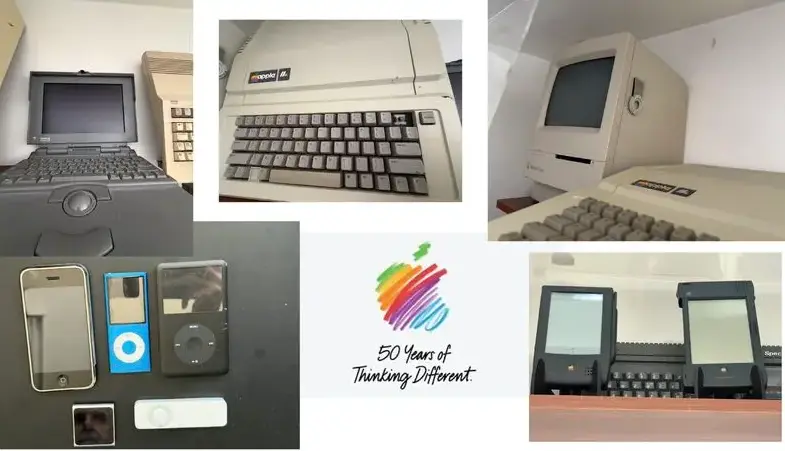
- Apple I (1976): A kit-based computer that laid the foundation for personal computing.
- Apple II (1977): One of the first highly successful mass-produced PCs.
- Macintosh (1984): Introduced the graphical user interface (GUI) to the mainstream.
Why It Mattered
Before Apple, computers were complex, command-line-driven machines. Apple simplified interaction using:
- Graphical icons
- Mouse navigation
- Visual workflows
This human-centered design approach remains a core differentiator today.
2. Decline and Reinvention (1985–1997)
After internal conflicts, Steve Jobs left Apple in 1985. The company struggled with:
- Fragmented product lines
- Weak differentiation
- Declining market share
By the mid-1990s, Apple was close to bankruptcy.
Turning Point
In 1997, Jobs returned—and launched the “Think Different” campaign.
Strategic Reset
- Reduced product complexity
- Focused on design and usability
- Rebuilt brand identity around creativity
This period demonstrates a critical business principle: innovation requires clarity of vision, not just technology.
3. The Digital Hub Strategy (2001–2010)
Apple’s most transformative decade began with a shift toward digital lifestyle integration.
Key Products
- iPod (2001)
- iTunes (2001)
- iPhone (2007)
- iPad (2010)
Mechanism of Success
Apple created an integrated ecosystem:
- Hardware + software + services
- Seamless synchronization
- Controlled user experience
Real-World Impact
- iPod + iTunes transformed the music industry
- iPhone redefined communication, computing, and media consumption
This era established Apple as not just a computer company—but a consumer technology ecosystem leader.
4. Post-Jobs Era: Scaling Innovation (2011–2020)
After Steve Jobs’ passing in 2011, Tim Cook led Apple into a new phase focused on scalability, services, and operational excellence.
Strategic Shifts
- Expansion into services (Apple Music, iCloud)
- Emphasis on privacy as a core value
- Supply chain optimization
Key Products
- Apple Watch (2015)
- AirPods (2016)
Evidence-Based Insight
According to financial disclosures and market analyses:
- Services became a major revenue driver
- Wearables grew into a multi-billion-dollar category
This period shows how Apple transitioned from innovation-driven growth to ecosystem monetization and expansion.
5. Apple in the AI and Silicon Era (2020–2026)
Apple’s latest transformation centers on custom silicon and on-device intelligence.
Key Developments
- Apple M1 (2020) and successors
- AI-powered features integrated into iOS and macOS
- Increased focus on privacy-preserving machine learning
Why Custom Chips Matter
Apple’s silicon strategy enables:
- Better performance-per-watt
- Tight hardware-software integration
- Enhanced battery life and efficiency
AI Strategy: Different from Competitors
Unlike cloud-heavy AI models, Apple emphasizes:
- On-device processing
- Data minimization
- User privacy
This aligns with growing regulatory and consumer concerns around data security.
6. Core Principles Behind Apple’s 50-Year Success
1. Human-Centered Design
Apple consistently prioritizes usability over technical complexity.
Example:
The iPhone removed physical keyboards, replacing them with intuitive touch interfaces.
2. Vertical Integration
Apple controls:
- Hardware
- Software
- Services
Outcome:
- Consistent user experience
- Reduced fragmentation
- Strong brand loyalty
3. Ecosystem Lock-In (Positive Friction)
Devices work better together:
- iPhone + Mac + Apple Watch
- Shared services like iCloud
Result:
High user retention and lifetime value.
4. Strategic Simplicity
Apple deliberately limits product lines to:
- Reduce confusion
- Improve quality
- Strengthen branding
5. Premium Positioning
Rather than competing on price, Apple focuses on:
- Quality
- Design
- Experience
7. Risks and Criticisms
No 50-year success story is without challenges.
Common Critiques
- High pricing limits accessibility
- Closed ecosystem reduces flexibility
- Legal scrutiny over App Store policies
Regulatory Landscape (2026)
Governments worldwide are evaluating:
- Antitrust concerns
- Platform control
- Developer fairness
Apple’s ability to adapt will shape its next decade.
8. Real-World Use Cases: Why Apple Still Leads
Case 1: Creative Professionals
- Mac + iPad workflows enable seamless design and editing
Case 2: Healthcare Integration
- Apple Watch monitors heart rate, ECG, and activity
Case 3: Enterprise Adoption
- Secure devices with strong privacy controls
These examples demonstrate practical, real-world value beyond marketing claims.
9. The Future: What “Think Different” Means Next
Looking ahead, Apple is expected to focus on:
- Spatial computing
- AI-assisted productivity
- Health technology expansion
The challenge is maintaining innovation while operating at massive scale.
Conclusion
“Think Different” is not just a historical slogan—it is a repeatable innovation framework. Over 50 years, Apple Inc. has demonstrated that success comes from:
- Deep integration of technology
- Relentless focus on user experience
- Strategic clarity and discipline
As the tech landscape evolves, Apple’s ability to reinterpret this philosophy will determine whether it continues to lead—or becomes just another legacy company.
FAQs
What is the meaning of Apple’s “Think Different” slogan?
It reflects Apple’s core philosophy of challenging conventional thinking and creating user-focused, innovative technology.
How did Apple become a global tech leader?
Through continuous innovation, strong ecosystem integration, and a focus on design, usability, and premium user experience.
What are Apple’s most important products over 50 years?
Key milestones include the Apple II, Macintosh, iPod, iPhone, iPad, and Apple Watch.
Why is Apple’s ecosystem considered powerful?
Because it seamlessly connects devices, software, and services, creating a unified and efficient user experience.
What is Apple’s future direction beyond 2026?
Apple is focusing on AI integration, custom silicon, privacy-first technology, and emerging areas like spatial computing and health tech.


 and then