








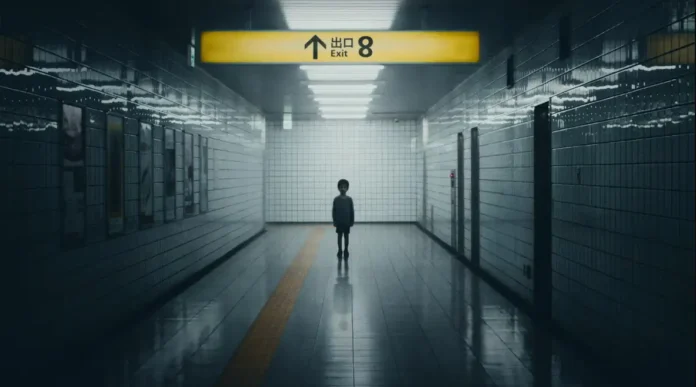
The Exit 8 movie is a psychological horror film that creates tension through repetition, subtle visual anomalies, and cognitive uncertainty. Instead of jump scares, it uses environmental storytelling and perception-based fear, making it a unique and intellectually engaging experience for viewers seeking atmospheric horror.
KumDi.com
Exit 8 delivers a uniquely unsettling experience by focusing on pattern recognition, spatial awareness, and psychological discomfort rather than traditional horror tropes. Adapted from the viral indie game, the film retains its core concept: a seemingly endless underground passage where subtle anomalies determine survival.
For viewers searching for a smart, immersive psychological thriller, Exit 8 stands out in 2026 as a minimalist yet highly effective exploration of fear rooted in perception and cognition.
Table of Contents

What is Exit 8 about?
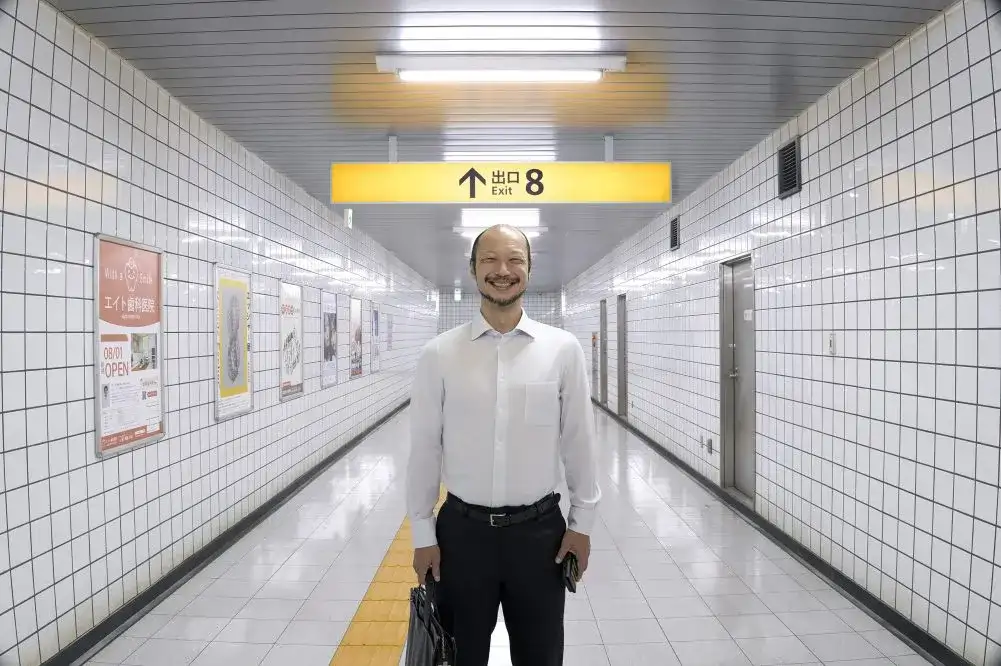
At its core, Exit 8 follows a character trapped in a looping subway corridor. The only way to escape is to identify anomalies in the environment. If something feels “off,” the character must turn back. If not, they proceed. Missing an anomaly resets the loop.
👉 This creates tension through:
- Repetition
- Uncertainty
- Cognitive overload
Visual Tone & Atmosphere
Minimalism as a Psychological Tool
Unlike conventional horror films, Exit 8 uses:
- Static environments
- Neutral color palettes
- Subtle visual distortions
This approach aligns with environmental horror design principles, where fear emerges from recognition failure rather than external threats.
Why It Works
Research in cognitive psychology shows that humans are highly sensitive to pattern disruption. Even minor inconsistencies (e.g., a missing sign, altered lighting) can trigger discomfort.
👉 The film leverages this by:
- Training the viewer to observe details
- Gradually introducing ambiguity
- Creating tension through doubt, not action
Narrative Structure & Pacing
Non-Traditional Storytelling
Exit 8 avoids a conventional plot arc. Instead, it follows a loop-based progression model:
- Enter corridor
- Observe environment
- Detect anomaly (or fail)
- Reset or progress
This structure mirrors interactive media, particularly indie horror games.
Pacing Analysis
- Slow pacing → intentional, builds cognitive tension
- Repetition → reinforces unease
- Escalation → anomalies become harder to detect
👉 This may not appeal to viewers expecting fast-paced action, but it is highly effective for:
- Psychological horror fans
- Experimental cinema audiences
Psychological Mechanisms Behind the Fear
1. Pattern Recognition Fatigue
Repeated exposure to similar environments reduces certainty, increasing anxiety.
2. Uncertainty & Decision Stress
The viewer constantly asks:
👉 “Did I miss something?”
This mirrors real-world cognitive stress under ambiguity.
3. The Uncanny Effect
Small deviations in normal settings create disproportionate discomfort.
Comparison with Similar Films
| Element | Exit 8 | Traditional Horror |
|---|---|---|
| Fear Type | Psychological, cognitive | Physical, visual |
| Environment | Static, repetitive | Dynamic, varied |
| Pacing | धी Slow, deliberate | Fast, event-driven |
| Viewer Role | Observer + participant | Passive viewer |
Strengths (Expert Evaluation)
✔ Highly Original Concept
Transforms a simple gameplay mechanic into cinematic tension.
✔ Strong Environmental Storytelling
No need for excessive dialogue or exposition.
✔ Cognitive Engagement
Requires active viewer participation—rare in modern cinema.
Limitations (Balanced Perspective)
⚠ Niche Appeal
May feel repetitive for general audiences.
⚠ Limited Character Development
Focus is on environment, not emotional arcs.
⚠ Subtlety Over Clarity
Some viewers may miss key details, reducing impact.
Real-World Viewing Insight
From a professional content analysis perspective (film + UX design crossover), Exit 8 functions similarly to:
- User experience stress testing
- Cognitive load experiments
- Perception-based training environments
👉 This makes it particularly interesting for:
- Designers
- Psychologists
- Game developers
Who Should Watch Exit 8?
Ideal Audience
- Fans of psychological horror
- Viewers who enjoyed experimental films
- Gamers familiar with indie horror mechanics
Not Ideal For
- Those seeking action-heavy horror
- Viewers who prefer clear narratives
- Casual entertainment seekers
Practical Viewing Tips
To fully appreciate Exit 8:
- Watch in a dark environment
- Avoid distractions (details matter)
- Pay attention to small visual changes
- Consider a second viewing for deeper understanding

FAQs
Is Exit 8 worth watching for psychological horror fans?
Yes, this Exit 8 movie review confirms it is worth watching, especially for fans of psychological horror. The film focuses on perception and tension rather than jump scares, making it a standout in exit 8 psychological horror explained discussions.
What is the meaning behind Exit 8 movie?
The meaning explored in this Exit 8 movie review highlights themes of perception, repetition, and uncertainty. Many exit 8 movie meaning analysis interpretations suggest it reflects cognitive stress and the fear of missing subtle changes in familiar environments.
Is Exit 8 a scary movie or more psychological?
According to this Exit 8 movie review, it is primarily psychological rather than traditionally scary. The exit 8 psychological horror explained approach relies on atmosphere and mental tension instead of sudden shocks or visual horror.
How is Exit 8 different from other horror movies?
This Exit 8 movie review shows the film differs by using minimalism and repetition. Unlike typical horror, exit 8 psychological horror explained focuses on environmental anomalies and viewer perception rather than monsters or jump scares.
What type of audience will enjoy Exit 8 movie?
Based on this Exit 8 movie review, viewers who enjoy slow, thought-provoking films will appreciate it most. Those interested in exit 8 movie meaning analysis and experimental storytelling will find it especially engaging.
Final Verdict
Exit 8 is a highly specialized but intellectually rewarding film. It challenges conventional storytelling by placing the burden of tension on the viewer’s perception. While not universally appealing, it represents a notable evolution in psychological horror, blending gaming logic with cinematic execution.
For those willing to engage actively, Exit 8 offers a distinct and memorable experience that lingers beyond the screen.




 and then