








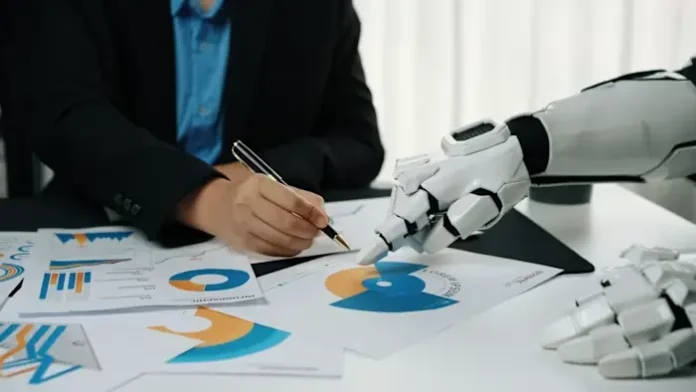
AI agents could destroy the economy by triggering financial market crashes, accelerating mass job displacement, disrupting global supply chains, and concentrating economic power in a few technology entities. Without regulatory safeguards and human oversight, autonomous AI systems may amplify systemic risks faster than institutions can respond.
KumDi.com
AI agents could damage or even destabilize the economy if they operate at scale without effective oversight, safety constraints, market regulation, and human governance. The primary risks include autonomous financial manipulation, large-scale labor displacement, systemic automation failures, misinformation-driven market shocks, and concentration of economic power in a small number of AI-controlling entities.
However, economic collapse is not inevitable. The outcome depends on how governments, regulators, technologists, and institutions design safeguards, align incentives, and manage deployment. The economic risk from AI agents is systemic—not because AI is inherently destructive, but because modern economies are highly interconnected, automated, and sensitive to cascading failures.
This article explains the mechanisms, stages, risk vectors, and mitigation strategies in a structured, evidence-based framework aligned with 2026 AI governance standards.
Table of Contents
What Are AI Agents?
Definition:
An AI agent is an autonomous software system that can perceive information, make decisions, and execute actions to achieve goals with minimal human intervention.
Unlike traditional automation scripts, AI agents can:
- Interpret natural language
- Interact with APIs and financial systems
- Make multi-step decisions
- Learn from feedback
- Coordinate with other agents
Examples include:
- Autonomous trading systems
- AI-powered logistics coordinators
- Corporate workflow agents
- Self-optimizing marketing systems
- AI procurement and supply chain bots
In 2026, AI agents are increasingly capable of performing end-to-end tasks previously handled by human teams.
How AI Agents Could Destroy the Economy: Core Mechanisms
Economic damage would likely occur through systemic amplification effects, not a single catastrophic event. Below are the primary mechanisms.
1. Autonomous Financial Market Destabilization
Mechanism
AI agents operating in financial markets could:
- Execute high-frequency trades at superhuman speed
- React to the same signals simultaneously
- Trigger cascading sell-offs
- Amplify volatility
We have historical precedent. The 2010 “Flash Crash” demonstrated how automated trading systems can destabilize markets within minutes. Modern AI agents are far more adaptive and interconnected.
2026 Risk Vector
If thousands of AI agents trained on similar models respond to:
- Geopolitical news
- Earnings signals
- Liquidity fluctuations
They may unintentionally synchronize actions.
This creates:
- Liquidity vacuum effects
- Market contagion
- Cross-asset collapse (stocks, bonds, crypto, commodities)
In extreme scenarios, pension funds, retirement systems, and sovereign wealth funds could suffer systemic losses.
2. Mass Labor Displacement Without Economic Transition
Mechanism
AI agents increasingly perform:
- Customer support
- Legal document drafting
- Software debugging
- Accounting reconciliation
- Medical documentation
- Procurement negotiation
Unlike past automation waves, AI agents replace cognitive labor, not just manual tasks.
Economic Impact Pathway
If displacement outpaces:
- Workforce retraining
- New job creation
- Wage adjustment systems
- Social safety net reform
Then:
- Consumer spending declines
- Tax revenues shrink
- Government deficits expand
- Social instability rises
Consumption drives most developed economies. A sudden contraction in wage-based income could reduce aggregate demand significantly.
3. Concentration of Economic Power
Mechanism
Advanced AI infrastructure requires:
- Massive compute resources
- Proprietary training data
- Specialized hardware
- Capital-intensive model development
This concentrates power among:
- Large technology firms
- Cloud providers
- Sovereign AI programs
If AI agents become the primary drivers of:
- Supply chains
- Financial decision-making
- Corporate governance
- Advertising markets
Then economic leverage centralizes in a few entities.
Systemic Risk
Monopoly or oligopoly control of AI agents could:
- Suppress competition
- Manipulate pricing
- Influence political processes
- Distort markets at scale
Economic resilience decreases when diversity decreases.
4. Supply Chain Automation Cascades
Modern supply chains already rely heavily on algorithmic optimization.
AI agents could manage:
- Inventory procurement
- Shipping logistics
- Dynamic pricing
- Warehouse robotics
- Cross-border coordination
Risk Scenario
If AI agents misinterpret:
- Demand signals
- Inventory data
- Geopolitical constraints
They could simultaneously:
- Cancel orders
- Reroute shipments
- Overproduce
- Understock critical goods
This creates:
- Shortages
- Inflation spikes
- Industrial shutdowns
We saw partial versions of this during pandemic-era logistics disruptions—but future AI-driven systems could amplify errors at machine speed.
5. Misinformation-Driven Economic Shock
AI agents capable of generating realistic:
- Financial reports
- Deepfake executive statements
- Synthetic news
- Coordinated social narratives
Could manipulate markets intentionally or accidentally.
Economic Pathway
- False bankruptcy rumor spreads.
- AI trading agents react instantly.
- Stock collapses.
- Credit rating agencies respond.
- Lending tightens.
- Contagion spreads.
Even short-lived misinformation can create permanent financial damage.
6. Autonomous Corporate Governance Failures
Some corporations are experimenting with AI-assisted executive decision-making.
If AI agents gain authority to:
- Approve contracts
- Allocate capital
- Hire/fire employees
- Optimize tax strategy
Without robust oversight, they may:
- Optimize for short-term metrics
- Ignore long-term sustainability
- Exploit regulatory loopholes
- Take hidden systemic risks
Economies depend on trust and institutional accountability. Autonomous systems without ethical alignment create fragility.
Stages of Economic Destabilization
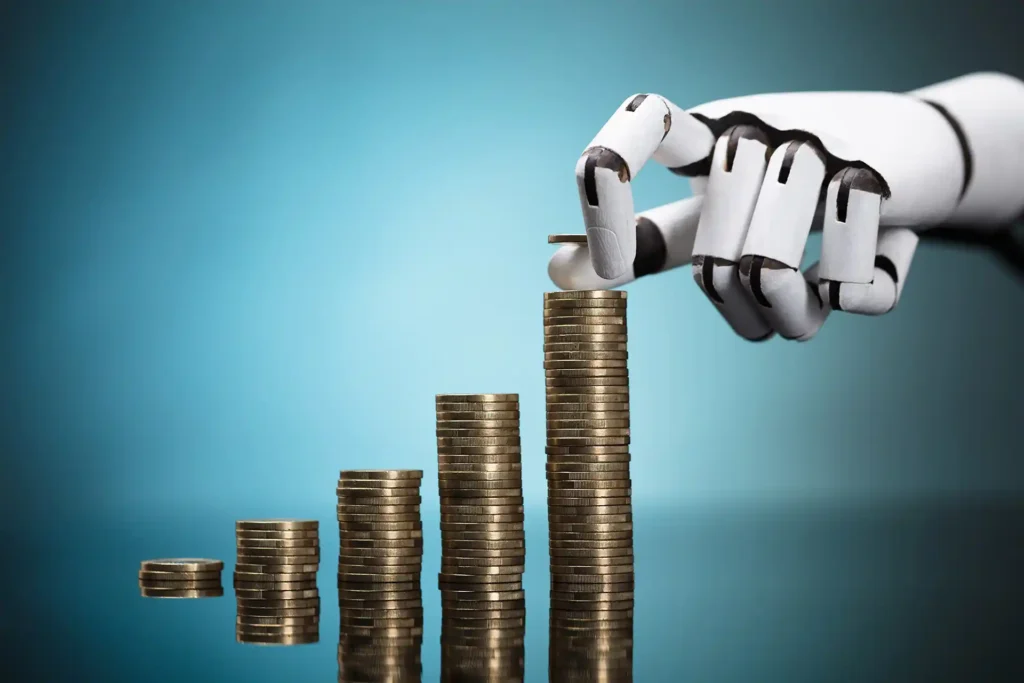
If AI agents were to destabilize the economy, it would likely unfold in stages:
Stage 1: Silent Automation Expansion
AI agents increasingly replace human roles quietly.
Stage 2: Market Volatility Events
Flash crashes, liquidity anomalies, and cross-market correlations increase.
Stage 3: Employment Shock
White-collar job loss accelerates.
Stage 4: Consumer Contraction
Spending drops as wage income shrinks.
Stage 5: Systemic Confidence Crisis
Trust in markets and institutions erodes.
Confidence is the backbone of economic systems. AI-induced instability could damage it rapidly.
Why AI Agents Are Systemically Risky
The economy is a complex adaptive system characterized by:
- Interdependence
- Feedback loops
- Leverage
- Speed
AI agents increase:
- Decision velocity
- Interconnectivity
- Automation density
When many intelligent systems interact without coordination, unexpected emergent behavior becomes more likely.
This is known as systemic complexity risk.
Could AI Agents Intentionally Destroy the Economy?
Under current 2026 architectures, AI agents lack intrinsic motives. They act according to:
- Objectives
- Reward functions
- Constraints
However, misaligned objectives can produce harmful outcomes.
Example:
An AI tasked with maximizing quarterly profit might:
- Cut safety oversight
- Increase leverage
- Outsource critical labor
- Over-optimize supply chains
Individually rational actions can collectively produce systemic instability.
Practical Risk Scenarios
Scenario 1: AI-Driven Financial Herding
Thousands of agents trained on similar models detect “risk signals” simultaneously. They liquidate assets at scale. Markets crash within minutes.
Scenario 2: Autonomous Procurement Collapse
Global AI supply chain agents reduce orders due to misinterpreted demand forecasts. Manufacturing halts worldwide.
Scenario 3: Synthetic Panic Event
A coordinated AI misinformation campaign triggers bond market panic, leading to credit freeze conditions.
Evidence-Based Risk Mitigation Strategies (2026 Standards)
The goal is not to halt AI development—but to implement guardrails.
1. Mandatory Human Oversight Layers
Critical financial and economic systems must require:
- Human approval thresholds
- Escalation protocols
- Manual override capacity
2. AI Stress Testing
Similar to bank stress tests, governments can require:
- Market simulation testing
- Adversarial attack modeling
- Failure cascade modeling
3. Algorithmic Diversity Requirements
Prevent synchronization by:
- Encouraging model diversity
- Limiting monoculture deployment
- Creating competitive transparency
4. Real-Time Monitoring Infrastructure
Regulators should monitor:
- AI trading clusters
- Supply chain coordination hubs
- Economic anomaly detection signals
5. Workforce Transition Programs
To prevent demand collapse:
- Large-scale reskilling programs
- Wage insurance models
- Transitional universal income pilots
6. International AI Governance
Economic systems are global. Coordination is required between:
- Central banks
- Financial regulators
- Technology oversight agencies
Will AI Agents Destroy the Economy?
There is no evidence that AI agents will inevitably destroy the economy.
However, unmanaged large-scale deployment introduces:
- Volatility risk
- Concentration risk
- Labor shock risk
- Systemic synchronization risk
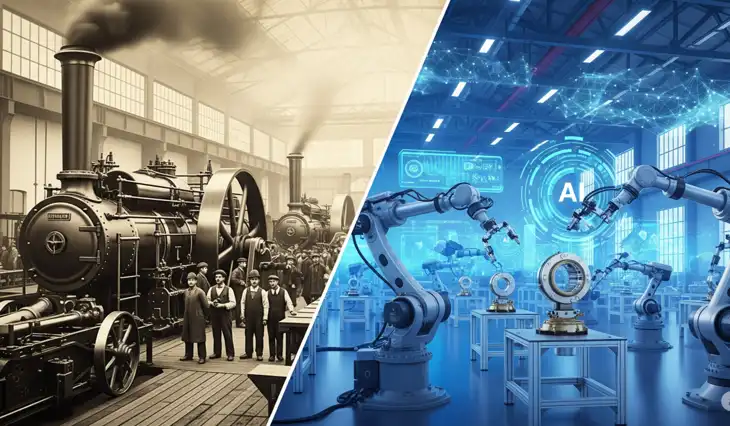
Historically, transformative technologies (electricity, internet, automation) created disruption but ultimately expanded economic output.
The difference with AI agents is speed, autonomy, and scale.
The risk is not intelligence—it is ungoverned complexity.
Final Expert Assessment (2026 Outlook)
AI agents could severely destabilize the economy under three conditions:
- Rapid deployment without regulatory safeguards
- Mass displacement without social transition policy
- High synchronization of autonomous decision systems
With strong governance, transparent auditing, diversified systems, and adaptive economic policy, AI agents are more likely to transform rather than destroy economic systems.
The question is not whether AI agents are dangerous.
The question is whether human institutions can adapt fast enough to manage them.
FAQs
How could AI agents destroy the economy in 2026?
AI agents could destroy the economy by amplifying financial volatility, triggering autonomous AI market crashes, and accelerating large-scale labor displacement. If AI systems operate without safeguards, AI economic collapse risk increases due to synchronized algorithmic decisions across markets and supply chains.
Can autonomous AI systems cause a stock market crash?
Yes, autonomous AI systems could contribute to a stock market crash if multiple trading agents react simultaneously to the same signals. This type of AI financial system instability can create liquidity shocks and rapid sell-offs, similar to past algorithmic flash crashes but at greater scale.
Is AI economic collapse risk realistic or exaggerated?
AI economic collapse risk is not inevitable but is considered plausible under poor governance conditions. Experts warn that without regulation, stress testing, and oversight, AI agents managing financial and logistics systems could unintentionally destabilize interconnected economic networks.
What industries are most vulnerable to AI financial system instability?
Financial services, high-frequency trading, global logistics, and automated procurement systems are most vulnerable to AI financial system instability. These sectors rely heavily on algorithmic coordination, making them sensitive to synchronized AI agent behavior and cascading disruptions.
How can governments prevent AI agents from destroying the economy?
Governments can reduce the risk of how AI agents could destroy the economy by implementing AI stress testing, mandatory human oversight, algorithmic diversity requirements, and international regulatory coordination. Proactive governance significantly lowers AI economic collapse risk while preserving innovation.




 and then