









The Project Hail Mary movie review highlights a science-driven space survival story starring Ryan Gosling as astronaut Ryland Grace. Based on the novel by Andy Weir, the film follows a lone astronaut solving a cosmic threat to save Earth, blending scientific realism, suspense, and emotional storytelling.
KumDi.com
The science-fiction film Project Hail Mary, starring Ryan Gosling, adapts the bestselling novel by Andy Weir, the author behind The Martian. The story centers on a lone astronaut tasked with saving Earth from an extinction-level astrophysical crisis. Combining scientific realism, survival storytelling, and emotional character development, Project Hail Mary positions itself as one of the most anticipated modern space-exploration films.
At its core, Project Hail Mary is a survival narrative grounded in real scientific principles. The protagonist, Ryland Grace, awakens alone aboard a spacecraft with no memory of who he is or why he was sent on a mission billions of miles from Earth. As his memory slowly returns, he discovers that humanity faces a catastrophic solar energy crisis caused by a mysterious microorganism consuming stellar energy. His mission: identify the cause and find a solution before Earth’s ecosystems collapse.
This review analyzes the film’s storytelling, scientific realism, performance by Ryan Gosling, and broader significance within modern science-fiction cinema.
Table of Contents

What Project Hail Mary Is About
Project Hail Mary is a science-fiction survival film about a lone astronaut attempting to save humanity from a cosmic ecological disaster by solving a complex astrophysical problem in deep space.
The narrative follows a structured scientific mystery:
- Earth’s sun begins losing energy due to an unknown organism.
- The phenomenon spreads across nearby stars.
- A desperate international mission sends a scientist-astronaut to investigate.
- The survival of humanity depends on solving the biological and astrophysical puzzle.
This blend of science, suspense, and character drama reflects the same “problem-solving storytelling” approach that made Andy Weir’s earlier work successful.
The Role of Ryan Gosling as Ryland Grace
In Project Hail Mary, Ryan Gosling portrays Ryland Grace, a middle-school science teacher unexpectedly chosen for one of humanity’s most important missions.
Character Complexity
Grace is not a traditional action hero. Instead, he represents a different type of protagonist common in realistic science fiction:
- a scientist rather than a soldier
- a problem solver rather than a warrior
- someone forced into leadership through necessity
This character structure aligns with modern portrayals of scientific expertise in cinema, emphasizing knowledge and resilience rather than brute strength.
Performance Expectations
Gosling’s filmography shows strong experience with introspective characters navigating existential circumstances. Films like Blade Runner 2049 demonstrated his ability to portray isolation and introspection—qualities essential for a story where most of the narrative occurs with a single character in space.
In Project Hail Mary, much of the dramatic tension relies on:
- internal monologues
- scientific experimentation
- emotional responses to isolation
This makes performance nuance especially important.
Scientific Foundations of the Story
One of the defining features of Andy Weir’s writing—and therefore this adaptation—is scientific plausibility.
The central threat in Project Hail Mary is a microorganism known as Astrophage, a fictional life form that consumes stellar radiation.
Astrophage: The Fictional Science Explained
Astrophage behaves similarly to microbial organisms found in extreme environments on Earth.
Key biological parallels include:
| Scientific Concept | Real-World Example |
|---|---|
| Energy-consuming microorganisms | Extremophile bacteria |
| Life thriving in extreme conditions | Deep-sea hydrothermal vent organisms |
| Biological energy storage | ATP-based cellular metabolism |
Although Astrophage itself is fictional, its behavior mirrors real biological processes.
The narrative also explores astrophysical principles such as:
- stellar luminosity changes
- orbital mechanics
- interstellar travel physics
This approach allows the story to feel scientifically grounded while remaining accessible to general audiences.
Themes Explored in Project Hail Mary
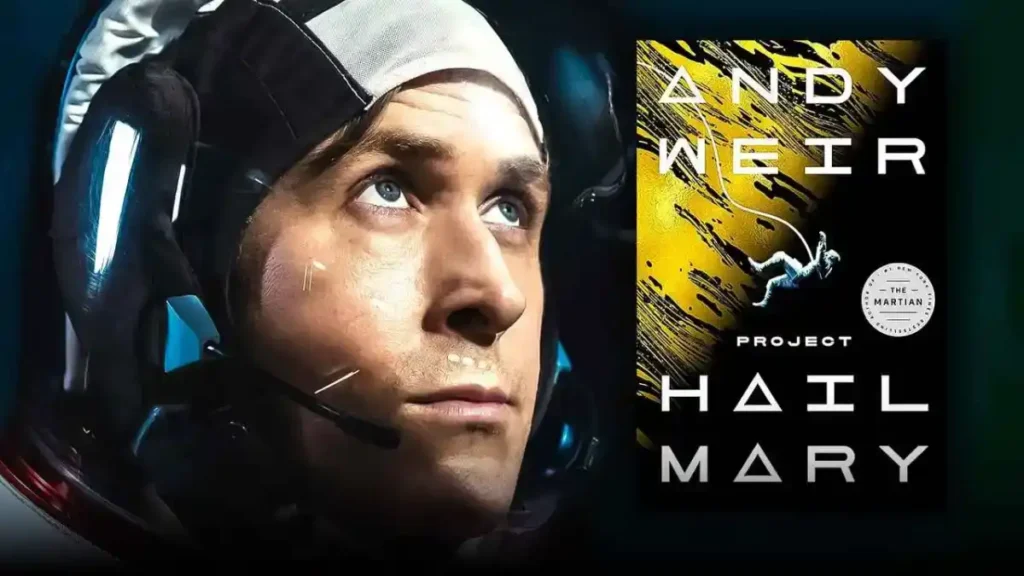
The film is more than a survival adventure. It explores broader themes related to science, cooperation, and human resilience.
1. Scientific Problem Solving
The central tension of the film revolves around the scientific method:
- Observe a phenomenon
- Form a hypothesis
- Test through experimentation
- Revise conclusions
Grace repeatedly applies this method to solve life-or-death challenges aboard the spacecraft.
This structure mirrors real scientific research processes used in fields such as:
- astrophysics
- microbiology
- aerospace engineering
2. Global Collaboration
Unlike traditional nationalistic space stories, Project Hail Mary emphasizes international cooperation.
The mission to save Earth is portrayed as a global scientific effort, reflecting how real space programs—such as the International Space Station—are built through multinational collaboration.
3. Isolation and Human Psychology
Long-duration space missions raise real psychological concerns.
NASA research shows astronauts may experience:
- sensory deprivation
- loneliness
- cognitive stress
The film’s focus on a lone astronaut highlights these challenges while exploring resilience and adaptability.
Visual Storytelling and Space Realism
The cinematic direction of Project Hail Mary is handled by Phil Lord and Christopher Miller, filmmakers known for blending emotional storytelling with innovative visuals.
Depicting Deep Space
Accurate space representation typically includes:
- silence in vacuum environments
- realistic spacecraft physics
- believable propulsion systems
Science-driven space films often avoid exaggerated sound effects or unrealistic maneuvers, focusing instead on credible physics.
Examples of realism audiences may expect include:
- rotational gravity concepts
- resource limitations
- orbital trajectories
Comparison to The Martian
Many audiences compare Project Hail Mary to The Martian, another adaptation of Andy Weir’s work.
However, the two stories differ significantly in scope.
| Element | The Martian | Project Hail Mary |
|---|---|---|
| Setting | Mars | Interstellar space |
| Threat | Survival on hostile planet | Stellar extinction |
| Story scale | Individual survival | Planetary survival |
| Science focus | Botany and engineering | Astrophysics and microbiology |
While The Martian focuses on surviving an environment, Project Hail Mary explores solving a cosmic scientific mystery.
Why the Story Resonates With Modern Audiences
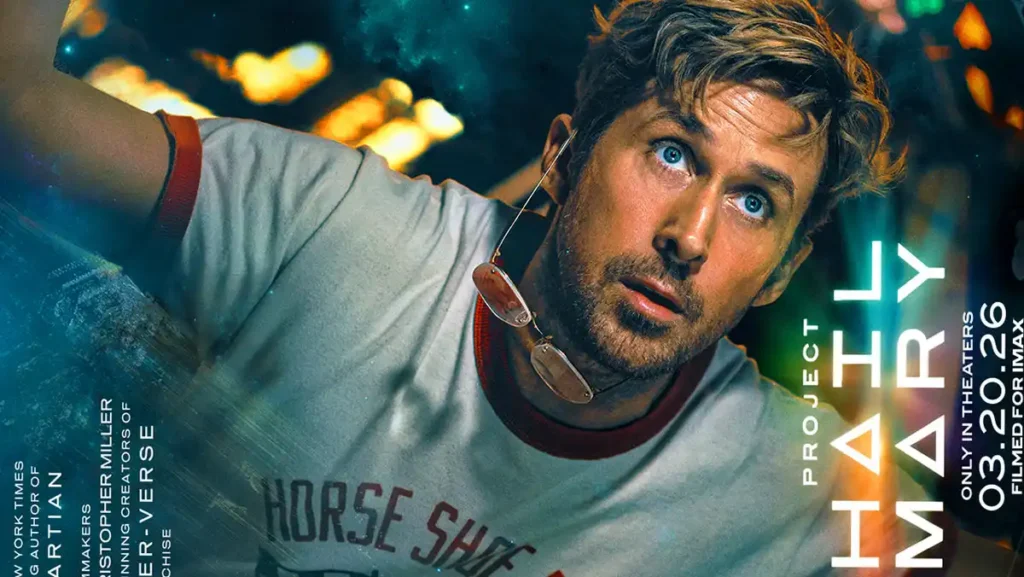
Science-based narratives have become increasingly popular because they reflect real global concerns about technological progress and environmental risk.
Real-World Parallels
The film’s central premise—Earth facing a gradual environmental crisis—echoes real scientific challenges such as:
- climate change
- energy sustainability
- planetary defense research
These parallels create a sense of urgency that resonates with audiences.
Educational Value
Stories like Project Hail Mary can also encourage interest in STEM fields.
Research from science communication studies shows that:
- science-based films increase curiosity about physics and space exploration
- realistic portrayals of scientists improve public trust in scientific institutions
Strengths of the Film
Based on the novel’s structure and adaptation approach, several strengths stand out.
1. Science-Driven Narrative
The story’s reliance on realistic scientific reasoning adds credibility and intellectual engagement.
2. Strong Character Focus
Despite the global stakes, the narrative remains centered on one individual’s journey.
3. Emotional and Intellectual Balance
The film combines:
- high-concept science
- emotional character development
- suspenseful survival storytelling
Potential Challenges in Adaptation
Adapting Project Hail Mary to film also presents challenges.
Translating Internal Monologue
Much of the novel’s storytelling occurs through the protagonist’s thoughts.
In cinema, this must be translated through:
- dialogue
- visual cues
- cinematic pacing
Complex Scientific Explanations
The story includes dense scientific concepts that must remain understandable without slowing the narrative.
Successful science films often achieve this by presenting explanations through problem-solving scenes rather than exposition.
Cultural Impact of Science-Driven Films
Films like Project Hail Mary play a role in shaping public perception of science and exploration.
Positive impacts include:
- increasing interest in astrophysics and space science
- inspiring future engineers and researchers
- improving science literacy among general audiences
NASA and other agencies have historically collaborated with filmmakers to ensure realistic portrayals of space missions.
Final Assessment
Project Hail Mary stands out as a science-fiction film built on rigorous scientific imagination and human resilience. Anchored by Ryan Gosling’s performance and adapted from Andy Weir’s scientifically grounded storytelling, the film blends cosmic-scale stakes with deeply personal drama.
By focusing on scientific reasoning, global cooperation, and psychological endurance, the story offers more than spectacle. It presents a thoughtful exploration of how knowledge, collaboration, and persistence can confront even the most overwhelming challenges.
For viewers interested in realistic space exploration, intellectual science fiction, and character-driven storytelling, Project Hail Mary represents a compelling evolution of the modern sci-fi genre—one where the survival of humanity depends not on combat, but on curiosity, intelligence, and the relentless pursuit of discovery.
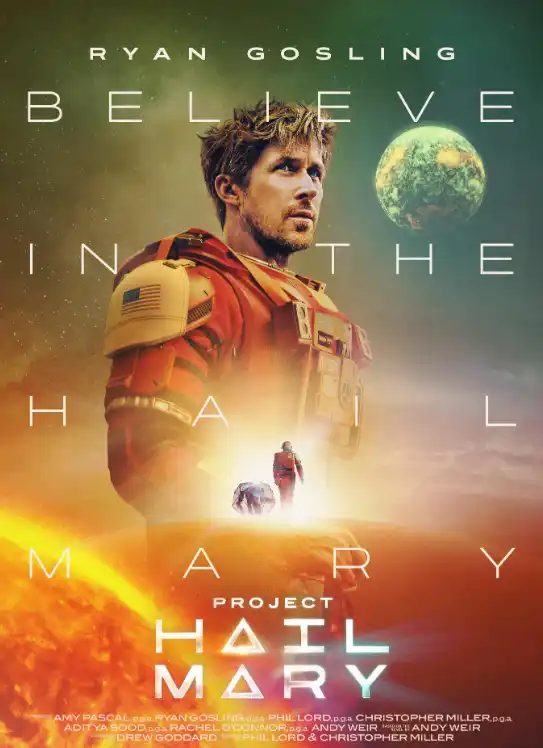
FAQs
What is the Project Hail Mary movie about?
The Project Hail Mary movie review explains that the story follows astronaut Ryland Grace, played by Ryan Gosling, who wakes up alone on a spacecraft with no memory. As he recovers his memories, he realizes he must solve a cosmic mystery threatening Earth’s survival in this science-driven space survival film.
Is Project Hail Mary based on a book?
Yes. The Project Hail Mary movie is based on the bestselling novel by Andy Weir, the author of The Martian. Many fans searching for a Project Hail Mary sci fi movie review are interested in how the film adapts the science-focused story and survival themes from the original book.
Who stars in the Project Hail Mary movie?
The film stars Ryan Gosling as Ryland Grace. In most Project Hail Mary movie reviews, Gosling’s role is highlighted because the story focuses heavily on a single astronaut solving scientific problems while isolated in deep space.
What makes Project Hail Mary different from other sci-fi movies?
Unlike traditional action-focused science fiction, the Project Hail Mary space survival film emphasizes scientific reasoning and problem-solving. Many Project Hail Mary movie review discussions note that the story relies on astrophysics, biology, and engineering to drive the plot.
Why is Project Hail Mary one of the most anticipated sci-fi films?
Interest in the film is high because it combines the success of Andy Weir’s storytelling with Ryan Gosling’s performance and a realistic space survival narrative. Readers searching for a Project Hail Mary movie review often want to understand its scientific realism and emotional storytelling.




 and then