








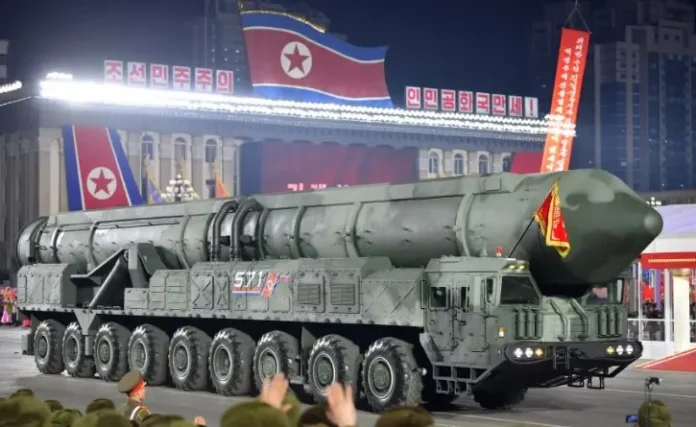
In a bold move that has sent shockwaves across the global stage, North Korean leader Kim Jong Un has overseen the delivery of 250 nuclear-capable missile launchers to frontline military units. This announcement, made through the country’s state media, underscores the regime’s unwavering commitment to expanding its nuclear capabilities and reinforcing its position as a formidable nuclear power. As the world watches with bated breath, the implications of this development are far-reaching, potentially reshaping the geopolitical landscape and intensifying the ongoing tensions between North Korea and the international community.

The Escalating Nuclear Ambitions of North Korea
North Korea’s nuclear program has long been a source of concern for the global community, and the recent delivery of these 250 missile launchers serves as a stark reminder of the regime’s relentless pursuit of military might. Under Kim Jong Un’s leadership, the country has demonstrated an unwavering determination to develop and deploy a range of nuclear-capable weapons, including tactical ballistic missiles capable of delivering lower-yield nuclear warheads.
Deployment of Battlefield Nuclear Weapons
One of the most alarming aspects of this development is North Korea’s intent to deploy battlefield nuclear weapons along its border with South Korea. This move, coupled with the authorization of preemptive nuclear strikes if the regime perceives a threat to its leadership, has heightened regional tensions and raised the specter of a potential nuclear confrontation.
Overwhelming Firepower and Tactical Efficiency
The new missile launchers, freshly produced by the country’s munitions factories, are designed to fire “tactical” ballistic missiles, a term that describes systems capable of delivering lower-yield nuclear weapons. Kim Jong Un has boasted that these launchers will provide his frontline units with “overwhelming” firepower over South Korea, making the operation of tactical nuclear weapons more practical and efficient.
Expanding the Arsenal of Short-Range Weapons
In addition to the deployment of these new missile launchers, North Korea has been actively expanding its lineup of mobile short-range weapons. These systems are designed to overwhelm missile defenses in South Korea, posing a significant threat to the country’s security and stability.
Hwasong-11: A New Missile Revelation
One such development is the introduction of a new missile called the Hwasong-11, which analysts believe can travel up to 100 kilometers. If deployed in frontline areas, these missiles would theoretically be able to cover vast swaths of South Korea’s greater capital region, where nearly half of the country’s population resides.
Countering Missile Defenses
By investing in these short-range, mobile weapons, North Korea aims to circumvent and overwhelm the missile defense systems in place in South Korea. This strategic move is part of the regime’s broader efforts to enhance its military capabilities and project an image of unrelenting power.
Pressuring the United States and its Allies
Kim Jong Un’s decision to showcase the delivery of these 250 missile launchers is widely seen as an attempt to pressure the United States to accept North Korea as a nuclear power and to push for the lifting of U.S.-led sanctions imposed on the country over its nuclear program.
Leveraging the “New Cold War”
In recent months, Kim has sought to align North Korea with countries that are confronting Washington, embracing the idea of a “new Cold War” and trying to display a united front against the West. This foreign policy strategy is exemplified by the regime’s growing ties with Russia, which has offered flood aid to North Korea, further solidifying the two nations’ burgeoning relationship.
Exploiting Geopolitical Tensions
North Korea’s accelerated weapons development, including the use of Russia’s war in Ukraine as a distraction, is a calculated move to dial up tensions, particularly in the lead-up to a U.S. election year. By doing so, the regime hopes to compel the United States to engage in negotiations and ultimately recognize its status as a nuclear-armed state.
Confrontation as the Preferred Path
In his speech at the delivery ceremony, Kim Jong Un made it clear that North Korea is bracing for a prolonged confrontation with the United States, rejecting the notion of negotiations and instead emphasizing the need to be “more thoroughly prepared to cope with the latter.”
Justifying the Military Buildup
Kim justified North Korea’s military buildup as a counter to the “outrageous” military cooperation between the United States and its regional allies, which he claimed are now exhibiting the characteristics of a “nuclear-based military bloc.” This rhetoric serves to rally domestic support and solidify the regime’s narrative of an external threat that necessitates the continued expansion of its nuclear capabilities.
Intergenerational Conflict with the U.S.
Notably, Kim’s speech portrayed the United States not merely as a transient administration, but as a “hostile state” that future generations of North Koreans will have to confront. This framing underscores the regime’s belief in the inevitability of an ongoing confrontation with the United States, further entrenching its commitment to the steady improvement of its defense capabilities.
Defiance in the Face of Adversity
Interestingly, Kim’s decision to hold the missile delivery ceremony while the country was recovering from devastating floods in late July was a deliberate statement of the regime’s unwavering determination to prioritize its military ambitions.
Pushing Ahead “Without Stop”
Kim explicitly stated that the timing of the event, despite the ongoing flood recovery efforts, demonstrated North Korea’s resolve to “push ahead with the bolstering of defense capabilities … without stop in any circumstances.” This defiant posture highlights the regime’s willingness to allocate resources and attention to its nuclear program, even in the face of natural disasters and humanitarian crises.
Expanding Relations with Russia
The flood disaster has also provided an opportunity for North Korea to deepen its ties with Russia, as the latter has offered aid to the country. This expanding relationship between the two nations is a testament to Kim’s foreign policy strategy of aligning with countries that are confronting the United States, further solidifying North Korea’s position as a key player in the emerging “new Cold War” dynamic.
Heightened Regional and Global Tensions
The delivery of these 250 missile launchers to North Korea’s frontline units has significant implications for regional and global security. The United States, South Korea, and Japan have responded by expanding their combined military exercises and sharpening their nuclear deterrence strategies, underscoring the escalating tensions in the region.
Monitoring and Analysis
The South Korean and U.S. militaries have been closely analyzing North Korea’s weapons development, with the spokesperson for South Korea’s Joint Chiefs of Staff noting the need for further monitoring to confirm the operational readiness of the missile systems showcased. While the specific assessment of the systems’ capabilities remains uncertain, the overall threat posed by North Korea’s expanding nuclear arsenal is clear.
Potential Flashpoints and Escalation
The deployment of these short-range, mobile missile launchers near the border with South Korea raises the specter of potential flashpoints and the risk of escalation. The ability of these weapons to cover vast areas of the South Korean capital region only amplifies the concerns about the fragility of regional stability and the potential for miscalculation or unintended conflict.
The Implications for Global Security
The North Korean regime’s relentless pursuit of nuclear capabilities has far-reaching implications for global security. As the country continues to defy international norms and expand its nuclear arsenal, the risk of a nuclear confrontation or an accidental escalation of tensions remains a pressing concern.
Challenging the Global Non-Proliferation Regime
North Korea’s defiance of the global non-proliferation regime and its refusal to engage in meaningful denuclearization negotiations pose a significant challenge to the international community’s efforts to curb the spread of nuclear weapons. The delivery of these 250 missile launchers serves as a stark reminder of the regime’s unwavering commitment to its nuclear ambitions, further complicating diplomatic efforts to address this pressing issue.
Potential Ripple Effects and Instability
The destabilizing impact of North Korea’s nuclear program extends beyond the Korean Peninsula, as it has the potential to trigger a regional arms race and undermine the fragile balance of power in Northeast Asia. Moreover, the regime’s willingness to use its nuclear capabilities as a bargaining chip and a means of exerting pressure on the international community raises concerns about the broader implications for global security and stability.
Navigating an Uncertain Future
As the world grapples with the implications of North Korea’s latest nuclear provocation, the path forward remains fraught with uncertainty and complexity. The international community must navigate this delicate situation with a combination of strategic diplomacy, robust deterrence, and a commitment to upholding global norms and security.
Diplomatic Challenges and Opportunities
Engaging North Korea in meaningful negotiations to achieve denuclearization has proven to be an elusive goal, as the regime appears to be entrenched in its position as a nuclear-armed state. However, diplomatic efforts, including the involvement of regional powers and the exploration of creative negotiation strategies, may still hold the potential to de-escalate tensions and chart a path towards a more stable and secure future.
Strengthening Regional and Global Cooperation
Effective responses to North Korea’s nuclear ambitions will require a coordinated and collaborative approach among the key stakeholders in the region and the international community. Strengthening military cooperation, enhancing intelligence-sharing, and developing robust deterrence strategies will be crucial in mitigating the risks posed by North Korea’s nuclear capabilities.

Fostering a Peaceful and Stable Korean Peninsula
Ultimately, the goal must be to foster a peaceful and stable Korean Peninsula, where the threat of nuclear conflict is diminished, and the well-being of the people is prioritized. This will necessitate a comprehensive, long-term strategy that addresses the complex geopolitical, economic, and humanitarian dimensions of the North Korean issue, while upholding the principles of international law and human rights.
As the world watches with heightened concern, the delivery of these 250 missile launchers to North Korea’s frontline units serves as a stark reminder of the regime’s unwavering commitment to its nuclear ambitions. The implications of this development are far-reaching, potentially reshaping the global security landscape and intensifying the ongoing tensions between North Korea and the international community. The path forward will require a delicate balance of strategic diplomacy, robust deterrence, and a steadfast commitment to upholding global peace and stability.




 and then