








Thailand–Cambodia border fighting refers to recurring military clashes caused by disputed borders, historical temple claims, and strategic terrain. The conflict persists due to unresolved colonial-era boundaries, nationalist politics, and military escalation, with future outcomes ranging from prolonged low-intensity fighting to negotiated diplomatic settlements.
KumDi.com
Thailand–Cambodia Border Fighting, rooted in colonial-era maps and nationalistic fervor, has once again erupted into the deadliest fighting in years, demonstrating a profound inability of diplomatic mechanisms to secure a lasting peace. Far from being a localized skirmish, the current conflagration has quickly escalated, involving heavy artillery exchanges, air strikes, and naval engagement across multiple provinces. The most devastating consequence is the immense human cost: official figures confirm that over half a million people have been displaced on both sides of the frontier, overwhelming local resources and creating a massive, urgent humanitarian crisis. Despite attempts by regional and international mediators to broker a ceasefire, the fighting continues to rage, suggesting that this cycle of violence is far from over.
Table of Contents
The Collapse of Peace: A Fragile Truce Shattered
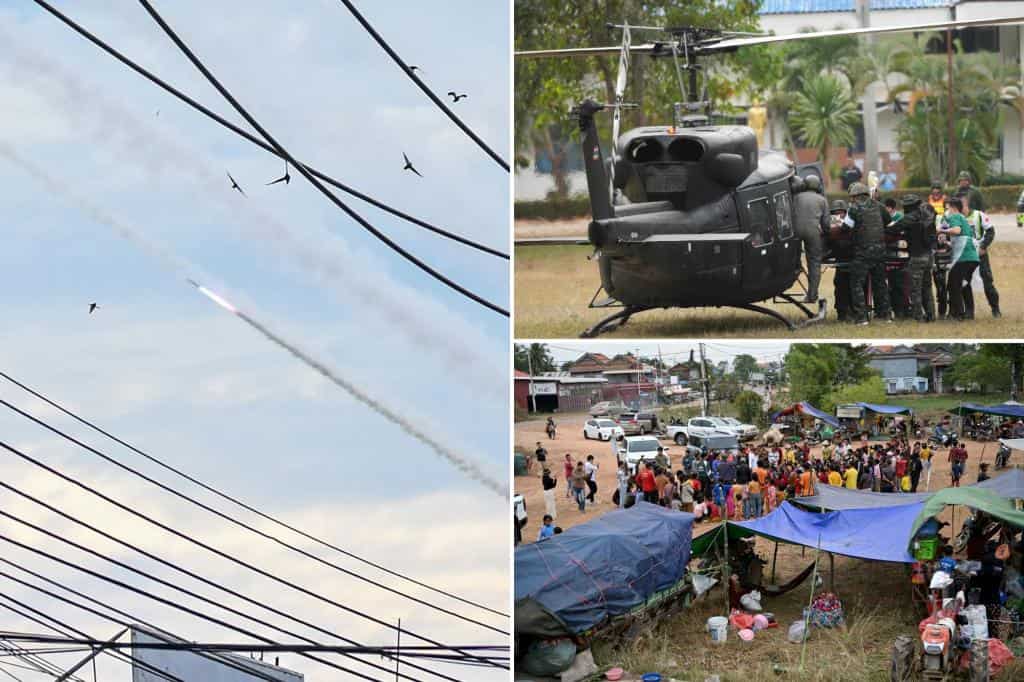
The latest round of hostilities, which began with a minor skirmish on December 7th, 2025, has swiftly undone a fragile peace agreement brokered by U.S. President Donald Trump and Malaysian Prime Minister Anwar Ibrahim just months earlier. That July 2025 accord, formalized in October, had temporarily halted a previous, similarly deadly bout of fighting. The current escalation, however, is more widespread and severe, pulling in naval assets and more advanced weaponry, including Thailand’s F-16 fighter jets and Cambodia’s long-range BM-21 rocket launchers.
The immediate trigger for the collapse remains disputed. Thai authorities claim the latest violence was precipitated by Cambodian forces planting new landmines in disputed areas, injuring Thai soldiers. Cambodia, in turn, accuses Thailand of an unprovoked escalation and violation of their shared border, specifically citing Thai airstrikes against what Cambodia claims are non-military targets. Regardless of who fired the first shot in this recent episode, the readiness of both nations to engage in full military operations underscores the deep-seated mistrust and unresolved territorial issues that continue to fuel the conflict.
A Crisis of Displacement: Over Half a Million Fleeing Homes
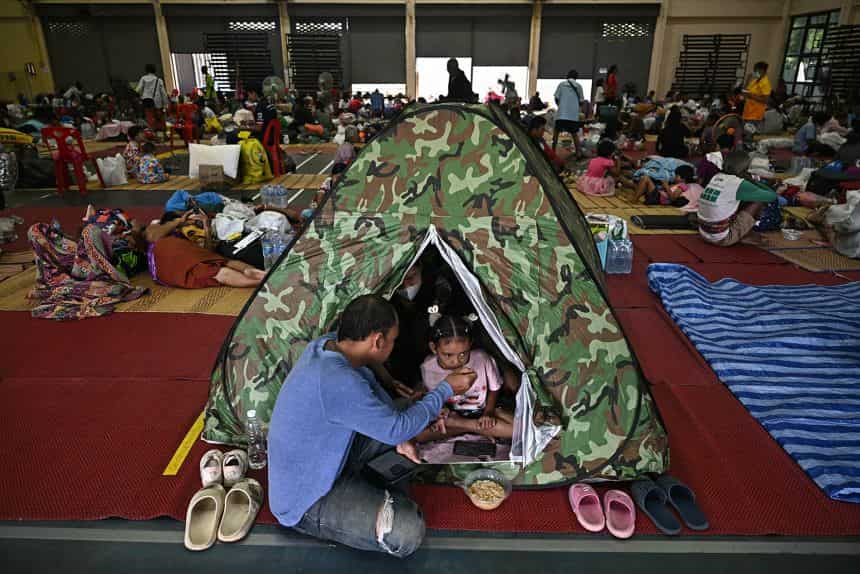
The most immediate and critical impact of the sustained fighting is the mass exodus of civilians. In both countries, border towns and villages have become military targets, forcing residents to flee their homes under dangerous conditions.
- In Cambodia, displacement figures have surged past 330,000 individuals, many of whom have sought refuge in 234 government-established displacement sites. Banteay Meanchey, Siem Reap, and Oddar Meanchey provinces are reporting the highest numbers of displaced, stretching the capacity of local authorities to provide basic necessities. The crisis has forced the closure of hundreds of schools, affecting over 200,000 students and turning educational facilities into temporary shelters.
- In Thailand, over 400,000 people have been evacuated to safe shelters across seven border provinces. The psychological toll on these communities is immense, with residents living in constant fear. The use of indiscriminate weapons like the BM-21 rockets, which have a wide area of impact, has intensified the threat to civilian areas, compelling large-scale, involuntary relocations.
The sheer scale of this displacement—now exceeding half a million and potentially reaching 700,000—highlights the severe humanitarian crisis. International aid organizations and local government agencies are struggling to meet the urgent needs for food, clean water, shelter, and medical care, especially as the number of casualties, including civilians, continues to rise.
Historical Background of the Thailand–Cambodia Border Dispute
Colonial Borders and Unresolved Boundaries
The origins of the Thailand–Cambodia border conflict date back to the early 20th century, during the colonial period in Southeast Asia. Borders were drawn using European mapping techniques that often ignored local geography, historical land use, and cultural boundaries. As a result, several areas along the modern Thai–Cambodian border were left poorly defined or contested.
These ambiguities became especially problematic after Cambodia gained independence and Thailand solidified its modern territorial administration. Competing interpretations of maps, treaties, and administrative authority laid the foundation for future disputes.
Ancient Temples as Political Flashpoints
One of the defining features of the Thailand–Cambodia border conflict is the presence of ancient Khmer temples near or directly on the disputed frontier. These sites are not merely archaeological landmarks—they are powerful symbols of national heritage, historical legitimacy, and sovereignty.
Temples such as Preah Vihear, Ta Muen Thom, and others located along elevated terrain have repeatedly become flashpoints. Control over these areas carries symbolic weight far beyond their military value, making compromise politically difficult for both sides.
Nationalism and Domestic Politics
Border tensions between Thailand and Cambodia are frequently amplified by domestic political pressures. Nationalist sentiment, public opinion, and leadership transitions often harden positions, especially during times of internal instability.
For political leaders, appearing “soft” on territorial issues can carry serious domestic costs. As a result, border incidents that might otherwise be resolved through quiet diplomacy sometimes escalate into armed confrontations.
Military and Strategic Dimensions of the Border Fighting
Geography and Tactical Advantage
The Thai–Cambodian border runs through mountainous terrain, dense forests, and remote rural areas. Elevated positions along escarpments provide strategic advantages for surveillance and artillery placement, making them highly contested.
Control of high ground not only enhances military leverage but also reinforces sovereignty claims. This geography explains why even small territorial areas can trigger disproportionate military responses.
Evolution of Military Engagement
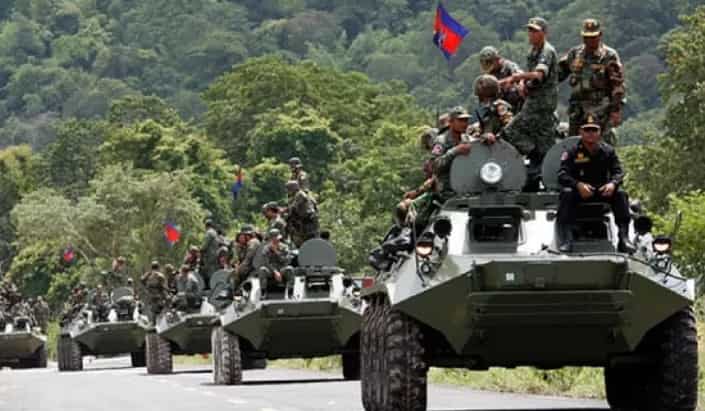
Earlier clashes along the border were largely limited to infantry skirmishes and artillery exchanges. Over time, however, the conflict has evolved to include more sophisticated weaponry, improved logistics, and increased mobility.
Modern border fighting now involves:
- Long-range artillery and rockets
- Air surveillance and tactical air support
- Naval patrols near coastal border zones
- Rapid troop redeployment
This evolution raises the risk of miscalculation and accidental escalation.
Rules of Engagement and Escalation Risks
Both Thailand and Cambodia publicly frame their military actions as defensive. However, differing interpretations of territorial boundaries mean that “defensive” maneuvers on one side are often perceived as aggression on the other.
Without robust de-escalation mechanisms, even minor incidents—such as patrol encounters or construction activities—can spiral into broader fighting.
Current Situation Along the Thailand–Cambodia Border
Renewed Armed Clashes
The present phase of Thailand–Cambodia border fighting is characterized by recurring armed incidents rather than continuous warfare. Ceasefires and informal truces are periodically declared, only to collapse under renewed tensions.
Clashes tend to concentrate around historically disputed zones and strategic locations, reinforcing the cyclical nature of the conflict.
Civilian Impact and Displacement
One of the most severe consequences of the border fighting is its impact on civilians. Communities living near the border face:
- Forced evacuations
- Loss of livelihoods
- Damage to homes and farmland
- Restricted access to healthcare and education
Displacement often occurs repeatedly, as residents return during lulls in fighting only to flee again when violence resumes.
Economic Disruption
The Thailand–Cambodia border is a vital corridor for trade, labor movement, and tourism. Fighting disrupts:
- Cross-border markets
- Supply chains
- Transport routes
- Local and regional investment
Border closures and security restrictions have ripple effects that extend well beyond the immediate conflict zone.
Diplomatic Efforts and Regional Implications
Bilateral Negotiations
Thailand and Cambodia have engaged in numerous bilateral talks aimed at managing border tensions. These discussions often focus on troop withdrawals, joint patrols, and technical boundary commissions.
However, progress is slow, and agreements are fragile due to political pressure and lack of enforcement mechanisms.
ASEAN’s Role
As members of ASEAN, both countries are subject to regional norms emphasizing dialogue and non-interference. ASEAN has occasionally facilitated communication, but its consensus-based approach limits its ability to impose binding solutions.
The conflict therefore tests ASEAN’s capacity to manage internal disputes among member states.
International Attention
While not a global flashpoint, the Thailand–Cambodia border fighting attracts periodic international attention due to concerns about regional stability, humanitarian impact, and precedent for resolving territorial disputes peacefully.
Future Predictions: What Happens Next?
Scenario 1: Prolonged Low-Intensity Conflict (Most Likely)
The most probable future scenario is a continuation of the current pattern: periodic clashes interspersed with uneasy ceasefires. Under this outcome:
- Border areas remain militarized
- Civilians face recurring displacement
- Diplomatic efforts prevent full-scale war but fail to resolve the dispute
This “managed instability” could persist for years.
Scenario 2: Diplomatic Breakthrough and Managed Settlement
A more optimistic scenario involves sustained diplomatic engagement leading to:
- Demilitarized buffer zones
- Joint management of cultural heritage sites
- Clear mechanisms for incident prevention
This would require strong political will, domestic consensus, and long-term confidence-building measures.
Scenario 3: Escalation Into Wider Regional Tension
While less likely, a significant escalation could occur if:
- A major incident causes high civilian or military casualties
- Nationalist pressure overrides diplomatic restraint
- Miscalculation leads to broader military engagement
Such an outcome would have serious consequences for regional stability and economic confidence.
Key Factors That Will Shape the Conflict’s Future
Domestic Political Stability
Leadership changes or internal political crises in either country could significantly affect border policy. Stable governments are more likely to pursue negotiation; unstable ones may resort to hardline positions.
Military Communication Channels
Effective communication between military commands reduces the risk of accidental escalation. Weak or politicized command structures increase danger.
Economic Incentives
Cross-border trade and regional development projects can act as stabilizing forces by raising the cost of conflict for both sides.
Why the Thailand–Cambodia Border Conflict Is Unlikely to Disappear
Despite decades of negotiations, the Thailand–Cambodia border fighting persists because it sits at the intersection of history, identity, and power. Territorial disputes tied to national pride are among the hardest to resolve, especially when legal, political, and emotional narratives collide.
Even if large-scale fighting is avoided, the underlying issues will remain unless addressed through comprehensive, long-term solutions.
Conclusion: An Enduring Test for Southeast Asian Stability
The Thailand–Cambodia border conflict is more than a local dispute—it is a test of diplomacy, regional cooperation, and conflict management in Southeast Asia. Its roots run deep, its consequences are real, and its future remains uncertain.
While a permanent resolution is possible, it will require patience, political courage, and sustained engagement. Until then, the Thailand–Cambodia border fighting is likely to remain a recurring feature of the region’s geopolitical landscape.
For observers and stakeholders, understanding the background, present dynamics, and future risks is the first step toward anticipating what comes next.
FAQs
What caused the Thailand–Cambodia border fighting?
Thailand–Cambodia border fighting is caused by unresolved colonial-era borders, disputes over temple sites like Preah Vihear, and rising nationalist pressure that fuels military confrontation.
Where does Thailand–Cambodia border fighting mainly occur?
The conflict mainly occurs along disputed border areas near ancient temple complexes and strategic high ground, making the Thailand Cambodia border conflict both symbolic and military-sensitive.
Is the Thailand–Cambodia border conflict still ongoing?
Yes, Thailand–Cambodia border fighting continues intermittently, with ceasefires often breaking down due to unresolved territorial claims and recurring security incidents.
How does Thailand–Cambodia border fighting affect civilians?
The conflict causes civilian displacement, economic disruption, and restricted access to essential services, especially in regions affected by Southeast Asia border tensions.
What are the future predictions for Thailand–Cambodia border fighting?
Future predictions suggest either prolonged low-intensity conflict, a diplomatic settlement through negotiation, or potential escalation if nationalist and military pressures intensify.




 and then