








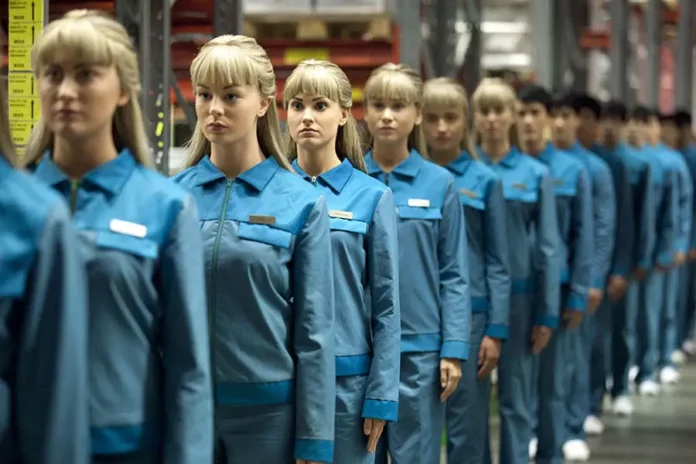
A future without work refers to a society where automation and AI perform most labor tasks, making human work optional. This evolution could redefine productivity, purpose, and the economy, shifting humanity from necessity-driven labor to creativity-driven living.
KumDi.com
A future without work is quickly becoming a central topic in global discussions on automation and AI. As technology accelerates, many question whether human labor will remain essential or fade into an optional pursuit. This article explores whether this transformation is imagination or an inevitable evolution.
The global conversation around the future of work has often revolved around shorter schedules, hybrid arrangements, and the increasingly popular idea of the four-day workweek. But according to Elon Musk, this entire debate may soon become irrelevant. The billionaire entrepreneur believes that in “less than 20 years,” and potentially as soon as 10–15 years, artificial intelligence and robotics will advance to a point where human labor becomes optional.
Rather than working fewer days, Musk argues that most people may not need to work at all — unless they want to. Work, he says, will evolve into something closer to a hobby or creative pursuit rather than an economic requirement.
This idea may seem like science fiction, but rapid advancements in automation suggest that it may be closer than many realize. Below is a deep, SEO-friendly exploration of why Musk believes work will disappear, how society might change, and what individuals and businesses should prepare for today.
Table of Contents

The End of Work as We Know It: Musk’s Core Prediction
Musk’s prediction centers on an unprecedented transformation driven by AI and robotics. Modern AI already performs tasks that once required humans — from writing and design to analysis, logistics, and complex decision-making. Robotics continues to improve at a rapid pace, increasingly capable of physical labor, manufacturing, mobility, and precision tasks.
Musk’s core claim is simple:
If machines can eventually do everything humans can do — and do it faster, cheaper, and better — then traditional work becomes unnecessary.
In his view:
- AI will handle knowledge work.
- Robotics will perform physical labor.
- Automated systems will produce goods and services with minimal human input.
- The cost of production will drop dramatically.
- Human time will no longer be traded for money as a survival requirement.
Under this model, the entire economic foundation of work-for-income begins to dissolve.
Why Musk Thinks It Will Happen Within 20 Years
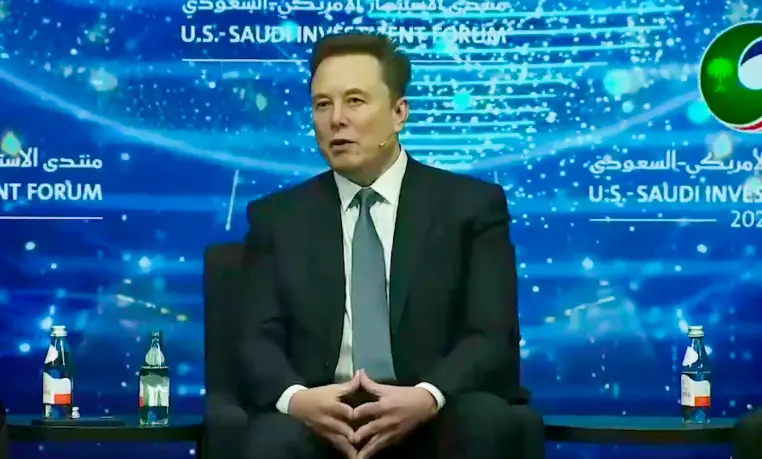
Musk has often emphasized that people underestimate the exponential nature of technological growth. While AI today is impressive, he believes we are still at the beginning of what will soon become a steep acceleration curve.
1. Exponential AI development
AI models today can already write, code, analyze, design, create images, and even simulate human reasoning. The next decade is expected to bring even more advanced general intelligence systems capable of managing entire industries.
2. Robotics scaling faster than expected
Robotic manufacturing is becoming cheaper, more reliable, and more adaptable. Machines that once required enormous resources can now be produced at scale and integrated into workplaces of all types.
3. Full automation of essential industries
Everything from agriculture and transportation to logistics, customer service, and administration could be fully automated, dramatically reducing the need for human labor.
4. The economics push toward automation
Companies pursue efficiency. Automation provides infinite scalability without fatigue, human error, or rising labor costs. Economically, automation is inevitable.
These combined forces are the foundation of Musk’s timeline: fewer than 20 years before working is no longer a necessity.
A Post-Work Society: Benefits of a Fully Automated Future
While Musk’s prediction may seem disruptive, the potential benefits are enormous. A society where work is optional could create unprecedented opportunities for human flourishing.
✔ More free time for creativity and passion
If machines handle daily responsibilities, humans can spend more time on the things they truly enjoy: art, music, innovation, science, hobbies, and personal development.
✔ Reduced stress and improved mental health
Without the pressure of meeting financial obligations through work, quality of life could rise dramatically. More rest, more social connection, and more autonomy can lead to healthier societies.
✔ Greater access to goods and services
Automation could make products cheaper and more abundant. With the cost of production dropping, many basic needs could be provided at little or no cost.
✔ The ability to choose work — not be forced into it
People could still work if they enjoy it, much like someone choosing to grow vegetables or build furniture for fun.
✔ New forms of value beyond economic productivity
With survival decoupled from labor, humans may redefine purpose and contribution in new, meaningful ways.
Challenges and Risks: What Could Go Wrong
Of course, a future where human labor becomes optional is not without risks. Musk frequently warns of the dangers that accompany rapid automation.
⚠ Economic inequality
If ownership of AI and robotics is concentrated among a few corporations or individuals, wealth inequality could reach extraordinary levels. New income models may be required to maintain social stability.
⚠ Loss of identity and purpose
Work is a major source of meaning for many people. A sudden shift away from work-based identity could create psychological challenges and a need for new structures of purpose.
⚠ Social displacement
Industries tied to human labor would undergo massive disruption. Millions of workers could find themselves needing new roles, retraining, or alternative ways to engage with society.
⚠ Governance issues
Governments may struggle to regulate AI, develop safety nets, and ensure fair access to automated systems. Without proper policy, the transition could be chaotic.
⚠ Technological dependence
A world run by machines requires extremely reliable systems. Failures in AI or robotics infrastructure could pose serious risks.
Will We Still Work Even If We Don’t Have To?
Even if Musk’s prediction becomes reality, that doesn’t necessarily mean people will stop working entirely.
1. People enjoy creating
Humans naturally seek challenges and ways to express themselves. Many will continue to “work” out of passion, even if they aren’t required to.
2. Certain roles may remain human
Emotional labor, leadership, creativity-driven fields, and human connection may still be desirable or irreplaceable.
3. Social and cultural expectations may change slowly
Even if automation reaches full capability, society may take time to adjust norms around work and identity.
4. Work may simply be redefined
It may shift from economic labor to activities like:
- creative production
- community leadership
- problem-solving
- mentoring
- innovation
- care and compassion activities
In this sense, “work” does not disappear — it transforms.
What You Can Do Today to Prepare for a Post-Work World
Even if Musk’s timeline is ambitious, the direction of change is unmistakable. Preparing now can create major advantages later.
1. Prioritize creativity and originality
The most future-proof skills will be uniquely human: storytelling, vision, art, strategy, emotional intelligence, and innovation.
2. Become adaptable and continuously learn
The ability to pivot across fields will be more valuable than deep expertise in a single task that may be automated.
3. Explore entrepreneurial and creative projects
In a world with more free time, personal projects may become new forms of identity and contribution.
4. Focus on wellness and personal growth
If external work pressures decline, internal purpose becomes central. Developing healthy habits now will pay off later.
5. Engage in conversations about future policy
Ideas like universal basic income, automated resource distribution, and shared ownership of AI will become increasingly important.
A Future Without Work: Imagination or Inevitable Evolution?
Whether Musk’s prediction becomes reality in 10 years, 20 years, or longer, one thing is clear:
The future of work will not look like the past.
Automation is accelerating at a pace humanity has never seen before. As machines become smarter and more capable, society will be forced to rethink not only how we work, but why we work — and what it truly means to live a meaningful, fulfilling life.
The four-day workweek may soon feel like a modest step toward a far more dramatic transformation:
A world where work is no longer a necessity, but a choice.
FAQs
What does a future without work mean?
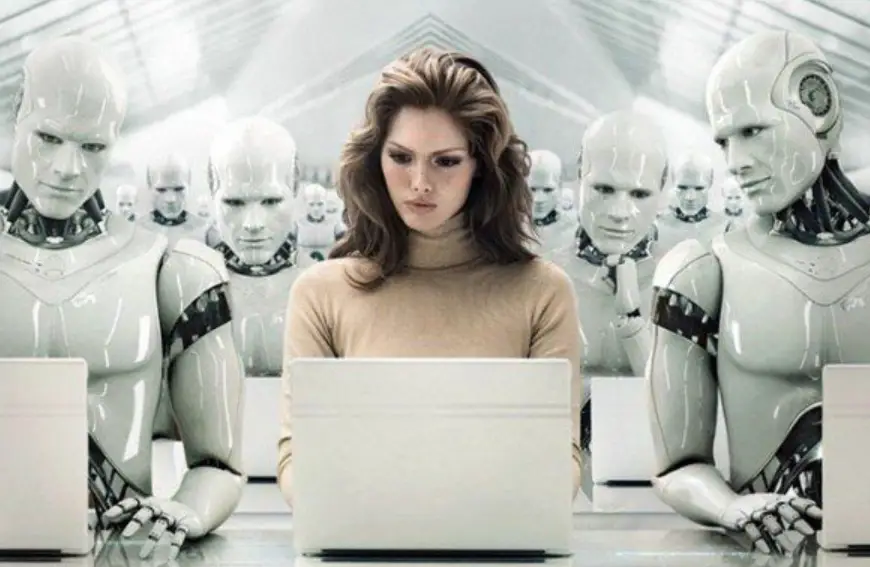
A future without work describes a scenario where automation and AI replace most jobs, reducing the need for human labor and creating a work-free society.
Is a future without work truly inevitable?
Many experts believe a future without work is likely as automation evolution accelerates, though timelines depend on global adoption and technological capability.
How will AI contribute to a future without work?
AI drives job displacement by handling tasks once performed by humans, supporting the transition toward a future without work.
What are the benefits of a work-free society?
A work-free society may improve creativity, productivity, and well-being as humans focus on passion projects while automation evolution handles labor.
What jobs may survive automation evolution?
Roles requiring creativity, empathy, or complex human judgment may remain relevant even in a future without work, despite widespread AI job displacement.




 and then