


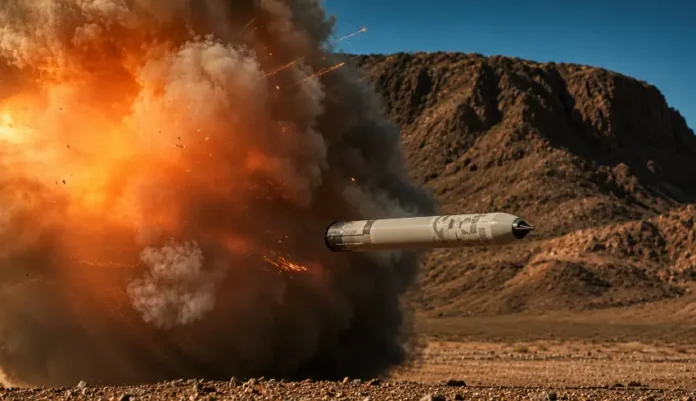

Tiberius Aerospace is an AI-powered defense technology company founded by former Google and Apple executives Chad Steelberg and Andy Baynes. The company combines AI-assisted engineering, advanced aerospace systems, and distributed manufacturing through its GRAIL platform and Sceptre program to modernize defense production.
KumDi.com
Artificial intelligence is entering one of the world’s most complex and controversial industries: military defense. Tiberius Aerospace, founded by technology entrepreneurs Chad Steelberg and Andy Baynes, is demonstrating how Silicon Valley expertise can be applied to advanced defense manufacturing. After using AI to analyze military technology gaps arising from the Russia-Ukraine war, the company developed proprietary defense technology, established government partnerships, and announced $85 million in Series A funding at a valuation exceeding $1 billion.
What makes this story particularly significant is not simply the development of new military equipment. It is the business strategy behind it. Rather than following the traditional defense contractor model, Tiberius Aerospace is combining artificial intelligence, aerospace engineering, intellectual property licensing, and distributed manufacturing. Its approach illustrates how AI could reshape the economics of defense production while raising important questions about military accountability, international security, and the commercialization of emerging technologies.
Table of Contents
What Is Tiberius Aerospace?
Tiberius Aerospace is a defense technology company focused on combining AI-assisted engineering, advanced aerospace systems, and modern manufacturing infrastructure.
Its business model aims to address a longstanding challenge in the defense industry: conventional military procurement and manufacturing processes can take years to translate technological requirements into operational capabilities.
Tiberius wants to introduce a more integrated approach in which software, engineering, industrial partnerships, and government requirements are coordinated through digital platforms.
Its strategy has three major components:
- AI-assisted development: Applying computational analysis and simulation to evaluate defense technology opportunities.
- Advanced aerospace products: Developing proprietary defense systems, including the Sceptre artillery program and a missile development program.
- Distributed manufacturing: Working with qualified industrial partners to expand production capacity without owning every manufacturing facility.
The company’s long-term ambition is to create an industrial technology platform rather than depend on revenue from one defense product.
This distinction is important. A conventional manufacturer primarily generates revenue by selling physical equipment. A technology-centered defense company can potentially generate additional revenue through intellectual property licensing, software services, engineering partnerships, and manufacturing agreements.
However, these business opportunities depend on government procurement, technical qualification, export authorization, and successful commercialization. A billion-dollar valuation is not the same as a billion dollars in revenue.
Who Are the Ex-Google and Apple Executives Behind Tiberius Aerospace?
The company is led by two technology entrepreneurs whose professional backgrounds span artificial intelligence, consumer technology, product development, and business innovation.
Chad Steelberg: From Enterprise AI to Defense Technology
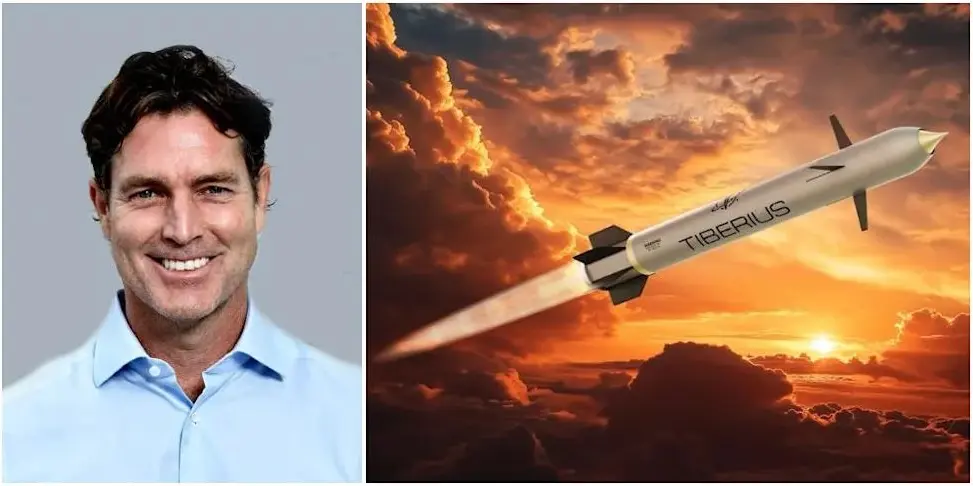
Chad Steelberg previously led Veritone, an enterprise AI company.
His experience involved applying artificial intelligence to complex commercial problems, developing technology platforms, and building businesses around data-driven products.
According to WIRED’s November 17, 2026 investigation, Steelberg initially became interested in supporting Ukraine after hosting hundreds of Ukrainian refugees at his property in France following Russia’s 2022 invasion.
The experience motivated him to investigate how his technology background could contribute to the conflict.
Rather than immediately establishing a conventional weapons manufacturing operation, he began examining the military situation through AI-assisted analysis, engineering research, and quantitative evaluation.
Andy Baynes: Bringing Silicon Valley Product Experience to Defense
Andy Baynes brings experience from Google and Apple, where he worked on technology and product development.
His background also includes involvement with Nest, the smart-home technology company acquired by Google.
Baynes spent time working with Ukrainian technology entrepreneurs and became familiar with the country’s engineering and software development ecosystem.
After Russia’s invasion, he became involved in humanitarian logistics, helping coordinate the movement of equipment and the evacuation of women and children.
He later joined Steelberg’s Tiberius initiative as chief strategy officer in 2023.
Their combined experience provides an unusual foundation for a defense startup: one founder with enterprise AI and entrepreneurial experience, and another with experience in product development and large-scale technology businesses. WIRED
How AI Helped Identify an Opportunity in the Ukraine War
One of the most interesting aspects of the Tiberius story is how artificial intelligence influenced the company’s initial business direction.
After Russia invaded Ukraine in February 2022, the founders began evaluating the conflict as a complex technological and industrial problem.
The objective was to understand where innovation could make a meaningful difference.
According to WIRED, Steelberg and his team used AI-assisted models, engineering research, and spreadsheets to evaluate different military technology categories and identify potential capability gaps.
Their analysis considered factors such as:
- Existing military technology limitations.
- Changing battlefield requirements.
- The economic efficiency of different technology categories.
- Industrial production constraints.
- The relationship between technological capabilities and military requirements.
The analysis led the team away from simply developing another drone or concentrating exclusively on defensive equipment. Instead, it identified a potential market opportunity in longer-range artillery technology.
This became the basis for the Sceptre program.
The important business insight is that AI was used as a strategic research tool to help identify an unmet requirement, rather than merely automate an existing manufacturing process.
This approach resembles AI-assisted market analysis in other industries: collecting information, identifying patterns, evaluating opportunities, and supporting decisions about where to invest resources.
However, an AI-generated recommendation is not automatically a validated military conclusion. Its reliability depends on data quality, model assumptions, expert review, and independent technical testing.
The Tiberius example therefore illustrates both the potential and the limitations of AI-driven strategic decision-making.
Sceptre: The Defense Technology Program That Put Tiberius on the Map
The Sceptre program is the most visible example of Tiberius Aerospace’s approach to defense innovation.
Sceptre is a precision-guided artillery munition designed for compatibility with NATO-standard 155 mm howitzers. These artillery systems are widely used by NATO members and have been supplied to Ukraine during the ongoing war.
The commercial proposition is significant: developing an advanced capability that can work with existing artillery infrastructure may be more attractive to military customers than requiring an entirely new weapons platform.
In April 2026, Tiberius announced that it had successfully fired a Sceptre projectile from a NATO-standard 155 mm howitzer, reporting successful in-flight ignition of its liquid-fueled ramjet propulsion technology.
The company describes Sceptre as a longer-range system intended to extend the capabilities of existing artillery.
However, it is important to distinguish between a successful demonstration and a fully qualified military product. A test milestone does not independently establish operational reliability, production readiness, or performance across different environmental conditions.
Why Sceptre Matters to the Defense Industry
The program illustrates several broader defense industry trends.
Modernization of existing military infrastructure: Governments can face significant financial and logistical challenges when replacing entire military platforms. Technologies designed to integrate with existing equipment may offer an alternative modernization pathway.
Increasing demand for advanced aerospace engineering: Military customers are looking for technologies that address changing operational requirements, creating opportunities for specialized engineering companies.
The importance of industrial scalability: Developing a successful prototype is only one stage. Manufacturers must also demonstrate consistent quality, dependable supply chains, regulatory compliance, and sustainable production capacity.
WIRED also quoted Sam Cranny-Evans, an associate fellow at the UK defense think tank Royal United Services Institute (RUSI), discussing the potential military significance of extending artillery reach in Ukraine.
GRAIL: The Artificial Intelligence Platform Behind the Business
While Sceptre attracts attention as a physical defense technology, the company’s longer-term commercial strategy centers on an AI platform called GRAIL, short for Generative Real-Time Artificial Intelligence for Lethality.
GRAIL originated from the AI-assisted research system Steelberg initially developed to analyze military requirements.
Tiberius subsequently developed this concept into a broader software platform intended to support engineering, simulation, manufacturing coordination, and supply-chain management.
According to WIRED, the company wants GRAIL to help authorized users evaluate designs under different environmental conditions, manage industrial processes, and coordinate technology improvements across manufacturing partners.
Its broader commercial functions can be understood in five categories.
1. AI-Assisted Engineering Analysis
AI can help engineering teams organize technical information, identify relationships between design variables, and evaluate research findings.
In aerospace and industrial engineering, these capabilities can improve productivity by reducing repetitive analytical work.
However, AI-generated engineering outputs require validation by qualified specialists. Physical testing and established engineering standards remain essential.
2. Digital Simulation
Computer simulation allows engineering teams to investigate how systems may behave under different modeled conditions.
In the defense industry, simulation can support early-stage evaluation and help identify areas requiring further testing.
Simulation results are not substitutes for real-world testing, particularly when the consequences of technical failure are significant.
3. Manufacturing Coordination
Large defense programs often involve multiple suppliers, engineering contractors, and manufacturing organizations.
A coordinated digital platform can help manage information across these organizations, reducing administrative fragmentation.
4. Supply-Chain Management
Defense manufacturing depends on specialized components, qualified suppliers, production schedules, and material traceability.
AI-supported software can help identify supply-chain bottlenecks, monitor production information, and improve coordination between authorized partners.
5. Compliance and Documentation
International defense manufacturing requires extensive documentation, export authorization, contractual controls, and regulatory oversight.
Integrating compliance management into manufacturing workflows can help organizations maintain consistent records and improve operational transparency.
The larger business opportunity is that GRAIL could potentially become a platform supporting several defense programs rather than a software tool associated with only one product.
This is a potentially more scalable commercial proposition, although the company’s actual adoption, customer base, and recurring software revenue have not been independently established in the available reporting.
Defense-as-a-Service: A Different Business Model for Weapons Manufacturing
One of the most important aspects of Tiberius Aerospace is its proposed Defense-as-a-Service (DaaS) model.
The concept borrows from the software industry’s transition toward licensing, recurring services, and technology platforms.
Traditional defense manufacturers generally depend on significant industrial infrastructure, specialized production equipment, large engineering teams, and long-term government procurement contracts.
Tiberius is pursuing a model that places greater emphasis on proprietary technology, software, licensing, and manufacturing partnerships.
Rather than owning every factory involved in production, the company aims to work with qualified manufacturers in allied countries.
The structure can be understood through the following comparison:
| Traditional defense manufacturing | Tiberius’s proposed model |
|---|---|
| Heavy dependence on owned facilities | Distributed manufacturing partnerships |
| Product-centered revenue | Hardware, licensing, and software opportunities |
| Separate industrial systems | Integrated digital coordination |
| Centralized production capacity | Multiple qualified manufacturing partners |
| Long-term development processes | AI-assisted research and iterative development |
How the Defense-as-a-Service Model Creates Commercial Value
The model offers several potential revenue opportunities.
Intellectual property licensing: The company can license proprietary technology to authorized manufacturing partners.
Software services: Digital platforms may support engineering, supply-chain coordination, and industrial operations.
Manufacturing partnerships: Agreements with established industrial companies can create opportunities to expand production capacity.
Government contracts: Defense procurement programs can provide commercial demand for qualified products and services.
Technology development: Proprietary engineering and software capabilities may support future product programs.
There is an important distinction between this approach and ordinary software-as-a-service.
Military hardware requires physical qualification, production quality assurance, security controls, and regulatory authorization. Licensing a software platform is not equivalent to licensing a military product for international manufacture.
Tiberius must therefore demonstrate that its distributed manufacturing model can maintain consistent technical standards, protect intellectual property, and comply with the regulatory requirements of every participating country.
The Apple Manufacturing Strategy: What Tiberius Wants to Replicate
Andy Baynes’s experience at Apple provides an important context for understanding Tiberius’s manufacturing ambitions.
Apple’s business model relies on coordinating a sophisticated network of suppliers, manufacturers, technology partners, and logistics organizations.
The company does not need to own every factory involved in producing its devices. Instead, it retains control over critical elements of product development, design, intellectual property, and quality requirements while working with specialized manufacturing partners.
Baynes believes a comparable organizational principle could benefit Western defense manufacturing.
Tiberius wants to coordinate existing precision-manufacturing capacity across allied countries, including the United States, United Kingdom, France, Germany, and Nordic nations.
The objective is to create a more connected industrial ecosystem that can respond to changing defense requirements.
Why Distributed Manufacturing Is Important
The strategy offers several potential advantages:
- Industrial flexibility: Production can potentially be distributed across multiple qualified facilities.
- Reduced infrastructure investment: The company does not necessarily need to own every manufacturing facility.
- Access to specialist expertise: Different partners can contribute their established industrial capabilities.
- Geographic diversification: Multiple production locations can reduce dependence on a single industrial center.
- International partnerships: Allied countries may gain opportunities to develop their own defense manufacturing capabilities.
However, distributed production also introduces significant challenges.
Manufacturers must maintain consistent quality, secure sensitive technical information, manage intellectual property rights, and comply with different national export regulations.
The Apple analogy is therefore best understood as an organizational and supply-chain strategy, not a claim that defense manufacturing can operate under the same standards or commercial conditions as consumer electronics.
Tiberius’s ability to adapt this model to defense-specific requirements will be one of the most important factors determining its long-term success.
Why Investors Are Betting on AI Defense Technology
The November 2026 funding announcement provides a clear indication of investor interest in the company’s strategy.
Tiberius Aerospace: November 2026 Funding
| Category | Details |
|---|---|
| Series A Financing | $85 Million |
| Post-Money Valuation | Over $1 Billion |
| Technology Collaboration Contract | $500 Million |
| Major Milestone Year | 2026 |
| Announcement Date | November 17, 2026 |
Funding and valuation figures announced November 17, 2026. The $500 million collaboration is a separate commercial agreement and should not be treated as recognized revenue or profit.
The $85 million Series A round was co-led by European technology investment firm Lakestar and Rochefort Asset Management.
Ukrainian venture capital firm UA1 also participated.
The financing followed growing commercial interest in the company’s technology and its announced partnerships.
Why AI Defense Startups Are Attracting Capital
Several structural developments help explain the investment trend.
1. Rising defense modernization requirements
Governments are reassessing their military capabilities, industrial capacity, and supply-chain resilience.
2. Growing importance of software
Modern defense systems increasingly depend on software, data, digital infrastructure, and advanced computing.
3. Demand for industrial resilience
Countries want to reduce dependence on limited manufacturing sources for strategically important technologies.
4. Private investment opportunities
Defense technology creates opportunities for venture capital and institutional investors to support businesses combining software, engineering, and industrial production.
5. Potential for intellectual property revenue
Companies that retain proprietary technology may generate commercial value through licensing and partnerships rather than relying exclusively on direct equipment sales.
For investors, however, the central question remains whether technical achievements can translate into repeatable contracts, sustainable margins, and commercially successful production.
A billion-dollar valuation reflects investor expectations about future business potential, not independently verified profitability.
The $500 Million Technology Collaboration: A Major Commercial Milestone
In October 2026, Tiberius Aerospace announced a $500 million technology collaboration involving UK partners for the manufacturing, licensing, and distribution of its Sceptre technology.
The agreement is particularly important because it demonstrates the company’s intention to move beyond research and product development toward an international industrial business.
The collaboration reflects three commercial priorities:
- Establishing manufacturing relationships with industrial partners.
- Expanding authorized production and licensing opportunities.
- Building an international distribution framework.
For a defense technology startup, securing industrial partnerships can be as important as developing proprietary technology.
A successful prototype does not automatically create a sustainable business. Companies must also establish production capacity, meet government requirements, obtain necessary approvals, and demonstrate that customers are willing to purchase the technology.
The $500 million figure should therefore be understood as the announced value of a technology collaboration, not as $500 million in immediately received cash or confirmed profit.
Invictus: Tiberius Aerospace’s Next Development Ambition
Tiberius Aerospace is also developing a missile program called Invictus.
Its inclusion in the company’s broader technology portfolio demonstrates that the founders do not intend to build a business dependent exclusively on Sceptre.
From a commercial perspective, expanding into additional aerospace programs could create opportunities to reuse engineering expertise, software infrastructure, intellectual property, and established manufacturing relationships.
This strategy is consistent with the company’s broader ambition to become an integrated defense technology provider.
Nevertheless, a development program should not be confused with an operational product. Independent testing, qualification, government acceptance, and commercial deployment remain separate milestones.
What Are the Biggest Risks Facing Tiberius Aerospace?
Despite its funding success and commercial ambitions, Tiberius faces substantial technical, regulatory, financial, and ethical challenges.
These risks are particularly important because defense technology operates under stricter requirements than most consumer technology markets.
1. Technical Reliability and Independent Validation
AI-assisted engineering can accelerate research and computational analysis, but it cannot replace independent testing.
Aerospace and defense products must demonstrate consistent performance, reliability, and safety under demanding operating conditions.
The company will need to establish that its technical demonstrations can translate into repeatable, qualified products.
2. Government Procurement and Contract Delays
Defense procurement is complex.
Government customers must consider budgets, national security requirements, operational needs, testing standards, and political priorities.
Even promising technology can experience lengthy delays between initial development, procurement approval, and operational deployment.
3. International Export Controls
Defense technology is subject to national and international regulations.
For example, the US International Traffic in Arms Regulations (ITAR) govern certain defense-related exports, technical data, and transfers.
Companies operating across multiple countries must establish appropriate licensing, access controls, and compliance procedures.
4. Cybersecurity and Intellectual Property Protection
An AI-enabled manufacturing platform may contain sensitive engineering information, supplier data, and proprietary intellectual property.
Unauthorized access, data manipulation, or intellectual property theft could create serious commercial and national security consequences.
Cybersecurity must therefore be incorporated into the company’s operating model from the beginning.
5. AI Ethics and Human Accountability
The use of artificial intelligence in military systems raises important questions about human responsibility and international humanitarian law.
AI-assisted engineering and analysis are different from delegating decisions about the use of lethal force to autonomous systems.
Governments and defense companies must consider accountability, human oversight, civilian protection, and compliance with international law.
The International Committee of the Red Cross has emphasized the importance of establishing meaningful human control over autonomous weapon systems.
For companies like Tiberius, responsible AI governance is not simply a public relations consideration. It can influence government acceptance, international cooperation, regulatory compliance, and long-term business sustainability.
What Other Businesses Can Learn From Tiberius Aerospace
Although Tiberius operates in the defense industry, its business strategy offers lessons for entrepreneurs in aerospace, manufacturing, healthcare technology, logistics, and other industrial sectors.
1. Use AI to Discover Unmet Market Needs
The founders did not begin by simply automating an existing manufacturing process.
They used AI-assisted research to examine a complex industry problem and identify a potential commercial opportunity.
For other businesses, AI can help analyze customer requirements, operational inefficiencies, market data, and emerging industry trends.
The most valuable application of AI may be discovering which problems deserve investment in the first place.
2. Build Proprietary Technology and Intellectual Property
A company that owns valuable intellectual property can create revenue opportunities beyond selling physical products.
Software platforms, proprietary research, licensing agreements, and specialized engineering capabilities can become long-term commercial assets.
3. Build Strategic Partnerships Instead of Owning Everything
Tiberius’s distributed manufacturing model demonstrates the potential of combining internal capabilities with external industrial expertise.
For smaller companies, strategic partnerships can provide access to manufacturing, distribution, technology, and international markets without requiring enormous upfront infrastructure investments.
4. Combine AI With Industry Expertise
AI alone does not guarantee a successful business.
The strongest commercial applications combine artificial intelligence with professional knowledge, operational experience, technical validation, and real customer requirements.
In aerospace, for example, AI-supported analysis must work alongside qualified engineers and established safety standards.
The same principle applies to healthcare, finance, logistics, and advanced manufacturing.
5. Create a Scalable International Business Model
A business built around proprietary technology and licensing can potentially expand internationally more efficiently than one that depends entirely on company-owned facilities.
However, international expansion requires regulatory compliance, reliable partners, intellectual property protection, and consistent service or product quality.
What Tiberius Aerospace Reveals About the Future of AI and the Defense Industry
The rise of Tiberius Aerospace reflects a wider transformation in the global defense technology sector.
Companies such as Anduril Industries, Palantir Technologies, and Helsing are also demonstrating different ways of integrating software, artificial intelligence, and defense capabilities.
Their strategies are not identical.
- Anduril focuses on defense hardware, autonomous systems, and integrated technologies.
- Palantir provides data analytics and software platforms used by government and commercial organizations.
- Helsing develops AI-enabled defense technologies.
- Tiberius combines AI-assisted engineering, proprietary aerospace products, licensing, and distributed manufacturing.
The common theme is the growing importance of software and digital capabilities within traditionally hardware-intensive industries.
The defense industry is unlikely to abandon established manufacturers. Large contractors still possess substantial advantages in engineering, production, certification, and government relationships.
However, emerging technology companies may introduce new approaches to research, industrial coordination, and commercialization.
The next generation of defense businesses may therefore be defined not only by what they manufacture, but also by how effectively they connect software, intellectual property, engineering expertise, and global industrial capacity.
FAQs
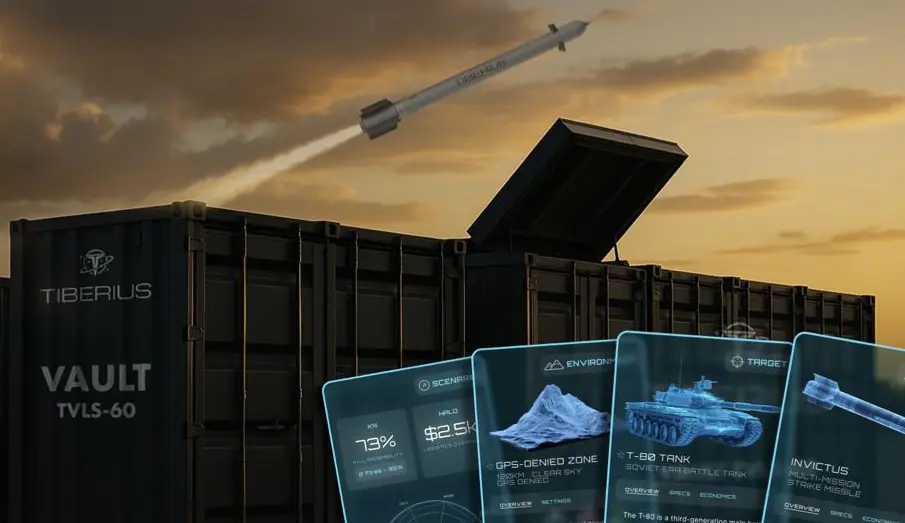
What is Tiberius Aerospace and how does its AI defense technology work?
Tiberius Aerospace is an AI-powered defense technology company founded by Chad Steelberg and Andy Baynes. It combines AI-assisted engineering, advanced aerospace development, and distributed manufacturing. Its GRAIL platform is designed to coordinate engineering, simulation, supply-chain management, and industrial production processes.
Who founded Tiberius Aerospace and what is their connection to Google and Apple?
Tiberius Aerospace was founded by technology entrepreneurs Chad Steelberg and Andy Baynes. Steelberg previously led Veritone, an enterprise artificial intelligence company, while Baynes has professional experience at Google and Apple. Their backgrounds influence the company’s approach to AI-powered defense innovation and advanced manufacturing.
What is GRAIL AI and why is it important to Tiberius Aerospace?
GRAIL, which stands for Generative Real-Time Artificial Intelligence for Lethality, is Tiberius Aerospace’s AI-enabled platform. It aims to integrate engineering analysis, simulation, manufacturing coordination, supply-chain management, and compliance into a connected digital environment supporting the company’s AI defense technology strategy.
What is the Sceptre artillery system developed by Tiberius Aerospace?
Sceptre is Tiberius Aerospace’s precision-guided 155 mm artillery munition program. The company announced successful in-flight ignition of its liquid-fueled ramjet technology during testing in April 2026. The program reflects its broader strategy of combining advanced aerospace engineering with AI-assisted defense development.
What is Defense-as-a-Service and how does it help Tiberius Aerospace build a billion-dollar business?
Defense-as-a-Service is Tiberius Aerospace’s business model combining proprietary technology, intellectual property licensing, software, and partnerships with qualified manufacturers. It aims to expand authorized production across allied countries without requiring the company to own every manufacturing facility, creating potential opportunities for international licensing and defense contracts.
Conclusion: AI Is Changing How the Defense Industry Builds Its Future
Tiberius Aerospace represents an emerging business model at the intersection of artificial intelligence, aerospace engineering, and international defense manufacturing.
Chad Steelberg and Andy Baynes are applying lessons from their technology careers to an industry traditionally dominated by large defense contractors. Their approach combines AI-assisted research, proprietary technology, digital platforms, licensing, and partnerships with established manufacturers.
The company’s $85 million Series A financing and reported valuation above $1 billion demonstrate significant investor interest in this strategy. Its Sceptre program, GRAIL AI platform, and announced $500 million technology collaboration provide important milestones in its commercial development.
However, the company’s long-term success will depend on more than technological innovation. Independent product validation, government procurement, manufacturing reliability, regulatory compliance, and responsible AI governance will determine whether its business model can scale.
The bigger lesson extends beyond the defense industry: AI is becoming an important foundation for building and operating complex industrial businesses. Companies that combine artificial intelligence with specialized expertise, proprietary intellectual property, strategic partnerships, and scalable infrastructure may be positioned to compete in markets previously dominated by established industrial giants.
Reference
- Tiberius Aerospace: Official company website
- International Committee of the Red Cross: Autonomous Weapons and International Humanitarian Law
- US Department of State: International Traffic in Arms Regulations (ITAR)




 and then
