


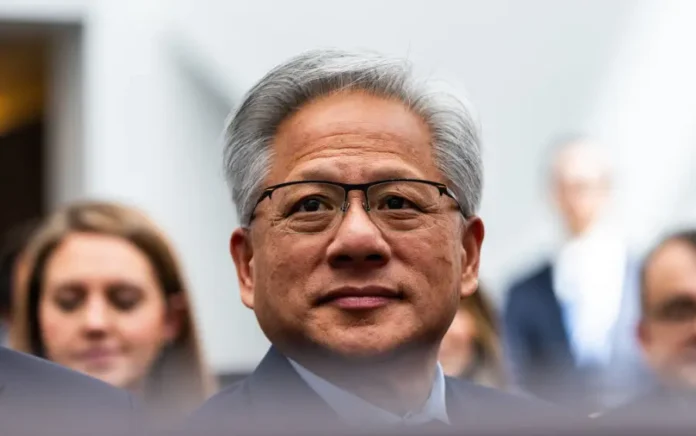

Nvidia has launched an independent investigation into CEO Jensen Huang following reports of his relationship with a Chinese businesswoman suspected of intelligence links. The investigation examines potential corporate security risks, confidential information exposure, and broader implications for US-China AI technology competition.
KumDi.com
Nvidia has launched an independent investigation into its founder and CEO, Jensen Huang, following reports that he had a personal relationship with a Chinese businesswoman suspected of working for Beijing’s intelligence services. The investigation comes amid growing concerns about China’s access to advanced artificial intelligence (AI) chips and the potential exposure of sensitive corporate or national security information.
On November 8, 2026, Nvidia’s board of directors announced that independent directors, supported by external legal counsel, would oversee the investigation. Although the board stated that it currently has no reason to believe Nvidia’s trade secrets or U.S. national security interests were compromised, it intends to examine all available information. Huang has expressed support for the review and committed to cooperating fully. He will remain CEO while the investigation proceeds.
The controversy raises questions extending beyond Huang’s personal conduct. It highlights the growing intersection of corporate governance, international intelligence operations, semiconductor technology, and geopolitical competition between the United States and China.
Table of Contents

Why Is Nvidia Investigating Jensen Huang?
The investigation follows media reports alleging that Jensen Huang developed a close personal relationship with Alice Huang, a Chinese businesswoman and former executive at Megaspeed, a Singapore-based company that purchases Nvidia AI chips.
According to reporting by The New York Times and subsequent coverage by other international media organizations, U.S. intelligence officials suspected that Alice Huang had been recruited by China’s Ministry of State Security (MSS), the country’s principal civilian intelligence agency.
The reported intelligence operation allegedly involved gathering information about Nvidia’s business activities, its leadership, and developments in the American AI semiconductor industry.
The allegations became particularly significant because Nvidia occupies a strategically important position in the global AI market. Its advanced graphics processing units (GPUs) are widely used to train and operate sophisticated AI models, making access to these processors an important issue in U.S.–China technology competition.
Nvidia’s board confirmed the investigation in an official statement published on November 8.
The company emphasized three important points:
- An independent committee of directors and external legal counsel will oversee the investigation.
- The board currently has no reason to believe that Nvidia’s confidential information or U.S. national security interests were compromised.
- Jensen Huang supports the investigation and has agreed to cooperate.
The distinction is important: the investigation confirms that Nvidia is examining the allegations, not that espionage or the transfer of confidential information has been conclusively established.
Who Is Alice Huang and What Is Her Connection to Nvidia?
Alice Huang has been identified in media reports as a Chinese businesswoman who previously held a senior executive position at Megaspeed, a Singapore-based data center and technology company.
Megaspeed is relevant to the investigation because it has been a significant Nvidia customer, purchasing substantial quantities of the company’s AI processors for data center infrastructure.
According to reporting cited by The New York Times, Megaspeed purchased more than $4.8 billion worth of Nvidia chips over a two-year period.
U.S. authorities reportedly scrutinized the company over concerns that advanced Nvidia processors might have been diverted to China despite American export restrictions.
Alice Huang’s reported professional relationship with Nvidia and her alleged personal connection with Jensen Huang have therefore attracted attention from U.S. intelligence and national security officials.
However, several important distinctions must be maintained:
- Alice Huang’s reported connection to Chinese intelligence remains an allegation based on media reporting and intelligence assessments.
- Her association with Megaspeed does not independently establish that the company knowingly participated in illegal technology transfers.
- A personal relationship with Nvidia’s CEO does not, by itself, demonstrate that confidential corporate information was disclosed.
- Nvidia has stated that it has no reason to believe its trade secrets or U.S. national security interests were compromised.
China has also rejected the espionage allegations. On October 30, 2026, a Chinese Foreign Ministry spokesperson characterized the reporting as groundless speculation and an attempt to damage China’s reputation.
These competing positions make the independent investigation particularly important.
Jensen Huang Acknowledges Personal Relationship and Apologizes to Nvidia Employees
The controversy intensified on November 8 when Jensen Huang sent a message to Nvidia employees acknowledging that he had been unfaithful to his wife.
In his message, Huang apologized to his family, colleagues, the company’s board, business partners, and shareholders.
He accepted responsibility for his personal conduct and acknowledged that his actions had fallen short of the standards expected of someone leading a global technology company.
His statement addressed two separate issues.
First, he acknowledged the personal consequences of his actions, expressing regret for the impact on his wife and children.
Second, he recognized his professional responsibilities as Nvidia’s chief executive, emphasizing his commitment to the company and his intention to regain the confidence of employees and shareholders.
Importantly, acknowledging a personal relationship is not equivalent to admitting involvement in espionage or the disclosure of sensitive information.
The central question for Nvidia’s investigation is whether the relationship created opportunities for foreign intelligence gathering or exposed confidential business information.
Why Is China Interested in Nvidia’s AI Chips?
Understanding the controversy requires examining the strategic importance of Nvidia’s semiconductor technology.
Nvidia is one of the world’s most influential suppliers of advanced AI computing hardware. Its GPUs provide the processing capacity needed to develop large language models, generative AI systems, autonomous technologies, and advanced scientific computing applications.
Unlike conventional computer processors, high-performance GPUs can perform thousands of parallel calculations simultaneously. This makes them particularly suitable for the demanding mathematical operations involved in training modern AI models.
For China, access to advanced AI processors is strategically important for several reasons.
1. Developing domestic artificial intelligence capabilities
Advanced GPUs can significantly accelerate the development of large-scale AI models. Access to high-performance computing infrastructure helps technology companies build competitive AI products and research systems.
2. Expanding data center infrastructure
AI development requires substantial computing capacity, electricity, cooling systems, and specialized semiconductor hardware. Access to advanced Nvidia processors can help accelerate the construction of large-scale data centers.
3. Supporting industrial and scientific innovation
AI computing is increasingly used in robotics, medical research, manufacturing, financial technology, autonomous vehicles, and scientific simulations.
4. Strengthening technological competitiveness
The United States and China are competing for leadership in strategic technologies. Semiconductor manufacturing and advanced AI computing have become central components of this competition.
Consequently, access to Nvidia’s most advanced processors is not simply a commercial purchasing issue. It has broader implications for technological independence and national security.
How U.S. Export Restrictions Make the Investigation More Serious
The United States has introduced export controls designed to restrict China’s access to certain advanced semiconductor technologies.
These measures are intended to limit the transfer of high-performance computing capabilities that could support sensitive military, surveillance, or strategic applications.
Export restrictions can apply to several aspects of the semiconductor supply chain, including:
- Advanced AI processors and graphics processing units.
- High-performance computing systems.
- Semiconductor manufacturing equipment.
- Certain chip designs and related technologies.
- Specific end users and entities subject to export restrictions.
Companies operating internationally must therefore evaluate not only who purchases their products but also where those products ultimately go.
This is particularly important for cloud computing providers and data center operators.
A company might purchase AI processors legally in Singapore or another international market. However, if the processors are subsequently transferred to a restricted destination in violation of applicable export controls, the transaction could create serious regulatory and legal consequences.
For Nvidia, the investigation therefore involves more than determining the nature of Huang’s relationship.
It also raises questions about customer screening, end-user verification, international distribution channels, and the effectiveness of corporate security procedures.
What Are the Potential National Security Risks?
The most important issue is whether foreign intelligence officials could have obtained information that would provide strategic advantages in the AI industry.
A CEO of a major semiconductor company may have access to commercially sensitive information through executive meetings, strategic planning, customer relationships, and government discussions.
Potential areas of concern include:
| Information category | Potential security implications |
|---|---|
| Product development | Knowledge of future chip capabilities and development timelines |
| Business strategy | Insight into Nvidia’s commercial priorities and market positioning |
| Customer relationships | Information about major customers and international partnerships |
| Export policy discussions | Awareness of regulatory developments and compliance strategies |
| Government engagement | Potential insight into technology policy and national security priorities |
This table describes potential exposure categories, not information that has been confirmed as compromised in this case.
There is also an important distinction between corporate trade secrets and classified government information.
Nvidia is a private company, and ordinary commercial discussions with customers do not automatically involve classified information. The company has previously emphasized that its regional cloud customers receive ordinary business information rather than sensitive trade secrets or information relevant to U.S. national security.
Nevertheless, senior executives can become attractive intelligence targets because of their professional networks, access to decision-makers, and influence over commercial relationships.
The investigation must establish whether any information was actually accessed, disclosed, or used improperly.
Why Is Corporate Espionage a Growing Concern in the AI Industry?
The Nvidia investigation illustrates a broader security challenge facing technology companies.
As artificial intelligence becomes strategically important, intelligence gathering increasingly focuses on the people, companies, and supply chains that support technological development.
Corporate espionage can involve several methods:
Human intelligence gathering: Building personal or professional relationships with individuals who have access to valuable information.
Business partnerships: Using commercial relationships to gain access to sensitive corporate networks or decision-makers.
Supply chain exploitation: Identifying weaknesses among suppliers, distributors, cloud providers, and technology partners.
Cyber espionage: Attempting to obtain confidential information through unauthorized access to digital systems.
Strategic influence: Developing relationships with influential executives or policymakers to obtain information or influence decisions.
The alleged circumstances surrounding Huang demonstrate why organizations must consider executive-level security as part of their broader corporate risk management strategies.
Security procedures should not be limited to protecting computer networks. They should also address conflicts of interest, customer due diligence, executive communications, sensitive meetings, and international business relationships.
Could the Investigation Affect Jensen Huang’s Position as Nvidia CEO?
As of November 9, 2026, Nvidia has not announced Huang’s resignation or removal.
The board has publicly expressed confidence in Huang and his leadership team while confirming that an independent investigation will take place.
This suggests that Nvidia is currently seeking to separate the investigation process from the company’s day-to-day executive operations.
However, several outcomes are possible.
Scenario 1: No evidence of confidential information disclosure
If investigators find no evidence that company secrets or protected information were compromised, Huang could remain CEO without major structural changes.
Scenario 2: Corporate governance weaknesses are identified
If the investigation identifies failures in executive oversight, customer screening, or internal security procedures, Nvidia could introduce additional compliance requirements and governance controls.
Scenario 3: Evidence of unauthorized information disclosure emerges
If investigators establish that sensitive corporate information was improperly shared, the consequences could include executive accountability, regulatory scrutiny, legal proceedings, and changes in corporate leadership.
Scenario 4: National security authorities identify broader concerns
If government agencies identify additional risks involving technology transfers or foreign intelligence activities, the investigation could expand beyond Nvidia’s internal governance.
These are potential outcomes rather than predictions. The available public information does not establish which scenario will occur.
Why Are U.S. Lawmakers Paying Attention?
The controversy has already attracted attention from senior Republican lawmakers in the U.S. House of Representatives.
On November 5, 2026, three committee leaders requested that Jensen Huang provide a closed-door briefing to Congress on November 18.
The lawmakers include representatives responsible for foreign affairs, China-related strategic competition, and intelligence oversight.
Their request focuses on two central issues:
- Huang’s reported interactions with Alice Huang.
- Nvidia’s security procedures for protecting American technology against foreign intelligence threats.
The congressional interest demonstrates that the controversy extends beyond an internal corporate investigation.
Lawmakers are concerned about whether foreign intelligence activities could undermine U.S. export controls or provide Beijing with access to sensitive technology and information.
Nvidia’s response to congressional inquiries and the results of its independent investigation could therefore become important developments in the wider U.S.–China technology relationship.
What Happens Next? Key Developments to Watch
Several developments will determine how the controversy evolves.
| Development | Why it matters |
|---|---|
| Independent board investigation | Determines whether company information or security procedures were compromised |
| Congressional briefing on November 18 | Could clarify national security concerns and Nvidia’s security protocols |
| Government intelligence assessments | May establish whether the reported intelligence operation involved unauthorized information gathering |
| Megaspeed scrutiny | Could provide additional insight into international chip distribution and customer compliance |
| Nvidia governance response | May result in stronger executive oversight and security controls |
Investors, technology companies, policymakers, and AI industry participants will be watching these developments closely.
For Nvidia, maintaining confidence among shareholders and international customers will be particularly important.
The company must demonstrate that its executive leadership, customer relationships, and global distribution network operate under effective security and compliance controls.
FAQs

Why Is Nvidia Investigating Jensen Huang Over Chinese Spy Allegations?
Nvidia is investigating CEO Jensen Huang following reports of his relationship with Alice Huang, a Chinese businesswoman suspected of having links to Chinese intelligence. The Nvidia Jensen Huang investigation aims to determine whether the reported relationship created corporate security risks or exposed confidential company information.
Who Is Alice Huang and What Is Her Connection to Nvidia?
Alice Huang is a Chinese businesswoman and former executive at Singapore-based technology company Megaspeed. Her reported professional connections to Nvidia’s chip distribution network and alleged links to Chinese intelligence have attracted attention amid concerns about AI semiconductor security and international technology transfers.
Did Jensen Huang Share Nvidia’s Confidential Information With China?
There is currently no publicly established evidence that Jensen Huang disclosed Nvidia trade secrets or sensitive information to Chinese intelligence. Nvidia’s board has stated that it has no reason to believe its trade secrets or US national security interests were compromised, pending the independent investigation.
How Could the Nvidia Investigation Affect US-China AI Technology Competition?
The Nvidia investigation could increase scrutiny of international AI chip distribution, semiconductor export controls, and corporate security procedures. Because Nvidia GPUs are essential for advanced AI development, potential unauthorized technology transfers could have broader implications for US-China technological competition and national security.
Will Jensen Huang Resign as Nvidia CEO Following the Investigation?
As of November 9, 2026, Nvidia has not announced Jensen Huang’s resignation or removal. The company has expressed confidence in his leadership while an independent board investigation examines the allegations. His position will depend partly on the investigation’s findings and any resulting corporate governance decisions.
Conclusion: Nvidia’s Investigation Highlights the Strategic Importance of AI Security
Nvidia’s investigation into Jensen Huang represents a significant corporate governance and national security issue at a time when artificial intelligence technology is becoming increasingly important to global economic and geopolitical competition.
The controversy involves three interconnected areas: executive accountability, international intelligence concerns, and the strategic importance of advanced semiconductor technology.
For Nvidia, the immediate priority is to establish whether any confidential corporate information was exposed and whether its existing security and compliance procedures were sufficient.
For the wider technology industry, the case offers a reminder that protecting AI innovation requires more than cybersecurity infrastructure. It also requires strong executive oversight, careful customer screening, transparent governance, and effective management of international business relationships.
Ultimately, the investigation’s findings will matter not only for Jensen Huang and Nvidia but also for the future of the global AI semiconductor industry and the ongoing technological competition between the United States and China.




 and then
