


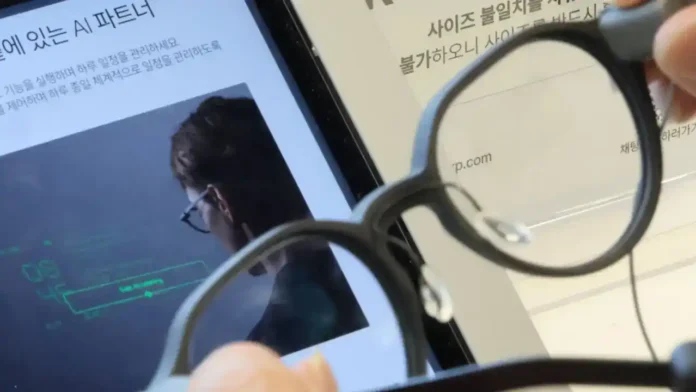

The South Korean tax exam AI cheating scandal involves the 2026 examination’s top-ranked candidate, who admitted using a miniature camera, smartphone, and generative AI to obtain unauthorized answers. The confession has triggered an investigation and raised serious concerns about examination security, professional qualifications, and AI misuse.
KumDi.com
South Korea is facing a major examination integrity controversy after the top-ranked candidate in the 63rd Certified Tax Accountant Examination admitted to using a miniature camera, a smartphone, and generative artificial intelligence (AI) to cheat during the examination. The candidate, who initially denied the allegations, later confessed publicly and submitted a written statement to police.
The incident has raised serious questions about examination security, the misuse of generative AI, professional qualification standards, and the ability of traditional testing systems to prevent technology-assisted cheating. More importantly, it demonstrates how AI can create new challenges for high-stakes examinations when candidates can secretly transmit questions to external systems and receive answers in real time.
The case is particularly significant because it involves a professional licensing examination, where passing is intended to demonstrate the knowledge and competence required to provide financial and tax-related services to the public.
Table of Contents

What Happened in the South Korean Tax Accountant Examination?
The controversy concerns the 63rd South Korean Certified Tax Accountant Examination, a national professional qualification examination designed to assess candidates seeking to become licensed tax accountants in South Korea.
On November 15, 2026, the candidate who achieved the highest overall ranking admitted that he had used electronic devices and generative AI to obtain answers during the examination.
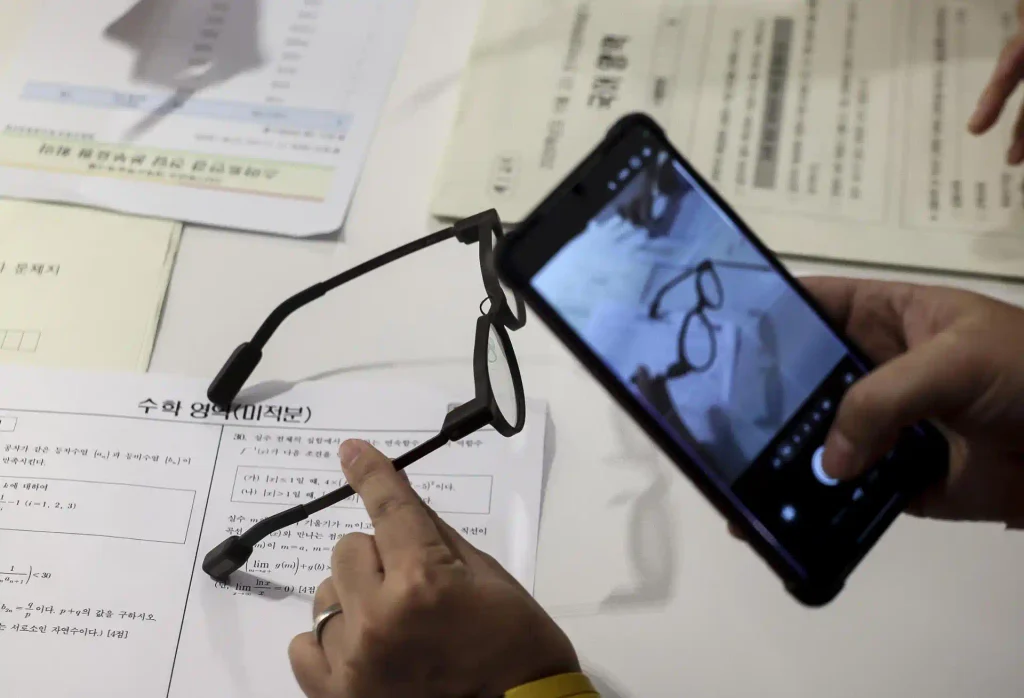
According to reports from Yonhap News Agency, Reuters, and The Korea Times, the candidate used a miniature camera to photograph examination questions, transmitted the images to an AI system, and checked the generated answers on a smartphone.
He acknowledged using this method during both stages of the tax accountant examination. He also admitted to using the same approach during the first-stage Certified Public Accountant (CPA) examination.
The confession reversed his earlier denials, which had followed growing public suspicion about his unusually high examination scores.
The candidate subsequently submitted a written confession to the Seoul Metropolitan Police Agency and stated that he would cooperate with the investigation and provide the remaining devices and related evidence.
The method’s technical details were not fully disclosed publicly, partly to prevent others from copying the approach.Yonhap News Agency+2
How Did the Candidate Achieve Such an Unusual Score?
The candidate’s examination results initially attracted attention because they were exceptionally high, particularly in a competitive professional examination known for its demanding questions and strict time limits.
His reported results were:
| Examination | Result |
|---|---|
| First-stage tax accountant examination | 397.5 out of 400 |
| Correct answers | 159 out of 160 |
| Second-stage written examination | 663 out of 800 |
| Overall ranking | First place |
The first-stage examination took place in April 2026, while the second-stage examination was held in July.
The candidate missed only one question out of 160 in the first stage. He also achieved the highest overall score in the second-stage examination.
These results generated considerable discussion among other candidates, professional tax accountants, and online communities.
One particularly notable issue involved introductory tax law. According to reporting by The Korea Times, the average score in this subject was just 30.18 points among 16,856 candidates, while 74.21% scored below the minimum passing threshold of 40 points.
Against this background, a near-perfect result appeared extraordinary.
However, an unusually high score alone does not establish misconduct. The subsequent public confession, rather than the score itself, fundamentally changed the nature of the controversy.koreajoongangdaily+2
How Generative AI Was Used to Cheat
The incident illustrates a relatively simple but serious form of technology-assisted examination fraud.
Rather than relying on AI glasses that directly display information, the candidate reportedly combined three separate technologies:
The reported AI-assisted cheating process
- Image captureA miniature camera was used to photograph examination questions.
- AI processingImages of the questions were transmitted to a generative AI system, which processed the content and produced answers.
- Answer retrievalThe candidate checked the AI-generated answers using a smartphone.
- Unauthorized examination assistanceAnswers obtained through external technology were used during the examination rather than relying on the candidate’s independent knowledge.
Based on the candidate’s public confession as reported on November 15, 2026. This is a high-level explanation, not a technical reproduction of the method.
This case highlights an important distinction: AI was not simply used as a study assistant before the examination. It was reportedly used as an unauthorized external source of answers while the examination was underway.
That distinction matters because generative AI has legitimate applications in education, accounting, legal research, and professional training. The ethical and regulatory problem arises when candidates use prohibited technology to obtain an unfair advantage.
Why Did AI Make This Type of Cheating Possible?
Generative AI systems can interpret text, process images, perform calculations, and respond to complex questions. These capabilities have made AI increasingly useful for professional education and examination preparation.
For example, an AI system can potentially assist with:
- Interpreting complex tax-related questions.
- Explaining accounting principles.
- Identifying relevant legal provisions.
- Performing mathematical calculations.
- Comparing alternative answers.
- Summarizing lengthy examination materials.
When combined with image recognition, these capabilities create additional security challenges for traditional paper-based examinations.
1. Multimodal AI can process examination content
Modern multimodal AI systems can accept images as input and extract information from them.
This means an AI tool may be able to interpret a photograph of a question rather than requiring someone to manually type the entire question.
2. AI can generate answers quickly
Generative AI can produce responses in seconds, depending on the complexity of the question, the model, and network conditions.
However, fast responses do not necessarily mean correct responses. AI systems can misunderstand questions, make calculation errors, misinterpret legal provisions, or generate convincing but inaccurate explanations.
3. AI can assist with specialized subjects
Professional examinations often contain technical questions involving accounting, taxation, business law, and financial calculations.
AI tools trained on large volumes of information can assist with these subjects, although their accuracy varies considerably according to the question and available information.
4. Traditional examination security was not designed for every new technology
Conventional examination supervision typically focuses on prohibited smartphones, unauthorized notes, communication devices, and conventional forms of impersonation or collaboration.
Miniature cameras and other wearable technologies introduce different detection challenges.
The South Korean incident demonstrates why examination security needs to consider not only conventional electronic devices but also concealed equipment and external AI access.Yonhap News Agency+2
Why the Incident Raises Serious Questions About South Korea’s Examination System
The controversy is not limited to the individual candidate. It has also exposed potential weaknesses in the way high-stakes national examinations are supervised.
The Human Resources Development Service of Korea (HRDK), known in Korean as the Korea Industrial Human Resources Corporation, administers the certified tax accountant examination on behalf of the government.
According to local reporting, two examination supervisors were assigned to each of the candidate’s examination rooms.
Despite this supervision, the alleged misconduct was not detected during either examination.
The candidate reportedly sat near the front of the classroom during the second-stage examination. This has intensified questions about whether existing supervision procedures are adequate for increasingly sophisticated electronic devices.
Another concern is the absence of classroom CCTV footage that could independently establish what happened during the examination.
The HRDK subsequently acknowledged the seriousness of the incident and apologized for failing to prevent the misconduct. It also indicated that it would review examination management procedures.
These developments raise several important institutional questions.
Was the existing electronic-device inspection sufficient?
Candidates were instructed not to bring prohibited electronic devices into the examination room. However, traditional inspection procedures may not be sufficient to identify concealed equipment.
Were supervisors adequately prepared?
Supervisors need training to recognize emerging technology-related risks without treating every candidate as suspicious.
Should examination rooms have stronger monitoring systems?
CCTV, appropriate device screening, and documented examination-room procedures could help improve accountability, subject to privacy and legal requirements.
Can examination results be trusted if misconduct is discovered after certification?
This is perhaps the most important question because professional qualifications are intended to provide confidence in a person’s knowledge and competence.koreajoongangdaily+2
What Legal Consequences Could the Candidate Face?
The legal implications are particularly important because the examination leads to a regulated professional qualification.
Under Article 10 of South Korea’s Certified Tax Accountant Act Enforcement Decree, a person who cheats during the examination can have the relevant examination suspended or invalidated and be barred from applying for the examination for five years following the disposition.
The specific legal consequences depend on the applicable provisions, the established facts, and the decisions of the responsible authorities.
The government’s initial response on November 15 included plans to move quickly to suspend the validity of the candidate’s passing certificate through the Tax Accountant Qualification Review Committee under the National Tax Service.
Police also received the candidate’s written confession and began an investigation.
It is important to distinguish between three separate stages:
- Criminal and factual investigation: Police examine the confession, available devices, statements, and other evidence.
- Administrative qualification review: The responsible authorities consider the validity of the examination results and professional qualification.
- Final legal consequences: Relevant authorities determine the applicable sanctions under the governing laws and procedures.
A public confession is significant evidence, but it does not mean every possible legal consequence has already been finalized.
As of November 16, 2026, the government had announced its intention to pursue suspension of the certificate’s validity, while the police investigation and administrative process remained ongoing.대한민국영문법령+2
Could the Candidate Lose His Tax Accountant Qualification?
Yes. The reported misconduct creates a substantial risk that his examination results and resulting qualification will be invalidated.
The relevant legal framework provides for examination invalidation and a five-year restriction on applying for the examination following the applicable disposition.
The government’s proposed suspension of the passing certificate is an important immediate administrative measure, but it should not be confused with a final determination of every legal consequence.
The case also raises questions about whether the candidate’s previous use of the same method during the first-stage CPA examination could lead to a separate investigation.
South Korea’s certified tax accountant and certified public accountant examinations are administered under different institutional arrangements. Therefore, any review of the CPA examination would involve the relevant authorities responsible for that qualification.
The investigation will need to establish the circumstances and evidence associated with each examination separately.
What Does This Incident Reveal About AI and Professional Education?
The most important lesson is that AI has changed the relationship between knowledge, assessment, and examination security.
For decades, professional examinations have relied primarily on a relatively straightforward assumption: candidates must independently demonstrate their knowledge within a controlled environment.
Generative AI challenges that assumption because it can provide access to an external problem-solving system in real time.
However, the South Korean case should not lead to the conclusion that AI itself is incompatible with professional education.
The more useful distinction is between responsible AI use and unauthorized assistance.
| Responsible AI use | Unauthorized examination use |
|---|---|
| Studying tax regulations | Obtaining prohibited external answers |
| Practicing accounting calculations | Secretly transmitting examination questions |
| Reviewing mistakes | Using AI during a closed-book examination |
| Comparing legal interpretations | Circumventing examination security |
| Preparing for professional certification | Misrepresenting independent competence |
AI can make professional education more accessible and efficient. Students can use it to understand difficult concepts, practice questions, identify knowledge gaps, and receive explanations.
Nevertheless, professional qualifications must continue to demonstrate that candidates possess the competencies required by the relevant licensing standards.
The issue is not whether candidates know how to access AI. It is whether they can independently understand, verify, and responsibly apply professional knowledge when their role requires it.
How Should South Korea Prevent AI-Assisted Examination Cheating?
The incident suggests that examination administrators need to update their security policies rather than rely exclusively on traditional supervision.
Several measures could help reduce similar incidents in future examinations.
1. Strengthen electronic-device screening
Examination administrators should review procedures for detecting prohibited electronic devices, including concealed cameras and wearable technology.
Depending on the examination environment, appropriate measures may include:
- Clear rules prohibiting unauthorized electronic devices.
- Improved pre-examination security checks.
- Consistent enforcement of device-storage requirements.
- Additional training for examination supervisors.
Security procedures should be proportionate and respect candidates’ privacy and legal rights.
2. Improve examination-room monitoring
Supervision should not depend entirely on whether an individual proctor notices suspicious behavior.
Possible improvements include:
- Better examination-room visibility.
- Documented supervisor observation procedures.
- Appropriate CCTV monitoring where legally permitted.
- Clear procedures for reporting suspicious activity.
- Consistent post-examination incident reviews.
3. Introduce AI-related examination policies
Examination administrators should explicitly define whether AI tools are permitted, restricted, or prohibited.
This is especially important because different examinations may have different requirements.
For example, an examination designed to assess independent professional knowledge may prohibit all external AI assistance, while a practical assessment may eventually allow approved AI tools under controlled conditions.
4. Review examination formats
Traditional multiple-choice examinations remain useful, but they may not adequately measure every aspect of professional competence.
Future assessments could incorporate:
- Complex case studies.
- Practical accounting exercises.
- Oral examinations.
- Professional judgment assessments.
- Scenario-based problem-solving.
- Verification of the candidate’s reasoning process.
These approaches would help assess whether candidates understand the principles behind an answer rather than simply whether they can produce the correct result.
5. Establish transparent investigation procedures
When suspected cheating is identified, authorities should preserve relevant evidence, investigate impartially, and communicate the results appropriately.
Fair procedures are important not only for maintaining public confidence but also for protecting candidates who have passed examinations legitimately.
Will AI Change the Future of Professional Qualification Examinations?
The South Korean tax accountant scandal may become an important reference point for how governments and professional institutions approach AI-assisted cheating.
The challenge is not unique to South Korea. Educational institutions worldwide are considering how to adapt assessment systems to technologies capable of generating text, solving mathematical problems, analyzing documents, and interpreting images.
The implications extend beyond university examinations.
Professional qualifications in accounting, law, medicine, engineering, and finance all depend on public confidence in the competence of certified individuals.
In these professions, an examination is not simply an academic competition. It is part of the process used to establish whether someone has the knowledge and judgment required for professional responsibilities.
For example, a tax accountant must understand relevant tax legislation, identify reporting issues, interpret financial information, and explain the consequences of different tax treatments.
AI can support these activities, but professional accountability remains with the human practitioner.
A person who cannot independently evaluate an AI-generated answer may struggle to identify incorrect advice, outdated regulations, or inappropriate conclusions.
Therefore, future professional examinations will likely need to assess two complementary capabilities:
- Independent professional competence: The ability to understand and solve problems without unauthorized external assistance.
- Responsible AI literacy: The ability to use AI appropriately, verify its outputs, and recognize its limitations.
The goal should not be to exclude AI from professional education. It should be to ensure that technology enhances professional competence rather than replaces the knowledge that qualifications are intended to certify.
FAQs
What happened in the South Korean tax exam AI cheating scandal?
The South Korean tax exam AI cheating scandal emerged after the top-ranked candidate in the 2026 Certified Tax Accountant Examination admitted using a miniature camera, smartphone, and generative AI to obtain answers during the examination. His confession prompted an investigation into examination misconduct and professional qualification validity.
How did the top scorer use AI to cheat in South Korea’s tax accountant exam?
The candidate reportedly used a miniature camera to photograph examination questions, transmitted the images to an AI system, and checked the generated answers on a smartphone. This method of AI cheating in professional examinations allowed him to access unauthorized external assistance during the test.
What score did the candidate achieve in the South Korean tax accountant examination?
The candidate scored 397.5 out of 400 in the first-stage examination, answering 159 of 160 questions correctly. He subsequently scored 663 out of 800 in the second stage and ranked first overall, making the South Korea tax accountant exam scandal particularly controversial.
What are the legal consequences of AI cheating in South Korea’s professional examinations?
Under South Korea’s Certified Tax Accountant Act Enforcement Decree, examination cheating can result in invalidation of examination results and a five-year restriction on applying for the examination following the relevant disposition. The candidate’s qualification is also subject to administrative review.
How will the South Korean tax exam AI cheating scandal affect future examinations?
The South Korean tax exam AI cheating scandal may encourage stronger electronic-device screening, improved examination supervision, clearer AI-use policies, and practical assessment methods. Professional licensing institutions may increasingly focus on independent knowledge, critical thinking, and responsible AI use.
Conclusion: AI Is Changing Examinations, but Professional Integrity Still Matters
South Korea’s AI-assisted tax examination cheating scandal is more than an isolated case of examination misconduct. It highlights a growing challenge for educational institutions, professional licensing bodies, and governments adapting to rapidly developing AI technologies.
The candidate’s near-perfect examination results initially attracted attention because they appeared extraordinary. His subsequent confession revealed that the results were not achieved through independent examination performance.
The incident has also exposed potential weaknesses in conventional examination supervision and raised questions about how professional qualifications should be protected in an AI-enabled society.
Ultimately, artificial intelligence can become a valuable tool for learning, research, and professional development. However, it cannot replace the ethical responsibility and independent competence expected of licensed professionals.
The future of professional education will depend on finding the right balance between technological innovation, fair assessment, and public trust.




 and then
