








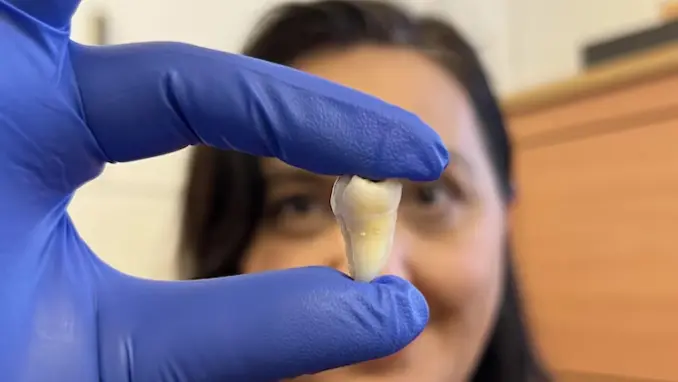

Scientists are working to grow human teeth in the lab using advanced stem cell and tissue engineering techniques. This breakthrough in regenerative dentistry could soon allow people to naturally regrow real, living teeth that integrate with the jawbone and function just like natural ones.
KumDi.com
Imagine visiting your dentist for a missing tooth—and instead of getting a titanium implant, your dentist simply grows a brand-new, living tooth from your own cells. This once-unthinkable idea is now moving closer to reality as scientists around the world race to grow human teeth in the laboratory.
The promise of regenerative dentistry lies in one simple but extraordinary goal: to help the human body replace lost teeth naturally. Researchers are now using advanced biotechnology, stem cells, and tissue engineering to unlock the body’s ability to regrow teeth, something humans lost millions of years ago.
Table of Contents
Two Main Approaches to Growing Teeth
Scientists have been focusing on two major strategies for tooth regeneration. Both are groundbreaking—but they take very different paths.
1. Growing Entire Teeth in the Lab
The first approach is to grow a whole tooth outside the body, in a laboratory environment, using stem cells. These cells are carefully guided to develop into the exact types of cells that make up a tooth—enamel, dentin, and pulp. The goal is to recreate the natural developmental process that occurs in the womb when baby teeth form.
Researchers have succeeded in growing small “tooth buds” that have the basic structure of real teeth. These can potentially be implanted into the jaw, where they would continue to grow and integrate with bone, nerves, and blood vessels—just like natural teeth.
This method could one day replace traditional implants, which, while effective, don’t feel or function exactly like living teeth.
2. Reactivating Tooth Growth Inside the Mouth
The second approach is even more futuristic: instead of growing a tooth in a dish, some scientists are trying to reactivate tooth growth directly in the mouth. Humans actually have dormant genes and tissues capable of forming new teeth, but these are switched off after early childhood.
By using targeted drugs or biological molecules, researchers believe they can “turn on” these natural growth pathways again. In theory, this would allow a missing tooth to regrow in its original place, using the body’s own regenerative potential—no implants or lab-grown structures needed.
The Science Behind Lab-Grown Teeth
To grow a tooth, scientists need to mimic the complex environment of tooth development. It’s not just about cells—it’s about communication between them.
A developing tooth forms when two types of cells—epithelial cells (which form enamel) and mesenchymal cells (which form dentin and pulp)—interact in a precise sequence. These interactions must be replicated in the lab through carefully controlled conditions, growth factors, and scaffold materials that support the tooth’s shape.
Stem Cells at the Center
Stem cells are the cornerstone of this process. The most promising sources are:
- Dental pulp stem cells (DPSCs) — found inside the soft tissue of teeth
- Induced pluripotent stem cells (iPSCs) — adult cells reprogrammed to act like embryonic stem cells
- Dental follicle cells and periodontal ligament stem cells — which play key roles in tooth root formation
These cells can be coaxed into developing into enamel-producing and dentin-producing cells. When combined on a 3D scaffold that mimics natural tooth structure, they begin to organize themselves into early tooth forms.
Breakthroughs Fueling the Race
In recent years, several scientific breakthroughs have accelerated this field dramatically.
1. 3D Bioprinting and Scaffolds
Using 3D bioprinting, scientists can now print tooth-shaped scaffolds that guide stem cells to grow in the correct pattern. These scaffolds are made from biocompatible materials that eventually dissolve, leaving behind a natural tooth structure.
2. Enamel Regeneration
Enamel—the hardest substance in the human body—is notoriously difficult to replicate. But researchers have managed to produce enamel-like crystals and protein frameworks that could one day coat regenerated teeth, providing the same strength and protection as natural enamel.
3. Tooth Organoids
Tooth organoids—tiny, lab-grown tooth models—allow scientists to study how real teeth form. These organoids mimic early tooth development and are invaluable for testing new methods without using animals or human trials prematurely.
4. Drug-Based Reactivation
Perhaps the most exciting progress comes from drugs that can reawaken tooth formation. In animal studies, certain proteins have been successfully inhibited to allow new tooth buds to form. Human trials could eventually make tooth regrowth as simple as taking a prescription.
Challenges Still Ahead
Despite enormous progress, major challenges remain before lab-grown teeth become a common dental procedure.
- Perfecting Enamel: Creating enamel that matches the hardness and durability of natural enamel remains one of the biggest scientific hurdles.
- Controlling Tooth Shape: Each tooth type—incisor, molar, canine—has a unique shape and size. Getting lab-grown teeth to develop into the right form and align properly in the jaw is still difficult.
- Ensuring Safety: Regenerative therapies must be proven safe, with zero risk of tumor formation, infection, or immune rejection.
- Integrating Nerves and Blood Vessels: A functional tooth must connect with the body’s nervous and circulatory systems for sensation and nutrition. This integration is challenging but essential for success.
- Long-Term Durability: Scientists need to confirm that regenerated teeth can last a lifetime under real chewing forces and bacterial exposure.
When Could This Become a Reality?
Optimistic forecasts suggest that early human applications could begin within the next decade. Drug-based methods might reach clinical use sooner because they rely on the body’s existing structures, whereas lab-grown transplants will require longer testing and regulatory approval.
However, the idea that a child born today could one day have a missing tooth replaced by a lab-grown biological one is no longer fantasy—it’s within reach.
What It Means for Patients and Dentists
If tooth regeneration becomes mainstream, it will completely transform modern dentistry.
Instead of filling cavities or screwing in implants, dentists could regenerate parts of the tooth—or even entire teeth—from a patient’s own cells. This would eliminate the risk of implant rejection, improve oral health, and reduce the need for repeat dental work.
It could also lower long-term healthcare costs by providing permanent, living solutions rather than mechanical replacements. For patients who have lost multiple teeth, this breakthrough could restore not only smiles but also confidence, comfort, and quality of life.
Ethical and Regulatory Considerations
As with any major medical innovation, growing human teeth raises ethical and regulatory challenges. Stem cell sourcing, genetic modification, and long-term monitoring will require strict oversight. There are also questions of access and affordability—will this technology be available only to the wealthy, or will it become an accessible part of public healthcare?
Governments and health authorities will need to develop clear frameworks to ensure that regenerative dentistry is safe, ethical, and equitable.
The Future of a Natural Smile
The race to grow human teeth in the lab is more than just a scientific competition—it’s a vision of the future where medicine works with nature, not against it. For centuries, humans have been replacing lost teeth with artificial substitutes. Now, science may allow us to restore what evolution took away: the ability to grow new teeth for life.
In the next decade, we may see the first successful lab-grown tooth replacements, and eventually, a world where dental implants are obsolete. A smile regenerated from your own body might soon be the most natural smile of all.
FAQs
How are scientists able to grow human teeth in the lab?
Scientists can grow human teeth in the lab by combining stem cell teeth with biomaterial scaffolds that mimic natural tooth development. These cells form dentin, enamel, and pulp, creating a living tooth structure ready for future clinical use in regenerative dentistry.
What is regenerative dentistry and how does it differ from implants?
Regenerative dentistry focuses on healing or regrowing natural tissues—like lab-grown teeth—instead of inserting metal or ceramic implants. Unlike traditional implants, these living teeth integrate with nerves and blood vessels, offering long-term durability and natural sensation.
When will lab-grown teeth be available to the public?
Clinical use of lab-grown teeth is still in development, but experts predict regenerative dentistry could introduce viable treatments within the next decade. As stem cell teeth technology advances, patients may soon have the option to regrow natural replacements for missing teeth.
Are lab-grown human teeth safe and effective?
Early studies show that lab-grown human teeth are safe in controlled environments. However, scientists must ensure regenerative dentistry methods are stable, immune-compatible, and long-lasting before public use. Trials are underway to confirm their effectiveness in real-world applications.
Can stem cells really regrow damaged or missing teeth naturally?
Yes. Using stem cell teeth technology, researchers can activate the body’s natural ability to grow human teeth in the lab or even directly inside the mouth. This regenerative process could permanently replace tooth loss treatments and reshape the entire field of regenerative dentistry.




 and then