








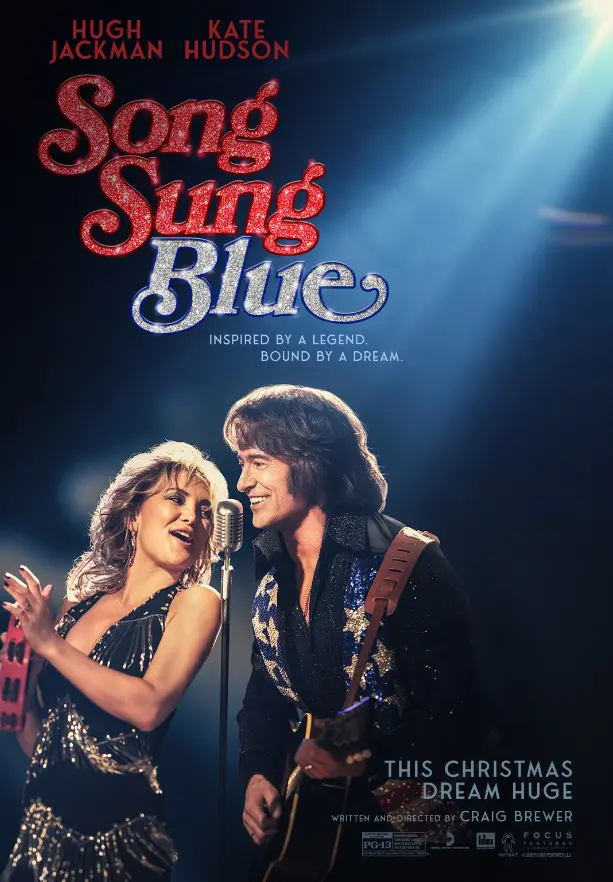
Song Sung Blue is a musical drama starring Hugh Jackman and Kate Hudson that tells the true-inspired story of two musicians who find love, purpose, and resilience through music. The film blends emotional storytelling with nostalgic songs, focusing on human connection rather than fame.
KumDi.com
This Song Sung Blue movie review examines a heartfelt musical drama that balances uplifting performances with emotional realism. Featuring Hugh Jackman and Kate Hudson, the film follows two musicians whose shared love of music becomes a source of healing, connection, and quiet triumph amid personal hardship.
Song Sung Blue is a heartfelt musical drama that blends nostalgia, romance, and real-life struggle into a crowd-pleasing cinematic experience. Starring Hugh Jackman and Kate Hudson, the film tells the story of two everyday musicians who find purpose, love, and meaning through their shared devotion to music. Released during the holiday season, Song Sung Blue aims to uplift audiences while also confronting the emotional realities behind artistic dreams.
Directed by Craig Brewer, known for emotionally driven music-centered films, Song Sung Blue walks a fine line between feel-good musical entertainment and grounded human drama. While not without flaws, the film succeeds in delivering warmth, strong performances, and memorable musical moments that resonate long after the credits roll.
Table of Contents

Plot Overview: When Music Becomes a Lifeline
At its core, Song Sung Blue is the story of Mike and Claire, two struggling musicians whose lives intersect through a shared passion for performing. Living far from the spotlight, they form a Neil Diamond tribute act that gradually evolves into something far more meaningful than a simple stage show.
What begins as a modest attempt to make ends meet turns into a journey of self-discovery. As their performances grow in popularity, so does their personal bond. The film carefully traces their rise from small local gigs to more prominent stages, emphasizing the emotional connection they build through music rather than traditional fame or fortune.
However, the narrative does not shy away from hardship. As success arrives, so do unexpected challenges, forcing both characters to confront grief, responsibility, and the fragile balance between love and ambition. This emotional pivot transforms Song Sung Blue from a light musical into a deeper exploration of resilience and commitment.
Performances: Hugh Jackman and Kate Hudson Shine
The film’s greatest strength lies in its lead performances. Hugh Jackman delivers a role that feels both familiar and refreshingly grounded. Known for his musical talent, Jackman brings authenticity to Mike’s on-stage presence while portraying vulnerability offstage. His performance captures the quiet determination of a man chasing purpose rather than fame.
Kate Hudson offers one of her most emotionally nuanced performances in years. As Claire, she balances charm and emotional depth with ease. Hudson’s ability to transition from playful musical scenes to moments of quiet heartbreak anchors the film’s emotional core. Her chemistry with Jackman feels natural and unforced, making their relationship believable and engaging.
Together, Jackman and Hudson create a partnership that feels lived-in rather than cinematic. Their interactions are marked by subtle gestures, shared glances, and mutual respect — elements that elevate the film beyond a standard musical romance.
The supporting cast adds texture without overshadowing the leads. Each character serves a purpose in reflecting the realities of a working-class music scene, reinforcing the film’s grounded tone.
Direction and Tone: Heartfelt but Uneven
Craig Brewer’s direction emphasizes emotional honesty over spectacle. Unlike glossy musical biopics, Song Sung Blue opts for a more intimate approach, focusing on character moments rather than elaborate production design. Brewer allows musical performances to unfold naturally, often letting songs play out without excessive cuts or visual distractions.
That said, the film occasionally struggles with tonal balance. The transition from joyful musical sequences to heavy dramatic moments can feel abrupt. While these shifts are intentional and rooted in real life, they may surprise viewers expecting a consistently upbeat musical.
The screenplay leans into familiar biographical storytelling beats, which can feel predictable at times. However, the sincerity behind the writing often compensates for its lack of narrative innovation. The film’s emotional honesty keeps it engaging even when the structure feels conventional.
Music and Soundtrack: The Heart of the Film
Music is the emotional backbone of Song Sung Blue. The film features multiple performances inspired by classic Neil Diamond songs, reinterpreted through the characters’ personal experiences. Rather than feeling like imitation, the musical numbers function as storytelling devices, revealing character growth and emotional shifts.
Jackman and Hudson’s vocal performances are raw and expressive, prioritizing emotion over technical perfection. This choice enhances the film’s authenticity, making each performance feel personal rather than polished for commercial appeal.
For longtime fans of classic pop and soft rock, the soundtrack delivers a strong sense of nostalgia. For newer audiences, the songs still function effectively within the narrative, even without prior familiarity.
However, the frequency and length of musical sequences may not appeal to all viewers. Some scenes linger longer than necessary, slowing the pacing. Still, for audiences who enjoy music-driven storytelling, these moments are likely to be highlights rather than drawbacks.
Themes: Love, Resilience, and Ordinary Dreams
Beyond music, Song Sung Blue explores universal themes that give the film lasting appeal:
- The power of partnership: Success is portrayed not as individual achievement but as shared perseverance.
- Grief and healing: The film treats loss with sensitivity, showing how creativity can serve as both escape and healing process.
- Art without fame: The story celebrates musicians who perform not for stardom, but for connection.
These themes resonate strongly with audiences who appreciate grounded, human stories. The film suggests that fulfillment doesn’t always come from reaching the top, but from finding meaning in the journey itself.
Pacing and Structure: Emotional Over Efficiency
The film’s pacing prioritizes emotional immersion over narrative efficiency. Some viewers may find the second half slower as the story leans heavily into dramatic territory. While this deepens character development, it also risks testing audience patience.
A tighter edit could have improved momentum without sacrificing emotional depth. Still, the deliberate pacing allows the film’s quieter moments to breathe, reinforcing its reflective tone.
Audience Appeal: Who Will Enjoy Song Sung Blue?
Song Sung Blue is likely to appeal most to:
- Fans of musical dramas
- Viewers who enjoy character-driven stories
- Admirers of Hugh Jackman and Kate Hudson
- Audiences seeking an emotionally warm holiday film
Those expecting a high-energy musical or a fast-paced biopic may find the film subdued. However, viewers open to a reflective, emotionally honest experience will likely find it rewarding.
Final Verdict: A Film With Heart That Lingers
Song Sung Blue may not redefine the musical genre, but it succeeds where it matters most — heart, sincerity, and performance. Anchored by strong leads and emotionally resonant music, the film offers a touching reminder of why stories about ordinary people chasing meaningful dreams continue to matter.
Its imperfections — uneven pacing and tonal shifts — are outweighed by its warmth and authenticity. In a landscape crowded with spectacle-driven entertainment, Song Sung Blue stands out as a gentle, human-scaled film that values emotional truth over grandeur.
★★★☆☆ Overall Rating: 7.5 / 10
A soulful musical drama that doesn’t always hit every note perfectly, but sings with enough heart to stay with you long after the final song.

FAQs
What is Song Sung Blue about?
Song Sung Blue is a musical drama about two musicians who form a tribute act and discover love, resilience, and meaning through music, as explored in this Song Sung Blue movie review.
Is Song Sung Blue worth watching?
Yes, Song Sung Blue is worth watching for viewers who enjoy character-driven musical dramas, especially fans of Hugh Jackman musical drama performances and emotionally grounded storytelling.
How are Hugh Jackman and Kate Hudson in Song Sung Blue?
In this Song Sung Blue movie review, Hugh Jackman and Kate Hudson deliver emotionally rich performances, with strong chemistry that anchors the film’s romantic and dramatic core.
Is Song Sung Blue a happy or sad movie?
Song Sung Blue balances joy and loss, combining uplifting musical moments with serious emotional themes, making it a reflective rather than purely happy musical drama.
Is Song Sung Blue based on a true story?
Yes, Song Sung Blue is inspired by real-life musicians, which adds authenticity and emotional weight to the story, as detailed in this Song Sung Blue film analysis.




 and then