








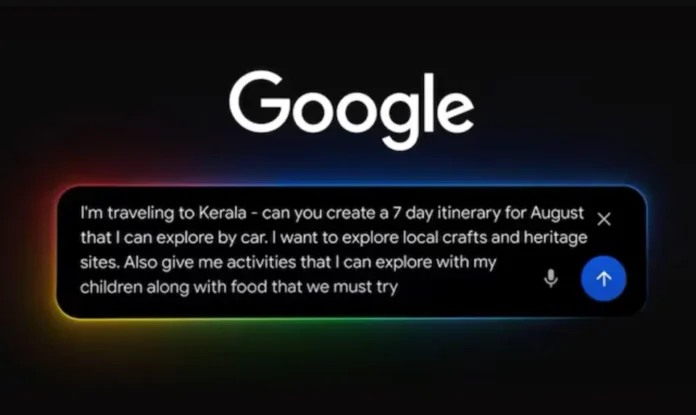
The 7 Google AI features transforming search include RankBrain, BERT, MUM, Gemini, AI Overviews, SpamBrain, and Neural Matching. Together, these AI systems evaluate intent, content quality, authority, and trust to determine how websites rank and appear in modern Google search results.
KumDi.com
The 7 Google AI features transforming search and SEO rankings represent a major shift toward intent-driven, AI-evaluated content discovery. Google now relies on machine learning models to assess relevance, expertise, and trustworthiness, making traditional keyword-focused SEO strategies increasingly ineffective.
Google Search is no longer a simple keyword-matching engine. Today, it is an AI-driven ecosystem powered by machine learning models that interpret intent, context, language, and trust signals at scale. Understanding Google AI features is now essential for anyone who wants to rank highly in search results, maintain visibility in AI-generated answers, and build long-term authority online.
From RankBrain to AI Overviews powered by Gemini, Google’s AI systems decide what content is shown, how it’s ranked, and whether it’s trusted. These systems evaluate not only relevance but also Experience, Expertise, Authoritativeness, and Trustworthiness (E-E-A-T).
This article breaks down the 7 most important Google AI features, how they work, and what they mean for SEO, publishers, and brands in 2025 and beyond.
Table of Contents

1. Google AI Overviews (Formerly SGE)
What It Is
Google AI Overviews generate AI-written summaries directly in search results, answering user queries without requiring a click. These summaries are powered by Google’s latest generative AI models and pull information from multiple authoritative sources.
Why It Matters
AI Overviews fundamentally change click behavior. Users may get answers instantly, but source visibility still matters, as Google cites and links to trusted pages.
How Google Evaluates Content for AI Overviews
- Strong topical relevance
- Clear, factual answers
- Structured content (headings, lists, definitions)
- High E-E-A-T signals
- Consistent author credibility
SEO Impact
To appear in AI Overviews:
- Answer questions clearly within the first 1–2 paragraphs
- Use expert-backed explanations
- Avoid vague or opinion-only content
- Demonstrate first-hand experience
AI Overviews reward clarity, authority, and trust — not keyword stuffing.
2. RankBrain: Google’s First AI Ranking System
What It Is
RankBrain is a machine learning system that helps Google interpret search intent, especially for new or ambiguous queries.
How RankBrain Works
RankBrain analyzes:
- Query patterns
- User engagement signals
- Semantic relationships between words
- Historical search behavior
It helps Google decide which ranking signals matter most for each query.
Why RankBrain Is Critical
Over 15% of daily Google searches are brand-new. RankBrain allows Google to rank content even when exact keywords don’t match.
SEO Implications
- Exact-match keywords matter less than topic coverage
- Content must match intent, not just phrasing
- Poor engagement (high bounce rate, low dwell time) hurts rankings
RankBrain favors content that solves problems, not content that repeats keywords.
3. BERT: Understanding Natural Language Like a Human
What It Is
BERT (Bidirectional Encoder Representations from Transformers) helps Google understand context and nuance in language, especially in long or conversational queries.
What Changed With BERT
Before BERT, Google focused on keywords. After BERT, Google understands:
- Word relationships
- Prepositions (“for,” “to,” “with”)
- Conversational meaning
Example
Query: “Can you get medicine for someone at a pharmacy”
BERT understands who is receiving the medicine, not just the words.
SEO Impact
- Write naturally, not mechanically
- Avoid unnatural keyword insertion
- Use complete, human-friendly sentences
BERT rewards clear writing and penalizes content written “for bots.”
4. MUM (Multitask Unified Model)
What It Is
MUM is a powerful AI model designed to handle complex, multi-part questions across formats and languages.
What Makes MUM Different
- 1,000x more powerful than BERT
- Understands text, images, and video
- Works across 75+ languages
- Can synthesize multiple sources
Example Use Case
Instead of multiple searches, users can ask:
“I’ve hiked Mount Fuji. What should I do to prepare for Mount Kilimanjaro?”
MUM understands context, experience level, and intent.
SEO Implications
- Cover topics comprehensively
- Use supporting visuals (images, diagrams)
- Build content hubs, not isolated articles
MUM favors depth over repetition.
5. Gemini: Google’s Core Generative AI Model
What It Is
Gemini is Google’s flagship multimodal AI model, powering:
- AI Overviews
- Conversational search
- Google Workspace AI
- Advanced reasoning in Search
Why Gemini Matters for SEO
Gemini evaluates:
- Content accuracy
- Source reliability
- Logical consistency
- Cross-source verification
E-E-A-T Connection
Gemini relies heavily on:
- Author credentials
- Publisher reputation
- Historical accuracy
- Transparent sourcing
Optimization Tips
- Include author bios
- Cite reputable sources
- Keep content updated
- Avoid exaggerated claims
Gemini prioritizes trust over creativity.
6. SpamBrain: Google’s AI Spam Detection System
What It Is
SpamBrain is an AI system that detects and neutralizes:
- Spammy backlinks
- Auto-generated content
- Keyword manipulation
- Scaled low-quality pages
Why It’s Dangerous (If You’re Doing SEO Wrong)
SpamBrain works in real time and improves continuously. Once flagged, recovery can be extremely difficult.
What SpamBrain Penalizes
- AI-generated content with no added value
- Affiliate pages with thin content
- Rewritten articles with no expertise
- Link schemes
How to Stay Safe
- Add original insights
- Demonstrate real experience
- Avoid mass content publishing
- Focus on quality over volume
SpamBrain doesn’t hate AI — it hates low-effort content.
7. Neural Matching: Concept-Based Search
What It Is
Neural Matching helps Google understand concepts, not just words. It connects searches with relevant pages even when terminology differs.
Example
Search: “Why does my TV look strange when watching sports?”
Google understands this may relate to:
- Motion smoothing
- Refresh rates
- Frame interpolation
SEO Impact
- Use synonyms naturally
- Explain concepts clearly
- Avoid over-optimization
Neural Matching makes semantic SEO mandatory, not optional.
How These 7 Google AI Features Work Together
Google does not use one AI system at a time. These features work in combination:
- RankBrain interprets intent
- BERT understands language
- Neural Matching connects concepts
- MUM synthesizes complexity
- Gemini generates AI responses
- SpamBrain filters low-quality content
- AI Overviews present trusted answers
Together, they create an ecosystem where authority and usefulness beat tactics.
Final Thoughts: How to Rank in an AI-Driven Google Search
To rank in modern Google Search, your content must:
- Demonstrate real expertise
- Answer questions clearly
- Provide unique value
- Build trust over time
- Align with user intent
SEO is no longer about gaming algorithms. It’s about earning trust from AI systems trained to think like users.
If your content helps people genuinely, Google’s AI will find it.
FAQs
What are the 7 Google AI features transforming search and SEO?
The 7 Google AI features include RankBrain, BERT, MUM, Gemini, AI Overviews, SpamBrain, and Neural Matching—core Google AI search algorithms that influence rankings and content visibility.
How do Google AI features impact SEO rankings?
Google AI features analyze intent, engagement, and authority using AI-powered SEO ranking factors, rewarding high-quality, trustworthy content over keyword-stuffed pages.
Why are Google AI Overviews important for SEO?
Google AI Overviews SEO matters because AI-generated summaries can reduce clicks while prioritizing authoritative sources, making structured, expert-led content essential for visibility.
Is RankBrain still relevant among newer Google AI features?
Yes, RankBrain remains foundational among the 7 Google AI features, helping Google interpret unfamiliar queries and prioritize intent-based search results.
How should SEO strategies adapt to Google AI search algorithms?
To align with Google AI search algorithms, SEO strategies must focus on E-E-A-T, comprehensive topic coverage, natural language writing, and real user value.




 and then