








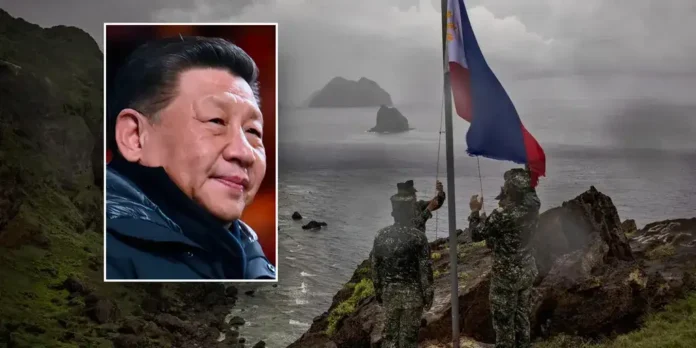
The South China Sea has become a hotbed of tension and geopolitical rivalry in recent years. One particular area of concern is the ongoing dispute between China and the Philippines over territorial claims in the region. This dispute has the potential to escalate into a larger conflict and has caught the attention of experts around the world. In this article, we will delve into the details of the Philippines dispute, analyze the factors driving the tension, and explore the potential consequences of this escalating situation.

Historical Context and Territorial Claims
The roots of the dispute between China and the Philippines can be traced back to historical claims and conflicting interpretations of international law. China has long asserted its sovereignty over the South China Sea, claiming a significant portion of it as its territorial waters. This claim is based on the “nine-dash line,” a demarcation line drawn by China in 1947 that encompasses most of the South China Sea. However, this claim has been challenged by other countries in the region, including the Philippines.
The Philippines, along with other claimant countries such as Vietnam, Malaysia, Brunei Darussalam, and Taiwan, opposes China’s expansive territorial claims. These countries argue that China’s claims are not supported by international law, particularly the United Nations Convention on the Law of the Sea (UNCLOS) of 1982. The UNCLOS provides a legal framework for the rights and responsibilities of countries in their use of the world’s oceans, including the establishment of exclusive economic zones (EEZs) and the resolution of maritime disputes.
Aggressive Actions and Growing Tensions
In recent years, China’s actions in the South China Sea have become increasingly assertive, leading to growing tensions with neighboring countries. China has built artificial islands, fortified existing features, and deployed military assets in the disputed waters. These actions have raised concerns among its neighbors and have been met with protests and diplomatic disputes.
One particular incident that has heightened tensions is the harassment of Filipino fishermen by Chinese coast guards. Chinese vessels have attempted to block Philippines’ supply ships and have engaged in confrontations with Filipino fishermen in disputed fishing grounds. These incidents have led to standoffs and near-clashes between the two sides, increasing the risk of a larger conflict.
The Role of the United States
The United States has been closely monitoring the situation in the South China Sea and has expressed its support for the Philippines and other countries in the region. The U.S. has a mutual defense treaty with the Philippines, which means that an attack on the Philippines would trigger a U.S. military response. This treaty has been a source of deterrence against potential Chinese aggression.
However, some experts argue that China’s perception of U.S. commitment to its allies in the region is wavering. They point to statements made by President Biden and the continuous probing of China into neighboring territories as evidence of this perception. This perceived weakness in U.S. commitment could embolden China and increase the risk of a confrontation.
Potential Consequences and Escalation
The escalating tensions in the South China Sea have raised concerns about the potential consequences of a conflict between China and the Philippines. The region is a crucial maritime trade route, with significant economic and strategic importance. A full-scale conflict could disrupt global trade, impact the economies of neighboring countries, and potentially draw in other major powers.
Experts warn that if a conflict were to erupt, it is more likely to start over the Philippines than Taiwan or Japan. The Philippines, despite its mutual defense treaty with the United States, is seen as the weakest militarily among the three targets. China’s aggressive actions and its disregard for international law have created a volatile situation that could quickly escalate into a larger conflict.
Diplomatic Efforts and Regional Cooperation
Efforts to resolve the dispute through diplomatic means have been ongoing, but progress has been slow. The Philippines has pursued legal avenues, including filing a case against China before the Permanent Court of Arbitration in The Hague. The court ruled in favor of the Philippines in 2016, declaring that China’s claims in the South China Sea had no legal basis. However, China rejected the ruling and continues to assert its claims in the region.
Regional cooperation has also played a role in addressing the South China Sea dispute. The Association of Southeast Asian Nations (ASEAN) has been instrumental in facilitating discussions and promoting a Code of Conduct in the South China Sea. However, reaching a consensus among the member states has been challenging due to differing interests and concerns.
The Way Forward
Resolving the Philippines dispute in the South China Sea requires a multilateral approach that balances the interests of all parties involved. Diplomatic negotiations, adherence to international law, and the promotion of regional cooperation are essential in finding a peaceful resolution. The international community, including the United States, must continue to support the Philippines and other claimant countries in upholding their rights and protecting their interests.
As tensions continue to simmer in the South China Sea, it is crucial for all parties to exercise restraint and pursue dialogue rather than resorting to military confrontation. The stakes are high, and the potential consequences of a conflict are severe. The international community must work together to ensure a peaceful and stable resolution to the Philippines dispute and maintain peace and security in the region.

Conclusion
The Philippines dispute in the South China Sea is a complex and sensitive issue with far-reaching implications. As China’s ambitions in the region grow, the potential for a larger conflict looms. However, diplomatic efforts, regional cooperation, and international support can help mitigate tensions and promote a peaceful resolution. It is crucial for all parties involved to prioritize dialogue and adhere to international law to ensure stability and security in the South China Sea.




 and then