








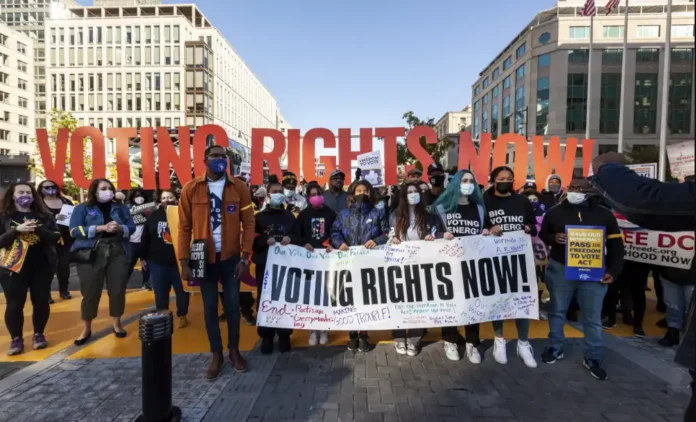

Many countries are debating whether 16-year-olds should vote. In 2025, teen voting rights are gaining momentum, with surprising data showing increased political engagement, maturity, and civic awareness among younger voters.
KumDi.com
Should 16-year-olds vote? In 2025, the discussion around teen voting rights is more relevant than ever. Advocates argue that today’s teens are more informed and politically engaged than previous generations. As debates around democracy, education, and civic duty intensify, lowering the voting age to 16 may reshape political landscapes worldwide.
The debate over lowering the voting age to 16 has sparked worldwide attention. Britain stands ready to welcome up to a million and a half new voters to its electoral rolls. Many Americans might see this as a radical shift, yet several countries have already taken this step. Austria, Argentina, Brazil, and Germany allow 16-year-olds to vote in various elections.
The numbers tell an interesting story. Young people aged 16-17 make up 16 percent of the world’s population, but only one-fifth of them can vote in most countries. Real-life examples challenge common assumptions about teen voters. Takoma Park, Maryland’s experience proves enlightening. The city allowed 16-year-olds to vote in municipal elections back in 2013. These young voters showed up at polling stations at rates two to three times higher than other age groups. But public sentiment remains resistant to change. A recent poll revealed 84% of registered U.S. voters oppose this idea.
This piece will get into both sides of this heated debate. We’ll look at teen maturity levels and their ability to make informed decisions. The research on teenage decision-making capabilities might surprise you. Changes that could reshape our democracy might be closer than we think. Your views about young people’s role in democratic processes might shift after seeing what the evidence suggests.
Table of Contents
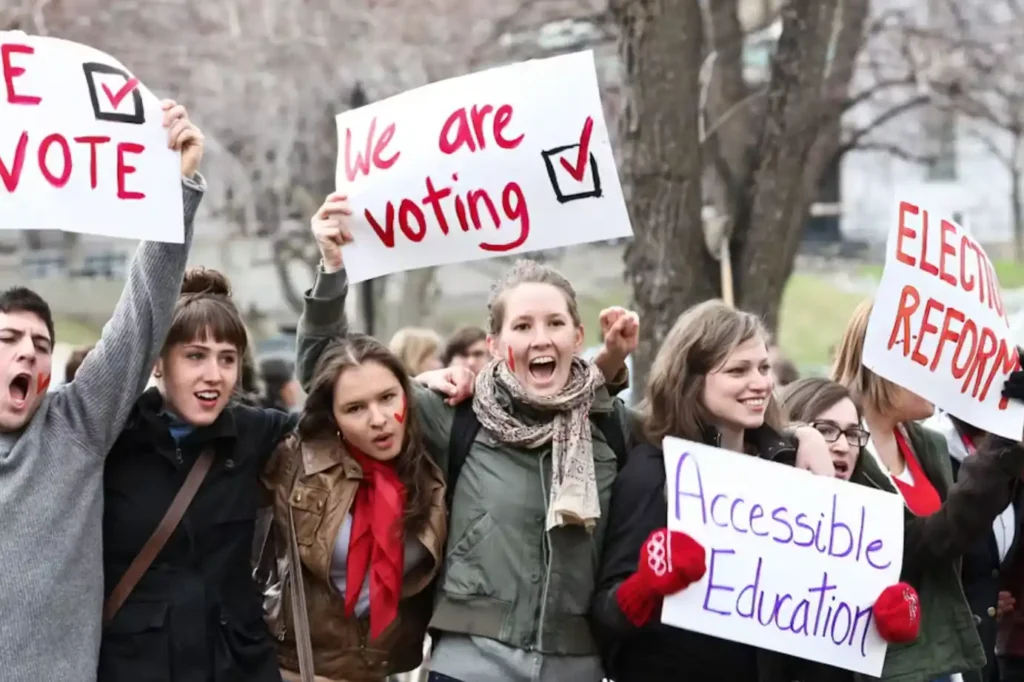
Arguments for lowering the voting age to 16
The case to lower the voting age to 16 isn’t just wishful thinking—research and practical reasons back it up. Let’s get into why teens deserve their say at the ballot box.
Teens are learning civics in school
Students at 16 learn about government and civics in high school. The classroom creates a perfect time to link their studies with real-life civic engagement. These teens could practice democracy instead of just reading about it. Teachers and parents can help young voters find their way through registration and locate polling places. This support helps overcome common hurdles that first-time voters face. Their educational background makes 16-year-olds just as knowledgeable about civics as older voters. Studies show they “obtain scores similar to those of adults” on civic knowledge tests.
Voting builds lifelong habits
People who vote once are 13% more likely to vote again. Data from Austria and Latin America shows better turnout rates among 16- and 17-year-old voters compared to those who start at 18. This happens because younger voters still live at home and study. They make better first-time voters than 18-20 year-olds who often move away from home. Takoma Park, Maryland proves this point—turnout among 16- and 17-year-olds doubled that of voters 18 and older.
They already work, pay taxes, and drive
Young citizens at 16 handle major adult duties. They drive cars, work full-time jobs, and pay their taxes. Sixteen marks a crucial milestone in American life—these citizens start contributing to the economy but can’t decide how their tax money gets spent. This creates unfairness. Without voting rights until 18, some citizens must wait until they’re almost 22 to vote for their mayor.
They are affected by laws and policies
Current policies shape young people’s lives though they can’t vote on them:
- School safety and gun violence
- Education quality and college affordability
- Climate change policies they’ll live with longest
- Neighborhood safety and infrastructure
These 16-year-olds will live longest with today’s decisions. Some experts believe we need to give them a voice. Studies show that youth voting rights make politicians pay attention to youth issues like education spending. Lowering the voting age could help young people shape the world they’ll inherit.
Arguments against letting 16-year-olds vote
Supporters make compelling points for teen voting rights, but critics have raised equally important concerns. Let’s get into the main objections to lowering the voting age.
Are 16-year-olds mature enough to vote?
Critics argue that adolescents lack sufficient neurological development to handle voting responsibilities. Research suggests that the teenage brain—specifically the prefrontal cortex—continues to undergo major reconstruction during adolescence. This region makes balanced decision-making and reasonable political judgment possible.
Some experts highlight that teenagers’ emotional development lags behind their logical reasoning. Emotions could drive many of their decisions. All the same, other researchers point out that no conclusive neurological evidence proves 16-year-olds cannot make informed voting choices.
Low performance in civics education
The educational statistics paint a concerning picture. Only 20% of eighth-graders scored at or above “proficient” levels on the National Assessment of Educational Progress civics test in 2022. The situation becomes more worrying as 31% performed below the “basic” level. These students couldn’t define simple concepts like government, constitution, and rule of law.
History knowledge shows an even bleaker picture—just 13% scored “proficient” on U.S. history tests, and 40% fell below “basic” levels. Many teenagers struggle with these foundational concepts, which makes opponents question their readiness to participate in elections.
Susceptibility to peer and parental influence
Young voters show particular vulnerability to social influences. Nearly 80% of people under 30 plan to vote when they believe their peers will, compared to just 35% when they think friends won’t participate. Family connections shape voting behavior significantly—60% of an individual’s likelihood to vote passes to others in their household.
Public opinion is largely against it
Public sentiment strongly opposes teen voting. A Hill-HarrisX poll showed 84% of registered voters rejected allowing 16-year-olds to vote. Every age demographic opposed the change. Even younger adults under 35 showed limited support, with only 39% favoring a lower voting age. A separate survey revealed just 8% support for a 16-year-old voting age.
What the research says
Scientific research provides valuable insights about teen voting that go beyond political debates. The evidence helps us learn whether 16-year-olds are ready to vote.
Studies on teen political knowledge
Teen political literacy presents a mixed picture. Youth voters in 2022 revealed that much of them didn’t have enough information about candidates and voting processes. Studies connect political literacy directly to democratic participation. The numbers show this clearly – 71% of informed 14-18 year olds would vote if given the chance. This number drops to 36% for those who feel uninformed. Most teens can identify candidates and their main policy positions. Political awareness starts earlier than expected. Children between 5-11 years old already show substantial political knowledge.
Neuroscience and decision-making at 16
Brain studies show two different neural pathways that teens use to make decisions. The first pathway handles information processing and reasoning needed for voting. The second deals with impulsive choices. A complete 2021 research review found that teens can make rational, thoughtful decisions because their cognitive abilities are mature enough. This finding challenges the belief that teens lack the mental capacity to vote.
Austria’s example: vote quality and turnout
Austria leads Europe in teen voting rights. The country’s experience offers solid ground evidence. Young voters aged 16-17 showed up to vote more often than first-time voters aged 18-20. The 2008 national election saw 88% of 16-17 year-olds voting, matching the overall voter average. Participation decreased to 63% in 2013. However, Austrian youth’s interest in politics more than doubled between 2013 and 2017. Research shows that 16-17 year-olds made voting choices just as good as older first-time voters.
UNICEF and human rights perspectives
UNICEF promotes lower voting ages. They emphasize children’s rights to voice opinions and make decisions. The UN Convention on the Rights of the Child states that participation rights are the foundations for political involvement. Human rights documents support youth voting. The Universal Declaration of Human Rights and International Covenant on Civil and Political Rights promote universal suffrage without age limits. The UN Committee on the Rights of the Child has praised countries that lowered voting ages to 16.
What would change if teens could vote?
Giving 16-year-olds the right to vote would change our democratic system. This change would go far beyond adding new voters. The way our democracy works would never be the same.
Youth issues gaining political attention
Young voters would push different priorities than older voters, which would make candidates pay attention to issues they often ignore. Recent polls show what matters most to young people:
- Climate change stands out as their biggest worry
- Gun violence makes many students fear for their safety at school
- College costs keep 16-year-olds up at night
- Mental health support has become crucial after the pandemic
These concerns would get much more attention once teens could vote. Research backs this up – politicians started caring more about education spending after younger people got voting rights.
Potential shifts in party strategies
Political parties would need new ways to reach voters. Right now, almost half (46%) of young people never hear from any political group about elections. Both parties miss the mark – Democrats don’t contact 62% of young people, and Republicans miss 67%.
Young voters today lean more independent than party-loyal. Campaigns would need to go digital to reach this group, since 90% of Gen Z spends over an hour online each day. Political ads would flood YouTube, Instagram, and Facebook. This makes sense because a quarter of Gen Z adults watch more YouTube than other social media.
Legal and constitutional hurdles
Teen voting would need big legal changes. The Constitution would need an amendment, much like the Twenty-Sixth Amendment that gave 18-year-olds the right to vote. Some places aren’t waiting – cities like Takoma Park and Hyattsville, Maryland already let teens vote in local elections.
The role of civic education in schools
More voters means better civic education. Only 40 states require students to take civics, and just six states make it a full-year class. City kids have an edge here – they’re 20% more likely to take a government course than rural students.
Good civic education makes a real difference. Students who learn about voting from their teachers get more involved in their communities. They volunteer more and help with campaigns. Schools would need to teach practical stuff too – like how to register and where to vote. This matters because 27% of students say they don’t know enough about voting.
Conclusion
The debate about letting 16-year-olds vote remains a complex issue with valid points on both sides. Without doubt, we see an interesting contrast – research shows teens vote more than older first-time voters, yet most people strongly oppose a lower voting age.
Those in favor make strong cases about fairness and representation. Sixteen-year-olds already pay taxes, work, and handle other duties without any say in decisions that affect them. Critics raise valid points about teen’s maturity and civic awareness. They point to concerning data about young people’s grasp of basic democratic ideas.
In spite of that, science tells a different story than what either side might accept. Brain studies show teens can make rational voting choices, even as other parts of their minds keep developing. Real-life examples from Austria prove young voters turn out in high numbers and make choices just as sound as older citizens.
A lower voting age would change political priorities. Politicians would pay more attention to climate change, gun violence, education costs, and mental health to win this new group of voters. Political parties would need new strategies to reach younger voters who don’t follow traditional party lines.
Many hurdles stand in the way, especially at the federal level. Yet this debate comes down to basic questions about democracy. Who should have a voice? What makes someone ready to vote? The core question asks whether democracy works better with more voices or by limiting participation to those who meet age-old rules. Whatever side you take, this debate makes us learn about democracy’s foundations and what it means to be a citizen today.
FAQs
Why are people pushing for teen voting rights in 2025?
Advocates for teen voting rights in 2025 believe that 16-year-olds are politically aware and should have a voice in shaping their future, especially on issues like climate change and education.
What are the benefits of allowing 16-year-olds to vote?
Key benefits include early civic engagement, increased voter turnout over time, and stronger democratic values—supporting both teen voting rights and youth political engagement.
Are there any countries where 16-year-olds can already vote?
Yes. Countries like Austria, Brazil, and Scotland have already lowered the voting age to 16, proving that lowering voting age can work effectively within modern democracies.
What are the arguments against letting 16-year-olds vote?
Critics argue that 16-year-olds may lack maturity or experience. However, research in 2025 shows rising levels of civic awareness and responsible decision-making among teen voters.
How does lowering the voting age impact elections?
Lowering the voting age can shift political priorities, encouraging parties to focus more on education, mental health, and climate policies—core concerns of teen voting rights advocates.




 and then