








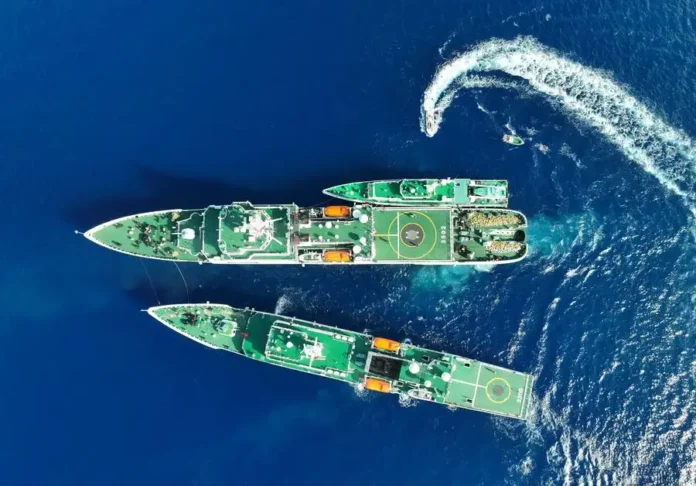

Beijing warns Manila over the South China Sea by signaling it is prepared to use a “powerful toolbox” of diplomatic, economic, legal, coast guard, and military measures. The warning reflects rising China–Philippines tensions in 2026 and highlights growing concerns over regional security, maritime stability, and the risk of accidental escalation.
KumDi.com
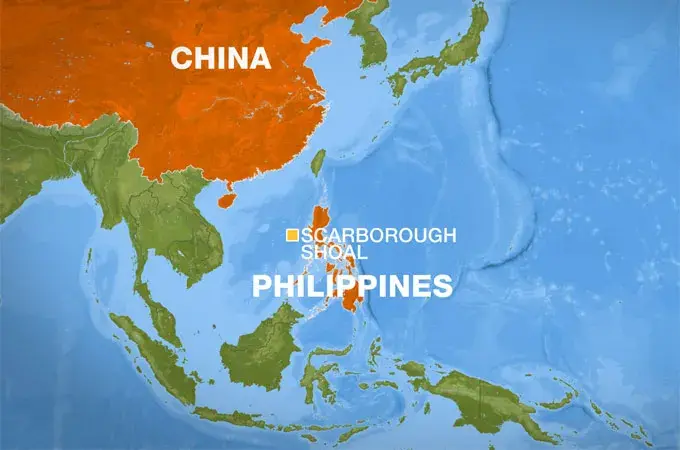
China has issued one of its strongest public warnings to the Philippines in 2026, stating that Beijing possesses a “powerful” set of measures—a diplomatic, legal, economic, coast guard, and military “toolbox”—that could be used if Manila continues actions Beijing considers provocative in the South China Sea. The warning comes amid increasing confrontations around disputed maritime features including Scarborough Shoal and Second Thomas Shoal, where both countries accuse each other of dangerous actions.
While the rhetoric is unusually forceful, experts generally view the statement as part of a broader strategy of deterrence rather than an immediate indication of impending military conflict. Nevertheless, the risk of accidental escalation remains significantly higher than in previous years because of more frequent encounters between coast guards, naval vessels, and military aircraft.
Table of Contents
What Did Beijing Mean by a “Powerful Toolbox”?
The phrase “powerful toolbox” refers to the wide range of instruments China can employ without necessarily entering into full-scale armed conflict.
These measures include:
- Diplomatic protests and ambassador summons
- Expanded China Coast Guard operations
- Maritime militia deployments
- People’s Liberation Army (PLA) naval and air patrols
- Economic and trade pressure
- Legal enforcement under China’s domestic maritime laws
- Administrative measures around disputed waters
- Information and public diplomacy campaigns
Rather than relying solely on military force, modern geopolitical competition increasingly involves combining these tools to influence another country’s behavior.
Why Is China Warning the Philippines?
The latest warning follows months of growing friction in the South China Sea.
Several developments have contributed:
1. Increasing Maritime Encounters
Chinese and Philippine vessels have repeatedly confronted one another near:
- Scarborough Shoal
- Second Thomas Shoal
- Sabina Shoal
Both governments accuse the other of dangerous maneuvers.
Reuters reported that Beijing and Manila recently summoned each other’s ambassadors following another serious maritime confrontation.
2. Philippine Maritime Activities
The Philippines has continued:
- Resupply missions
- Coast Guard patrols
- Scientific surveys
- International legal initiatives
- Maritime cooperation with allies
From Manila’s perspective, these activities occur within its Exclusive Economic Zone (EEZ) under the United Nations Convention on the Law of the Sea (UNCLOS).
China rejects this interpretation in many disputed areas.
3. Military Cooperation with Allies
Beijing has also criticized expanding security cooperation between:
- Philippines
- United States
- Japan
- Australia
Joint naval exercises and expanded defense agreements are viewed by Beijing as external interference in regional disputes.
Understanding the South China Sea Dispute
The South China Sea is one of the world’s most strategically important waterways.
Approximately one-third of global maritime trade passes through the region every year.
The sea also contains:
- Major fishing grounds
- Oil reserves
- Natural gas deposits
- Critical shipping routes
Multiple countries maintain overlapping claims, including:
- China
- Philippines
- Vietnam
- Malaysia
- Brunei
- Taiwan
The competing claims have made the region one of the world’s most persistent geopolitical flashpoints.
The Significance of Scarborough Shoal
Scarborough Shoal has become one of the most sensitive locations in the dispute.
It is important because of:
- Rich fishing resources
- Strategic location
- Potential energy reserves
- Military observation value
China recently conducted naval and air exercises near the shoal after criticizing Philippine efforts to expand seabed rights through the United Nations.
What Is Meant by a “Head-On Blow”?
Chinese officials have used increasingly forceful language, including references to delivering a “head-on blow” against actions Beijing considers unlawful or provocative.
In diplomatic practice, such language typically signals that China may respond with progressively stronger countermeasures rather than indicating a declaration of war.
Possible responses include:
Maritime Enforcement
- Interception of vessels
- Increased patrols
- Boarding inspections
- Maritime exclusion measures
Military Demonstrations
- Combat readiness patrols
- Naval exercises
- Air force deployments
- Missile exercises
Political Pressure
- Diplomatic protests
- Suspension of dialogue
- International messaging
Economic Measures
Potential restrictions on selected sectors could also be considered if political tensions worsen.
Legal Perspectives
China’s Position
China argues that:
- Historical records support its sovereignty.
- Maritime features fall within Chinese jurisdiction.
- Foreign vessels require permission for certain activities.
The Philippine Position
The Philippines argues:
- UNCLOS defines its Exclusive Economic Zone.
- The 2016 Permanent Court of Arbitration ruling rejected China’s “nine-dash line” claims.
- Philippine activities occur within internationally recognized maritime rights.
China does not recognize the arbitration ruling.
This legal disagreement remains one of the central obstacles to resolving the dispute.
Why Experts Are Concerned
Security analysts are less worried about intentional war than accidental escalation.
Several factors increase risk:
- More frequent close encounters
- Larger numbers of patrol vessels
- Military aircraft operating nearby
- National political pressure
- Public expectations
- Involvement of external allies
History shows that many international crises begin through miscalculation rather than deliberate planning.
How the United States Fits Into the Situation
The United States does not take a position on competing sovereignty claims.
However, Washington has:
- Strengthened defense cooperation with Manila.
- Expanded military exercises.
- Increased rotational deployments.
- Reaffirmed treaty commitments under the U.S.-Philippines Mutual Defense Treaty.
China views many of these activities as contributing to regional tensions, while the United States and the Philippines describe them as defensive and intended to preserve freedom of navigation.
Possible Future Scenarios
Scenario 1: Managed Competition
Most analysts consider this the most likely outcome.
Characteristics include:
- Continued diplomatic protests
- Coast Guard confrontations
- Military patrols
- Crisis management dialogue
Scenario 2: Increased Maritime Pressure
China could:
- Expand patrol frequency
- Increase inspections
- Strengthen administrative control
- Intensify coast guard operations
Scenario 3: Temporary Diplomatic Stabilization
Both countries could resume:
- Bilateral dialogue
- Military communication channels
- Fisheries negotiations
- Confidence-building measures
Such mechanisms have periodically reduced tensions in the past.
Scenario 4: Serious Incident
A collision or injuries involving military or coast guard personnel could rapidly escalate diplomatic tensions, requiring urgent crisis management to prevent wider conflict.
Practical Implications for Businesses and Travelers
Although tensions have risen, commercial shipping through the South China Sea continues.
Businesses should:
- Monitor shipping advisories.
- Review supply-chain contingency plans.
- Assess insurance coverage for maritime risks.
- Stay informed about sanctions or regulatory changes.
Travelers should:
- Follow official government travel advisories.
- Avoid entering restricted maritime areas.
- Monitor developments if traveling in affected coastal regions.
FAQs
Why is Beijing warning Manila over the South China Sea?
Beijing warns Manila over the South China Sea because China believes recent Philippine maritime operations, security cooperation with allies, and activities in disputed waters challenge its territorial claims. The warning reflects growing South China Sea escalation in 2026 and increasing China–Philippines maritime dispute tensions.
What does China’s “powerful toolbox” mean in the South China Sea dispute?
China’s “powerful toolbox” refers to a combination of diplomatic pressure, legal enforcement, coast guard operations, military patrols, economic measures, and information campaigns. These tools allow Beijing to respond to South China Sea disputes without necessarily initiating direct military conflict with Manila.
Could the South China Sea escalation lead to military conflict?
While Beijing warns Manila using unusually strong language, most security experts believe both governments seek to avoid full-scale war. However, continued South China Sea escalation increases the possibility of accidental incidents involving coast guard or naval vessels that could rapidly heighten regional tensions.
Why is the South China Sea strategically important?
The South China Sea is one of the world’s busiest shipping corridors, carrying roughly one-third of global maritime trade. Beyond commercial shipping, the region contains valuable fishing grounds, potential oil and natural gas resources, making the China–Philippines maritime dispute significant for both regional and global economic security.
How could Beijing–Manila tensions affect global businesses?
Beijing–Manila tensions could disrupt shipping routes, increase maritime insurance costs, affect regional supply chains, and create greater geopolitical uncertainty. Businesses involved in international trade should closely monitor South China Sea escalation 2026 developments and prepare contingency plans for potential operational risks.




 and then