









The United States is highly unlikely to invade Greenland regardless of the war, as such an action would violate international law, damage NATO alliances, and create severe political consequences. U.S. strategy favors cooperation, military agreements, and influence rather than territorial invasion of allied regions.
KumDi.com
Will the United States invade Greenland? The question of whether the United States will invade Greenland regardless of the war reflects growing concern over Arctic security and global power rivalry. While Greenland holds undeniable strategic value, a U.S. invasion would conflict with alliance obligations, international law, and domestic political realities, making military takeover an improbable outcome.
The idea that the United States might one day invade Greenland has moved from an almost satirical talking point into a serious geopolitical question discussed in policy circles, media commentary, and public debate. Greenland—vast, icy, sparsely populated—appears at first glance an unlikely candidate for military conflict. Yet in the modern era of great-power competition, geography, resources, and strategic positioning matter more than ever.
So the question must be asked plainly and without sensationalism: Will the United States invade Greenland regardless of whether a major war is already underway?
This article argues that while Greenland is undeniably critical to U.S. strategic interests, a unilateral military invasion is extremely unlikely, not because of sentiment or morality alone, but because it would contradict core American strategic logic, alliance structures, domestic political constraints, and the very principles that sustain U.S. global power.
Why Greenland Matters More Than Ever
Greenland’s importance is not hypothetical. It sits at the crossroads of North America and Europe, directly along critical Arctic and North Atlantic routes. As climate change accelerates Arctic ice melt, Greenland’s strategic relevance has increased dramatically in three key ways.
First, military positioning. Greenland occupies a central location for early-warning radar systems, missile defense, and monitoring trans-Atlantic military movement. Control or influence over this territory strengthens continental defense in ways that no substitute location can fully replicate.
Second, resources. Greenland holds untapped deposits of rare earth elements, critical minerals, and potential energy resources that are essential for modern defense systems, renewable technologies, and advanced manufacturing. In an era where supply chains are weaponized, access matters.
Third, Arctic competition. The Arctic is no longer a frozen buffer zone. It is becoming an arena of competition among major powers. Greenland functions as a strategic anchor in this emerging theater.
These realities explain why the United States has long maintained a military presence in Greenland and why American policymakers continue to view it as indispensable.
Table of Contents
Rhetoric Versus Reality: Understanding U.S. Political Statements
Public statements from U.S. leaders about Greenland—especially language that refuses to rule out force—should not be dismissed, but neither should they be taken at face value. Political rhetoric often serves domestic political objectives: signaling strength, framing national security priorities, or appealing to specific voter blocs.
Historically, the United States has frequently used aggressive language without following through on the most extreme interpretations of that language. This distinction matters. Strategic signaling is not the same as strategic intent.
An invasion would require consensus across the executive branch, legislative approval, military planning, alliance coordination, and public support. None of these conditions currently exist in a form that would make a Greenland invasion viable.
The NATO Constraint: Why Allies Matter More Than Territory

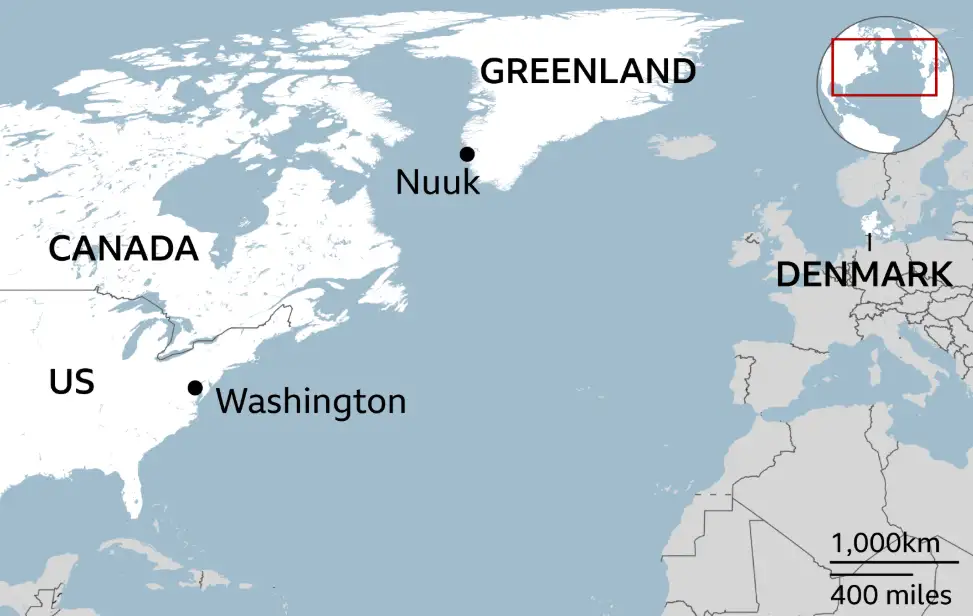
Perhaps the single most decisive factor preventing a U.S. invasion of Greenland is NATO itself. Greenland is part of the Kingdom of Denmark, a longstanding NATO ally. The alliance is not merely symbolic—it is the backbone of U.S. power projection, legitimacy, and burden-sharing.
An attack on Greenland would create a paradox no modern alliance has ever faced: a NATO member using force against another NATO member’s territory. The consequences would be catastrophic:
- Alliance trust would collapse
- Collective defense credibility would be shattered
- U.S. leadership within NATO would be fundamentally undermined
From a purely strategic standpoint, destroying NATO to gain Greenland would be irrational. The alliance provides exponentially greater security value than any single territory, no matter how strategically located.
International Law and the Cost of Precedent
The United States has historically positioned itself—imperfectly but deliberately—as a defender of international norms, sovereignty, and rule-based order. These norms are not abstract ideals; they are tools that legitimize U.S. power and constrain rivals.
A unilateral invasion of Greenland would establish a precedent that could be used by other powers to justify territorial expansion elsewhere. Once norms are broken by their strongest enforcers, they become unenforceable.
From a long-term perspective, such an action would weaken the very system that allows the U.S. to oppose territorial aggression in other regions.
Domestic Political Reality: The Invasion Nobody Can Sell
Wars are not launched by presidents alone. They require funding, legal authorization, and public tolerance. A military invasion of Greenland would face immediate obstacles at home:
- Congressional resistance from both parties
- Public skepticism about attacking an allied democracy
- Military leadership concerns about mission legitimacy and alliance fallout
The American public has become increasingly resistant to large-scale foreign interventions, especially those lacking clear moral justification or immediate threat. Greenland presents neither a hostile government nor an imminent danger.
Without domestic legitimacy, an invasion would be politically unsustainable.
So Why Does the Idea Persist?
The persistence of the invasion narrative stems from three factors:
- Great-power anxiety about losing influence in the Arctic
- Media amplification of provocative political statements
- Misunderstanding of modern power, which prioritizes influence over occupation
In the 21st century, control is more often achieved through economic leverage, security agreements, and institutional leadership than through territorial conquest.
What the United States Is More Likely to Do Instead

Rather than invasion, the United States is far more likely to pursue:
- Expanded military cooperation agreements
- Increased investment and infrastructure partnerships
- Joint Arctic defense initiatives within NATO
- Diplomatic pressure to limit rival influence
These tools achieve strategic objectives without triggering alliance collapse or legal crisis.
Final Assessment: Will the U.S. Invade Greenland Regardless of War?
No.
Not because Greenland lacks value—but because invasion would contradict every foundational pillar of U.S. power:
- Alliance leadership
- Legal legitimacy
- Domestic political sustainability
- Strategic rationality
Greenland will remain a focal point of U.S. interest, investment, and military cooperation. But interest does not equal invasion. In the modern geopolitical landscape, the most powerful nations expand influence not by seizing territory, but by shaping systems.
The United States understands this distinction well.
Strategic Analysis Table: Will the United States Invade Greenland?
| Key Factor | Strategic Reality | Impact on Invasion Likelihood |
|---|---|---|
| U.S. Military Interest in Greenland | The U.S. values Greenland for Arctic defense, missile warning systems, and strategic positioning rather than territorial control. | Low – Military access does not require invasion |
| NATO Alliance Obligations | Greenland is part of Denmark, a NATO ally, making any invasion a direct alliance conflict. | Very Low – NATO unity outweighs territorial gain |
| International Law & Sovereignty | A forced takeover would violate international law and undermine U.S. global legitimacy. | Very Low – Legal consequences are severe |
| U.S. Domestic Political Support | Congress and public opinion show little appetite for invading allied territory without clear threat. | Low – Political approval unlikely |
| Greenland Public Opinion | Greenlanders favor self-determination and reject annexation by the United States. | Very Low – Lack of local legitimacy |
| More Realistic U.S. Strategy | Security agreements, NATO Arctic cooperation, and economic partnerships. | High – Preferred strategic approach |
Speculation about invasion captures attention, but strategy is shaped by constraints, not fantasies. The real story is not whether the U.S. will invade Greenland—but how global power competition is evolving in ways that make cooperation more valuable than conquest.

FAQs
Will the United States invade Greenland regardless of the war?
No, the United States is extremely unlikely to invade Greenland regardless of the war because such action would undermine NATO, violate international law, and damage long-term U.S. geopolitical credibility.
Why is Greenland important to U.S. geopolitical strategy?
Greenland plays a critical role in U.S. Arctic security, missile defense, and transatlantic military positioning, making it central to broader Greenland geopolitical strategy without requiring invasion.
Could NATO allow a U.S. invasion of Greenland?
No, NATO Arctic security depends on alliance unity. A U.S. invasion of Greenland would severely destabilize NATO and weaken collective defense commitments.
Has the U.S. ever considered military control over Greenland?
The U.S. has historically pursued military cooperation and basing rights, not a Greenland invasion scenario, prioritizing strategic access over sovereignty control.
What is the most realistic U.S. approach to Greenland?
The most realistic approach is expanding security cooperation, economic partnerships, and NATO Arctic coordination rather than pursuing a U.S. Greenland invasion scenario.




 and then