








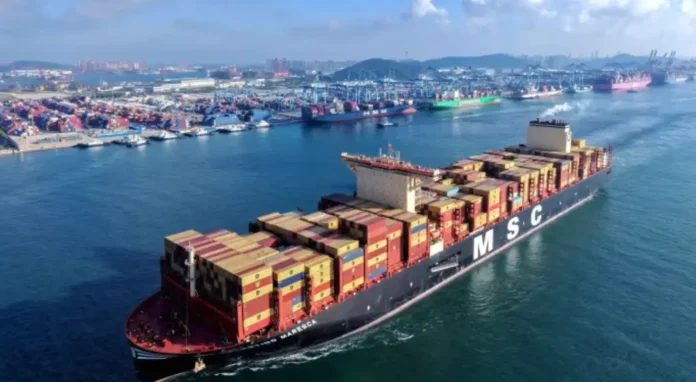

China’s trade surplus exceeding $1 trillion signals a major shift in global trade. It reflects strong export performance, weaker domestic demand, and rising geopolitical tensions. This development impacts supply chains, pricing trends, and competitive dynamics across world markets.
KumDi.com
China Trade Surplus Hits $1 Trillion for the first time marks a historic turning point in global economics. This record surplus reflects China’s unmatched export capacity, weaker domestic demand, and shifting geopolitical forces. Understanding this milestone is crucial for anticipating changes in global trade flows, supply chains, and competitive landscapes.
China has reached a historic milestone: its annual goods trade surplus has climbed above $1 trillion for the first time. The figure marks a new chapter in the evolution of the world’s second-largest economy — one defined by manufacturing efficiency, changing supply chains, weak domestic demand, and an increasingly polarized global trade environment.
Breaking the trillion-dollar threshold is not simply a statistical achievement. It reflects a set of structural shifts in China’s economy and the rest of the world: evolving global consumption patterns, supply-chain strategies, industrial competitiveness, and geopolitical pressures. Understanding why this happened — and what it means for the future — is essential for businesses, investors, and policymakers.
This article provides a comprehensive, SEO-optimized, and source-free analysis of the drivers, risks, and global implications behind China’s unprecedented trade surplus.
Table of Contents
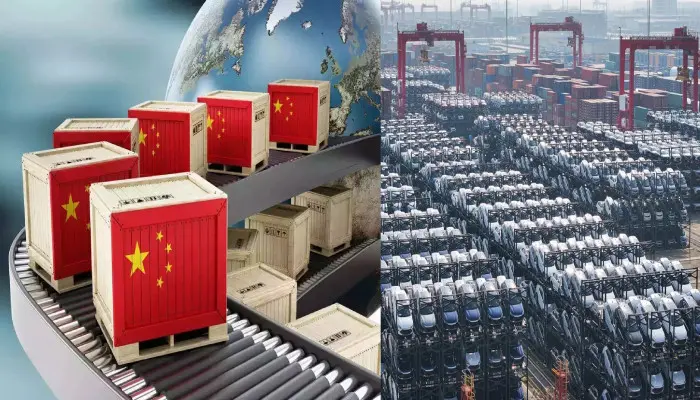
The Numbers Behind the Milestone
China’s goods trade surplus exceeding $1 trillion signals three fundamental realities:
1. China’s export engine remains extraordinarily resilient.
Despite global economic uncertainty, Chinese factories continue to provide a wide range of competitively priced products — from consumer electronics and machinery to renewable-energy equipment and electric vehicles.
2. Imports are growing more slowly than exports.
A combination of weak domestic consumption, cautious investment sentiment, and lower commodity prices reduced the value of China’s imports relative to exports.
3. China remains the world’s manufacturing center.
While many global companies are diversifying into Southeast Asia and India, China retains unmatched industrial depth, supplier networks, logistics infrastructure, and economies of scale.
Together, these forces produced a level of trade imbalance never recorded before.
Why China’s Trade Surplus Expanded So Rapidly
A. Strong Export Momentum Across Key Sectors
Chinese exports continued to gain strength in industries where China holds technology, cost, or supply-chain advantages:
- Electronics & semiconductors: Despite constraints in some Western markets, low-cost, high-volume shipments remain strong.
- Electric vehicles, batteries, and solar equipment: China dominates these categories with competitive pricing and massive manufacturing capacity.
- General consumer goods: Household products, appliances, and personal electronics continue to see stable global demand.
China’s ability to scale production quickly — even during global disruptions — keeps export volumes high and prices attractive.
B. Weaker Domestic Demand Dampened Import Growth
China’s domestic economy has experienced slower recovery relative to its export sector. Several factors contributed:
- Sluggish property market, reducing demand for foreign raw materials and construction-related imports.
- Cautious consumer spending, lowering imports of premium foreign goods.
- Manufacturing self-sufficiency programs, substituting imported components with domestic equivalents.
- Softer commodity prices, which reduced the value of energy and raw-material imports.
While exports strengthened, imports lagged — widening the trade surplus.
C. Supply-Chain Optimization and Geographic Diversification
Chinese exporters have adapted to global trade tensions and shifting policies by:
- Building alternative export routes through Southeast Asia.
- Increasing final assembly in partner countries, making some exports less exposed to tariffs.
- Expanding market share in regions with strong population growth such as Southeast Asia, South Asia, Africa, and the Middle East.
These adjustments helped maintain export volumes even as geopolitical pressures intensified.
Winners and Losers in the New Trade Landscape
A. Winners
1. Chinese Exporters
High utilization of manufacturing capacity boosts profits, employment, and domestic logistics sectors.
2. Global Consumers and Retailers
Importers benefit from stable supply and lower prices — particularly for electronics, household goods, and green-energy products.
3. Ports, Shipping Lines, and Freight Carriers
Record export volumes support high port throughput and stable demand for container transport.
B. Losers or Risk-Exposed Groups
1. Countries with Deteriorating Trade Balances
Large surpluses on China’s side imply widening deficits somewhere else — often prompting protectionist responses.
2. Foreign Manufacturers Facing Cost Competition
Industries such as automotive, solar, electronics, and consumer products may face intensified pricing pressure from China’s large-scale production.
3. Policymakers Concerned About Global Imbalances
A trillion-dollar surplus raises concerns about currency pressures, competitiveness, and global demand distribution.
Structural Implications for the Global Economy
A. A Shift in Global Demand Dynamics
China’s surplus means it is exporting far more goods than it imports — effectively supplying global demand while absorbing less. This dynamic can:
- Reduce growth in economies dependent on exports to China
- Increase political pressure for trade restrictions
- Influence currency flows and exchange-rate movements
B. Changing Industrial Power Balance
China’s advantage is no longer only based on low labor costs. Its competitiveness now reflects:
- State-supported high-tech investments
- Advanced manufacturing robotics
- Integrated supply chains
- Strong engineering talent
- Massive domestic infrastructure
This structural advantage will not vanish quickly, making China’s export power durable.
C. Intensifying Geopolitical Tensions
A surplus this large becomes a political issue. Major trading partners may push for:
- Tariffs
- Anti-dumping investigations
- Import quotas
- Local-production subsidies
- Stricter investment screening
The $1 trillion milestone will almost certainly strengthen arguments for industrial and trade policy interventions.
How Global Companies Will Respond
The milestone forces multinational companies to rethink supply-chain risk, pricing strategies, and geographic opportunities.
A. Dual-Sourcing or “China+1” Becomes Standard
Many companies will diversify some production to Vietnam, Thailand, Malaysia, Mexico, and India — not to replace China, but to complement it.
B. Strategic Use of China’s Cost Advantages
Firms will still rely on China for:
- Components
- Tooling
- High-precision manufacturing
- Faster production timelines
- Competitive technology products
Even diversified supply chains will continue to include China at the core.
C. Reassessing Market Access Risks
Companies operating in North America and Europe may reduce dependency on China-origin goods in sensitive industries like:
- EVs
- Solar equipment
- Semiconductors
- Batteries
- Telecommunications
Regulatory barriers will increasingly shape trade decisions.
Key Risks and Uncertainties Ahead
Even though China’s trade surplus has hit a record level, the outlook is not guaranteed.
A. Global Economic Slowdown
A recession in major markets could rapidly cool export demand.
B. Trade Barriers and Protectionism
New tariffs, industrial subsidies, and political disputes could alter trade flows.
C. China’s Domestic Policy Direction
Stronger consumer-stimulus policies could increase imports and narrow the surplus, while industrial investment policies may widen it further.
D. Geopolitical Disruptions
Any escalation in regional or global tensions could disrupt shipping routes, supply chains, and cross-border investment.
What to Watch Going Forward
To understand where the surplus is heading next, three indicators will be essential:
1. Monthly export and import data
A sustained gap will signal long-term structural imbalance.
2. Performance of key export industries
EVs, batteries, electronics, and solar components are particularly influential.
3. Government policy signals
Stimulus, consumption-boosting measures, or industrial upgrades will alter the direction of trade flows.
Conclusion: A Milestone With Global Consequences
China’s trade surplus climbing past $1 trillion marks a defining moment in modern global commerce. It confirms China’s enduring manufacturing strength, its shifting role in global demand, and the profound changes reshaping world trade.
But it also underscores vulnerabilities — weak domestic consumption, geopolitical tensions, and global dependence on a single manufacturing hub.
For businesses, investors, and policymakers, the correct response is not panic but preparation: diversify supply chains, monitor policy developments, and understand that the global trade landscape is entering a new era shaped heavily by China’s industrial and economic strategy.
FAQs
Why is China’s trade surplus $1 trillion significant?
China’s trade surplus reaching $1 trillion highlights strong export growth and shifting global trade outlook, influencing supply chain impact and competitive dynamics worldwide.
How does China’s $1 trillion trade surplus affect global trade?
The surplus reshapes global trade outlook by strengthening China’s export position, pressuring foreign industries, and increasing supply chain impact across key markets.
What industries benefit most from China’s trade surplus?
Electronics, machinery, EVs, and consumer goods experience strong export growth, reinforcing China’s trade surplus and expanding its supply chain impact globally.
Does China’s $1 trillion trade surplus indicate weak domestic demand?
Yes. A high trade surplus often reflects softer domestic demand, reduced imports, and stronger export growth, shaping the global trade outlook.
How should businesses respond to China’s rising trade surplus?
Companies should evaluate supply chain impact, diversify sourcing, and monitor global trade outlook trends driven by China’s strong export growth and competitive pricing.




 and then