


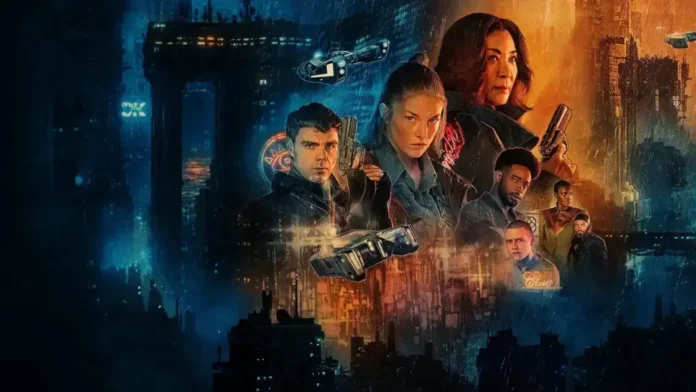

Blade Runner 2099 is an ambitious science-fiction sequel on Amazon Prime Video, featuring Michelle Yeoh and Hunter Schafer. Its impressive cyberpunk visuals, compelling performances, and exploration of artificial intelligence make it worth watching, although slow pacing and uneven storytelling may disappoint some longtime Blade Runner fans.
KumDi.com
Blade Runner 2099 is a visually ambitious science-fiction series that expands one of cinema’s most influential cyberpunk universes. Released on November 25, 2026, on Amazon Prime Video, the eight-episode limited series stars Michelle Yeoh and Hunter Schafer in a story set 50 years after Blade Runner 2049. Its central premise reverses the traditional relationship between humans and replicants, introducing a future in which artificial beings have gained power while humanity struggles to survive as an oppressed population.
Is Blade Runner 2099 worth watching? The answer is yes, particularly for viewers who appreciate atmospheric science fiction, complex artificial intelligence themes, dystopian storytelling, and strong performances. However, the series does not consistently achieve the emotional depth or narrative precision of its cinematic predecessors. Its impressive production design and lead performances are major strengths, while its deliberately slow pacing and occasionally underdeveloped storylines may frustrate some viewers.
For fans of the original franchise, Blade Runner 2099 offers an interesting new perspective on artificial consciousness, identity, mortality, and what it means to be human. It is an ambitious continuation rather than a replacement for the films that established the franchise.
Table of Contents

Blade Runner 2099 at a Glance
| Category | Details |
|---|---|
| Title | Blade Runner 2099 |
| Release date | November 25, 2026 |
| Streaming platform | Amazon Prime Video |
| Genre | Science Fiction, Cyberpunk, Thriller, Drama |
| Format | Limited television series |
| Episodes | 8 |
| Main cast | Michelle Yeoh, Hunter Schafer |
| Creator / Showrunner | Silka Luisa |
| Executive producer | Ridley Scott |
| Setting | Los Angeles, 2099 |
| Connection | 50 years after Blade Runner 2049 |
| Streaming status | All episodes available |
What Is Blade Runner 2099 About?
Blade Runner 2099 takes place in a future approximately 50 years after the events of Blade Runner 2049. The world has undergone a dramatic transformation, with replicants occupying a position of power and humans experiencing a radically different social reality.
The series follows two central characters: Cora, played by Hunter Schafer, and Olwen, played by Michelle Yeoh.
Cora is a human fugitive who has spent much of her life escaping danger. In an attempt to change her circumstances and pursue a dangerous objective, she assumes another identity and becomes involved with the Blade Runner organization.
Olwen is a replicant Blade Runner approaching the end of her predetermined lifespan. Her limited remaining time adds an important emotional dimension to the story, particularly as she becomes involved in an investigation that could have serious consequences for the future of their society.
The two women eventually form an uneasy partnership to track down a runaway connected to a secret that threatens their fragile world.
Their investigation gradually reveals deeper questions about power, identity, artificial intelligence, and the relationship between creators and their creations.
One of the series’ most interesting narrative decisions is its reversal of the traditional Blade Runner premise. Instead of humans hunting replicants, the new world introduces replicants who investigate and pursue humans.
This reversal creates an opportunity to examine the franchise’s familiar moral questions from a different perspective.
Michelle Yeoh and Hunter Schafer: The Performances That Drive the Series
The strongest element of Blade Runner 2099 is its central casting.
Michelle Yeoh as Olwen
Michelle Yeoh brings considerable screen presence to Olwen, a replicant whose approaching expiration creates a sense of urgency throughout the story.
Her character represents one of the franchise’s most important philosophical questions: Can an artificial being experience mortality in a way that makes its existence meaningful?
Olwen’s situation creates an interesting contrast between physical strength and emotional vulnerability. Although she operates within a world where replicants possess significant power, she cannot escape the limitations imposed on her existence.
Yeoh’s performance benefits from her ability to communicate complex emotions through restrained expressions and physical movement.
Her previous experience in science fiction and action productions also makes her a natural fit for the franchise’s demanding visual and dramatic environment.
However, the writing does not always give Olwen enough narrative space. Several important aspects of her character could have benefited from more detailed development.
Hunter Schafer as Cora
Hunter Schafer provides the other major performance as Cora, a human attempting to survive in a society that no longer places humanity at the top of the social hierarchy.
Cora’s complicated identity gives the character a strong dramatic foundation.
She must conceal important aspects of herself while navigating an environment in which trust can be dangerous. Her personal history, family responsibilities, and evolving relationship with Olwen gradually reveal the emotional motivations behind her decisions.
Schafer handles the character’s vulnerability and determination effectively.
Her performance also provides a different kind of energy from Yeoh’s more restrained portrayal. This contrast helps create a compelling dynamic between the two leads.
Together, the performances give the series much of its emotional credibility.
Visual Effects and Production Design: Does Blade Runner 2099 Capture the Original Atmosphere?
Visual storytelling has always been central to the Blade Runner franchise.
The original 1982 film established an influential cyberpunk aesthetic through its enormous urban architecture, industrial landscapes, artificial lighting, and densely populated futuristic environments.
Blade Runner 2049 expanded that visual language through monumental architecture, vast desert landscapes, and carefully controlled cinematography.
Blade Runner 2099 continues this tradition.
The series presents a future Los Angeles characterized by deteriorating urban environments, neon illumination, advanced technology, and contrasting levels of social development.
Its production design combines recognizable elements of the original franchise with additional locations and environments that reflect the changed political and social structure of 2099.
The visual world is particularly effective when it communicates information without relying on dialogue.
For example, differences between public spaces, institutional buildings, and underground environments help establish the unequal relationship between humans and replicants.
This is important because successful science-fiction world-building should make the audience understand how a fictional society operates, rather than simply showing futuristic buildings and advanced technology.
The series delivers many visually impressive moments.
However, visual consistency does not automatically translate into originality. Some environments and stylistic choices feel familiar to viewers who know the earlier films.
The challenge for a franchise sequel is to preserve its visual identity while introducing something genuinely new.
Blade Runner 2099 succeeds more consistently at maintaining the atmosphere than reinventing it.
Storytelling and Pacing: The Biggest Weakness
One of the main criticisms of Blade Runner 2099 concerns its eight-episode structure.
The Blade Runner franchise has traditionally explored its themes through relatively concentrated cinematic narratives. The television format offers more time for character development, social commentary, and exploration of the fictional world.
However, additional screen time also creates a greater storytelling challenge.
A limited series must provide enough narrative momentum to keep viewers interested across multiple episodes.
In Blade Runner 2099, the central investigation sometimes becomes less engaging than the philosophical and personal questions surrounding the characters.
The middle portion of the series can feel unnecessarily extended, particularly when the story shifts toward tracking individuals, uncovering objects, and revealing additional secrets.
This is not necessarily a problem with the underlying concept. In fact, the central premise offers considerable potential.
The difficulty is maintaining a balance between investigative storytelling and meaningful character development.
The best episodes are those that connect the external investigation with the characters’ internal conflicts.
When the series concentrates on Cora and Olwen, their identities, and their relationship with the world around them, the narrative becomes considerably more interesting.
When the investigation becomes the dominant focus, some of the emotional complexity becomes less effective.
The Most Interesting Theme: What Makes Someone Human?
The Blade Runner franchise has always explored the boundaries between artificial and biological life.
Its central philosophical question is not simply whether machines can think or behave like humans.
It is whether intelligence, memory, emotional attachment, suffering, and the desire to survive can create something that deserves to be recognized as human.
This question becomes particularly relevant in Blade Runner 2099.
The new series changes the traditional relationship between humans and replicants.
In earlier installments, replicants were frequently treated as artificial products whose existence was controlled by corporations and human institutions.
By 2099, the social structure has changed.
Replicants have gained power, while humans face the consequences of a world in which they are no longer the dominant species.
This reversal encourages viewers to reconsider familiar ideas about discrimination, social hierarchy, technological control, and the ethics of artificial intelligence.
Artificial Intelligence and the Future of Society
The series also feels relevant to contemporary discussions about artificial intelligence.
Modern AI systems are increasingly capable of generating images, producing written content, analyzing information, and performing tasks that once required substantial human involvement.
However, current AI capabilities should not be confused with the fictional consciousness and biological autonomy depicted in the Blade Runner universe.
Replicants are fictional engineered beings with physical bodies, emotional experiences, and individual identities.
Today’s AI systems do not possess established human-like consciousness simply because they can produce convincing conversational responses.
This distinction makes the series particularly interesting as speculative science fiction.
Rather than presenting a straightforward prediction of technological development, it uses an imagined future to examine what might happen when society struggles to define the moral boundaries of artificial life.
Blade Runner 2099 vs. Blade Runner and Blade Runner 2049
How does the new series compare with the two previous films?
| Feature | Blade Runner (1982) | Blade Runner 2049 (2017) | Blade Runner 2099 (2026) |
|---|---|---|---|
| Format | Feature film | Feature film | Limited series |
| Main focus | Humanity and identity | Memory and artificial life | Power, identity and mortality |
| Visual style | Classic cyberpunk noir | Monumental cinematic science fiction | Expanded cyberpunk dystopia |
| Narrative structure | Detective mystery | Philosophical investigation | Multi-episode investigation |
| Main storytelling strength | Atmosphere and philosophical ambiguity | Emotional depth and world-building | New perspective on the franchise |
| Main challenge | Deliberate pacing | Length and narrative complexity | Uneven pacing and character development |
The original Blade Runner established the philosophical foundation of the franchise.
Blade Runner 2049 expanded those ideas through a more emotionally complex story involving memory, identity, and the possibility of artificial beings developing beyond their intended purpose.
Blade Runner 2099 takes the next step by examining what happens after the relationship between humans and replicants has fundamentally changed.
The television format allows the franchise to explore additional characters and locations.
Nevertheless, the series does not always achieve the narrative concentration or emotional impact of the films.
Its most valuable contribution is its willingness to examine the established universe from a different social and political perspective.
What Critics Are Saying About Blade Runner 2099
Early professional reviews have been mixed but generally recognize the series’ visual ambition and leading performances.
At the time of writing, Rotten Tomatoes lists a critics’ Tomatometer score of approximately 69%, based on 65 reviews. Its published critics’ consensus highlights the visually impressive expansion of the Blade Runner universe and the performances of Hunter Schafer and Michelle Yeoh.
The response is not uniformly positive.
Several reviewers have praised the production design, cinematography, atmosphere, and central performances.
Other critics have expressed concerns about the narrative’s pacing, emotional depth, and reliance on familiar franchise elements.
The Los Angeles Times describes the series as slow-paced but supported by its leading actors.
Variety highlights Schafer’s performance and the production’s ability to introduce a compelling perspective on familiar philosophical questions.
The Verge also recognizes the series’ inventive approach to the franchise while identifying problems with its extended runtime and uneven middle episodes.
These responses suggest that Blade Runner 2099 is a series whose technical and creative strengths are more consistently appreciated than its storytelling.
Importantly, Rotten Tomatoes scores represent an aggregation of published reviews, not a definitive measure of whether an individual viewer will enjoy the series.
Is Blade Runner 2099 Worth Watching?
The answer depends on what you expect from a Blade Runner production.
Reasons to Watch
1. A fresh perspective on the Blade Runner universe
The reversal of the relationship between humans and replicants creates an interesting starting point for a new story.
2. Strong lead performances
Michelle Yeoh and Hunter Schafer provide two contrasting central performances that help maintain the series’ emotional focus.
3. Impressive futuristic environments
The production design creates a detailed dystopian setting that continues the franchise’s established visual identity.
4. Relevant philosophical themes
The exploration of artificial intelligence, identity, mortality, and social inequality gives the series more substance than a conventional science-fiction action production.
5. An expanded story format
Eight episodes provide opportunities to explore the fictional world beyond the limitations of a traditional feature film.
Reasons Some Viewers May Be Disappointed
1. Deliberate pacing
The story takes its time developing its central investigation, and some episodes may feel longer than necessary.
2. Uneven character development
Although the leading characters are interesting, some supporting roles receive less meaningful development.
3. Familiar visual elements
The series maintains the established Blade Runner aesthetic but does not always introduce sufficiently distinctive visual ideas.
4. Limited narrative momentum
Some investigative storylines compete with the more interesting philosophical questions.
5. High franchise expectations
Comparisons with the original film and Blade Runner 2049 are inevitable, and the series does not consistently reach the same storytelling standard.
Do You Need to Watch the Previous Blade Runner Movies First?
Watching the earlier films is recommended, but it is not essential.
New viewers can understand the basic premise of Blade Runner 2099 without having seen the previous installments.
However, watching the earlier productions provides valuable context.
A recommended viewing order is:
- Blade Runner (1982): Introduces replicants, the original dystopian setting, and the central philosophical questions.
- Blade Runner 2049 (2017): Explores the development of replicant identity, memory, and the possibility of biological reproduction.
- Blade Runner 2099 (2026): Examines a transformed society decades after the events of the previous film.
For viewers interested in the history of the franchise, this order provides a more complete understanding of how its central ideas have evolved.
FAQs
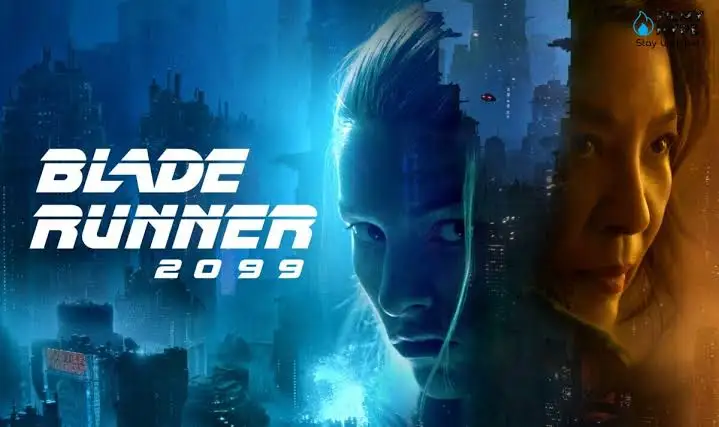
Is Blade Runner 2099 worth watching in 2026?
Yes, Blade Runner 2099 is worth watching for fans of science fiction, cyberpunk storytelling, and artificial intelligence themes. Its impressive production design, performances by Michelle Yeoh and Hunter Schafer, and expanded Blade Runner universe make it an interesting Prime Video series, although its slow pacing may not appeal to everyone.
Where can I watch Blade Runner 2099 on Prime Video?
Blade Runner 2099 is available on Amazon Prime Video. The science-fiction series premiered on November 25, 2026, with eight episodes. Streaming availability, subscription requirements, and subtitle options may vary depending on your country.
Who is in the Blade Runner 2099 cast?
The main Blade Runner 2099 cast includes Michelle Yeoh as Olwen and Hunter Schafer as Cora. The supporting cast includes Dimitri Abold, Lewis Gribben, Matthew Needham, Johnny Harris, and Tom Burke. Their performances help bring the futuristic cyberpunk world to life.
Is Blade Runner 2099 a sequel to Blade Runner 2049?
Yes, Blade Runner 2099 continues the story of the Blade Runner universe approximately 50 years after Blade Runner 2049. The series introduces new characters and explores a transformed society in which replicants have gained power and humans face a different social hierarchy.
How does Blade Runner 2099 compare to Blade Runner 2049?
Blade Runner 2099 expands the franchise through an eight-episode television format, exploring artificial intelligence, identity, mortality, and social inequality. While Blade Runner 2049 delivers a more concentrated cinematic experience, the new series offers additional world-building and a fresh perspective on the relationship between humans and replicants.
Blade Runner 2099: Final Verdict and Rating
Blade Runner 2099 is an ambitious addition to an established science-fiction franchise.
Its greatest achievements are its production design, the performances of Michelle Yeoh and Hunter Schafer, and its decision to examine the Blade Runner universe from a dramatically different social perspective.
The series also demonstrates the storytelling opportunities available when a cinematic science-fiction universe moves into television.
However, its eight-episode structure occasionally works against it. Some investigative developments feel extended, and the narrative does not always provide the emotional depth necessary to support its impressive visual presentation.
For longtime fans, the series offers worthwhile ideas and a fresh perspective on the relationship between artificial and biological life.
For newcomers, it provides an accessible introduction to a visually distinctive cyberpunk universe, although its deliberate storytelling style may not appeal to viewers looking for fast-paced science fiction.
Editorial rating: 7.5/10
References
- Rotten Tomatoes – Blade Runner 2099 reviews and critics’ consensus
- Amazon’s official announcement and viewing information




 and then
