


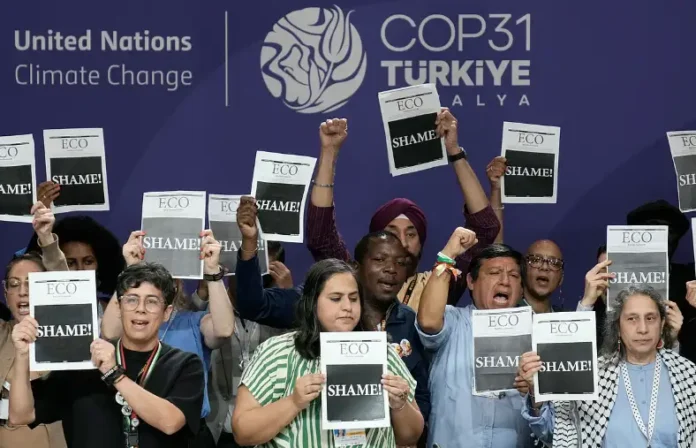

The COP31 climate summit collapsed in November 2026 after countries failed to reach an agreement on transitioning away from fossil fuels. Disagreements over coal, oil, natural gas and climate finance prevented consensus, exposing deep divisions over global warming, renewable energy investment and international climate commitments.
KumDi.com
The 2026 United Nations Climate Change Conference (COP31) in Antalya, Türkiye, ended without an overarching political agreement after nearly 200 countries failed to reach consensus on moving away from fossil fuels. The negotiations collapsed on November 22, following more than two weeks of discussions and approximately two additional days of negotiations beyond the scheduled closing date.
The central disagreement was whether the final agreement should explicitly commit countries to transitioning away from coal, oil and natural gas. The European Union and several climate-vulnerable nations rejected the proposed agreement because it did not mention fossil fuels or establish a clear transition pathway. Disagreements over climate finance, carbon capture technology and support for developing countries further widened the divisions. The outcome represents a significant setback for international climate diplomacy, although existing climate agreements and national commitments remain in force.
Table of Contents
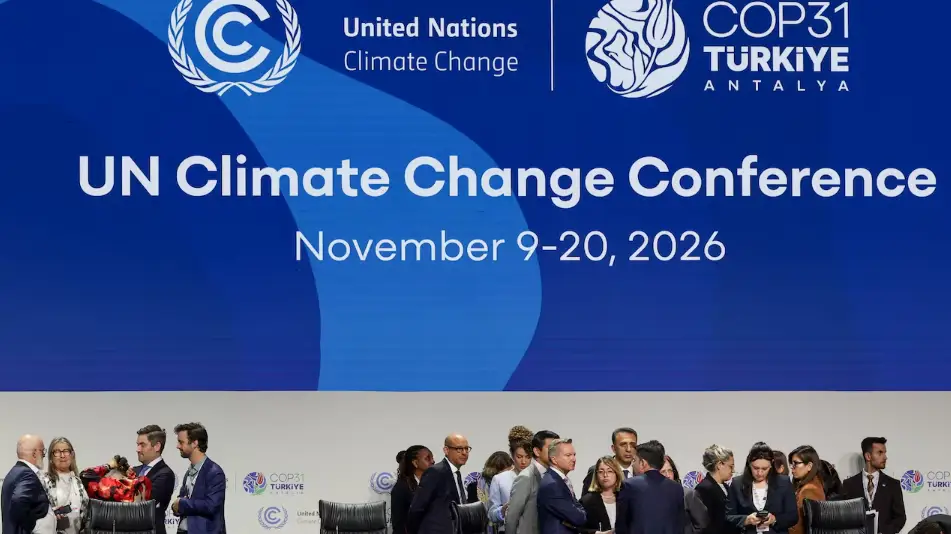
What Happened at COP31?
COP31 brought together government representatives, climate negotiators, scientists, environmental organizations and international institutions in Antalya, Türkiye, under joint Turkish-Australian leadership.
The conference was intended to advance international cooperation on reducing greenhouse gas emissions, accelerating the clean energy transition and supporting countries experiencing increasingly severe climate impacts.
However, negotiations became increasingly difficult as participating governments disagreed over the wording and ambition of the final political declaration, commonly known as the cover decision.
The proposed agreement, referred to as the Antalya Pact, failed to secure the consensus required for adoption.
According to reporting by Reuters, the European Union and several other countries considered the final proposal insufficient because it omitted an explicit commitment to moving away from fossil fuels. Developing countries also questioned whether the proposed financial assistance was sufficiently specific to address their adaptation needs.
The breakdown was particularly significant because it marked the first failure to adopt an overarching political agreement at a major UN climate summit since COP15 in Copenhagen in 2009.
Key facts about the COP31 collapse
| Category | Details |
|---|---|
| Conference | COP31 |
| Location | Antalya, Türkiye |
| Conclusion | November 22, 2026 |
| Participants | Nearly 200 countries |
| Main disagreement | Transition away from fossil fuels |
| Additional disputes | Climate finance, carbon capture and adaptation |
| Proposed agreement | Antalya Pact |
| Final outcome | No overarching political agreement |
The failure does not mean that all COP31 negotiations produced nothing. Several separate initiatives and areas of cooperation continued, including efforts to accelerate electrification and climate adaptation.
However, the absence of a comprehensive political agreement exposed the difficulty of translating international climate commitments into coordinated action.
Why Did Countries Fail to Agree on Fossil Fuels?
The disagreement over fossil fuels reflects a fundamental conflict between climate objectives, national economic interests and energy security.
Coal, oil and natural gas remain essential components of the global economy. They support electricity generation, transportation, industrial manufacturing, agriculture and international trade.
For countries that depend heavily on fossil fuel production or exports, an accelerated transition can create substantial economic and fiscal challenges.
For climate-vulnerable countries and governments pursuing stronger emissions reductions, delaying the transition creates increasingly serious environmental and economic risks.
Three major disagreements contributed to the collapse.
A. Disagreement over phasing out coal, oil and natural gas
One of the most important issues was whether countries should reaffirm a clear commitment to transitioning away from fossil fuels.
At COP28 in Dubai in 2023, countries agreed to language calling for a transition away from fossil fuels in energy systems. This was a significant development in international climate negotiations because it explicitly recognized the need to move beyond the principal sources of human-caused global warming.
At COP31, however, the proposed final agreement did not retain an explicit fossil-fuel transition commitment.
The initial draft included language calling for an immediate transition away from fossil fuels in energy systems. Subsequent negotiations removed references to fossil fuels from the proposed text.
More than 100 countries reportedly supported retaining stronger language, but opposition from other participants prevented agreement.
The European Union, Norway, Panama, the Marshall Islands and other countries objected to the final proposal.
Russia and Saudi Arabia were among the countries opposing explicit fossil-fuel language.
Their positions reflected concerns about energy security, the economic consequences of restricting fossil fuel production and the need to consider different national circumstances.
The disagreement ultimately became too substantial to resolve through compromise.
B. Climate finance disagreements
Climate finance was another major obstacle.
Developing countries often face greater exposure to climate-related disasters while having fewer financial resources to prepare for, respond to and recover from them.
For example, small island nations face rising sea levels, coastal erosion and increasingly severe storms. Agricultural economies are vulnerable to prolonged droughts, changing rainfall patterns and extreme heat.
These countries argue that wealthier nations, which historically contributed substantially more to cumulative greenhouse gas emissions, should provide financial assistance.
The proposed COP31 agreement called for efforts to at least triple adaptation finance by 2035. However, developing countries criticized the absence of a clearly established baseline and specific financial commitments.
This created an important political problem: countries were being asked to support stronger climate action without sufficient agreement on how the economic costs would be distributed.
For many developing economies, transitioning to renewable energy requires substantial investment in electricity grids, storage systems, transportation infrastructure and industrial modernization.
Without accessible financing, the transition can become significantly more difficult.
C. Disagreement over carbon capture technology
Carbon capture and storage (CCS) also became controversial during the negotiations.
Carbon capture refers to technologies designed to separate carbon dioxide from industrial emissions or, in some applications, directly from the atmosphere.
The captured carbon dioxide can then be transported and stored in suitable geological formations or used in certain industrial processes.
Supporters argue that carbon capture could help reduce emissions in industries where eliminating fossil fuel use is technically difficult, including cement, steel and some chemical manufacturing.
However, critics argue that relying too heavily on carbon capture could allow fossil fuel production to continue without sufficiently reducing the underlying dependence on coal, oil and natural gas.
The central distinction is important:
- Emissions reduction: Preventing greenhouse gases from entering the atmosphere in the first place.
- Carbon capture: Capturing carbon dioxide from specific sources or the atmosphere.
- Fossil-fuel transition: Gradually replacing fossil fuel-dependent energy systems with lower-emission alternatives.
Carbon capture may have a role in a broader climate strategy, but it cannot independently replace the need for substantial emissions reductions and clean energy deployment.
Why Are Fossil Fuels So Important to the Climate Crisis?
Fossil fuels are energy sources formed over millions of years from the remains of ancient plants and organisms. The three principal types are coal, petroleum (oil) and natural gas.
When these fuels are burned, they release carbon dioxide (CO₂), a greenhouse gas that traps heat in the Earth’s atmosphere.
This process strengthens the natural greenhouse effect and contributes to rising global temperatures.
According to climate science, human activities are responsible for the current long-term warming trend, with fossil fuel combustion representing one of the largest sources of greenhouse gas emissions.
How fossil fuels contribute to global warming
The relationship between fossil fuel consumption and climate change can be explained in five stages:
- Extraction: Coal, oil and natural gas are extracted from underground reserves.
- Combustion: These fuels are burned to produce electricity, heat, transportation energy and industrial power.
- Carbon emissions: Burning fossil fuels releases carbon dioxide into the atmosphere.
- Heat retention: Higher atmospheric greenhouse gas concentrations increase the amount of heat retained by the climate system.
- Climate impacts: Global temperatures rise, contributing to changes in precipitation, ocean conditions, extreme heat and other climate-related risks.
The consequences extend beyond environmental damage.
Rising temperatures can affect agricultural productivity, water availability, public infrastructure, insurance markets, supply chains and public health.
The economic consequences of continued fossil fuel dependence
The economic risks associated with fossil fuel dependence are not limited to climate damage.
Countries that rely heavily on imported oil and natural gas can experience significant financial pressure when international energy prices increase.
Energy-importing economies may face:
- Higher electricity and transportation costs.
- Increased inflation and manufacturing expenses.
- Greater exposure to geopolitical disruptions.
- Vulnerability to international fuel price fluctuations.
- Higher costs associated with adapting infrastructure to climate impacts.
By contrast, renewable energy sources such as solar and wind can reduce exposure to imported fuel markets, although their successful integration requires investment in electricity networks, energy storage and flexible power systems.
This makes the energy transition both an environmental priority and a long-term economic resilience strategy.
Which Countries Opposed the Proposed Climate Agreement?
The COP31 negotiations highlighted differences between countries with substantial fossil fuel interests and those seeking stronger international climate commitments.
It is important to distinguish between countries opposing a particular agreement and countries rejecting climate action altogether. Their positions can differ depending on the wording, financing arrangements and economic implications of individual proposals.
Countries and groups with differing positions
| Countries or groups | Main concerns |
|---|---|
| European Union | Wanted an explicit commitment to transition away from fossil fuels |
| Norway | Supported stronger language on fossil fuel transition |
| Panama | Objected to the lack of a clear fossil fuel commitment |
| Marshall Islands and Vanuatu | Sought stronger climate action to protect vulnerable communities |
| Russia | Opposed restrictive fossil fuel language |
| Saudi Arabia | Supported keeping different energy solutions available |
| Developing countries | Demanded more predictable climate adaptation finance |
The European Union’s position was particularly important because it represented a major negotiating bloc.
Several European representatives argued that an agreement without any meaningful reference to fossil fuels would undermine the progress made at previous climate conferences.
Meanwhile, vulnerable island nations emphasized that the consequences of delayed climate action are already affecting their populations.
These differences demonstrate why climate negotiations are difficult: countries do not experience climate risks, economic costs or energy transitions in the same way.
What Does the COP31 Failure Mean for the Paris Agreement?
The failure to adopt the COP31 overarching agreement does not cancel the Paris Agreement.
Adopted in 2015, the Paris Agreement is an international treaty designed to strengthen the global response to climate change.
Its central temperature objectives are:
- Hold the increase in global average temperature to well below 2°C above pre-industrial levels.
- Pursue efforts to limit warming to 1.5°C.
- Strengthen countries’ ability to adapt to climate impacts.
- Align financial flows with lower-emission and climate-resilient development.
Participating countries submit Nationally Determined Contributions (NDCs), which outline their national climate targets and planned actions.
These commitments operate through an ongoing international framework rather than depending entirely on the success of a single annual conference.
Consequently, COP31’s failure creates a political and diplomatic setback, but existing Paris Agreement obligations and previously adopted COP decisions remain relevant.
Why the 1.5°C target matters
The 1.5°C threshold is particularly important for vulnerable ecosystems and populations.
Although every additional fraction of warming matters, the risks generally become more severe as temperatures increase.
Potential consequences include:
- More frequent and intense extreme heat.
- Greater risks of severe agricultural disruption.
- Increased stress on freshwater resources.
- More damaging coastal flooding from sea-level rise.
- Greater pressure on biodiversity and marine ecosystems.
- Increased health risks associated with heat exposure and environmental conditions.
The world is already experiencing substantial climate impacts, and scientific assessments warn that limiting long-term warming to 1.5°C is increasingly difficult.
The failure of COP31 therefore raises concerns about whether current national policies and international commitments are sufficient to reduce future climate risks.
What Progress Was Still Achieved at COP31?
Despite the collapse of the main agreement, the conference was not entirely without progress.
More than 90 countries signed a separate pledge supporting increased electrification, with the objective of raising electricity’s share of final energy consumption to 35% by 2035.
Electrification is an important part of decarbonization because it allows activities traditionally powered by fossil fuels to shift toward electricity generated from lower-emission sources.
Examples include:
Electric transportation: Replacing petrol and diesel vehicles with electric alternatives.
Industrial electrification: Using electric heating and other technologies in manufacturing processes where technically and economically feasible.
Building electrification: Replacing fossil fuel heating systems with electric heat pumps and other efficient technologies.
Renewable electricity: Expanding solar, wind and other low-carbon power generation.
However, electrification alone does not guarantee lower emissions. Its climate benefits depend on how electricity is generated and whether electricity infrastructure can accommodate increasing demand.
The conference also continued discussions on climate adaptation, international cooperation and the financing requirements of developing countries.
These initiatives demonstrate that international climate action can continue through smaller agreements and national partnerships, even when a comprehensive political declaration cannot be adopted.
What Needs to Happen Next to Accelerate the Global Energy Transition?
The COP31 outcome highlights the need to move beyond broad political declarations and focus on measurable implementation.
A credible global transition requires coordinated action across energy production, electricity infrastructure, industrial development, financing and social protection.
Five priorities are particularly important.
1. Establish realistic fossil fuel transition pathways
Governments need measurable plans for reducing dependence on coal, oil and natural gas.
These plans should include clear emissions targets, investment schedules, energy efficiency improvements and strategies for replacing high-emission energy sources.
Transition pathways should reflect national circumstances while remaining consistent with global climate objectives.
2. Accelerate renewable energy investment
Solar and wind power have become increasingly competitive in many electricity markets.
However, renewable energy expansion requires more than installing additional generating capacity.
Governments and energy companies must also invest in:
- Modern electricity transmission networks.
- Battery and long-duration energy storage.
- Grid management and digital infrastructure.
- Interconnection between electricity markets.
- Reliable backup and flexible generation.
Without these investments, renewable energy capacity may not translate into reliable reductions in fossil fuel consumption.
3. Provide predictable climate finance
Developing countries need financing mechanisms that are affordable, transparent and accessible.
Climate finance should support renewable energy infrastructure, climate adaptation, disaster preparedness and resilient public services.
International financing institutions, development banks and private investors all have important roles.
Financial assistance must also address the debt and borrowing constraints faced by lower-income countries.
4. Protect workers and communities
The transition away from fossil fuels affects workers, businesses and communities that depend on coal mines, oil production, gas infrastructure and related industries.
A successful transition must include:
- Retraining and employment programs.
- Investment in alternative industries.
- Regional economic diversification.
- Social protection for affected households.
- Support for small businesses and local communities.
This approach is often described as a just transition.
The objective is to reduce emissions without creating unnecessary economic hardship for workers and communities.
5. Strengthen international accountability
Climate agreements become meaningful when governments translate them into measurable policies.
Countries should regularly report progress on emissions reductions, renewable energy deployment, adaptation spending and climate finance.
Independent scientific assessments and transparent monitoring can help identify where national commitments are falling short.
The next stage of international climate diplomacy must focus on implementation rather than simply negotiating ambitious language.
What Happens After COP31?
The failure in Antalya shifts attention toward the next phase of international climate negotiations and the implementation of existing commitments.
Countries will need to continue discussions on fossil fuel transition pathways, climate adaptation funding and international cooperation ahead of COP32, which is expected to take place in Ethiopia in 2027.
The challenge will be rebuilding confidence between developed and developing countries.
For international climate diplomacy to make meaningful progress, governments must address three interconnected questions:
- How quickly can countries reduce their dependence on fossil fuels?
- Who will finance the transition and help vulnerable countries adapt?
- How can governments ensure that climate commitments translate into measurable results?
The answers will influence future energy investments, industrial policies and international economic relationships.
The transition is also increasingly shaped by private-sector investment, technological innovation and changing consumer demand. Renewable energy, electric transportation and energy storage are developing independently of international climate negotiations.
Nevertheless, international agreements remain important because they provide common objectives, political coordination and a framework for financial cooperation.
The COP31 collapse is therefore a warning about the limitations of multilateral diplomacy, not evidence that the global energy transition has stopped.
FAQs
Why did the COP31 climate summit collapse in 2026?
The COP31 climate summit collapsed because participating countries could not agree on an overarching climate agreement. The main disagreement concerned the transition away from fossil fuels, including coal, oil and natural gas. Disputes over climate finance and carbon capture technology also prevented consensus.
Which countries opposed the COP31 fossil fuel agreement?
he European Union, the United Kingdom, Norway, Panama, the Marshall Islands and other climate-vulnerable nations rejected the proposed COP31 agreement because it did not explicitly address the transition away from fossil fuels. Russia and Saudi Arabia opposed stronger fossil fuel language, highlighting international divisions over energy policy.
Does the COP31 climate summit failure affect the Paris Agreement?
No. The COP31 climate summit failure does not cancel the 2015 Paris Agreement. The international treaty remains in force, and participating countries continue to have climate commitments, including national emissions reduction targets and efforts to limit global warming to well below 2°C while pursuing the 1.5°C goal.
Why is transitioning away from fossil fuels important for global climate change?
Transitioning away from fossil fuels is essential because burning coal, oil and natural gas releases carbon dioxide, a major greenhouse gas responsible for human-caused global warming. Expanding renewable energy, improving energy efficiency and electrifying transportation and industry can help reduce emissions and support long-term climate goals.
What happens next after the COP31 climate summit collapse?
Following the COP31 climate summit collapse, countries must continue implementing existing climate commitments and negotiating solutions to unresolved issues, including fossil fuel transition pathways, renewable energy investment and climate finance. International discussions are expected to continue ahead of COP32 in Ethiopia in 2027.
Conclusion: The Global Energy Transition Needs More Than Political Agreements
The collapse of COP31 demonstrates how difficult it remains for nearly 200 countries to agree on a common strategy for addressing climate change.
The disagreement over fossil fuels was not simply a debate about energy technology. It reflected deeper differences involving economic development, national energy security, historical responsibility and the financial costs of climate action.
For vulnerable countries, delaying emissions reductions and adaptation funding increases exposure to climate-related risks. For fossil fuel-dependent economies, moving too quickly without credible economic alternatives can create serious financial and employment challenges.
The solution requires a balanced but measurable approach: reducing fossil fuel dependence, expanding renewable energy, strengthening electricity infrastructure, improving energy efficiency and providing predictable financial support to developing economies.
COP31 did not deliver the political agreement many countries expected. However, the need for international cooperation has not disappeared.
The real measure of future climate progress will be whether governments turn existing commitments into practical results, supported by transparent targets, sufficient investment and accountable implementation.
References
- CNN – Global climate summit collapses as countries fail to agree on moving away from fossil fuels
- IPCC – Intergovernmental Panel on Climate Change




 and then
