








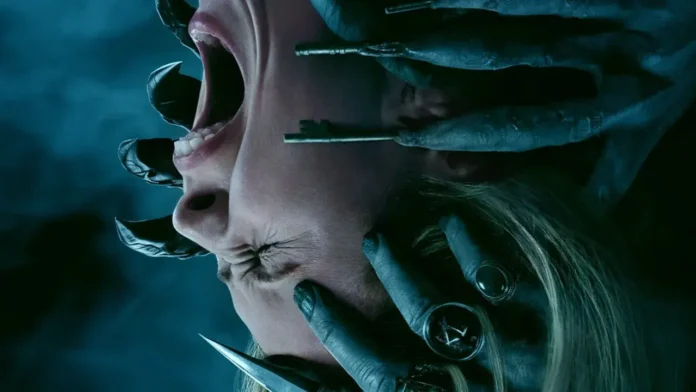

Insidious: Out of the Further is a worthwhile but uneven supernatural horror sequel. The sixth film introduces Gemma, a young mother who can enter The Further and bring supernatural entities back into the real world. It delivers effective scares, atmospheric visuals, and a fresh premise, but its mythology and exposition can slow the story. Overall, it earns a 6.5/10 and is best suited to Insidious fans and supernatural-horror audiences.
KumDi.com
Insidious: Out of the Further is a visually inventive but uneven sixth entry in the long-running supernatural horror franchise. Directed by Jacob Chase and starring Amelia Eve, Brandon Perea, Maisie Richardson-Sellers, Sam Spruell, and Lin Shaye, the film moves away from the Lambert family and introduces a new protagonist, Gemma, whose unusual ability changes the rules of The Further.
Spoiler-free verdict: A worthwhile but inconsistent franchise continuation — stronger in atmosphere and individual scares than in storytelling.
Insidious: Out of the Further Quick Review
| Category | Assessment |
|---|---|
| Genre | Supernatural horror / mystery / thriller |
| Director | Jacob Chase |
| Main character | Gemma, played by Amelia Eve |
| Returning star | Lin Shaye as Elise Rainier |
| Runtime | 1 hour 46 minutes |
| Rating | PG-13 |
| U.S. theatrical release | August 21, 2026 |
| Franchise position | Sixth Insidious film |
| Overall verdict | Recommended for franchise and supernatural-horror fans |
Sony Pictures officially describes the movie as a new chapter centered on a young mother who discovers that she can enter The Further and, unusually, bring entities from that realm back into the physical world. The franchise has reportedly surpassed $740 million worldwide, making this a significant continuation rather than a minor spin-off.
Table of Contents

What Is Insidious: Out of the Further About?
At the center of the film is Gemma, a young mother raising her daughter in the house where she grew up. Her relationship with the supernatural is different from the protagonists of earlier Insidious movies because she does not merely encounter The Further.
She can travel into it and bring what exists there back into the real world.
That ability is the film’s central horror mechanism.
In previous installments, The Further generally functioned as an otherworldly space populated by lost souls and hostile entities. Out of the Further reverses the direction of the threat. Instead of the living simply being pulled toward the supernatural realm, supernatural beings now have a pathway into ordinary reality.
That gives the film a useful conceptual hook: the boundary separating the living world from The Further is no longer secure.
The official synopsis emphasizes exactly this escalation, explaining that once demons recognize Gemma’s ability, the physical world becomes their playground.
This is one of the film’s strongest ideas because it creates a natural progression from the previous mythology without requiring the Lambert family to return as the central characters.
Does Insidious: Out of the Further Work as a New Chapter?
Yes, to an extent.
One of the smartest decisions is moving the story beyond the Lambert family. The previous five movies established a substantial mythology around the Further, astral projection, demons, Elise Rainier, and the Lambert family. Continuing that exact storyline indefinitely would have created considerable franchise fatigue.
Out of the Further instead functions as something close to a soft reboot within the established universe.
Gemma and her daughter provide a new emotional center, while Elise — played again by Lin Shaye — maintains a connection to the franchise’s established mythology.
Several reviews have specifically noted that the movie does not simply depend on nostalgia for the earlier films. Nerdist, for example, praised the decision to introduce new characters while allowing established franchise elements to remain relevant.
That distinction matters.
A sequel does not necessarily need the original characters to feel connected to its predecessor. What it needs is a coherent set of rules, themes, and visual language.
Out of the Further largely succeeds at that.
The Biggest Strength: The Horror Concepts
The film’s best material comes from its visual conception of supernatural horror.
Several early reviews have highlighted individual sequences involving liminal spaces, confined environments, strange creatures, and distorted versions of familiar locations. One review particularly praised a sequence involving a seemingly endless hallway and creatures that create tension through distance and stillness rather than constant movement.
That approach is important because effective supernatural horror is not necessarily about showing the monster more often.
Fear generally becomes less effective when the threat is completely explained.
The strongest Insidious sequences traditionally use:
- Limited information
- Unexpected movement
- Unfamiliar spaces
- Sound design
- Controlled lighting
- Delayed visual reveals
Out of the Further occasionally understands this very well.
The film’s best scares reportedly come from controlling what the audience sees rather than simply filling the frame with digital creatures.
This is also where Jacob Chase’s direction becomes most noticeable. Chase previously directed Come Play, another supernatural horror film built around technology, isolation, and an invasive otherworldly presence. His experience with atmospheric horror gives Out of the Further some of its more effective sequences.
How Scary Is Insidious: Out of the Further?
If your primary question is “Is Insidious: Out of the Further actually scary?”, the answer is sometimes — but not consistently.
The movie contains effective jump scares and unsettling imagery, but its horror is not uniformly frightening.
This distinction is important.
A horror movie can be entertaining without being genuinely terrifying.
Several critics have described the film as containing memorable or inventive sequences while criticizing the overall consistency of the scares. The Guardian, for example, acknowledged visually inventive moments but argued that the film is weighed down by convoluted mythology and forgettable scares.
Other reviews have been considerably more positive about its scare construction. DiscussingFilm described the new chapter as clever and visually inventive, while another review praised Chase’s control of camera movement and tension during the first half.
So the fairest assessment is:
The movie contains good horror sequences, but not every scene maintains the same level of tension.
Why the First Half Gets More Praise
A recurring point across early reviews is that the first half is stronger than the latter portion.
That criticism appears in multiple forms.
Some reviewers describe the opening section as atmospheric and suspenseful before the movie becomes increasingly dependent on exposition and mythology. Others argue that the film establishes interesting possibilities early but takes too long to exploit them.
This is a structural issue rather than simply a scare issue.
The premise is straightforward:
Gemma can enter The Further — and she can bring things back.
That creates enormous storytelling possibilities.
The challenge is what happens after the audience understands the rule.
If the movie keeps adding explanations, supernatural terminology, character backstory, and mythology instead of escalating the consequences, the central concept becomes less frightening.
This appears to be where Out of the Further divides critics.
The Main Weakness: Too Much Mythology
The biggest criticism surrounding Insidious: Out of the Further concerns its storytelling and mythology.
The Insidious franchise has always depended on supernatural rules. However, there is a significant difference between establishing a mysterious supernatural world and explaining every detail of that world.
Horror benefits from ambiguity.
When a supernatural entity is mysterious, the audience imagines possibilities that the film does not explicitly show.
When the movie explains:
- who the entity is,
- what it wants,
- how the supernatural system works,
- why the characters are connected,
- and what must happen next,
the threat can become less frightening.
This is why some reviewers have described the sixth film as increasingly convoluted or exposition-heavy. The New York Post criticized the movie for confusing mythology and excessive explanation, while The Guardian similarly argued that the expanded mythology weighs down the film.
For viewers who primarily want atmosphere and scares, this is probably the movie’s biggest limitation.
Amelia Eve as Gemma
The film depends heavily on Amelia Eve, because Gemma is not simply another character being haunted by an external monster.
She is directly connected to the supernatural mechanism driving the story.
That creates an interesting dramatic problem: Gemma is simultaneously victim, participant, and potential threat.
Her ability is useful, but it also makes her vulnerable.
The official premise confirms that her ability to move between worlds is precisely what attracts the attention of the entities in The Further.
This makes the character more active than many traditional haunted-house protagonists.
Rather than simply asking:
“What is haunting this family?”
the movie can ask:
“What happens when the person being hunted is also the doorway?”
That is a stronger horror concept.
The emotional dimension comes from Gemma’s relationship with her daughter and the unresolved trauma connected to the home where she grew up.
Lin Shaye’s Return as Elise
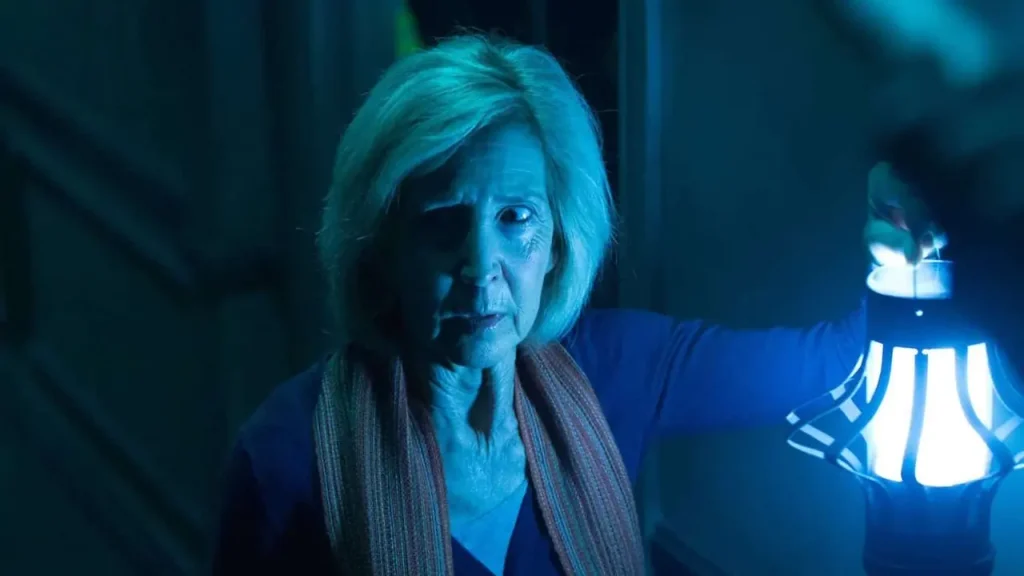
For long-time Insidious viewers, Lin Shaye’s return as Elise Rainier is one of the film’s most important connections to the franchise.
Elise has become one of the defining characters of the series, and her presence provides continuity without requiring Patrick Wilson’s Josh Lambert or the original Lambert family to return as the protagonists.
The official production information confirms Shaye’s return, while the film’s new storyline establishes Gemma as the central character.
Critically, Elise also serves an important narrative function.
She represents experience.
Gemma is discovering the rules of The Further. Elise already understands that supernatural encounters rarely follow normal logic.
That creates a useful contrast between:
new protagonist + established mythology
rather than:
old protagonist + repeated storyline.
Is It Necessary to Watch the Previous Insidious Movies?
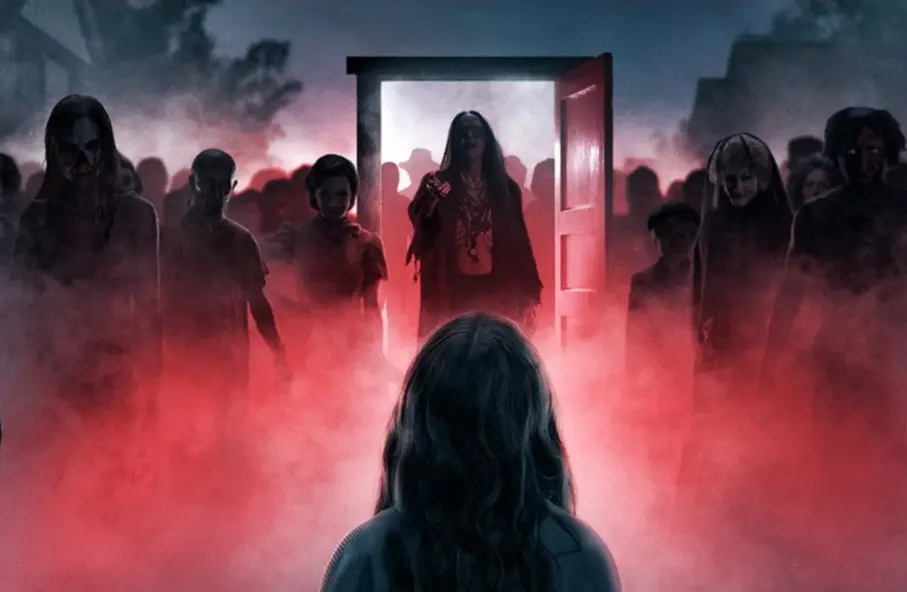
Not strictly, but familiarity helps.
Because Out of the Further introduces a new family, newcomers can understand the basic premise without having watched every previous entry.
However, viewers who know the franchise will have a better understanding of:
- The Further
- astral projection
- Elise Rainier
- supernatural entities
- the franchise’s recurring visual language
- the significance of returning mythology
The sixth movie follows Insidious: The Red Door (2023), which served as a major conclusion to the Lambert family’s story. The new installment therefore works partly as a transition toward a new storyline.
Best viewing approach
If you want the minimum preparation, watch:
Insidious (2010) → Insidious: The Red Door (2023) → Out of the Further (2026)
If you are a franchise completionist, watching all five previous movies gives you the fullest understanding of the mythology.
Insidious: Out of the Further vs. the Original Insidious
The comparison with the 2010 original is inevitable.
The first Insidious was effective partly because its supernatural mythology initially felt unfamiliar. James Wan and Leigh Whannell combined haunted-house conventions with astral projection and a distinctive visual identity.
Six films later, the audience understands much more about The Further.
That creates a fundamental problem:
Mystery is difficult to preserve after extensive world-building.
Out of the Further attempts to solve that problem by changing the rules. Instead of simply exploring The Further, it asks what happens when The Further begins invading reality.
That is a sensible evolution.
But execution matters more than the concept itself.
The consensus from early reviews suggests that the movie has enough inventive material to distinguish itself from a purely routine sequel, but not enough sustained innovation to completely restore the freshness of the original.
Is Insidious: Out of the Further Worth Watching in Theaters?
For horror fans, yes — with realistic expectations.
The film’s visual design, sound, and jump scares benefit from theatrical presentation.
Supernatural horror is particularly dependent on:
- darkness,
- sound,
- silence,
- sudden changes in volume,
- spatial awareness,
- and audience reaction.
A crowded theater can amplify those elements.
If you are a casual viewer who wants a tightly written horror movie with consistently escalating tension, however, the mixed critical response suggests waiting for streaming may be reasonable.
The movie has a reported runtime of 1 hour and 46 minutes and carries a PG-13 rating for strong violent content, some strong language, bloody images, and terror.
Who Should Watch Insidious: Out of the Further?
Watch it if you:
- Enjoy supernatural horror.
- Like the Insidious mythology.
- Want a new family rather than another Lambert story.
- Enjoy creature-driven horror and jump scares.
- Like atmospheric, liminal-space horror.
- Want to see Lin Shaye return as Elise.
- Prefer theatrical horror experiences.
You may want to skip it if you:
- Expect another 2010-level Insidious experience.
- Dislike supernatural exposition.
- Prefer psychological horror over monster horror.
- Are tired of franchise mythology.
- Want consistently escalating scares from beginning to end.
Final Rating: 6.5/10
Best feature: inventive supernatural premise and several strong horror set pieces
Biggest weakness: overextended mythology and uneven pacing
Scare factor: ★★★½☆
Story: ★★★☆☆
Visual horror: ★★★★☆
Franchise value: ★★★½☆
Theater recommendation: Yes, especially for Insidious fans
FAQs
Is Insidious: Out of the Further scary?
Yes. The film features jump scares, supernatural entities, disturbing imagery, and atmospheric horror, although the scares are not consistently intense throughout.
Is Insidious: Out of the Further worth watching?
Yes, especially for fans of the franchise and supernatural horror. Its new premise and visual set pieces are effective, although the story can become overly focused on mythology and exposition.
Do I need to watch the previous Insidious movies?
No. The film introduces a new protagonist and storyline, so newcomers can follow it. However, watching the original Insidious and The Red Door provides useful context for The Further and Elise Rainier.
Who is Gemma in Insidious: Out of the Further?
Gemma, played by Amelia Eve, is the film’s central character. She discovers that she can enter The Further and bring supernatural entities back into the physical world, making her ability the central threat of the story.
Is Insidious: Out of the Further better than The Red Door?
Not necessarily. Out of the Further offers a fresher supernatural concept and new characters, while The Red Door focuses more directly on the Lambert family’s story. Which is better depends on whether you prefer new mythology or franchise continuity.
Bottom Line
Insidious: Out of the Further is not the franchise’s return to its 2010 peak, but it is more than a disposable sequel.
Jacob Chase gives the series a new protagonist, a new supernatural rule, and several memorable horror environments. The film is most successful when it trusts atmosphere, silence, strange imagery, and spatial tension. It becomes less effective when it pauses to explain the mythology it should be using to frighten the audience.
For fans of supernatural horror, that makes Out of the Further a reasonable theatrical choice in 2026.
For everyone else, it is best approached as a moderately effective franchise horror movie with a strong premise, several excellent sequences, and an uneven second half.
That distinction is ultimately the key to understanding the current critical response: Insidious: Out of the Further is neither a major reinvention nor a complete failure. It is an attempt to keep a 16-year-old horror universe alive by changing the direction of the threat — and, at its best, that approach works.




 and then