


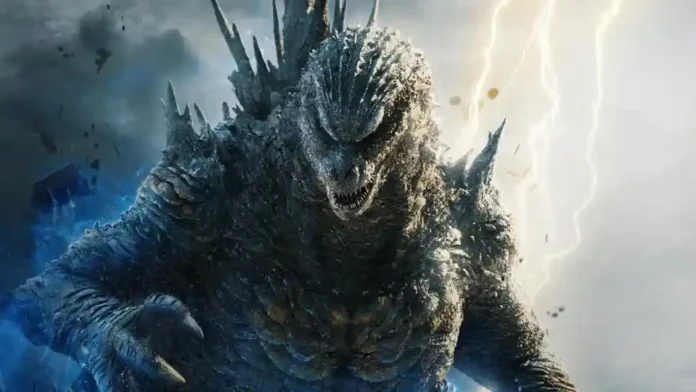

GODZILLA MINUS ZERO (2026) is the sequel to Godzilla Minus One, continuing the story of postwar Japan as a new monster threat emerges. Directed by Takashi Yamazaki, the film combines emotional storytelling, spectacular visual effects, and expanded kaiju action.
KumDi.com
GODZILLA MINUS ZERO (2026) is the highly anticipated sequel to Godzilla Minus One (2023), directed, written, and overseen in visual effects by Academy Award-winning filmmaker Takashi Yamazaki. The film continues the story of postwar Japan, returning to the Shikishima family as the country faces another devastating monster threat. Its central appeal is the combination of large-scale kaiju destruction, emotionally grounded human storytelling, and advanced cinematic visual effects.
The early critical response suggests that Godzilla Minus Zero delivers impressive production design, atmospheric tension, and memorable action sequences, although its longer human drama and pacing have attracted criticism. The film is therefore not simply another monster-versus-human spectacle. It continues the franchise’s exploration of war, trauma, survival, family responsibility, and the consequences of national devastation. Whether it surpasses its predecessor depends largely on how much viewers value character development alongside spectacular monster action.
Review context: This article reflects information and professional reviews available on November 3, 2026. It distinguishes confirmed production and story information from critical interpretation.
Table of Contents

GODZILLA MINUS ZERO: Movie Overview
Godzilla Minus Zero is the 2026 Japanese science-fiction and monster film produced by Toho. It follows the events of Godzilla Minus One, expanding the story beyond the immediate destruction of Tokyo and examining what happens when a recovering society faces another catastrophic threat.
| Movie Information | Details |
|---|---|
| Title | GODZILLA MINUS ZERO |
| Japanese title | ゴジラ-0.0 |
| Release year | 2026 |
| Country | Japan |
| Genre | Science Fiction, Action, Kaiju, Drama |
| Director | Takashi Yamazaki |
| Screenwriter | Takashi Yamazaki |
| Visual Effects | Takashi Yamazaki / Shirogumi |
| Music | Naoki Sato |
| Production | TOHO Studios, ROBOT |
| Distributor | Toho |
| Runtime | Approximately 135 minutes |
| Main cast | Ryunosuke Kamiki, Minami Hamabe, Yuki Yamada, Kuranosuke Sasaki, Sakura Ando |
| International distribution | GKIDS in North America |
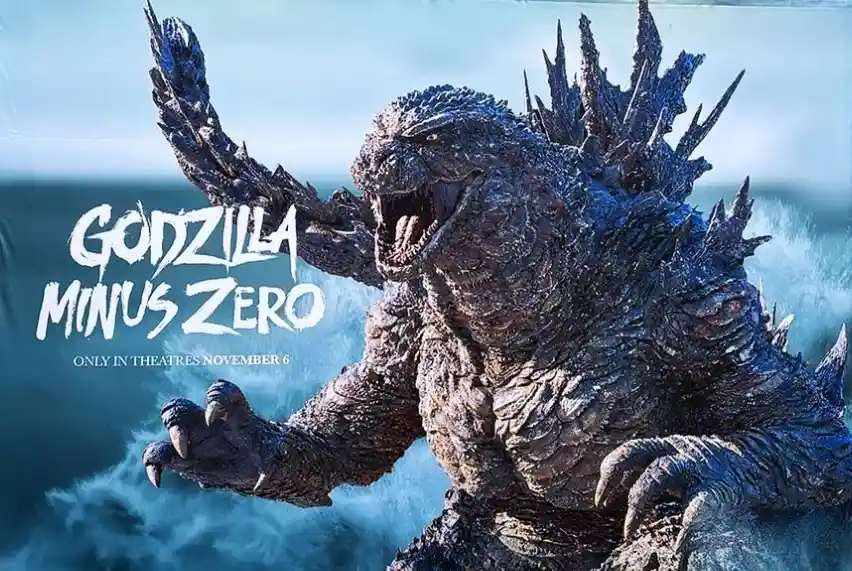
The film was released in Japan on November 3, 2026, with its North American theatrical release scheduled to begin November 6, 2026. It is also notable as the first Japanese production filmed specifically for IMAX.
Story and Plot: What Is GODZILLA MINUS ZERO About?
The story takes place in 1949, two years after the events of Godzilla Minus One. Japan is still struggling to rebuild its cities, communities, and social structures following World War II and Godzilla’s devastating attack.
The Shikishima family is attempting to establish a peaceful life. Kōichi Shikishima, played by Ryunosuke Kamiki, and Noriko Ōishi, played by Minami Hamabe, are among the survivors trying to move beyond the psychological and physical consequences of the previous catastrophe.
However, the fragile recovery is interrupted by another extraordinary threat.
The film introduces a new disaster involving Godzilla and the appearance of Ghidorah, a powerful monster associated with the destruction of major population centers. The situation forces survivors and specialists to reconsider how humanity can defend itself against creatures that conventional military power struggles to defeat.
The central themes of the story
Three major themes shape the narrative:
1. The psychological consequences of war
The characters are not simply survivors of a monster attack. They are people who have already experienced the destruction of war, including the loss of family members, homes, and a sense of security.
The sequel explores how another disaster can reactivate unresolved psychological trauma.
2. Family responsibility and survival
Kōichi and Noriko face the difficult question of whether protecting their family means avoiding danger or confronting the threat before it reaches their home.
Their decisions introduce an emotional conflict that extends beyond the conventional monster-movie formula.
3. The relationship between humanity and catastrophic forces
The film continues Godzilla’s historical connection to nuclear destruction, environmental catastrophe, and the vulnerability of modern civilization.
Rather than treating the monster solely as an enemy to defeat, the narrative uses its presence to examine how societies respond when their ability to control their environment reaches its limits.
Is GODZILLA MINUS ZERO a direct sequel?
Yes. It directly continues the story of Godzilla Minus One, including the experiences of its principal characters.
For the best understanding of the sequel, watching Godzilla Minus One first is strongly recommended. It establishes the emotional background, relationships, and historical circumstances that give the new film much of its meaning.
Direction and Cinematic Storytelling: Takashi Yamazaki Returns
Takashi Yamazaki returns as director, screenwriter, and visual-effects lead. His involvement is particularly important because the success of Godzilla Minus One was built on a combination of relatively intimate human drama and convincing large-scale destruction.
Yamazaki’s approach differs from many blockbuster monster films.
Instead of beginning with continuous action, he establishes the ordinary lives of people living in a damaged society. This creates a contrast between everyday human activities and the extraordinary scale of the monster threat.
In Godzilla Minus Zero, this approach becomes more ambitious.
The film expands the human storyline, introduces additional characters, and explores a broader range of consequences resulting from the new monster crisis.
However, this ambition creates a narrative challenge. A monster movie must balance character development with the anticipation of its central attraction. According to the Associated Press review, the human drama occasionally dominates the story to the point that Godzilla’s limited screen presence becomes frustrating.
This is an important distinction when evaluating the sequel: more emotional material does not automatically produce a stronger dramatic experience. Character development needs to maintain narrative momentum, particularly in a 135-minute film.
Visual Effects and Godzilla’s New Appearance
Visual effects remain one of the most important reasons to watch Godzilla Minus Zero.
The production follows the visual-effects philosophy established in its predecessor: Godzilla should feel physically imposing, destructive, and integrated into the surrounding environment.
What makes the visual effects important?
The effectiveness of a giant-monster sequence depends on more than the appearance of the creature.
Several technical elements contribute to the experience:
- Scale and perspective: Buildings, vehicles, aircraft, and people establish the enormous physical dimensions of Godzilla.
- Environmental interaction: Destruction must affect surrounding structures in a believable way.
- Lighting and atmosphere: Smoke, water, fire, and atmospheric conditions help establish the monster’s presence.
- Movement and weight: Godzilla’s movements must communicate physical mass rather than resemble an ordinary animated character.
- Sound and visual synchronization: Roars, impacts, and environmental destruction must work together to create a convincing cinematic experience.
The returning creative team also benefits from its previous experience producing Godzilla Minus One, which received the Academy Award for Best Visual Effects at the 96th Academy Awards.
One particularly important development is the production’s IMAX-specific cinematography. Godzilla Minus Zero is the first Japanese production filmed specifically for IMAX, using IMAX-certified digital cameras and image optimization for the format.
Does the sequel improve on Minus One’s visual effects?
The sequel aims to deliver a larger visual experience, with more elaborate effects choreography and expanded monster action.
However, visual improvement and storytelling improvement are different things.
A more detailed Godzilla design, larger destruction sequences, and advanced projection formats cannot independently guarantee a more memorable film.
The most effective visual sequences are those in which technical achievement supports the story rather than replacing it.
Godzilla and Ghidorah: The Monster Action
One of the sequel’s most significant developments is the introduction of Ghidorah as a major threat.
The appearance of another powerful kaiju changes the nature of the conflict. Instead of focusing exclusively on humanity’s efforts to survive Godzilla, the film introduces a larger confrontation involving multiple catastrophic forces.
Why Ghidorah matters
Ghidorah is one of the most recognizable monsters in the Godzilla franchise. Its presence introduces several narrative possibilities:
- A more complicated threat to human civilization.
- A different type of monster confrontation.
- Greater opportunities for large-scale visual effects.
- A new relationship between Godzilla and other destructive forces.
The contrast between Godzilla and Ghidorah also provides an opportunity to expand the franchise’s mythology.
Nevertheless, the monster action is not equally successful throughout the film.
The Associated Press review identifies a mid-film aerial sequence as a particularly effective moment, praising its suspense and visual composition. It is more critical of the climactic confrontation, describing the staging as less effective than expected. AP News
This suggests that the sequel’s strongest action moments are not necessarily its largest ones. Suspense, framing, movement, and the relationship between the monster and human characters are equally important.
Cast and Character Performances
The return of familiar characters provides continuity between the two films.
| Actor | Character | Role in the story |
|---|---|---|
| Ryunosuke Kamiki | Kōichi Shikishima | Former kamikaze pilot and central protagonist |
| Minami Hamabe | Noriko Ōishi | Kōichi’s partner |
| Yuki Yamada | Shirō Mizushima | Returning survivor |
| Kuranosuke Sasaki | Seiji Akitsu | Experienced naval captain |
| Sakura Ando | Sumiko Ōta | Shikishima’s neighbor |
| Hidetaka Yoshioka | Kenji Noda | Engineer involved in the response to Godzilla |
| Min Tanaka | Kanji Murakami | Scientist carrying the psychological scars of war |
| Masami Nagasawa | Makoto Aoyama | Meteorologist involved in disaster response |
| Jun Kunimura | Dr. Ogata | Medical and disaster-response figure |
Ryunosuke Kamiki as Kōichi Shikishima
Kamiki returns to the central role of Kōichi, whose experiences in the previous film continue to shape his decisions.
The character’s importance comes from his conflict between personal survival and responsibility toward others.
His performance provides the sequel with a connection to the emotional foundation of Godzilla Minus One.
Minami Hamabe as Noriko Ōishi
Noriko represents another perspective on the consequences of the previous disaster.
Her relationship with Kōichi adds a personal dimension to the larger conflict, particularly when the family’s future becomes uncertain.
Min Tanaka as Kanji Murakami
Murakami introduces another perspective on postwar trauma.
His personal history and anger toward the occupying American forces give the film an additional political and historical dimension.
Masami Nagasawa as Makoto Aoyama
Aoyama contributes a scientific perspective to the disaster-response storyline.
Her meteorological expertise connects environmental conditions with the challenge of predicting and responding to kaiju activity.
The ensemble is an important strength of the film, although the Associated Press review argues that several supporting characters do not receive sufficient development to justify the amount of narrative attention they receive.
Music, Sound Design, and Cinematic Atmosphere
A successful Godzilla movie needs an effective soundscape. The monster’s presence must be communicated through more than visual imagery.
Naoki Sato returns as composer, contributing to the film’s dramatic atmosphere.
Three elements are particularly important:
Orchestral scoring: Music establishes anticipation before the monster appears and helps communicate the emotional consequences of destruction.
Low-frequency sound design: Deep impacts, monster roars, and environmental rumbling reinforce the perceived size and weight of Godzilla.
Silence and suspense: Reducing the musical intensity before a major confrontation can make an approaching threat more unsettling.
The Associated Press specifically highlights the combination of Yamazaki’s visual direction and Sato’s pulsating score in the film’s aerial sequence. This demonstrates how sound and cinematography can create tension without depending entirely on continuous action.
IMAX Experience: Is GODZILLA MINUS ZERO Worth Watching on the Big Screen?
One of the most important technical developments is the film’s IMAX production format.
Unlike a movie that is simply converted or reformatted for premium screens, Godzilla Minus Zero was filmed using IMAX-certified digital cameras and includes sequences optimized for the format.
This matters because Godzilla films depend heavily on visual scale.
A large screen can make several elements more effective:
- The relationship between Godzilla and surrounding architecture.
- Large-scale destruction and environmental movement.
- Wide cinematic compositions.
- The contrast between human characters and enormous monsters.
- The impact of spatially detailed sound.
The North American release also includes IMAX early-access screenings on November 3, followed by the wider theatrical release beginning November 6, 2026.
Which theater format should viewers choose?
| Format | Best suited for |
|---|---|
| IMAX | Large-scale visuals and immersive presentation |
| Dolby Cinema | High-quality picture and sound |
| 4DX | Motion-based theatrical experience |
| D-BOX | Motion-enabled seating |
| Standard cinema | Conventional theatrical viewing |
Recommendation: IMAX is the strongest format to consider if the objective is to experience the film’s large-scale visual effects and specially optimized sequences. However, the best choice also depends on local theater equipment and ticket prices.
GODZILLA MINUS ZERO vs. GODZILLA MINUS ONE
The comparison with Godzilla Minus One is unavoidable.
The 2023 film established a successful combination of postwar historical drama, monster horror, and human storytelling. Its Academy Award recognition also increased international expectations for the sequel.
The two films share the same creative direction and central characters, but their storytelling priorities are not identical.
| Comparison | Godzilla Minus One (2023) | Godzilla Minus Zero (2026) |
|---|---|---|
| Setting | Postwar Japan, 1947 | Postwar Japan, 1949 |
| Director | Takashi Yamazaki | Takashi Yamazaki |
| Main focus | Survival and rebuilding | Recovery and a new catastrophe |
| Human storyline | Individual and family survival | Family responsibility and wider disaster response |
| Monster threat | Godzilla | Godzilla and Ghidorah |
| Visual approach | Grounded monster spectacle | Expanded cinematic spectacle |
| Production format | Conventional theatrical production | First Japanese production filmed for IMAX |
| Runtime | 125 minutes | Approximately 135 minutes |
Which movie has the stronger story?
Godzilla Minus One benefits from a relatively focused narrative. Its central character has a clear emotional journey, and the monster threat directly reinforces that journey.
Godzilla Minus Zero expands the scope of the story. It introduces more characters, a wider disaster-response narrative, and additional political and environmental themes.
That expansion has advantages and disadvantages.
The sequel provides a broader look at postwar Japanese society, but the larger cast and longer narrative create additional demands on pacing.
The Associated Press review gives Godzilla Minus Zero two out of four stars, arguing that the human drama becomes overextended and that the final monster confrontation does not fully deliver on its potential.
Other critics have been more enthusiastic. Rotten Tomatoes displayed a 93% Tomatometer score from 55 reviews in its November 3 listing, demonstrating that critical responses are not unanimous.
The important distinction is that a high aggregate review score does not mean every critic agrees about the story, pacing, or monster action.
Critical Reception: What Are Reviewers Saying?
The early critical response presents a mixed but informative picture of the sequel.
93%
Rotten Tomatoes Tomatometer
Snapshot displayed November 3, 2026 · 55 critic reviews
Associated Press
2/4
Jake Coyle’s individual review
These are different evaluation systems. The AP rating is not the Rotten Tomatoes aggregate score.
What critics appreciate
Several recurring strengths emerge from the available reviews:
- Impressive visual effects and Godzilla’s physical presence.
- Strong period atmosphere and production design.
- Effective suspense in selected action sequences.
- Performances that communicate the emotional consequences of disaster.
- An ambitious continuation of the themes introduced in the previous film.
What critics find less successful
The criticisms are also worth considering:
- The human drama can feel longer than necessary.
- Godzilla’s screen presence may be insufficient for viewers primarily interested in monster action.
- Some supporting characters lack sufficient development.
- The climactic monster confrontation may not meet the expectations established by the buildup.
This difference in critical interpretation is important. Viewers seeking an emotional postwar drama may appreciate the expanded character material, while audiences expecting continuous kaiju battles may find the pacing frustrating.
Who Should Watch GODZILLA MINUS ZERO?
The film is particularly suitable for several audiences.
Godzilla franchise fans: The sequel continues the story of the Shikishima family and expands the monster mythology.
Fans of Japanese cinema: Its historical setting, Japanese-language performances, and postwar social themes provide a different perspective from many Hollywood monster productions.
Science-fiction and visual-effects enthusiasts: Its IMAX-specific production and large-scale monster sequences make it a significant theatrical release.
Viewers interested in historical drama: The film explores the psychological consequences of war, national recovery, and the vulnerability of ordinary families.
However, viewers who prefer fast-paced action with frequent monster appearances should approach it with more measured expectations.
Is it necessary to watch Godzilla Minus One first?
Yes, preferably.
Although the sequel introduces its own disaster, much of its emotional foundation depends on the events of the 2023 film.
Watching the predecessor first helps audiences understand:
- Kōichi’s experiences during the war.
- His psychological relationship with survival.
- His relationship with Noriko.
- The original Godzilla disaster.
- The circumstances behind Japan’s recovery.
Without this background, some of the sequel’s emotional developments may have less impact.
Strengths and Weaknesses: Final Assessment
A balanced assessment of Godzilla Minus Zero requires separating its technical achievements from its narrative execution.
| Category | Assessment |
|---|---|
| Visual effects | Strong |
| Cinematography | Strong |
| Sound and music | Effective |
| Monster design | Major attraction |
| Acting | Generally strong |
| Historical atmosphere | Strong |
| Character development | Uneven |
| Story pacing | Mixed |
| Monster action frequency | Limited |
| Overall entertainment | Depends on audience expectations |
Main strengths
- Visual ambition: The IMAX-focused production offers a significant technical development for Japanese cinema.
- Historical storytelling: The postwar setting gives the monster narrative a meaningful human context.
- Returning cast: Familiar characters provide continuity with the previous film.
- Expanded monster mythology: The introduction of Ghidorah broadens the franchise’s narrative possibilities.
- Atmospheric filmmaking: The combination of cinematography, sound, and music creates several memorable suspense sequences.
Main weaknesses
- Longer storytelling: The 135-minute runtime may feel excessive when character conflicts become repetitive.
- Monster screen time: Audiences expecting frequent Godzilla appearances may be disappointed.
- Supporting characters: Some characters receive more narrative attention than their development supports.
- Final confrontation: The climactic battle has received criticism for its execution.
FAQs
What is GODZILLA MINUS ZERO about?
GODZILLA MINUS ZERO (2026) is a Japanese science-fiction monster movie and the sequel to Godzilla Minus One. Set in 1949, the story follows postwar Japan as Kōichi Shikishima and other survivors face another catastrophic monster threat involving Godzilla and Ghidorah.
Who is in the GODZILLA MINUS ZERO cast?
The GODZILLA MINUS ZERO cast includes Ryunosuke Kamiki as Kōichi Shikishima and Minami Hamabe as Noriko Ōishi. Other returning and featured actors include Yuki Yamada, Sakura Ando, Kuranosuke Sasaki, Hidetaka Yoshioka, Min Tanaka, and Masami Nagasawa.
Is GODZILLA MINUS ZERO better than GODZILLA MINUS ONE?
GODZILLA MINUS ZERO expands the monster mythology, visual effects, and postwar storyline introduced in Godzilla Minus One. However, early reviews identify differences in pacing and character development. Whether it is better depends on whether viewers prefer expanded monster action or a more focused emotional narrative.
Does GODZILLA MINUS ZERO feature Ghidorah?
Yes. GODZILLA MINUS ZERO introduces Ghidorah as part of its monster conflict, expanding the Godzilla franchise’s kaiju mythology. Its appearance creates a new dimension to the story and provides opportunities for large-scale monster confrontations and visual effects.
Is GODZILLA MINUS ZERO worth watching in IMAX?
GODZILLA MINUS ZERO is worth considering in IMAX because it was filmed using IMAX-certified digital cameras and includes imagery optimized for the format. The larger screen and immersive sound can enhance its monster sequences, environmental destruction, and cinematic scale.
Final Verdict: Is GODZILLA MINUS ZERO Worth Watching?
GODZILLA MINUS ZERO is an ambitious continuation of one of modern Japanese cinema’s most successful Godzilla reinventions.
Takashi Yamazaki maintains the combination of historical drama, monster horror, and visual spectacle that made Godzilla Minus One internationally successful. The sequel expands its narrative world through additional characters, a new monster threat, and a more technically ambitious cinematic presentation.
However, expansion does not necessarily mean improvement.
The larger story introduces pacing challenges, and the human drama does not always maintain the emotional precision of its predecessor. The relatively limited monster action may also frustrate viewers who consider Godzilla the primary reason to watch the film.
Nevertheless, the production’s visual ambition, historical atmosphere, and continuation of the Shikishima family’s story make it an important release for fans of Japanese monster cinema.
Final recommendation: Watch Godzilla Minus Zero in a premium theatrical format, preferably IMAX, if you enjoy visually ambitious Japanese science-fiction films and character-driven monster stories. Watch Godzilla Minus One first to appreciate the sequel’s emotional continuity.
The most reasonable expectation is not that this sequel automatically surpasses its predecessor, but that it offers a larger and more ambitious continuation with some notable storytelling compromises.




 and then
