









One Night Only Film Review (2026): This character-driven drama stands out for its emotional realism, strong performances, and intimate storytelling. The film explores regret, memory, and human connection through a single-night narrative that delivers a thoughtful and lasting emotional impact without relying on melodrama or spectacle.
KumDi.com
One Night Only Film Review (2026) examines one of the year’s most emotionally compelling independent dramas. This quiet, character-driven film succeeds through exceptional performances, restrained direction, and authentic storytelling that explores regret, memory, and unresolved relationships. If you’re looking for a thoughtful drama with genuine emotional depth, this review explains why One Night Only deserves attention from fans of intimate cinema and modern indie filmmaking.
Table of Contents

What is One Night Only about?
At its core, One Night Only is built around a simple premise: a chance encounter between two people whose lives once intersected in a meaningful way. Over the course of a single evening, they revisit shared memories, confront past decisions, and gradually reveal the emotional consequences of choices made years earlier.
The film unfolds almost in real time, creating a sense of intimacy that places the audience inside the conversation rather than outside observing it. The limited time frame becomes the film’s central dramatic engine.
The performances carry the film
The most impressive aspect of One Night Only is its acting. Because the narrative is dialogue-driven, the performances must communicate emotional history without lengthy exposition.
The leads rely heavily on:
- subtle facial expressions,
- pauses and silence,
- restrained body language,
- shifting emotional distance.
This naturalistic approach makes the relationship feel authentic rather than overly scripted.
Direction and visual storytelling
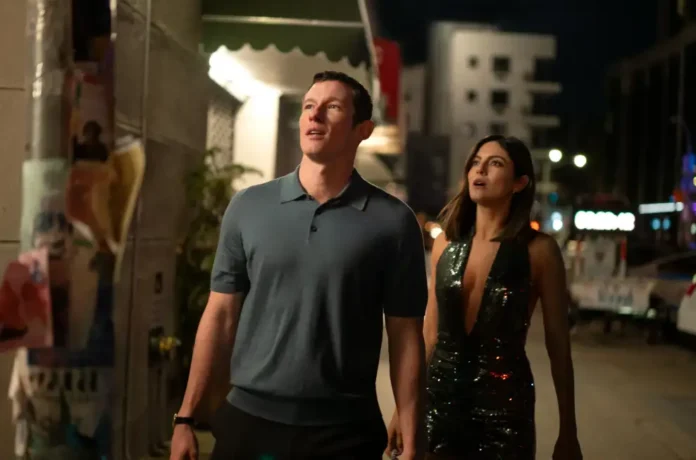
The director demonstrates confidence in minimalism. Instead of constant movement or elaborate cinematography, the film uses carefully composed frames that emphasize emotional space between the characters.
Visually, the film favors:
- nighttime urban locations,
- soft practical lighting,
- reflections and windows,
- empty streets,
- quiet interiors.
These elements reinforce themes of isolation and memory.
One particularly effective technique is the use of stillness. Scenes are often allowed to breathe, giving emotional moments time to develop organically.
Themes explored in One Night Only
The film examines several interconnected themes that give it broader emotional resonance.
Regret
Rather than presenting regret as dramatic tragedy, the film portrays it as something ordinary and persistent. The characters are not destroyed by their past; they are shaped by it.
Timing
A central question throughout the film is whether meaningful relationships can survive poor timing. The story suggests that love, friendship, and connection are often influenced as much by circumstance as by intention.
Memory
The film carefully explores how people remember the same events differently. Conversations repeatedly reveal that each character has constructed a different narrative about what happened.
Emotional honesty
The night becomes an opportunity for honesty that was previously impossible. This creates tension because honesty does not necessarily produce reconciliation.
Why the single-night structure works
Many films use compressed timelines, but One Night Only benefits from the format because it mirrors real emotional encounters.
A single night can feel unusually significant because:
| Narrative effect | Emotional result |
|---|---|
| Limited time | Increased urgency |
| Night setting | Greater vulnerability |
| Continuous conversation | Growing intimacy |
| Impending separation | Emotional tension |
This structure keeps the film focused and avoids unnecessary subplots.
Pacing: deliberate but rewarding
Some viewers may find the pacing slow. The film is intentionally measured, with extended conversations and moments of silence that prioritize emotional realism over narrative momentum.
However, for audiences who appreciate films such as Before Sunrise, Lost in Translation, or Past Lives, the pacing becomes one of the film’s strengths.
The emotional payoff comes gradually rather than through sudden revelations.
Strengths of the screenplay
The screenplay avoids several common problems found in relationship dramas.
It largely avoids:
- excessive exposition,
- manipulative sentimentality,
- unrealistic confrontations,
- overly polished dialogue.
Instead, conversations feel fragmented, repetitive, and occasionally awkward in ways that resemble real interactions.
One notable achievement is the script’s willingness to leave certain questions unanswered.
Where the film is less effective
The film is not without limitations.
Limited external conflict
Because the story focuses almost entirely on the two central characters, viewers seeking stronger external stakes may find the narrative too contained.
Emotional ambiguity
The ending is intentionally open-ended. While this fits the film’s themes, some audiences may prefer greater narrative resolution.
Supporting characters
Secondary characters function primarily as emotional context rather than fully developed individuals.
These weaknesses are relatively minor but worth noting.
The film’s emotional realism
What separates One Night Only from many romantic dramas is its understanding of emotional realism.
The characters often:
- interrupt themselves,
- misinterpret each other,
- avoid direct answers,
- change subjects,
- struggle to articulate feelings.
This creates a convincing portrait of adults processing unresolved emotions.
From a psychological perspective, the film captures several recognizable patterns associated with long-term unresolved relationships, including selective memory, defensive humor, emotional avoidance, and retrospective idealization.
Cinematography and sound design
The cinematography deserves particular recognition.
The nighttime photography creates a sense of suspended time, while the restrained camera work keeps attention on performance rather than visual spectacle.
The sound design is equally effective.
Instead of an intrusive score, the film often uses:
- distant traffic,
- footsteps,
- room tone,
- ambient city sounds.
This understated approach enhances immersion.
Who should watch One Night Only?
This film is best suited for viewers who enjoy:
- character-driven dramas,
- relationship studies,
- independent cinema,
- dialogue-focused storytelling,
- emotionally subtle films.
It is less likely to satisfy audiences looking for thriller elements, major plot twists, or fast-paced entertainment.
What makes One Night Only notable in 2026?
In a year when many films compete through scale, franchise recognition, or technological innovation, One Night Only stands out for its confidence in simplicity.
The film demonstrates that compelling cinema can emerge from:
- strong writing,
- excellent performances,
- focused direction,
- emotional authenticity.
Its modest scale becomes an advantage because it allows the audience to engage deeply with the characters rather than the mechanics of the plot.
Expert evaluation
From a film analysis perspective, One Night Only succeeds primarily in three areas:
Narrative coherence
The story remains tightly focused on its central emotional question.
Performance quality
The actors create believable emotional history through nuanced performances.
Thematic consistency
Every creative element supports the film’s exploration of memory, regret, and timing.
The film’s greatest achievement is that it feels emotionally observed rather than emotionally engineered.

FAQs
Is One Night Only (2026) worth watching?
Yes. One Night Only Film Review highlights the film’s emotional storytelling, nuanced performances, and strong character development. If you enjoy best indie drama films 2026, this movie is a highly worthwhile watch.
What is One Night Only (2026) about?
The film follows two people who reconnect during a single night and confront their shared past, regrets, and unresolved emotions. One Night Only 2026 review often praises its intimate dialogue and realistic relationship dynamics.
Is One Night Only (2026) a slow-paced movie?
Yes, but intentionally so. One Night Only Film Review describes the pacing as deliberate and emotionally immersive, making it ideal for viewers who appreciate character-focused dramas rather than action-driven stories.
Does One Night Only (2026) have a satisfying ending?
The ending is emotionally meaningful but intentionally open to interpretation. One Night Only movie ending explained discussions often focus on themes of acceptance, timing, and emotional closure rather than a conventional resolution.
Who should watch One Night Only (2026)?
Anyone who enjoys best indie drama films 2026, relationship dramas, and dialogue-driven storytelling should watch it. One Night Only Film Review recommends it for audiences seeking emotional depth, realistic performances, and thoughtful independent cinema.
Final verdict
One Night Only is a mature, intelligently written drama that earns its emotional impact through restraint rather than manipulation. Its dialogue, performances, and atmospheric direction create a deeply human portrait of two people confronting the lives they imagined and the lives they actually lived.
For viewers interested in independent cinema, relationship dramas, and character-focused storytelling, it is one of the more quietly memorable films of 2026.
Rating: 8.8/10
Its emotional honesty, minimalist direction, and exceptional performances make it a film that lingers long after the final scene, not because it provides definitive answers, but because it asks questions that many viewers will recognize from their own lives.




 and then