








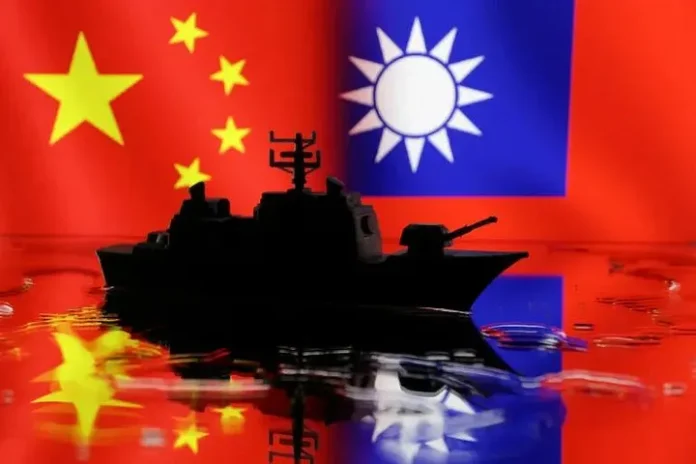

The geopolitical landscape surrounding Taiwan has grown increasingly tense, as China’s authoritarian government has ramped up its military posturing and sabre-rattling near the democratically-governed island. In a concerning development, the Chinese military has initiated a new round of war games in areas surrounding Taiwan, drawing strong condemnation from Taipei and concern from the international community. This article delves into the nuances of this escalating situation, exploring the motivations behind China’s actions, the potential implications for regional stability, and the critical role the United States and its allies play in navigating this delicate geopolitical minefield.

China’s Justification for the Military Exercises
China’s military leadership has framed the latest round of war games, dubbed “Joint Sword-2024B,” as a “legitimate and necessary operation for safeguarding state sovereignty and national unity.” The Eastern Theatre Command of the People’s Liberation Army (PLA) has stated that the exercises are a “stern warning to the separatist acts of Taiwan independence forces,” painting the drills as a response to the recent National Day speech by Taiwanese President Lai Ching-te.
In his address, Lai asserted that China has no right to represent the 23 million people of Taiwan, a position that Beijing has vehemently rejected. The Chinese government views Taiwan as a breakaway province that must be reunited with the mainland, by force if necessary. By conducting these military maneuvers, China aims to demonstrate its resolve to defend its territorial claims and deter any perceived moves towards Taiwanese independence.
The Scope and Scale of the Military Exercises
The latest round of Chinese military exercises encompasses a wide swath of areas surrounding Taiwan, with the PLA’s Eastern Theatre Command publishing a map detailing nine distinct zones where the drills are taking place. These include two zones on Taiwan’s eastern coast, three on the western coast, one to the north, and three around Taiwan-controlled islands near the Chinese mainland.
The drills are focused on a range of military capabilities, including “sea-air combat-readiness patrols, blockading key ports and areas, assaulting maritime and ground targets, and joint seizure of comprehensive superiority.” Chinese ships and aircraft are reported to be approaching Taiwan from multiple directions, underscoring the scale and complexity of the operations.
Notably, the Chinese military has not announced any plans for live-fire exercises or the establishment of no-fly zones, a departure from the more aggressive posturing seen in the aftermath of former U.S. House Speaker Nancy Pelosi’s visit to Taiwan in 2022. However, the mere presence of a significant military force in the waters and airspace surrounding Taiwan is itself a form of coercion and a potential threat to the island’s security.
Taiwan’s Defiant Response and International Condemnation
Taiwan’s government has responded to China’s military exercises with a firm and unwavering stance. The Mainland Affairs Council, the island’s China policy-making body, has condemned the “blatant provocations” by China, stating that the drills seriously undermine regional peace and stability. Taiwan’s presidential office has also called on China to respect the Taiwanese people’s choice of a free and democratic way of life and to refrain from further military actions that would disrupt the status quo.
The United States, a key ally and supporter of Taiwan, has also expressed its concerns over China’s actions. The State Department has stated that the PLA’s response to Lai’s “routine” National Day speech is “unwarranted and risks escalation,” calling on Beijing to “act with restraint and to avoid any further actions that may undermine peace and stability across the Taiwan Strait and in the broader region.”
The Potential for Miscalculation and Escalation
The current geopolitical standoff around Taiwan raises serious concerns about the potential for miscalculation and inadvertent escalation. As both China and Taiwan posture and flex their military might, the risk of an accidental clash or unintended confrontation increases. This could have devastating consequences for the region and the global economy, given Taiwan’s critical role as a semiconductor powerhouse and the strategic importance of the Taiwan Strait.
Moreover, the ongoing Russia-Ukraine war has heightened tensions and uncertainty in the international arena, potentially emboldening China to take more aggressive actions in the Taiwan Strait. The Chinese government may view the current global upheaval as an opportunity to test the resolve of the United States and its allies, potentially pushing the boundaries of what it can get away with without triggering a major military confrontation.
The Implications for Regional Stability and Global Order
The escalating tensions around Taiwan have far-reaching implications for regional stability and the broader global order. China’s assertive military posturing, coupled with its refusal to renounce the use of force, has sown deep mistrust and apprehension among its neighbors and the international community. This, in turn, has the potential to disrupt trade routes, disrupt global supply chains, and undermine economic prosperity in the Asia-Pacific region and beyond.
Moreover, the situation in the Taiwan Strait has become a critical flashpoint in the ongoing geopolitical rivalry between the United States and China. As the two superpowers jockey for influence and assert their respective spheres of influence, the risk of a direct confrontation or even a military conflict looms large. The stakes are high, as the outcome of this standoff could have profound implications for the future of the rules-based international order and the balance of power in the Indo-Pacific.
The Role of the United States and its Allies
The United States has long been a staunch supporter of Taiwan, providing the island with military assistance and diplomatic backing. In the face of China’s increasingly assertive posturing, the Biden administration has reiterated its commitment to the “one-China policy,” while also emphasizing the importance of maintaining peace and stability in the Taiwan Strait.
However, the United States is not alone in its efforts to support Taiwan and deter Chinese aggression. A growing coalition of allies, including Japan, Australia, and European nations, have voiced their concerns over China’s actions and pledged to work together to uphold the rules-based international order. This multilateral approach is crucial in sending a strong message to Beijing that any attempt to forcibly reunite Taiwan with the mainland will be met with a coordinated and resolute response from the international community.
The Importance of Diplomatic Engagement and Conflict Resolution
Despite the escalating tensions, there remains a glimmer of hope for a diplomatic resolution to the standoff. In his National Day speech, Taiwanese President Lai Ching-te expressed a willingness to engage in “healthy and orderly dialogue and exchanges” with China, even as he firmly rejected Beijing’s sovereignty claims.
Encouraging such constructive dialogue and exploring avenues for conflict resolution should be a top priority for policymakers and diplomats on all sides. While the path to a peaceful solution may be fraught with challenges, the alternative of military confrontation is simply too costly and catastrophic to contemplate. By prioritizing diplomacy, building trust, and finding common ground, the key stakeholders in this geopolitical drama may be able to chart a course towards de-escalation and long-term stability.
The Potential Impact on Global Supply Chains and the Semiconductor Industry
Taiwan’s central role as a global semiconductor powerhouse adds an additional layer of complexity to the ongoing tensions in the Taiwan Strait. The island’s advanced chip manufacturing capabilities are critical to the functioning of countless industries worldwide, from consumer electronics to military hardware. Any disruption to Taiwan’s semiconductor supply chain would have far-reaching consequences for the global economy.
As China flexes its military muscle and threatens Taiwan’s sovereignty, there are growing concerns about the potential impact on the island’s semiconductor industry. A full-scale invasion or blockade of Taiwan could cripple global chip production, leading to widespread shortages, price hikes, and disruptions to a wide range of industries. This scenario would not only harm the global economy but also undermine the technological and military superiority of the United States and its allies.
The Need for Strategic Foresight and Contingency Planning
The escalating tensions around Taiwan underscore the importance of strategic foresight and contingency planning on the part of policymakers, business leaders, and security experts. As the geopolitical landscape continues to shift, it is crucial to anticipate potential flashpoints, identify vulnerabilities, and develop robust strategies to mitigate the risks posed by an increasingly assertive China.
This may involve diversifying supply chains, strengthening regional alliances, investing in cutting-edge military technologies, and exploring alternative energy sources to reduce dependence on Taiwan’s semiconductor industry. By taking a proactive and comprehensive approach, the international community can better position itself to navigate the treacherous waters of the Taiwan Strait and safeguard global stability and prosperity.
The Role of Public Opinion and Domestic Politics
The ongoing tensions around Taiwan are not just a matter of geopolitics; they also have significant domestic political implications for both China and Taiwan. In China, the government’s military posturing and rhetorical attacks on Taiwanese leadership are largely aimed at shoring up nationalist sentiment and consolidating the ruling Chinese Communist Party’s grip on power.
Similarly, in Taiwan, the government’s resolute defense of the island’s sovereignty and democratic values has become a rallying cry for the Taiwanese people, who have repeatedly demonstrated their unwavering commitment to self-determination. As the situation continues to evolve, the domestic political calculus in both countries will likely play a crucial role in shaping the trajectory of the conflict.
The Potential for Long-Term Consequences
The current standoff around Taiwan has the potential to reverberate for years, if not decades, to come. The stakes are high, and the implications of a military confrontation or miscalculation could be catastrophic, not just for the region but for the global order as a whole.
As such, it is imperative that all stakeholders — from policymakers and military strategists to business leaders and ordinary citizens — remain vigilant, engaged, and committed to finding a peaceful resolution to this geopolitical quagmire. The future of Taiwan, the stability of the Asia-Pacific region, and the very foundations of the international system hang in the balance, and the decisions made in the coming months and years will shape the world for generations to come.

Conclusion: Navigating the Choppy Waters of the Taiwan Strait
The recent escalation of military tensions in the Taiwan Strait is a stark reminder of the fragility of the global geopolitical landscape. As China continues to flex its muscles and assert its territorial claims, the risk of miscalculation and unintended conflict looms large. However, the stakes are too high, and the potential consequences too severe, to allow this situation to spiral out of control.
Through a combination of strategic diplomacy, robust military deterrence, and a steadfast commitment to the rules-based international order, the United States, Taiwan, and their allies must work tirelessly to navigate these choppy waters and find a path towards lasting peace and stability. Failure to do so could have devastating ramifications, not just for the Asia-Pacific region, but for the entire global community.
Navigating the complexities of the modern world, it is crucial that we remain informed, engaged, and vigilant on these critical issues. The future of our world may very well depend on it.




 and then