








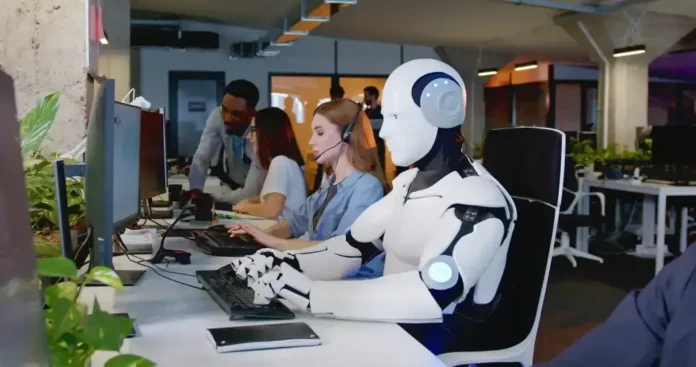
AI job anxiety is the growing fear that artificial intelligence will replace jobs, reduce career opportunities, or make skills obsolete. It’s rising rapidly due to fast AI adoption, unclear workplace policies, and economic uncertainty, leaving workers anxious about their future in an AI-driven job market.
KumDi.com
AI job anxiety is no longer a distant concern—it’s a real and accelerating issue affecting today’s workforce. As artificial intelligence transforms how work is performed, employees face growing fears around automation, job security, and long-term career relevance, especially during a period of economic pressure and organizational change.
Artificial intelligence is no longer a distant future concept. It is already embedded in hiring systems, performance evaluations, creative work, customer service, and decision-making processes across nearly every industry. While AI promises efficiency, innovation, and economic growth, it has also triggered a growing and deeply personal concern for millions of workers worldwide: AI job anxiety.
This anxiety is not rooted in science fiction or speculation. It is driven by real changes happening in real workplaces — and it is arriving at a moment when economic uncertainty, burnout, and career instability are already high. For many people, the question is no longer if AI will affect their job, but how soon and how severely.
Table of Contents

What Is AI Job Anxiety?
AI job anxiety refers to the persistent fear, stress, or uncertainty workers experience due to the rapid adoption of artificial intelligence in the workplace. It includes worries about job displacement, reduced career opportunities, declining relevance of existing skills, and the pressure to constantly adapt to new technologies.
Unlike traditional job insecurity, AI job anxiety is uniquely psychological. It is driven by:
- The speed at which AI capabilities are advancing
- A lack of clarity about how AI decisions are made
- Fear of being compared to machines
- Uncertainty around future career paths
- Concerns about losing professional identity and purpose
For many workers, AI feels less like a tool and more like a moving target — one that keeps changing expectations faster than people can adjust.
Why AI Job Anxiety Is Escalating Now
AI job anxiety is intensifying because it intersects with several larger forces that are already straining the global workforce.
1. Rapid AI Adoption Without Clear Guidance
Organizations are implementing AI tools faster than they are explaining them. Employees are often told to “use AI” without being taught how it affects performance evaluations, promotions, or long-term roles.
This lack of transparency creates uncertainty — and uncertainty fuels anxiety.
2. Economic Pressure and Workforce Instability
Many workers are already facing stagnant wages, layoffs, restructuring, and rising living costs. When AI enters the picture during an unstable economic period, it amplifies existing fears.
Instead of viewing AI as an opportunity, workers often see it as a replacement risk layered on top of financial stress.
3. Skill Obsolescence Feels Closer Than Ever
Unlike previous technological shifts, AI impacts both manual and knowledge-based roles. Writers, designers, analysts, marketers, developers, and even managers are now questioning the longevity of their skills.
When people feel their expertise may expire, anxiety becomes inevitable.
Who Is Most Affected by AI Job Anxiety?
AI job anxiety is widespread, but it is not evenly distributed.
Early-Career Professionals
Younger workers often feel intense pressure to “future-proof” their careers. Many worry that the roles they are training for may not exist in the same form by the time they gain experience.
Mid-Career Workers
Those with established careers may fear being replaced by younger, more AI-savvy workers or automated systems. Learning new technologies while managing family and financial responsibilities adds to the stress.
Creative and Knowledge Workers
Roles once considered safe — such as writing, design, research, and strategy — are now directly impacted by generative AI. This has created a new kind of anxiety: being replaced not by cheaper labor, but by algorithms.
The Psychological Impact of AI Job Anxiety
AI job anxiety goes beyond career planning. It affects mental health, confidence, and workplace culture.
Loss of Confidence
When machines appear to outperform humans, workers may begin to doubt their own abilities. Over time, this can erode self-esteem and reduce motivation.
Chronic Stress and Burnout
Constantly worrying about job relevance creates mental fatigue. Employees may feel they must always be learning, always improving, and always competing — not just with colleagues, but with machines.
Fear-Driven Decision Making
Anxious workers may avoid taking risks, sharing ideas, or exploring new paths. Ironically, this fear can limit adaptability — the very trait needed to thrive in an AI-driven economy.
Is AI Actually Replacing Jobs — or Changing Them?

A key driver of AI job anxiety is the belief that AI will eliminate large numbers of jobs entirely. While some roles will undoubtedly disappear, the reality is more nuanced.
AI is more likely to:
- Automate repetitive tasks
- Reshape job responsibilities
- Increase productivity expectations
- Create new hybrid roles
In many cases, jobs are not vanishing — they are evolving. However, change without support still feels threatening.
The Skills That Matter More in an AI-Driven World
One way to counter AI job anxiety is to understand what AI cannot easily replace.
Human-Centered Skills
- Critical thinking
- Emotional intelligence
- Ethical judgment
- Creativity and originality
- Leadership and communication
These skills grow in importance as AI handles routine or data-heavy tasks.
AI Literacy (Not Just Technical Skills)
You do not need to become an AI engineer to stay relevant. Understanding how AI works, how it is used, and how to collaborate with it is often more valuable than deep technical expertise.
What Organizations Must Do to Reduce AI Job Anxiety
AI job anxiety is not just an individual issue — it is a leadership responsibility.
Companies that successfully manage AI transitions tend to:
- Communicate clearly about AI strategy
- Provide structured training and reskilling programs
- Set ethical boundaries around AI use
- Reassure employees about human value
- Involve workers in AI adoption decisions
Transparency builds trust. Silence builds fear.
How Individuals Can Manage AI Job Anxiety
While systemic change is essential, individuals can also take practical steps.
Reframe AI as a Tool, Not a Threat
AI works best as an assistant, not a replacement. Learning how to use AI to enhance your productivity can increase confidence rather than diminish it.
Commit to Continuous Learning
Focus on adaptable skills rather than fixed roles. Careers are becoming more fluid — and flexibility is a strength.
Protect Your Mental Health
Career anxiety is still anxiety. Mindfulness, boundaries, and realistic expectations matter just as much as upskilling.
Build a Strong Professional Identity Beyond Tasks
Jobs change. Skills evolve. Values, judgment, and perspective endure.
The Bigger Picture: Anxiety Is a Signal, Not a Failure
AI job anxiety does not mean workers are resistant to change. It means they care about stability, purpose, and dignity in their work.
Anxiety is a signal — one that highlights gaps in communication, education, and leadership. When addressed thoughtfully, it can become a catalyst for better systems, smarter policies, and more human-centered technology adoption.
Conclusion: AI Job Anxiety Is Real — but the Future Is Still Open
AI job anxiety is real, justified, and widespread — and it is emerging at one of the most challenging moments for the modern workforce. But anxiety does not define the future.
The future of work is not about humans competing with AI. It is about humans learning how to work with it — shaping technology to serve people, not replace them.
With the right mindset, skills, and leadership, AI does not have to be a source of fear. It can become a powerful tool for growth, creativity, and resilience in an evolving world.
FAQs
What is AI job anxiety and why is it increasing?
AI job anxiety refers to the fear that artificial intelligence will replace human jobs or reduce career stability. It is increasing due to rapid AI adoption, limited upskilling opportunities, and growing AI workforce anxiety across industries.
Which jobs are most affected by AI job anxiety?
AI job anxiety affects both white-collar and blue-collar roles, especially positions involving repetitive tasks, data analysis, content creation, and administrative work where AI job displacement fears are strongest.
Is AI actually replacing jobs or just changing them?
AI is more often transforming jobs rather than eliminating them entirely. However, the lack of clarity around future roles fuels AI workforce anxiety and uncertainty about long-term career paths.
How can workers reduce AI job anxiety?
Workers can reduce AI job anxiety by developing AI literacy, strengthening human-centered skills, and adapting to new roles created by the future of work AI transformation.
Will AI job anxiety continue to grow in the future?
Yes, AI job anxiety is expected to grow as AI adoption accelerates. However, transparent leadership, reskilling programs, and ethical AI use can significantly reduce workforce anxiety.


 and then