


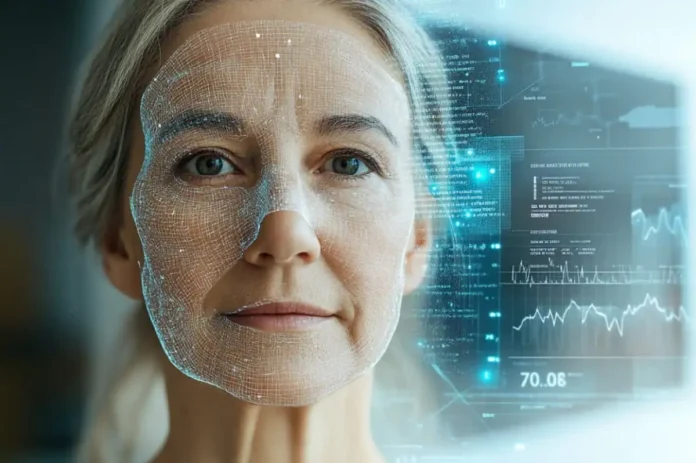

AI cancer prediction from face images is an emerging research area, but it cannot reliably determine whether an individual will die from cancer based on a photograph alone. New research suggests facial AI may help estimate survival risk in some cancer patients, but clinical validation remains essential.
KumDi.com
Artificial intelligence is transforming cancer research, from analyzing medical scans to identifying subtle patterns in pathology images. But can AI go one step further and predict whether someone will die from cancer simply by looking at a photograph of their face?
The short answer is no—not reliably, and not with enough clinical evidence to use a facial photograph as a standalone cancer mortality prediction tool. Researchers are investigating whether AI can identify health-related patterns in facial appearance, skin color, facial structure, and other visible characteristics. However, detecting a possible sign of illness is fundamentally different from determining whether a person has cancer or predicting whether they will die from it.
The distinction matters because cancer prognosis depends on multiple factors, including cancer type, tumor stage, molecular characteristics, treatment response, age, and overall health. A face photograph does not directly reveal most of this information. Although AI may eventually contribute to non-invasive health screening, claims that it can determine an individual’s likelihood of dying from cancer based on facial appearance alone should be treated with considerable caution.
This article examines what current AI research can actually establish, how facial analysis differs from established cancer prediction methods, the scientific limitations of these systems, and what patients should know about the future of AI-assisted cancer detection.
Table of Contents
What Is AI-Based Facial Health Prediction?
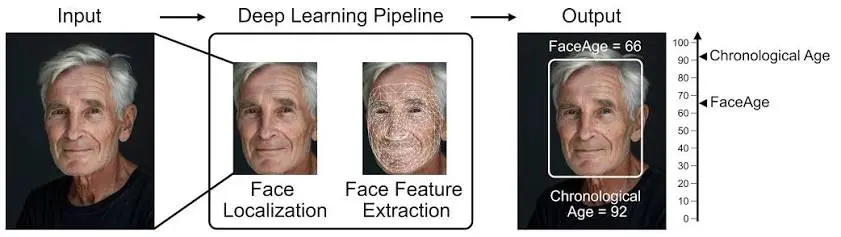
AI-based facial health prediction refers to the use of computer vision and machine learning to analyze photographs or video frames for patterns that may be associated with a person’s health.
Computer vision is a branch of AI that enables computers to interpret visual information. A model can be trained to recognize patterns in pixels, shapes, colors, textures, and spatial relationships that may be difficult for humans to quantify consistently.
In medical research, facial analysis may examine:
- Skin color and complexion: Changes in skin tone can sometimes be associated with conditions such as jaundice or anemia, although lighting and natural skin pigmentation can substantially affect appearance.
- Facial symmetry and structure: Certain genetic or developmental conditions are associated with recognizable facial characteristics, but these are not general indicators of cancer mortality.
- Visible changes over time: Changes in facial appearance may reflect aging, weight loss, illness, medication effects, or other factors.
- Eye and surrounding tissue appearance: Some conditions can cause visible changes around the eyes, but such observations are nonspecific.
- Image-derived statistical features: AI can measure patterns in an image that are not obvious to the naked eye. Whether those patterns have meaningful clinical value must be demonstrated separately.
The central scientific question is not whether an AI model can find a statistical association between a photograph and a health outcome. It is whether the association is accurate, reproducible, clinically meaningful, and useful for individual patients.
A model that distinguishes between two groups in a research dataset may perform poorly when used in a different hospital, population, or real-world setting.
Can AI Predict Cancer Mortality From a Facial Photograph?
At present, there is insufficient clinical evidence to establish that a facial photograph alone can reliably predict whether a particular person will die from cancer.
To understand why, it helps to distinguish three separate medical tasks.
| Medical task | What it means | Role of facial AI |
|---|---|---|
| Cancer screening | Identifying people who may need further testing | Facial analysis is not an established general cancer screening method |
| Cancer diagnosis | Determining whether cancer is present and identifying its type | A face photograph cannot establish a cancer diagnosis |
| Cancer prognosis | Estimating outcomes such as recurrence, progression, or survival | Facial images alone are insufficient for a reliable individual mortality prediction |
These tasks are related, but they are not interchangeable.
For example, an AI model might identify a visual pattern associated with poor health. That pattern could correlate with a higher risk of death across a research population. It would not necessarily indicate that cancer is present, much less establish that cancer will cause a particular person’s death.
A person may look healthy while having an early-stage cancer. Another person may appear tired or have lost weight because of a non-cancerous condition. Facial appearance cannot reliably distinguish these situations.
The key takeaway: An association between facial appearance and mortality does not prove that a model can diagnose cancer or accurately predict cancer-specific death.
The 2026 Breakthrough: FAHR-Face and AI Cancer Survival Prediction
A significant development reported in October 2026 has brought this question into sharper focus. Researchers associated with Mass General Brigham and Harvard Medical School developed an AI system called FAHR-Face (Foundation Artificial Intelligence for Health Recognition) to study biological age and survival outcomes using facial photographs.
According to reporting on the research published in The Lancet Digital Health, the system includes two complementary models: FAHR-FaceAge, which estimates biological age from facial appearance, and FAHR-FaceSurvival, which estimates survival risk among people with cancer. The findings represent a meaningful advance in research, although they do not establish that an ordinary selfie can predict an otherwise healthy person’s future cancer death.
What did the researchers investigate?
The research explored whether facial images contain patterns associated with biological aging and survival among patients who already had cancer or were receiving cancer-related care.
The reported findings included:
- Large-scale AI training: The facial analysis foundation model was trained using more than 40 million publicly available facial images.
- Cancer survival analysis: FAHR-FaceSurvival was fine-tuned using tens of thousands of photographs of patients with cancer.
- Independent testing: Researchers assessed performance in separate patient datasets rather than relying exclusively on the training data.
The central finding is that facial photographs may contain measurable information associated with survival outcomes in some cancer populations. This is more substantial than simply observing that people who look older sometimes have worse health outcomes.
However, it remains essential to understand the study population, the statistical results, and the limitations before interpreting the findings as a tool for predicting an individual’s future.
What did the reported results show?
Reported research findings · 2026
40M+
Facial images used to train the underlying model
3.23
Adjusted hazard ratio for the highest-risk versus lowest-risk quartile in reported validation
The hazard ratio describes a relative difference in the rate of death over follow-up, not a 3.23-fold certainty that an individual will die. It is not an individual probability of death.
The reported adjusted hazard ratio of 3.23 suggests that the highest-risk group experienced a substantially higher mortality hazard than the lowest-risk group in the evaluated cohort. The result is evidence of risk stratification, not proof that the system can determine the exact date, cause, or inevitability of an individual’s death.
Another reported analysis found that cancer patients whose estimated facial biological age was at least five years older than their chronological age had a 21% higher risk of death than the comparison group. Those whose estimated biological age was at least five years younger had a 17% lower risk. These are relative risk associations, not absolute changes in the probability of dying.
Does this mean a selfie can predict cancer death?
Not in the way a headline might suggest.
The model was studied in cancer-related clinical populations, not as a universal screening test for healthy people. Its predictions concern statistical survival risk, and the evidence does not show that the model can independently diagnose an undetected cancer from a selfie or reliably predict an individual’s exact outcome.
This distinction changes the interpretation of the breakthrough:
- Supported by the research: Facial images may provide additional information for estimating survival risk in studied cancer populations.
- Not established: A person without a cancer diagnosis can upload a selfie and learn whether they will develop fatal cancer.
- Not established: A facial score can replace cancer staging, laboratory tests, imaging, or an oncologist’s assessment.
- Still to be demonstrated: Whether using the model in routine clinical decisions improves patient outcomes compared with existing methods.
The research is promising precisely because it identifies a possible new source of prognostic information. Its clinical value depends on what it adds beyond information doctors already have.
How Could AI Extract Health Information From a Face?
A facial photograph contains more than recognizable facial features. It also contains patterns associated with age, skin texture, soft-tissue distribution, facial contours, and other characteristics.
AI models can learn statistical relationships between those patterns and outcomes recorded in medical datasets. They do not need to understand the biological mechanism behind every relationship to generate a prediction.
Several mechanisms could help explain why facial features correlate with health.
Biological aging and physiological reserve
Chronological age is the number of years a person has lived. Biological aging refers to changes in the body that may affect its ability to maintain normal function and recover from stress.
Two people of the same age may have very different physical resilience. Chronic disease, smoking, nutritional deficiencies, inflammation, and other factors can influence overall health and physical appearance.
A facial-age model may capture some of these differences indirectly. But an AI-estimated facial age is not a direct measurement of biological age. It is an estimate derived from visual patterns.
Weight loss and changes in facial tissue
Significant illness can sometimes lead to loss of body fat and muscle, making the face appear thinner. Reduced nutritional intake, inflammation, and changes in hydration can also affect facial appearance.
In patients with advanced cancer, these changes may accompany cancer-related cachexia, a complex syndrome involving weight loss and muscle wasting.
Nevertheless, facial thinning is not specific to cancer. It may occur with many other diseases or circumstances, and its absence does not exclude serious illness.
Frailty and the ability to tolerate treatment
Cancer outcomes depend partly on how well a person can tolerate treatment. A patient undergoing major surgery, radiation therapy, or systemic treatment may face different risks depending on their functional status and other medical conditions.
A facial AI model might capture visual features associated with frailty or general health. However, facial analysis cannot substitute for direct assessment of mobility, nutritional status, organ function, cognition, or performance status.
Patterns that are difficult to measure visually
Deep learning systems can identify complex combinations of image features that are difficult for a human observer to describe.
This is one reason AI research may find predictive associations that are not obvious during a routine examination. However, a model’s ability to make predictions does not automatically explain which biological processes generated those patterns.
Researchers must investigate whether the model is capturing meaningful health signals, indirect indicators of illness, or confounding factors associated with the dataset.
What Are the Limitations of AI Cancer Survival Prediction?
Even a model that performs well in a large research study can face substantial barriers before it becomes a dependable clinical tool.
1. Prediction is not the same as causation
If an AI model identifies facial features associated with higher mortality, it does not prove that those features cause the increased risk.
The model may be recognizing indirect signs of aging, frailty, chronic illness, or other factors. It may also learn patterns associated with the population in which it was trained.
Understanding these relationships is important because clinicians need to know whether the model offers information that can improve treatment decisions.
2. A risk score is not a personal death sentence
Survival models estimate probabilities or relative risks across groups. Their performance does not guarantee that a particular person’s outcome will match the prediction.
For example, two patients with the same cancer diagnosis may respond very differently to treatment. A person assigned a high-risk score may still respond well to therapy, while someone with a low-risk score may experience complications.
The National Cancer Institute emphasizes that prognosis depends on multiple clinical factors and that statistics derived from groups cannot determine exactly what will happen to an individual.
3. Representation and demographic bias
Facial AI systems must be evaluated across different ages, skin tones, ethnic backgrounds, sexes, and clinical populations.
Even when researchers report encouraging results across demographic subgroups, this does not establish equal performance in every population. Some groups may be underrepresented in training or validation datasets.
A model used in one country’s cancer centers may not perform equally well in another country’s healthcare system. External validation in diverse settings is therefore essential.
4. Differences in photography and clinical settings
Lighting, camera quality, facial expression, makeup, image compression, and camera angle can influence facial analysis.
The FAHR-Face researchers reported robustness across several common image variations, but performance under tested conditions does not establish reliability in every environment.
A model intended for hospital use would need standardized procedures, quality checks, and safeguards against misleading results from poor-quality images.
5. Limited evidence of improved clinical outcomes
A model can predict risk statistically without improving patient care.
To demonstrate clinical usefulness, researchers need to establish whether the system adds value beyond conventional assessments, including cancer stage, performance status, laboratory results, imaging findings, and clinicians’ evaluations.
Prospective studies should also determine whether using the predictions changes treatment decisions appropriately, improves outcomes, or reduces unnecessary interventions.
6. Privacy and the responsible use of facial data
Facial photographs are sensitive personal data. Medical AI systems that analyze them raise questions about informed consent, storage, data sharing, cybersecurity, and the potential for reuse beyond the original research purpose.
Patients should understand how their images will be processed and whether they will be retained, shared, or used to train future models.
A facial analysis service should not be assumed to be medically validated or privacy-protective simply because it uses sophisticated AI.
How Does Facial AI Compare With Established Cancer Prediction Methods?
The most important distinction is between AI analyzing an ordinary facial photograph and AI analyzing medical evidence specifically collected to detect or assess cancer.
Analyzes mammograms, CT scans, MRI scans, or other medical images to assist with identifying suspicious lesions or assessing disease characteristics. Its clinical role depends on the specific tool and its validation.
Examines tissue images to assist with identifying abnormal cells, classifying tumors, or assessing features that may be associated with prognosis.
Combine relevant information such as cancer type, stage, patient characteristics, laboratory findings, molecular markers, and treatment details to estimate outcomes.
Uses visible facial patterns to estimate characteristics such as biological age or survival risk. Research suggests potential value, but its role in routine cancer care remains under evaluation.
The U.S. Food and Drug Administration recognizes AI-enabled medical devices for specific clinical purposes, including some applications involving cancer imaging. These systems must be evaluated according to their intended use and applicable regulatory requirements. The existence of approved AI tools for medical imaging does not mean that every facial prediction algorithm has received equivalent authorization.
How Doctors Actually Estimate Cancer Survival
Cancer prognosis is a structured clinical assessment rather than a judgment based on appearance alone.
The National Cancer Institute identifies several important factors that influence prognosis.
- Cancer type and location: Breast cancer, lung cancer, colorectal cancer, and other malignancies have different biological behaviors and treatment options.
- Cancer stage: Doctors assess the size and extent of the primary tumor, lymph node involvement, and whether the disease has spread to distant organs.
- Tumor grade and molecular features: Microscopic appearance, genetic alterations, and biomarkers can help characterize how a cancer behaves and which treatments may work.
- General health and functional status: Age, other medical conditions, nutritional status, organ function, and physical functioning can influence treatment tolerance.
- Treatment options and response: Surgery, radiation, chemotherapy, targeted therapies, and immunotherapies have different benefits and risks depending on the cancer.
- Follow-up information: Changes in symptoms, imaging, laboratory measurements, and treatment response can refine a prognosis over time.
A facial AI model might eventually complement this assessment by providing another measure associated with general health or physiological reserve. The clinically relevant question is whether that information improves the quality of the decision—not whether the AI can produce a score from a photograph.
A practical example
Imagine two patients, both aged 65, who have been diagnosed with the same type of cancer.
Patient A has limited disease, good physical functioning, and a tumor likely to respond to the recommended treatment. Patient B has more advanced disease, significant weight loss, and other medical conditions that complicate treatment.
Their facial photographs might reveal some differences associated with health and aging. A research model might identify those patterns and assign different risk scores.
However, the photographs cannot establish the extent of either patient’s cancer or determine which treatment will work. The doctor still needs the diagnostic findings, staging information, treatment options, and a comprehensive assessment of each patient.
This illustrates the most plausible role for facial AI: providing supplementary information for clinical risk assessment, not replacing established cancer evaluation.
Could Facial AI Change Cancer Treatment in the Future?
Potentially, yes. If further research confirms its value, facial AI could become a low-cost tool for supporting some aspects of personalized cancer care.
Identifying patients who need a closer assessment
A validated system might help clinicians identify patients whose apparent health or physiological reserve warrants further evaluation before intensive treatment.
A high-risk result could prompt a more detailed assessment of frailty, nutrition, functional status, or other relevant clinical factors. It should not automatically exclude a patient from potentially beneficial treatment.
Supporting treatment planning
Doctors sometimes need to balance the potential benefits of treatment against its risks. A supplementary prognostic measure could be useful when conventional clinical information leaves uncertainty.
For example, before major surgery or intensive radiation therapy, an AI-derived risk estimate might eventually help identify patients who could benefit from additional supportive care or a more comprehensive assessment.
Expanding access to preliminary health assessment
Photographs are relatively easy to obtain, making facial AI attractive for research in settings where access to specialized equipment is limited.
Nevertheless, inexpensive image collection does not automatically make a tool suitable for screening. Clinical validation, appropriate follow-up, and access to confirmatory testing remain necessary.
What must happen before routine use?
Researchers and healthcare organizations should establish:
- Independent validation in larger and more diverse patient populations.
- Reliable calibration of predicted risk to actual outcomes.
- Evidence that facial analysis adds value beyond established clinical assessments.
- Prospective studies showing whether the tool improves treatment decisions or patient outcomes.
- Appropriate privacy protections, informed consent, and regulatory review.
These requirements are consistent with the broader need to evaluate AI medical devices throughout their development, deployment, and ongoing use.
What Should You Do If You Are Worried About Cancer?
A facial AI score should never be used as a substitute for appropriate medical evaluation.
If you are concerned about your cancer risk, the following steps are more useful than relying on a photograph.
- Follow recommended cancer screening guidelines. Depending on your age, sex, medical history, and country, screening may include tests for breast, cervical, colorectal, or lung cancer in eligible individuals.
- Seek medical advice about persistent or unexplained symptoms. Examples include a new lump, unexplained weight loss, persistent bleeding, a lasting change in bowel habits, or a cough that does not resolve. These symptoms can have many causes, but they may warrant assessment.
- Discuss personal risk factors with a healthcare professional. Smoking, family history, inherited genetic variants, previous cancer, and certain environmental exposures can influence screening and prevention recommendations.
- Use established diagnostic tests when indicated. A clinician may recommend an examination, blood tests, imaging, endoscopy, or a biopsy based on your symptoms and risk profile.
- Ask how any AI prediction should affect your care. If a medical professional uses an AI risk model, ask what population it was validated in, what the score means, and whether it changes the recommended clinical approach.
If you feel healthy and your face looks normal, that does not rule out cancer. Conversely, looking older or tired does not mean you have cancer or are likely to die from it.
FAQs
Can AI predict cancer death from a face photo?
AI cancer prediction from face images is an emerging research field, but current evidence does not establish that a facial photograph alone can reliably predict whether an individual will die from cancer. Facial AI may help estimate survival risk in certain cancer populations, but it cannot replace medical diagnosis or clinical assessment.
What is AI cancer survival prediction?
AI cancer survival prediction uses artificial intelligence to analyze relevant data and estimate the likelihood of outcomes such as survival or disease progression. Researchers are investigating whether facial images provide additional prognostic information, but established cancer prognosis methods still rely on factors such as cancer type, stage, tumor biology, overall health, and treatment response.
How does facial AI health analysis work?
Facial AI health analysis uses computer vision and machine learning to identify patterns in facial photographs, including skin texture, facial contours, and characteristics associated with biological aging. Researchers can investigate whether these patterns correlate with health outcomes. However, an association between facial features and mortality does not prove that AI can diagnose cancer from a selfie.
Is cancer prognosis AI accurate enough to predict individual survival?
Cancer prognosis AI can help estimate risk in specific patient populations, but its accuracy depends on the model, training data, validation methods, and clinical context. Facial AI requires further independent evaluation to establish its clinical usefulness. No AI-generated survival score can determine an individual’s exact outcome with certainty.
Can facial AI detect cancer before symptoms appear?
Facial AI has not been established as a general-purpose method for detecting cancer before symptoms appear. Although researchers are exploring facial image analysis for health screening and risk assessment, people should continue recommended cancer screening and seek medical advice about concerning symptoms. Facial AI should not replace established diagnostic tests or professional medical evaluation.
Conclusion: AI Can Estimate Cancer Survival Risk, but It Cannot Determine Your Fate From a Face
The October 2026 FAHR-Face research represents a notable development in medical AI. It provides evidence that a facial photograph can contain statistical signals associated with biological age and survival outcomes in studied cancer populations.
That finding should not be dismissed, but it should not be exaggerated either.
AI researchers have demonstrated a promising way to estimate cancer survival risk from facial images in patients with cancer. They have not established a reliable, universal test that can tell anyone whether they will die from cancer simply by analyzing a selfie.
The distinction is important for patients, clinicians, and healthcare organizations considering how to use this technology. A facial photograph may eventually provide useful supplementary information, but cancer prognosis still depends on the disease itself, its stage and biology, the patient’s overall health, and their response to treatment.
The most responsible future for facial AI is as a carefully validated clinical support tool—one that complements medical expertise, protects patient privacy, and improves decision-making without replacing established cancer diagnosis and care.
References
- The Guardian — AI tool predicts cancer survival from a patient selfie
- The Independent — AI facial-photo cancer survival research coverage




 and then
