


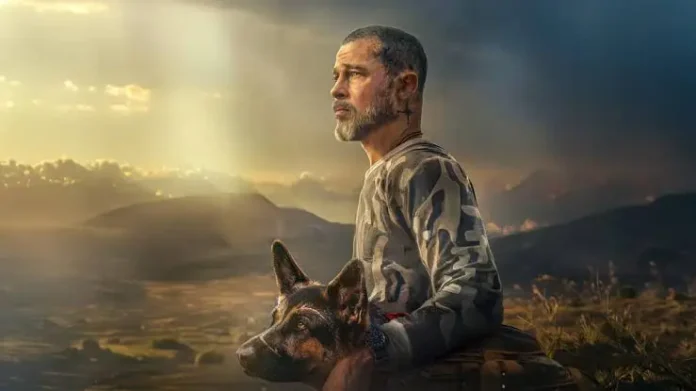

Heart of the Beast (2026) is a survival adventure thriller starring Brad Pitt as a former Special Forces soldier stranded in the Alaskan wilderness with his retired military dog, Odin. Directed by David Ayer, the film explores loyalty, trauma, companionship, and the fight to survive against nature.
KumDi.com
Heart of the Beast succeeds because it understands that survival is not always about physical strength. Sometimes, the most important reason to keep moving forward is the responsibility and connection we feel toward someone else.
Brad Pitt delivers a controlled performance, but Odin provides much of the film’s emotional identity. Their relationship gives a familiar survival narrative a more personal dimension.
The result is an engaging adventure drama that balances danger, companionship, and emotional storytelling.
Heart of the Beast (2026)
Overall editorial assessment
Worth Watching
7.5/10
Editorial assessment, not an official critic or audience rating.
| Category | Assessment |
|---|---|
| Acting | 8.5/10 |
| Emotional storytelling | 8.5/10 |
| Cinematography | 8/10 |
| Action and survival | 7.5/10 |
| Originality | 6.5/10 |
| Visual effects | 6.5/10 |
Recommended for: Survival thriller fans, Brad Pitt audiences, and dog lovers.
Table of Contents

Heart of the Beast (2026) is a survival adventure thriller starring Brad Pitt as a former Special Forces soldier stranded in the Alaskan wilderness with his retired military dog, Odin. Directed by David Ayer, the film combines intense wilderness survival, psychological trauma, military brotherhood, and the emotional connection between a man and his canine companion. Its greatest strength is the relationship between Pitt’s character and the dog, making it a character-driven adventure rather than simply another action movie.
Released in the United States on September 25, 2026, and in South Korea on October 28, 2026, Heart of the Beast offers audiences a relatively straightforward but emotionally engaging survival story. While its familiar genre structure and occasional computer-generated animal effects prevent it from becoming an exceptional thriller, the performances, physical action, and central human-animal relationship give the film considerable appeal.
Heart of the Beast (2026): Movie Information
| Category | Details |
|---|---|
| Movie Title | Heart of the Beast |
| Release Year | 2026 |
| Genre | Survival, Adventure, Action, Drama |
| Director | David Ayer |
| Screenwriter | Cameron Alexander |
| Main Cast | Brad Pitt, J.K. Simmons, Anna Lambe |
| Main Animal Character | Odin (German Shepherd) |
| Runtime | 101 minutes |
| Country | United States |
| Distributor | Paramount Pictures |
| U.S. Release | September 25, 2026 |
| South Korea Release | October 28, 2026 |
| Korean Age Rating | 12 and older |
The film is directed by David Ayer, known for character-focused action films such as Fury (2014) and End of Watch (2012). Brad Pitt also reunites with Ayer following their collaboration on Fury.
What Is Heart of the Beast About?
Heart of the Beast follows James Belmont, played by Brad Pitt, a former U.S. Army Special Forces soldier who has withdrawn from ordinary life following traumatic experiences during military service.
His closest companion is Odin, a retired military working dog who shares a similarly difficult past. Both have survived the consequences of war, and their relationship is built on years of trust, loyalty, and shared hardship.
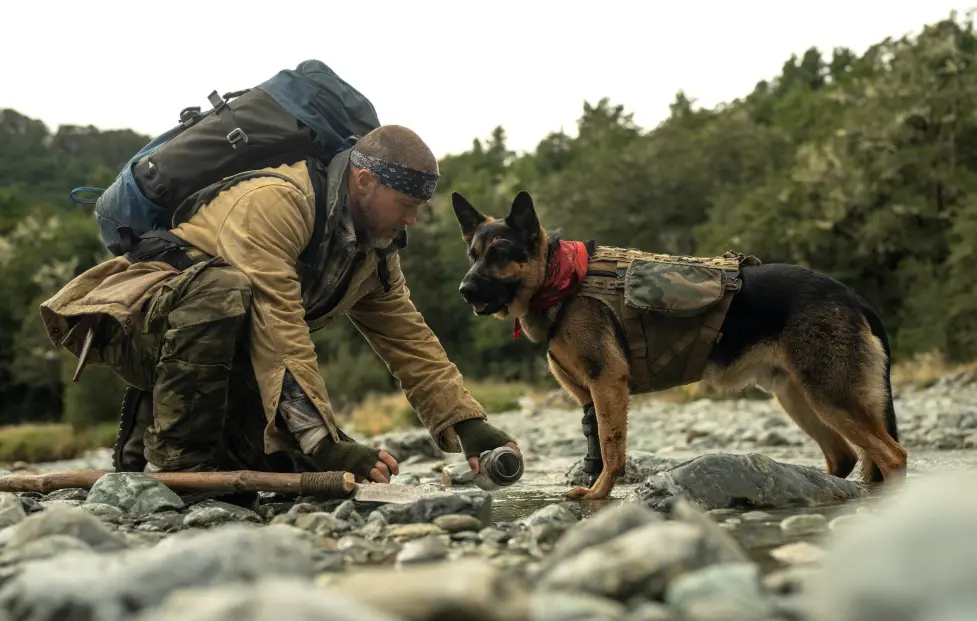
The situation changes dramatically when a plane crash leaves James and Odin stranded in the remote Alaskan wilderness. Far from civilization, the pair must navigate dangerous terrain, freezing water, unpredictable weather, and encounters with wild animals.
Their journey becomes a physical and psychological test. James must use his military experience to find a way back to safety while protecting Odin, whose injuries and physical limitations make the journey even more challenging.
However, the central question is not simply whether James can survive the wilderness. It is whether two damaged veterans, one human and one canine, can continue relying on each other when their physical and emotional limits are pushed to the extreme.
The film uses this survival journey to explore trauma, companionship, sacrifice, and the powerful connection between humans and animals.
Brad Pitt’s Performance: A Soldier Defined by Silence
Brad Pitt plays James Belmont with a restrained performance that differs from the charismatic, dialogue-heavy roles often associated with the actor.
James is not presented as a conventional action hero who constantly explains his decisions or delivers motivational speeches. Instead, his personality is communicated through physical movement, facial expressions, reactions, and interactions with Odin.
This approach is particularly important because James carries psychological wounds from his military service. His isolation is not merely a lifestyle choice. It reflects the difficulty of reconnecting with ordinary society after experiencing extreme violence and loss.
Pitt’s performance is most effective when James interacts with Odin. Small gestures, protective movements, and moments of hesitation communicate emotions that dialogue might otherwise make unnecessarily obvious.
The character also introduces an interesting contrast between physical capability and emotional vulnerability. James possesses extensive military training, but his survival is complicated by his physical condition and the consequences of his past.
Rather than relying entirely on action sequences, the film gives Pitt opportunities to portray a man who must confront his limitations and recognize that survival sometimes depends on accepting help.
Odin the German Shepherd: The Film’s Emotional Center
Although Brad Pitt is the leading human star, Odin is arguably the most memorable character in Heart of the Beast.
Odin is not simply an animal accompanying the protagonist. He is a retired military working dog with his own history of trauma, physical injuries, and emotional attachment to James.
His character has several important functions within the story.
1. A partner rather than a possession
The relationship between James and Odin is based on mutual dependence. James protects Odin physically, while Odin provides companionship and emotional stability.
2. A reflection of military trauma
Both characters have experienced violence and carry visible reminders of their previous lives. Their shared experiences create a bond that does not require extensive verbal communication.
3. A source of emotional tension
Because Odin has physical limitations, every dangerous situation creates additional uncertainty. The audience is not only concerned about James surviving but also about whether his companion can endure the journey.
4. A symbol of loyalty
Odin’s commitment to James reinforces one of the film’s central themes: genuine loyalty is demonstrated through actions, particularly when circumstances become difficult.
One interesting production detail is that Odin was portrayed by four dogs, including Uber and three of his offspring, with different animals performing different aspects of the character. This reflects the practical complexity of filming a physically demanding animal-centered adventure.
David Ayer’s Direction: Survival, Action, and Emotional Storytelling
Director David Ayer has considerable experience creating films centered on military environments, personal conflict, and characters operating under extreme pressure.
His previous collaboration with Brad Pitt on Fury demonstrated his ability to combine military action with character development. In Heart of the Beast, Ayer shifts the focus from battlefield combat to wilderness survival.
This change gives the film a different atmosphere.
Instead of large military operations, crowded battle scenes, and complex political conflicts, the story concentrates on two characters navigating an isolated environment.
The director uses three principal storytelling elements:
- Physical survival: The characters must overcome environmental hazards, injuries, exhaustion, and dangerous wildlife.
- Psychological survival: James must confront the emotional consequences of his military experiences.
- Emotional connection: The relationship between James and Odin becomes the foundation of the narrative.
Ayer’s approach works particularly well when the film allows the characters to communicate through their actions rather than dialogue.
However, the director occasionally returns to familiar action-movie conventions, particularly through military flashbacks and dramatic confrontations. These sequences provide background but sometimes interrupt the more intimate atmosphere.
The British Film Institute’s Sight and Sound review similarly identifies the film’s quieter moments as its strongest, while describing the overall survival narrative as relatively familiar.
Cinematography and the Alaskan Wilderness
The natural environment is more than a background in Heart of the Beast. It functions as an opposing force that constantly challenges the characters.
The wilderness represents uncertainty, isolation, and the limits of human control.
Cinematographer Mauro Fiore helps establish this atmosphere through expansive landscapes, dense forests, remote lakes, and physically demanding outdoor sequences.
Although the story takes place in Alaska, significant portions of the film were shot on New Zealand’s South Island. Its mountainous terrain and remote natural environments provide the visual foundation for the wilderness setting.
The cinematography contributes to the film in several ways:
Landscape photography
Wide shots emphasize the distance between the characters and civilization. They also communicate how small human beings become when surrounded by an enormous natural environment.
Environmental atmosphere
Forests, rivers, cold water, and changing weather conditions create a constant feeling of vulnerability.
Physical action
The camera work during dangerous sequences emphasizes movement, impact, and the difficulty of navigating unstable terrain.
Natural sound design
Breathing, footsteps, water, and environmental sounds help establish the physical reality of the journey.
One of the film’s notable strengths is its ability to create tension without depending exclusively on dialogue or fast-paced editing.
However, some animal effects are less convincing than the practical performances, particularly when CGI wildlife becomes part of the action. This is one area where the visual execution occasionally falls short of the film’s otherwise convincing physical atmosphere.
The Survival Thriller Elements: What Makes the Journey Dangerous?
Unlike traditional action films, where the primary threat usually comes from an identifiable enemy, Heart of the Beast uses the natural environment as its central antagonist.
James and Odin face several interconnected survival challenges.
| Survival Challenge | Impact on the Characters |
|---|---|
| Extreme weather | Increases the risk of exposure and exhaustion |
| Freezing water | Creates additional physical danger and threatens survival |
| Dangerous terrain | Makes travel difficult and increases injury risks |
| Wild animals | Introduces unpredictable physical threats |
| Limited resources | Makes food, shelter, and energy management essential |
| Previous injuries | Restricts physical capability and mobility |
| Psychological trauma | Complicates decision-making and emotional recovery |
These challenges are particularly effective because they affect both characters differently.
James has military experience and survival knowledge, but physical injuries and health limitations reduce his ability to respond to every threat.
Odin has instincts and training developed through military service, but his own physical injuries create additional vulnerabilities.
The film therefore avoids making survival entirely dependent on one exceptionally capable protagonist.
Instead, it presents survival as a partnership in which each character contributes something different.
How realistic is the survival story?
The film uses recognizable wilderness survival principles, including finding shelter, navigating difficult terrain, conserving energy, and responding to environmental threats.
However, it should be understood as fictional entertainment rather than a realistic survival-training demonstration.
Actual wilderness survival depends on several factors:
- Access to clean drinking water.
- Protection against hypothermia and exposure.
- Appropriate clothing and insulation.
- Injury assessment and medical treatment.
- Navigation and communication equipment.
- Energy conservation and careful movement.
In real situations, a serious injury, freezing-water exposure, or cardiovascular emergency can become life-threatening very quickly.
The film compresses and dramatizes these challenges to maintain narrative momentum. Its survival sequences are designed primarily to create tension and emotional investment rather than provide a comprehensive guide to wilderness safety.
The Deeper Meaning of Heart of the Beast: Trauma, Loyalty, and Healing
The title Heart of the Beast has more than one possible interpretation.
At the surface level, it suggests the physical dangers of the wilderness and the animals that inhabit it.
At a deeper level, it can be interpreted as a reference to the instinctive qualities that emerge when individuals face extreme circumstances.
The film explores three important themes.
1. The psychological consequences of military service
James is a veteran whose experiences continue to influence his life after leaving active service.
His isolation and difficulty connecting with other people suggest the lasting consequences of combat-related trauma.
The film also draws attention to the fact that military working dogs can experience stressful and traumatic situations.
Although the story does not function as a clinical examination of post-traumatic stress disorder (PTSD), it provides a fictional representation of how traumatic experiences can influence behavior, relationships, and everyday functioning.
Importantly, the film does not suggest that a dangerous journey automatically resolves psychological trauma. Instead, the relationship between James and Odin provides an emotional framework for exploring trust and companionship.
2. The human-animal bond
One of the most compelling themes is the connection between humans and working animals.
Military dogs are trained to perform specialized tasks, including detection, security, tracking, and other operational duties.
Their relationships with handlers often involve extensive cooperation, communication, and repeated shared experiences.
In James and Odin’s case, their connection extends beyond professional military duties. They have become companions who understand each other’s behavior and limitations.
The film illustrates how this relationship can remain meaningful even after military service ends.
3. Loyalty when circumstances become difficult
Loyalty is easy to express when life is comfortable.
It becomes more meaningful when someone must make difficult choices, accept personal risks, or continue supporting another individual despite physical and emotional hardship.
James and Odin’s journey provides a cinematic exploration of this idea.
Their relationship is not based on grand declarations. It is communicated through protection, trust, patience, and persistence.
This is ultimately what distinguishes Heart of the Beast from a conventional wilderness action movie.
What Works Well in Heart of the Beast?
The film has several identifiable strengths that make it appealing to adventure and drama audiences.
1. The relationship between Brad Pitt and Odin
The strongest element is the emotional connection between the human and canine protagonists. Odin’s expressions and behavior communicate emotion without requiring conventional dialogue.
2. A focused storyline
The relatively small cast and straightforward survival premise help maintain narrative focus. The audience understands the central objective: survive the wilderness and protect the relationship between the two characters.
3. Brad Pitt’s restrained performance
Pitt demonstrates that a leading action star does not always need extensive dialogue or elaborate fight sequences to maintain audience interest.
4. Cinematic wilderness photography
The natural landscapes provide scale and atmosphere, reinforcing the characters’ isolation.
5. Emotional accessibility
The themes of loyalty, friendship, trauma, and sacrifice are understandable across different cultures and age groups.
What Could Have Been Better?
Despite its strengths, Heart of the Beast has several limitations.
| Weakness | Why It Matters |
|---|---|
| Familiar survival formula | Experienced thriller audiences may anticipate certain developments |
| Limited supporting characters | Some secondary characters receive insufficient development |
| Uneven CGI effects | Certain animal encounters reduce visual realism |
| Military flashbacks | Some sequences interrupt the central survival narrative |
| Predictable storytelling | The basic journey follows established adventure-film conventions |
The biggest limitation is the screenplay’s reliance on familiar survival-movie storytelling.
Audiences who regularly watch wilderness thrillers may recognize elements associated with films such as The Grey and The Edge.
Nevertheless, the emotional relationship between James and Odin provides a distinct identity.
The film is most successful when it concentrates on the characters rather than attempting to create increasingly spectacular action sequences.
Is Heart of the Beast Worth Watching?
Yes. Heart of the Beast is worth watching for audiences who enjoy survival adventures, character-driven action dramas, and emotionally engaging stories about animals.
However, expectations should be appropriate.
This is not primarily a complicated psychological thriller or a large-scale military action production. Its appeal comes from a relatively simple premise supported by physical challenges and an emotional relationship.
The film is particularly suitable for:
- Brad Pitt fans interested in his more restrained dramatic performances.
- Dog lovers who appreciate stories about loyalty and companionship.
- Viewers who enjoy wilderness survival films.
- Audiences interested in military veterans and psychological resilience.
- Families looking for an adventure drama, while considering the film’s violence and injury-related content.
Those expecting a highly original survival narrative or technically flawless CGI may find certain elements familiar or disappointing.
FAQs
What is Heart of the Beast (2026) about?
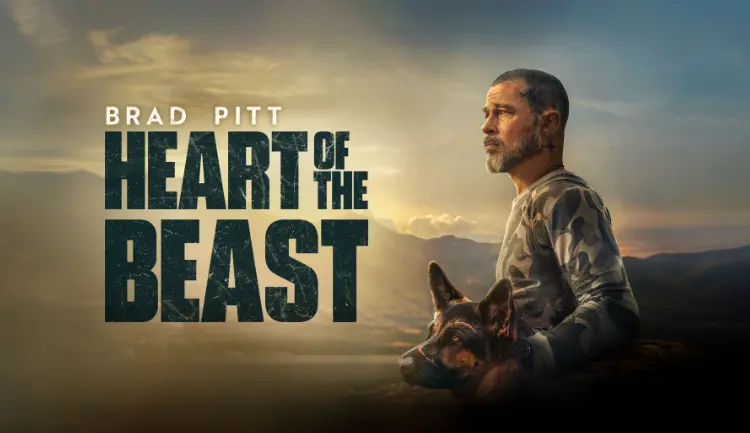
Heart of the Beast (2026) is a survival adventure thriller starring Brad Pitt as James Belmont, a former Special Forces soldier stranded in the Alaskan wilderness with his retired military dog, Odin. The story explores survival, loyalty, military trauma, and the emotional connection between humans and animals.
Who stars in Heart of the Beast (2026), and who directed the movie?
The Heart of the Beast movie cast includes Brad Pitt as James Belmont, J.K. Simmons as Watkins, and Anna Lambe as Amber. The film is directed by David Ayer, who previously collaborated with Brad Pitt on the military drama Fury (2014).
Is Heart of the Beast a true story or a fictional survival movie?
Heart of the Beast (2026) is a fictional survival movie written by Cameron Alexander. Although its story incorporates realistic elements of military working dogs, wilderness survival, and combat-related trauma, the characters and central events are fictional.
What kind of dog is Odin in Brad Pitt’s Heart of the Beast?
Odin in Heart of the Beast is a German Shepherd portraying a retired military working dog. His relationship with Brad Pitt’s character, James Belmont, is central to the survival thriller, highlighting canine loyalty, companionship, and the emotional bond between military handlers and their dogs.
Is Heart of the Beast (2026) worth watching?
Yes. Heart of the Beast (2026) is worth watching for fans of Brad Pitt survival movies, wilderness adventure films, and emotional animal dramas. Its strongest elements are the relationship between James and Odin, cinematic landscapes, and themes of loyalty and resilience.
Conclusion: More Than a Survival Movie
Heart of the Beast is ultimately a story about companionship in the face of adversity.
Through James and Odin, David Ayer explores how shared experiences can create connections that remain meaningful long after the circumstances that formed them have disappeared.
Brad Pitt brings emotional restraint to the central character, while Odin provides the film with its most distinctive emotional presence.
Although the screenplay follows familiar survival-thriller conventions, its emphasis on loyalty, trust, and the psychological consequences of war gives the story an identity of its own.
For audiences seeking an action-adventure film with genuine emotional substance, Heart of the Beast is a worthwhile addition to the 2026 movie lineup.
References
- Paramount Pictures – Heart of the Beast (2026) – Official Paramount Page
- cMovie.Asia – Critics and Film Reviews
- Rotten Tomatoes – Critics and Audience Reviews




 and then
