


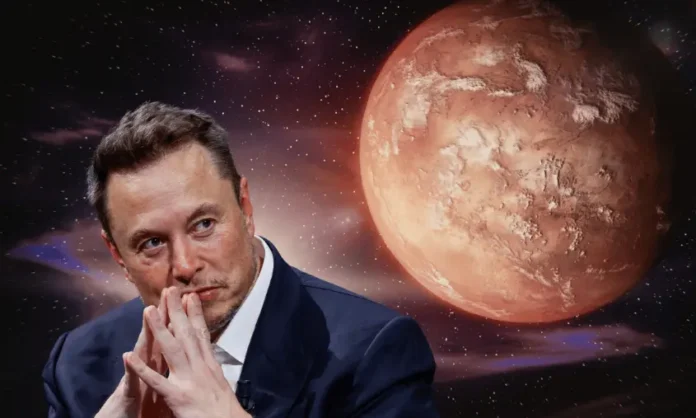

Elon Musk’s Mars colonization plan aims to establish a self-sustaining city of one million people, but Nobel laureate Michel Mayor warns that Mars is too hostile for easy human settlement. Extreme cold, radiation, limited resources, and life-support challenges make protecting Earth essential to humanity’s future.
KumDi.com
Elon Musk’s ambition to establish a self-sustaining civilization of one million people on Mars has encountered a fundamental scientific challenge: Mars is not a second Earth, and making it habitable for millions of people would require solving enormous problems in radiation protection, atmospheric pressure, food production, energy, and industrial infrastructure. Nobel Prize-winning astronomer Michel Mayor has challenged the practicality of Musk’s vision, arguing that humanity should prioritize protecting Earth rather than treating another planet as a backup.
The debate intensified in October 2026 after Mayor criticized the prospect of mass migration to Mars at the Starmus science festival in Tenerife, Spain. Mayor, who shared the 2019 Nobel Prize in Physics for the discovery of an exoplanet orbiting a Sun-like star, highlighted the Red Planet’s thin atmosphere, extreme temperatures, radiation exposure, and inhospitable surface. His warning raises an important question: can humanity realistically build a self-sufficient Martian civilization, or is protecting our own planet a far more achievable path to long-term survival?
The answer requires distinguishing between two very different objectives: sending humans to Mars and building a civilization that can survive there independently of Earth. The first is an ambitious engineering challenge. The second remains an unproven undertaking involving scientific, economic, biological, and ethical uncertainties.
Table of Contents
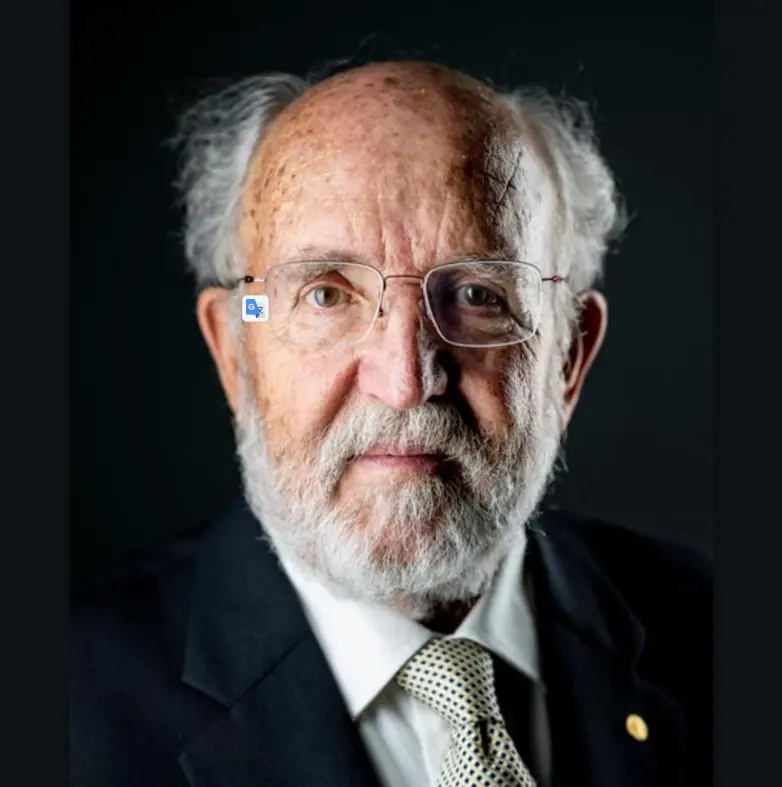
Who Is Michel Mayor, and Why Is He Challenging Elon Musk’s Mars Vision?
Michel Mayor: Nobel Prize-winning astronomer
Michel Mayor is a Swiss astronomer best known for co-discovering 51 Pegasi b with his doctoral student Didier Queloz in 1995. Their discovery established the first confirmed exoplanet orbiting a Sun-like star and helped transform the search for planets beyond our solar system. Mayor and Queloz received the 2019 Nobel Prize in Physics for this achievement.
Mayor’s criticism is not an argument against space exploration itself. Rather, it questions whether Mars can realistically become a destination for mass human migration within the next century.
His central concerns are physical and biological. Mars has a very thin atmosphere that cannot provide breathable air or Earth-like surface pressure. Its climate is extremely cold, its surface is exposed to hazardous radiation, and its soil cannot simply be treated as ordinary agricultural land.
These conditions mean that people living on Mars would depend on engineered environments for survival. Habitats would need to maintain pressure, supply oxygen, regulate temperature, provide water, and shield inhabitants from radiation. Food production and essential industrial processes would also need to function reliably in a hostile environment.
Mayor’s warning therefore focuses on a distinction that is sometimes lost in discussions of space colonization: the ability to reach another planet does not automatically mean the ability to live there safely, permanently, or independently.
Why Does Elon Musk Want to Send One Million People to Mar
Musk’s long-term objective is to make humanity a multiplanetary species. Through SpaceX, he aims to develop reusable spacecraft that could transport people and cargo to Mars at a scale far beyond the capabilities of traditional space missions.
The logic behind this ambition is that a civilization dependent on a single planet remains vulnerable to catastrophic events. A sufficiently independent settlement on Mars could, in principle, preserve human knowledge, technology, and population if Earth experienced an existential disaster.
Musk has also argued that a small outpost would not be enough. A sustainable civilization needs far more than astronauts and scientific equipment. It would require manufacturing, mining, agriculture, energy generation, medical care, transportation, and the ability to repair and reproduce essential technologies.
In March 2025, Musk described the need for approximately one million people and a million tonnes of cargo to establish a self-sustaining civilization. His broader vision involves scaling up transportation and developing the infrastructure needed to survive without regular supply shipments from Earth.
However, a stated goal is not the same as an established engineering capability. The number of people who can be transported, the cost of each journey, the reliability of life-support systems, and the ability to produce essential goods locally all remain critical variables.
What Would a Self-Sufficient Mars Colony Need?
| Essential system | Why it matters | Main challenge |
|---|---|---|
| Transportation | Moves people, machinery, and supplies between planets | Reusable spacecraft, safe landing, and repeated launches |
| Life support | Provides breathable air, water, and temperature control | Reliability and repair under hostile conditions |
| Food production | Supplies adequate calories and nutrition | Limited growing space, energy, water, and suitable soil |
| Energy | Powers habitats, agriculture, and industry | Dust storms, equipment failures, and continuous demand |
| Manufacturing | Produces tools, machinery, and replacement parts | Limited raw materials and complex industrial supply chains |
| Healthcare | Treats injuries, infections, and chronic disease | Limited facilities, staff, medicines, and emergency evacuation options |
| Population sustainability | Supports families and future generations | Unknown effects of low gravity, reproduction, and development |
A million residents would therefore represent a starting point for an extraordinarily complex industrial system, not simply a large collection of people living inside protective domes.
The Five Major Scientific Challenges of Living on Mar
1. Mars Has Almost No Breathable Atmosphere
Mars has an atmosphere composed primarily of carbon dioxide, with very little oxygen available for human respiration. Its average surface atmospheric pressure is less than 1% of Earth’s average sea-level pressure.
Humans cannot survive outdoors on Mars without specialized life-support equipment. A settlement would need pressurized habitats, oxygen production and storage, carbon dioxide removal, and reliable systems for detecting and containing leaks.
NASA’s MOXIE experiment aboard the Perseverance rover demonstrated that oxygen can be produced from the Martian atmosphere. This is an important step toward using local resources, but the experiment was a technology demonstration, not a complete system capable of supplying an entire city.
Scaling oxygen production to support hundreds of thousands of residents would require substantially more equipment, power, redundancy, and maintenance capability.
2. Extreme Cold and Radiation Threaten Human Health
Mars has an average surface temperature of approximately −60°C, although local conditions vary considerably and temperatures can fall much lower. Its thin atmosphere and lack of a global magnetic field leave the surface less protected from harmful radiation than Earth.
Long-term exposure to space radiation is associated with risks that include cancer and damage to the central nervous system. Radiation protection would be essential during interplanetary travel and throughout life on Mars.
Potential protective measures include:
- Locating habitats beneath the surface or covering them with Martian regolith.
- Using shielding materials around sleeping areas and other frequently occupied spaces.
- Monitoring radiation levels and establishing emergency shelters for solar particle events.
- Designing spacecraft with adequate radiation protection during transit.
These solutions introduce additional engineering demands. Underground construction, for example, requires excavation machinery, structural support, ventilation, power, and reliable access routes.
3. Growing Food Is More Complicated Than Planting Crops
Mars contains water ice, and its atmosphere contains carbon dioxide, both of which could potentially support aspects of resource utilization. However, these resources do not make the planet immediately suitable for agriculture.
Martian regolith is not equivalent to fertile Earth soil. It lacks the established biological ecosystem of productive agricultural soil, and some Martian materials contain perchlorate compounds that can be hazardous to human health. Water must also be located, extracted, processed, and monitored for contaminants.
A practical settlement would likely rely on controlled-environment agriculture, including hydroponics or other systems that regulate nutrients, water, temperature, humidity, and lighting.
Such systems can produce crops in enclosed environments, but feeding a large population would require enormous production capacity and dependable supplies of energy, equipment, nutrients, and replacement components.
Practical example: A small greenhouse might provide fresh vegetables for a research crew, but a city of one million people would need a much broader food system supplying calories, protein, fats, vitamins, and minerals. The scale and reliability requirements are fundamentally different.
4. Water and Energy Must Be Available Continuously
Water is essential for drinking, hygiene, food production, oxygen generation, and many industrial processes. Although NASA has identified water ice on Mars, a colony would need to establish the location, accessibility, extraction rate, and quality of its water sources before planning a large population.
Energy demand would also be substantial. Habitats, greenhouses, communications systems, mining equipment, manufacturing facilities, and life-support machinery would all require power.
Solar energy could contribute, but dust accumulation and storms can reduce the performance of solar equipment. Nuclear power is another potential option, although it introduces requirements involving reactor development, safety, maintenance, and fuel supply.
The challenge is not simply generating enough energy under normal conditions. A self-sufficient settlement must continue functioning when equipment fails, energy production falls, or spare parts are unavailable.
5. Human Biology in Martian Gravity Remains Uncertain
Mars has approximately 38% of Earth’s surface gravity. Scientists know that prolonged exposure to microgravity affects human physiology, including bone density, muscle function, and fluid distribution. However, the long-term effects of living continuously in Martian gravity are not yet fully understood.
Important unanswered questions concern childhood development, pregnancy, reproduction, aging, and the health consequences of spending decades in partial gravity.
A settlement intended to support multiple generations would need answers that short-duration astronaut missions cannot provide. It would also require advanced medical facilities, trained healthcare workers, pharmaceutical supplies, and the ability to manage emergencies far from Earth.
These biological questions are among the reasons that building a permanent settlement is much more complicated than landing a crew and keeping it alive for a limited mission.
SpaceX’s Mars Plan: What Is Possible by 2026?
SpaceX’s official Mars roadmap outlines a strategy based on reusable Starship spacecraft, large-scale cargo transport, local resource utilization, and the gradual construction of a permanent settlement. The company says establishing a self-sufficient city would require more than one million people and millions of tonnes of cargo. Its published roadmap lists initial cargo missions to Mars as starting no earlier than 2028. These are company targets, not confirmed mission outcomes.
The following comparison separates established capabilities from longer-term ambitions.
| Development area | Current position | What remains to be demonstrated |
|---|---|---|
| Reusable launch systems | SpaceX is developing and testing Starship for full and rapid reusability | Reliable, repeated operations at the scale required for Mars |
| Oxygen production | NASA’s MOXIE demonstrated oxygen production from the Martian atmosphere | Industrial-scale production and long-term operation |
| Local water supply | Water ice is known to exist on Mars | Reliable extraction, purification, and distribution for a large settlement |
| Human survival | Robotic missions and astronaut research provide important environmental and medical data | Safe, long-duration habitation and multigenerational health |
| Self-sufficient civilization | A long-term SpaceX objective | Independent food, energy, medicine, manufacturing, and replacement-part supply chains |
The central challenge is scale. Technologies that work in a laboratory, on the International Space Station, or in a small robotic experiment do not automatically work reliably across an entire city.
A realistic development pathway would involve progressively larger demonstrations: robotic cargo delivery, resource extraction, uncrewed infrastructure construction, crewed research habitats, expanded settlements, and eventually systems capable of operating without routine Earth resupply.
Even this sequence would not guarantee that a million-person settlement could become self-sustaining within a particular timeframe.
Why Mayor Says There Is No Planet B
Mayor’s warning is broader than the technical difficulties of building a Mars colony. It challenges the idea that humanity can rely on another planet as a substitute for Earth.
His argument has three important dimensions.
First, Mars is not naturally habitable. Earth provides breathable air, liquid water across much of its surface, a protective atmosphere, and ecosystems that support food production. Mars lacks these advantages. Reproducing even a fraction of Earth’s life-support systems would require continuous technological intervention.
Second, other planets are not readily accessible alternatives. Mars is relatively close in astronomical terms, but interplanetary travel remains expensive and hazardous. Planets orbiting other stars are vastly more distant. Even if astronomers identify a world with potentially favorable conditions, reaching it would require propulsion and energy capabilities far beyond current human spaceflight.
Third, Earth already supports human civilization. Climate change, environmental degradation, resource depletion, and other global risks deserve serious attention, but they do not make Mars a practical refuge for billions of people. Protecting existing ecosystems and infrastructure is a fundamentally different task from constructing a second biosphere from scratch.
This is the core of Mayor’s message: space exploration can advance science and technology, but humanity should not confuse exploration with an achievable mass evacuation plan.
Could Humans Terraform Mars and Make It Habitable?
Terraforming means changing a planet’s environment to make it more Earth-like and potentially suitable for human life without fully enclosed habitats.
In principle, scientists can investigate ways to warm Mars, release atmospheric gases, manage water resources, and develop biological systems. However, there is currently no demonstrated method for transforming Mars into an Earth-like planet at the scale required for an open-air human civilization.
Mars has lost much of its original atmosphere over geological time, and it does not possess Earth’s global magnetic field today. Its low atmospheric pressure and cold surface are fundamental obstacles, not merely inconveniences that can be solved by installing greenhouses.
Even if future technology could increase temperatures or atmospheric pressure, other problems would remain:
- Establishing a stable atmosphere with sufficient breathable oxygen.
- Maintaining temperatures and pressure over long periods.
- Providing protection from radiation.
- Developing fertile, biologically functional soils.
- Creating sustainable water cycles and resilient ecosystems.
- Preventing environmental systems from failing after human intervention.
SpaceX suggests that Mars could be warmed and that its carbon dioxide atmosphere could support plant growth under suitable conditions. However, growing plants in a controlled environment and making the entire planet habitable are two very different engineering challenges.
For the foreseeable future, pressurized habitats and controlled agricultural systems are more realistic research priorities than full planetary terraforming.
Mars Colonization vs. Protecting Earth: Which Is the Better Strategy?
The debate is often framed as a choice between space exploration and environmental protection. That is too simplistic. Space research can generate valuable scientific knowledge and technological advances, while investment in Earth’s resilience can reduce risks to the civilization that already exists.
A balanced assessment looks at the objectives of each approach.
| Consideration | Mars settlement | Protecting Earth |
|---|---|---|
| Primary objective | Establish an independent human settlement | Preserve and strengthen the existing habitable environment |
| Time horizon | Likely to require decades of development, with major uncertainties | Benefits can begin through present-day actions |
| Main challenges | Space transportation, radiation, life support, biology, industrial independence | Climate mitigation, ecosystem protection, public health, infrastructure resilience |
| Population impact | Initially limited to a small number of settlers | Potentially benefits billions of people |
| Role in long-term survival | Could eventually diversify some existential risks if genuinely self-sufficient | Addresses risks to the planet where humanity already lives |
Mars exploration may offer scientific, economic, and strategic benefits. It can advance robotics, materials science, energy systems, closed-loop life support, and our understanding of planetary evolution.
Nevertheless, those benefits do not establish that Mars is a practical alternative to Earth. The two strategies operate on different scales and should be evaluated according to their measurable outcomes rather than presented as mutually exclusive choices.
What Would It Take to Send One Million People to Mars?
The most important issue is not simply how many passengers a rocket can carry. It is whether the entire transportation and settlement system can operate safely, affordably, and repeatedly.
A credible million-person plan would require progress across several stages.
Stage 1: Reliable transportation
Demonstrate repeated launch, orbital refueling, interplanetary transit, Mars entry, descent, and landing. A large fleet would need high operational reliability and a sustainable maintenance cycle.
Stage 2: Robotic infrastructure
Establish power generation, communications, landing facilities, water extraction, oxygen production, and construction equipment before sending large numbers of people.
Stage 3: Human survival and settlement
Test pressurized habitats, food production, medical services, radiation shielding, and emergency systems with small crews before increasing the population.
Stage 4: Industrial independence
Develop the ability to produce essential materials, machinery, replacement components, medicines, and agricultural inputs locally, including when Earth shipments are interrupted.
Stage 5: A sustainable population
Establish dependable food and resource systems, long-term healthcare, social institutions, education, and evidence that the settlement can support future generations.
Each stage depends on the success of earlier ones. A failure in energy production, water supply, or a critical manufacturing process could threaten the entire settlement if replacement equipment cannot arrive from Earth.
That dependency is why a self-sufficient Mars city must be assessed as an integrated industrial civilization rather than simply a spaceflight project.
What This Debate Means for the Future of Humanity
The disagreement between Musk and Mayor reflects two different approaches to long-term survival.
Musk emphasizes technological expansion and the possibility of reducing humanity’s dependence on one planet. Mayor emphasizes physical constraints and the responsibility to protect the planet that already supports human life.
Both perspectives raise legitimate questions. A second settlement could eventually help diversify certain existential risks, but only if it becomes genuinely independent and resilient. Until then, a Mars colony would remain dependent on Earth for some combination of technology, supplies, expertise, and industrial support.
Meanwhile, Earth’s environmental and social challenges cannot be solved by sending a small fraction of the population to Mars. Most people will continue to depend on Earth’s atmosphere, water systems, agriculture, and infrastructure for the foreseeable future.
The most constructive approach is therefore to continue responsible space exploration while investing in the resilience of human civilization on Earth. Progress toward Mars should be judged by demonstrated engineering capabilities, independently verifiable milestones, and evidence of long-term sustainability—not by ambitious population targets alone.
FAQs
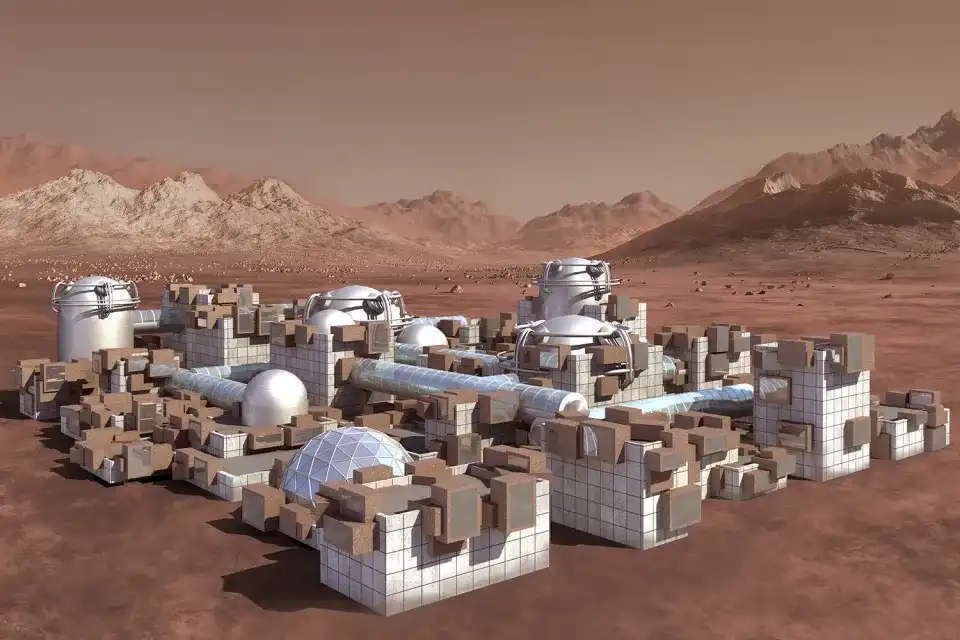
What is Elon Musk’s Mars colonization plan?
Elon Musk’s Mars colonization plan aims to establish a self-sustaining city on Mars with approximately one million people. Through SpaceX’s Starship program, the goal is to transport people and cargo while developing local resources, reliable life-support systems, and infrastructure for long-term survival.
Why did Nobel laureate Michel Mayor warn against Mars colonization?
Michel Mayor’s Mars warning highlights the scientific and practical challenges of establishing a large human settlement on the Red Planet. Mars has an extremely thin atmosphere, low temperatures, harmful radiation exposure, and limited accessible resources, making permanent human habitation far more difficult than simply reaching the planet.
Can one million people realistically live on Mars?
Sending one million people to Mars would require advanced transportation, radiation protection, reliable energy, food production, water extraction, medical facilities, and local manufacturing. Although future Mars colonization may become more feasible, a fully self-sufficient settlement remains an unproven technological and logistical challenge.
What are the biggest Mars colonization challenges facing SpaceX?
The main Mars colonization challenges include safely transporting people, landing heavy cargo, producing oxygen and water, protecting residents from radiation, and establishing dependable food and energy supplies. SpaceX must also demonstrate that essential infrastructure can operate reliably over long periods with limited support from Earth.
Why does Earth remain irreplaceable despite Elon Musk’s Mars plans?
Earth remains irreplaceable because it naturally provides breathable air, liquid water, a protective atmosphere, and ecosystems that sustain human life. Elon Musk’s Mars plans may support long-term exploration and risk diversification, but Mars cannot currently provide a practical alternative to protecting Earth’s environment and resources.
Conclusion: Mars Is a Scientific Frontier, Not a Replacement for Earth
Elon Musk’s vision of sending one million people to Mars represents one of the most ambitious goals in modern space exploration. SpaceX’s reusable spacecraft program and research into local resource utilization could help advance the technologies needed for future human missions.
However, Michel Mayor’s warning highlights the gap between transporting people to another planet and creating a self-sustaining civilization there. Mars presents formidable challenges in atmospheric pressure, radiation protection, food production, energy supply, human health, and industrial independence. None can be dismissed simply by increasing rocket capacity.
The evidence supports a balanced conclusion: Mars settlement may become increasingly feasible as technology advances, but it is not a viable substitute for protecting Earth today. Humanity can pursue scientific discovery and long-term space exploration while recognizing that Earth’s habitability remains the foundation of human survival.
References
- Michel Mayor’s Warning About Elon Musk’s Mars Colonization Plan
EL PAÍS English — Interview with Nobel laureate Michel Mayor discussing Mars colonization and humanity’s future. - SpaceX: Mission — Mars and Beyond
- NASA: Is There Oxygen on Mars?




 and then
