









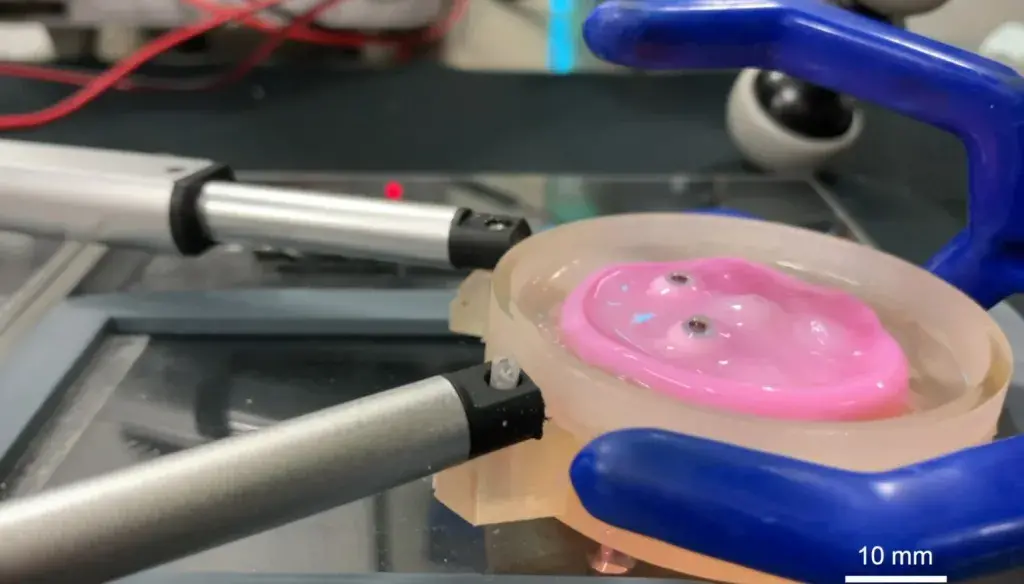
As the robotics industry continues its relentless march towards greater realism and human-like capabilities, scientists have recently unveiled a groundbreaking development that blends the organic and the artificial in a truly remarkable way. Researchers at the University of Tokyo have successfully created a robotic face covered in living human skin, complete with the ability to smile and express other lifelike facial expressions. This revolutionary breakthrough not only pushes the boundaries of what’s possible in the realm of biohybrid robotics but also holds immense potential for a wide range of applications, from the cosmetics industry to the training of plastic surgeons.
The Skin-Covered Robotic Face: A Nightmare Turned Innovative Reality
At first glance, the skin-covered robotic face created by the University of Tokyo team may seem like the stuff of nightmares, resembling a horrifying villain straight out of a horror movie. However, this unsettling appearance belies the incredible technological and scientific advancements that have gone into its creation. Led by Professor Shoji Takeuchi, a pioneer in the field of biohybrid robotics, the researchers have managed to overcome the significant challenges of integrating living tissue with complex mechanical structures, paving the way for a new era of more lifelike and expressive humanoid robots.
Mimicking Human Skin Ligaments
One of the key breakthroughs in the creation of this skin-covered robotic face was the researchers’ approach to mimicking the intricate structure of human skin ligaments. By drilling carefully designed V-shaped perforations into the robotic surface and using a specialized collagen gel, the team was able to securely bind the living skin tissue to the underlying mechanical components. This innovative anchoring system not only provides a strong and flexible attachment but also allows the skin to move in harmony with the robot’s movements, preventing tearing or peeling.
The Skin’s Self-Healing Capabilities
Another remarkable feature of the skin-covered robotic face is its ability to self-heal, much like human skin. When the artificial skin is damaged, it can repair itself, a capability that sets it apart from traditional materials used in robotics. This self-healing property not only enhances the durability of the robotic face but also opens up new possibilities for its use in various applications, such as the cosmetics industry and medical training.
Potential Applications in the Cosmetics Industry
One of the potential applications of this skin-covered robotic technology is in the cosmetics industry. By creating a robotic face that can mimic human expressions and the formation of wrinkles, researchers can use it as a platform to test new skincare products and treatments aimed at preventing, delaying, or improving the appearance of wrinkles. This could lead to more effective and personalized cosmetic solutions, benefiting both the industry and consumers alike.
Advancing Plastic Surgery Training
Another promising application of the skin-covered robotic face is in the field of plastic surgery training. By providing a realistic, lifelike platform for surgeons to practice their techniques, this technology can help improve the precision and outcomes of various facial procedures. The ability to observe and study the behavior of the artificial skin as it interacts with the underlying mechanical components can also provide valuable insights for the development of more advanced surgical techniques.
Integrating Sophisticated Actuators
While the current skin-covered robotic face is a remarkable achievement, the researchers acknowledge that there are still significant challenges to overcome. One of the primary goals is to integrate sophisticated actuators, or “muscles,” within the robot to create even more lifelike and expressive facial movements. By developing this advanced actuation system, the team hopes to further bridge the gap between the artificial and the organic, bringing robots one step closer to achieving true human-like capabilities.
Addressing Limitations and Future Developments
In addition to the integration of advanced actuators, the researchers are also working to address other limitations of the current skin-covered robotic face. This includes the lack of sensing functions and the absence of blood vessels to supply the necessary nutrients and moisture to the living skin. Overcoming these challenges will be crucial for ensuring the long-term viability and versatility of this technology.
Potential Ethical Considerations
As with any groundbreaking technological advancement, the development of skin-covered robots raises important ethical considerations that must be carefully examined. Questions surrounding the use of human-derived materials, the potential impact on human-robot interactions, and the broader societal implications of this technology will need to be thoroughly addressed by researchers, policymakers, and the public.
Collaboration and Interdisciplinary Efforts
The creation of the skin-covered robotic face is the result of a collaborative effort between researchers from various disciplines, including robotics, materials science, and biology. This interdisciplinary approach has been crucial in overcoming the complex challenges inherent in this type of biohybrid engineering. Moving forward, continued collaboration and the integration of diverse perspectives will be essential for further advancements in this field.
Embracing the Future of Biohybrid Robotics
The development of the skin-covered robotic face represents a significant milestone in the ongoing evolution of biohybrid robotics. By seamlessly blending the organic and the artificial, this technology opens up a world of possibilities, from more realistic and expressive humanoid robots to innovative applications in the cosmetics and medical industries. As researchers continue to push the boundaries of what’s possible, the future of this field promises to be both captivating and thought-provoking.
Conclusion: Embracing the Remarkable and the Unsettling
The skin-covered robotic face created by the University of Tokyo team may initially evoke a sense of unease or even horror, but it is undoubtedly a remarkable feat of scientific and technological innovation. By harnessing the power of living human skin and integrating it seamlessly with complex mechanical structures, these researchers have paved the way for a new era of biohybrid robotics that challenges our preconceptions and expands the realms of what’s possible. As we navigate the exciting and sometimes unsettling possibilities of this technology, it is crucial that we approach it with a combination of wonder, curiosity, and a thoughtful consideration of the ethical implications. The future of robotics is here, and it is both captivating and thought-provoking.




 and then