


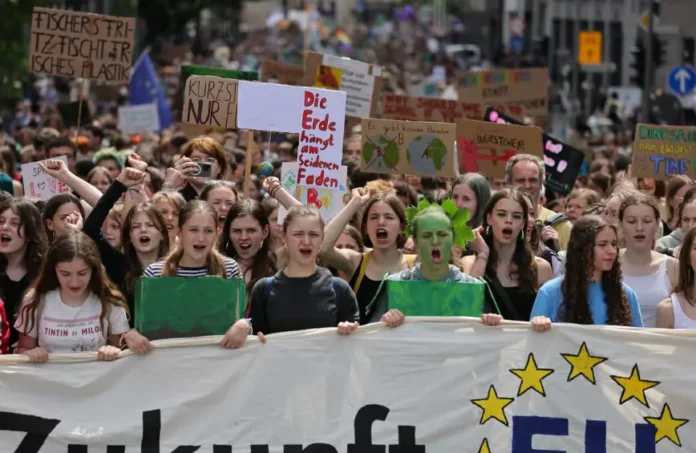

Gen Z protests in Europe are driven by rising living costs, unaffordable housing, job insecurity, climate concerns, and distrust of political institutions. Young Europeans are demanding fairer economic opportunities, stronger public services, greater accountability, and policies that offer a more secure future for the next generation.
KumDi.com
European Gen Z protesters are increasingly challenging governments over the cost of living, housing affordability, climate change, political accountability, economic inequality, and concerns about their future. For many young Europeans, the central issue is a growing gap between the life they expected to build and the opportunities they believe are realistically available to them. Rising living costs, insecure employment, expensive housing, and distrust of political institutions can turn individual frustration into collective action.
However, there is no single European youth protest movement with one common agenda. Demonstrations in different countries reflect distinct national circumstances, from housing shortages and climate policy to corruption allegations, public spending, democratic freedoms, and opposition to government decisions. What connects many of these movements is a generation demanding greater economic security, meaningful political representation, and evidence that decision-makers are taking its concerns seriously.
Table of Contents
Why Is Gen Z Leading Protests Across Europe?
Gen Z, generally defined as people born between 1997 and 2012, includes teenagers and young adults who have come of age during a period of financial instability, a global pandemic, rapid technological change, and heightened geopolitical uncertainty.
Their protests are driven by several interconnected pressures:
- The cost-of-living crisis: Rent, food, transport, and energy expenses can consume a substantial share of young people’s income.
- The housing crisis: Buying a home is increasingly difficult for many young adults, while high rents can delay independent living.
- Job insecurity: Temporary contracts, low starting salaries, underemployment, and uncertainty about career progression complicate long-term planning.
- Climate anxiety: Many young people want governments to address climate change without shifting disproportionate costs onto younger generations.
- Political distrust: Some feel that established parties and institutions respond too slowly to everyday economic problems.
- Economic inequality: The perception that wealth and opportunities are unevenly distributed can intensify frustration.
- Digital mobilisation: Social media allows young people to share grievances, organise demonstrations, and circulate information rapidly.
These factors do not affect every young European equally. National economies, family wealth, education, employment status, and access to social support all influence how strongly people experience them. Nevertheless, when several pressures accumulate, protests can become a way for young people to make their dissatisfaction politically visible.
The Cost of Living: Working Is No Longer a Guarantee of Financial Security
For many young Europeans, the cost-of-living crisis is not simply about expensive groceries. It is about whether a regular income can provide a reasonable standard of living.
Inflation following the COVID-19 pandemic and the energy-price shock associated with Russia’s full-scale invasion of Ukraine placed pressure on household budgets across Europe. Although inflation rates have varied over time and between countries, the increase in prices has left many households paying more for essential goods and services than they did before the crisis.
Young people who entered the labour market during this period often had limited savings and less bargaining power than established workers.
Why rising prices affect young people disproportionately
Young adults frequently face several disadvantages at once:
- They are more likely to be at an early stage of their careers, when earnings are relatively low.
- They may have limited savings to absorb unexpected expenses.
- They are less likely to own property purchased before housing prices increased.
- They may need to pay for rent, transport, education, and job-related expenses simultaneously.
- They may lack access to family wealth that helps other young adults manage financial shocks.
Consider a young worker earning an entry-level salary in a major European city. If rent and utility bills absorb most of their monthly income, even full-time employment may leave little room for savings, further education, travel, or starting a family.
This creates a sense of economic stagnation. The frustration is not necessarily that young people expect an easy life; it is that work may no longer provide the financial independence they associate with adulthood.
For protesters, demands related to wages, public services, affordable transport, and social protection are therefore closely connected to a broader question: does the economy offer a realistic path to a secure future?
The Housing Crisis: Why Young Europeans Struggle to Move Out
Housing is one of the clearest examples of how economic pressures translate into political dissatisfaction.
In many European cities, rents and property prices have risen faster than the incomes available to younger workers. Supply constraints, population concentration in major urban areas, construction costs, limited affordable housing, and competition for rental properties contribute to different degrees across local markets.
Young adults may find themselves staying with their parents longer, sharing accommodation with multiple housemates, moving away from employment centres, or spending an unsustainable proportion of their income on rent.
Why housing has become a generational issue
Housing is more than a financial asset. It influences independence, employment opportunities, relationships, family formation, and personal stability.
When younger generations struggle to access secure accommodation while existing property owners benefit from rising asset values, housing can become a symbol of wider inequality.
The divide is not simply between young and old. Many older renters and lower-income households also experience housing insecurity, while some younger people inherit property or receive substantial financial support from their families. The more precise distinction is between people who have access to affordable housing or family assets and those who do not.
What young protesters want: Depending on the country and movement, housing-related demands can include more social housing, stronger tenant protections, restrictions on exploitative rental practices, improved public transport to less expensive areas, and policies that expand the supply of affordable homes.
The policy challenge is to increase access to housing without creating unintended consequences that further reduce rental supply or discourage necessary construction.
Job Insecurity and the Broken Promise of Upward Mobility
For previous generations, obtaining an education and finding stable employment were often presented as reliable routes to a better life. For many young Europeans, that pathway appears less predictable.
Higher education can improve employment prospects, but a degree does not guarantee a well-paid job, secure housing, or freedom from financial stress. Graduates may compete for limited entry-level positions, accept work below their qualifications, or move between temporary contracts before obtaining stable employment.
Labour-market conditions differ considerably across Europe. Youth unemployment remains a particular concern in some countries, while other countries face skills shortages alongside problems involving wages, working conditions, or access to suitable jobs.
How employment insecurity fuels protest
Uncertainty about work affects more than monthly income. It makes long-term decisions harder.
A young person who does not know whether their contract will be renewed may hesitate to rent an apartment, relocate for work, pursue additional training, or take on financial commitments. When this uncertainty continues for years, it can undermine confidence in the idea that personal effort will produce economic progress.
Automation and artificial intelligence add another layer of concern. Although these technologies can create new jobs and increase productivity, they may also change entry-level roles, alter required skills, and place pressure on some occupations. Their long-term effects on young workers remain uneven and uncertain.
This is why some youth-led demonstrations connect employment concerns with broader demands for living wages, stronger worker protections, accessible vocational training, and a more equitable distribution of economic gains.
The underlying grievance is not necessarily opposition to economic change. It is concern about who benefits from that change and who bears its costs.
Climate Change: Anger About the Future and Government Inaction
Climate change remains an important political concern for many young Europeans. Extreme heat, floods, wildfires, biodiversity loss, and the transition away from fossil fuels have made environmental policy increasingly visible in public debate.
Youth-led climate activism has helped bring these issues into mainstream politics. Movements such as Fridays for Future have demonstrated how students and young adults can use school strikes, public demonstrations, and international coordination to demand stronger climate action.
However, climate-related grievances are not identical across Europe, and not every youth protest is primarily about the environment.
Why climate policy can generate anger
Young people have a long future ahead of them, so decisions about emissions, energy infrastructure, transport, and environmental protection can have consequences throughout their adult lives.
Frustration may arise when governments announce ambitious climate targets but appear slow to implement them. It can also emerge when climate policies impose immediate costs on households that are already struggling financially.
For example, higher transport or energy costs can create tension when affordable alternatives are unavailable. Rural residents, lower-income households, and workers who depend on cars may experience the transition differently from wealthier urban residents with access to public transport.
Effective climate policy therefore requires more than setting emissions targets. It also needs credible implementation, transparent communication, investment in alternatives, and measures to protect vulnerable households.
The central demand for climate justice is that the transition to a lower-carbon economy should be both environmentally effective and socially fair.
For many young activists, climate action is connected to a wider concern about whether political leaders are adequately protecting the long-term interests of future generations.
Political Distrust, Corruption, and the Demand for Accountability
Economic hardship can become a political crisis when people believe their institutions are unwilling or unable to address it.
In several European countries, youth-led demonstrations have been connected to allegations of corruption, concerns about public spending, demands for transparent investigations, or opposition to government decisions. Serbia’s student-led demonstrations, which gained momentum after the deadly collapse of a railway station canopy in Novi Sad in November 2024, illustrate how a specific public tragedy can develop into a wider movement demanding accountability.
The important distinction is that economic dissatisfaction and institutional distrust often reinforce each other. A person struggling to afford rent may become more frustrated when public money appears to be mismanaged or officials are perceived to escape responsibility.
Why accountability matters to Gen Z
Many young protesters want more than a change of government. They want institutions to demonstrate that rules apply consistently, public funds are used responsibly, and citizens can obtain meaningful answers when something goes wrong.
Common demands include:
- Independent investigations into suspected wrongdoing.
- Greater transparency in government spending and public contracts.
- Accountability for public officials.
- Protection for peaceful protest and freedom of expression.
- More meaningful participation in decisions affecting education, housing, and employment.
These demands are not unique to Gen Z, and young Europeans do not share a single political ideology. Some protests are driven by progressive movements, others by nationalist or anti-establishment groups, and many bring together people with different political views.
What matters is the shared potential for a loss of institutional trust to turn a specific grievance into broader opposition.
Education and Public Services: Why Students Are Taking to the Streets
Schools and universities are another major source of youth mobilisation. Students experience the consequences of education policy directly, from overcrowded classrooms and teacher shortages to university fees, admissions systems, and the availability of financial support.
When education systems struggle to provide adequate facilities or qualified staff, students may interpret these problems as evidence that public institutions are failing to invest in their future.
The issue extends beyond classroom conditions. Education is often presented as the route to economic mobility, so problems in the system can feel especially frustrating when graduates also face expensive housing and uncertain employment.
What recent protests reveal
In France, student demonstrations reported in October 2026 have included concerns about teacher shortages, poor school facilities, long hours, and university admissions, alongside wider cost-of-living grievances. In other countries, education protests have intersected with demands for better wages, affordable accommodation, and government accountability.
The broader lesson is that education cannot be separated from the economic conditions students face after graduation. Governments that want to reduce frustration need to consider both the quality of education and whether the labour and housing markets allow people to benefit from it.
Social Media: How Local Grievances Become Mass Protests
Social media has changed how young people discover demonstrations, communicate grievances, and coordinate collective action.
Platforms such as TikTok, Instagram, YouTube, and messaging services allow organisers to distribute protest information quickly, share videos of events, and connect people who might otherwise remain politically isolated.
This does not mean that social media creates the underlying problems. Rather, it can make existing dissatisfaction more visible and help people recognise that others share similar experiences.
The digital protest cycle
- A triggering event occurs. A policy announcement, public scandal, eviction, accident, or education dispute attracts attention.
- People share personal experiences. Posts connect the initial event to broader concerns such as rent, wages, or government accountability.
- A collective grievance develops. Users begin to interpret individual problems as part of a wider structural issue.
- Organisers coordinate action. Online networks distribute meeting locations, dates, safety information, and demands.
- Public attention increases. Images, reporting, and government responses can expand the movement beyond its original participants.
This process can happen rapidly, but digital attention does not automatically translate into sustained political influence.
Online mobilisation also carries risks. Misleading information, manipulated videos, harassment, and emotionally charged content can distort events. Algorithms may reward confrontation more than detailed policy discussion, while the most widely shared posts may not represent the views of most participants.
For this reason, responsible reporting should distinguish verified events from viral claims and should not treat the number of social media views as proof of broad public support.
Why European Protests Are Happening at the Same Time
The apparent wave of youth protests across Europe is best understood as a convergence of different national problems, rather than one centrally organised movement.
Young people in different countries may face similar pressures, but the immediate triggers and political demands can be very different.
Examples of protest dynamics reported in October 2026; these are illustrative, not an exhaustive list of European movements.
| Country | Reported focus | Wider issue |
|---|---|---|
| France | School conditions, teacher shortages, living costs and wages | Public services and household affordability |
| Spain | Housing affordability and eviction-related concerns | Rent pressures and tenant security |
| Portugal | Housing costs and access to affordable accommodation | Housing supply and financial independence |
| Italy | Household expenses, wages and public services | Purchasing power and economic insecurity |
| Albania | Government accountability, corruption concerns, employment and education | Institutional trust and opportunity |
| Serbia | Student-led demands for accountability following the Novi Sad station disaster | Transparency and public responsibility |
These differences matter. A housing protest may call for rental reforms and more affordable homes, while an anti-corruption movement may prioritise independent investigations and institutional reform. Treating them as one movement risks overlooking what protesters are actually asking their governments to change.
Nevertheless, simultaneous protests can create a sense of generational solidarity. Young people can see that concerns about opportunity, fairness, and accountability extend beyond their own communities.
What the Data Says About Young Europeans’ Economic Pressures
Individual protest movements cannot establish what an entire generation thinks. Official statistics provide a more reliable way to assess the underlying pressures.
According to Eurostat’s September 2026 housing analysis, based on 2025 data:
- 26.3 years: The average age at which people in the EU left their parental home.
- 26.9%: The share of EU residents aged 15–29 living in overcrowded households.
- 9.1%: The share of people aged 15–29 living in households where housing costs accounted for at least 40% of disposable income.
- 7.7%: The corresponding housing-cost overburden rate for the overall EU population.
These figures show that housing pressures are particularly relevant to young Europeans, although the severity varies substantially between countries.
The European Foundation for the Improvement of Living and Working Conditions, commonly known as Eurofound, reached a similar conclusion in its December 2025 research on youth housing. Its research describes how housing costs can affect educational and employment opportunities, household formation, and well-being.
The evidence supports a measured conclusion: housing insecurity is a documented structural challenge for many young Europeans, but it does not prove that every young person is financially disadvantaged or that housing alone explains the current protests.
Other factors, including employment conditions, the quality of public services, political events, and national economic circumstances, help explain why dissatisfaction becomes more politically visible in some places than others.
What Governments Can Do to Address Gen Z’s Anger
Governments cannot eliminate every source of social dissatisfaction, nor should peaceful disagreement be treated as a problem to suppress. However, evidence-based policy can address the material conditions that contribute to protest movements.
Expand access to affordable housing
Potential measures include increasing social and affordable housing, removing unnecessary barriers to appropriate new construction, improving rental security, and targeting support to households under severe financial pressure.
Policies should reflect local conditions. Rent regulation, for example, can provide greater security for some tenants, but poorly designed rules may also reduce incentives to supply or maintain rental properties. Housing policy therefore requires careful evaluation rather than a single solution applied everywhere.
Improve the transition from education to employment
Governments and employers can strengthen apprenticeships, vocational education, career guidance, and access to paid work experience. They can also assess whether entry-level wages, working conditions, and training opportunities provide realistic pathways to financial independence.
The objective should be to connect education with sustainable employment, not simply to increase the number of qualifications people obtain.
Protect purchasing power and strengthen public services
Targeted support for lower-income households, reliable public transport, accessible healthcare, and well-funded education can reduce pressure on essential household budgets.
Long-term reforms are more sustainable when they address the causes of financial insecurity instead of relying entirely on temporary subsidies.
Make political decision-making more transparent
Independent oversight, accessible public information, credible investigations, and meaningful public consultation can help rebuild institutional trust.
Young people should also have practical opportunities to influence decisions through student representation, youth councils, public consultations, and democratic participation. These mechanisms are most effective when governments explain how public input affects final decisions.
Make climate policies socially fair
Climate targets should be supported by realistic implementation plans, affordable alternatives to high-emission activities, and appropriate assistance for households and workers facing transition costs.
A policy that is environmentally necessary but financially inaccessible to lower-income households risks undermining public support.
Will Gen Z Protests Change European Politics?
The outcome depends on the organisation of each movement, the clarity of its demands, public support, and the willingness of political institutions to respond.
Some demonstrations may lead to immediate concessions, such as changes to a policy proposal or additional public funding. Others may influence elections, reshape political debate, or encourage new civic organisations. Still others may lose momentum without achieving their central goals.
Three factors are particularly important.
First, clear demands. Movements that identify specific, measurable objectives give governments and the public a clearer basis for evaluating progress.
Second, sustained organisation. Demonstrations can attract attention, but lasting reforms often require negotiation, coalition-building, legal advocacy, electoral participation, or continued civic engagement.
Third, institutional responsiveness. Governments that investigate legitimate concerns, explain their decisions, and implement credible reforms have a better opportunity to restore trust than those that dismiss all criticism or rely exclusively on enforcement.
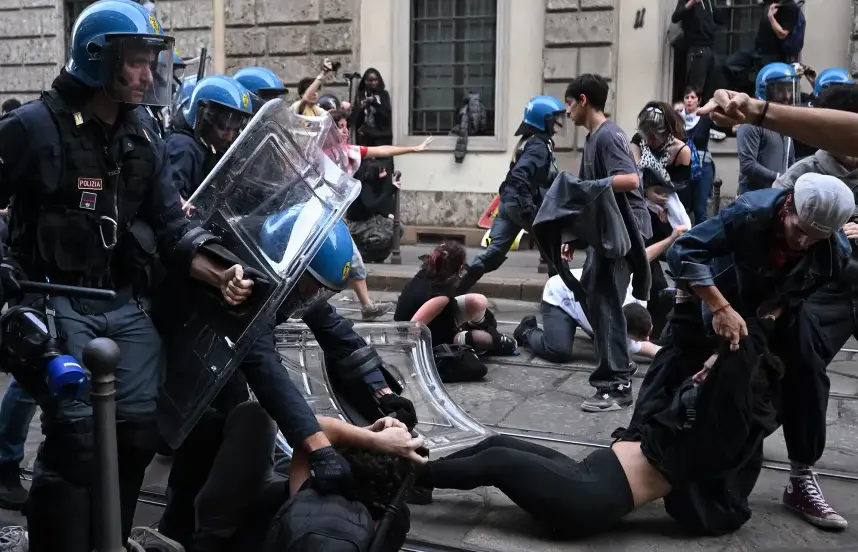
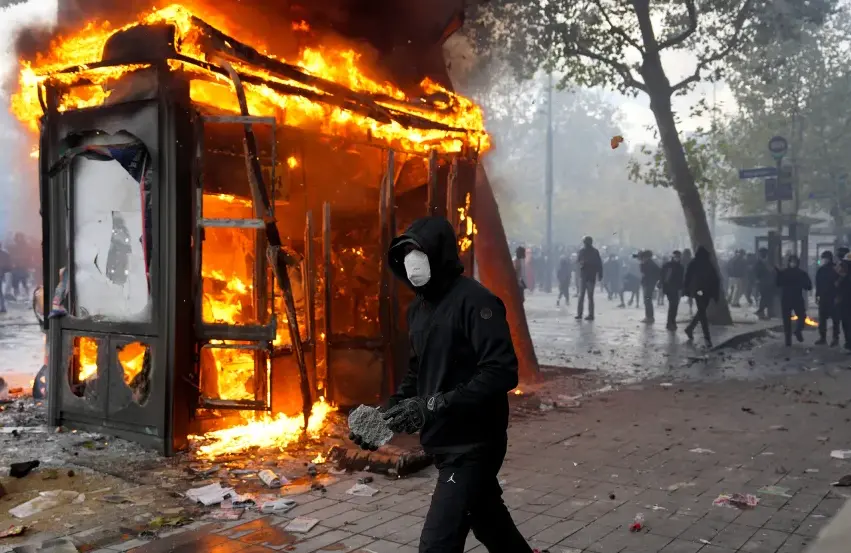
Peaceful protest is a legitimate feature of democratic life. Violence, intimidation, and destruction of property are separate issues that can endanger people and undermine public confidence in a movement.
It is also important not to assume that Gen Z will vote as a single bloc. Economic insecurity may lead some young people toward progressive parties, others toward conservative or anti-establishment movements, and others away from conventional party politics altogether.
The long-term political significance of these protests will depend less on the generation’s age label than on whether its concerns translate into durable changes in public policy and institutional accountability.
FAQs
Why are Gen Z protests happening across Europe in 2026?
Gen Z protests in Europe in 2026 reflect growing concerns about rising living costs, unaffordable housing, job insecurity, climate change, and political distrust. European youth protests differ by country, but many participants are demanding economic fairness, better public services, and greater government accountability.
How does the European housing crisis affect Gen Z protesters?
The European housing crisis affects Gen Z by making rent, homeownership, and independent living increasingly difficult for many young adults. High housing costs can limit savings, delay major life decisions, and increase frustration over economic inequality between people with access to family wealth and those without it.
Is the cost-of-living crisis in Europe driving youth protests?
Yes. The cost-of-living crisis in Europe is an important factor behind many youth grievances. Higher expenses for food, energy, transport, and housing can place significant pressure on entry-level salaries, leaving some young workers struggling to achieve financial independence despite being employed.
What are European youth protesters demanding from their governments?
European youth protesters are calling for solutions tailored to their countries’ challenges, including affordable housing, fair wages, improved education, stronger public services, effective climate action, and greater political transparency. Their specific demands vary according to local economic conditions and the events that triggered each demonstration.
Will Gen Z protests in Europe lead to political change?
Gen Z protests in Europe can influence political debate, encourage policy reforms, and increase pressure on elected officials. However, lasting change depends on sustained civic engagement, clear demands, public support, and government action addressing the underlying causes of youth dissatisfaction.
Conclusion: Gen Z Is Demanding a More Credible Future
The anger behind Europe’s youth protests cannot be reduced to a single issue or explained simply as a generational conflict. Housing costs, financial insecurity, concerns about education, climate change, and distrust of political institutions can combine to make the transition into adulthood feel increasingly uncertain.
Recent demonstrations illustrate how different national grievances can converge around a broader question: can young people reasonably expect to build secure, independent lives through education, work, and participation in democratic society?
The answer will depend on more than how governments respond to the next demonstration. It will depend on whether they can expand access to affordable housing, improve economic opportunities, deliver effective public services, and demonstrate that institutions are accountable to the people they serve.
For European governments, businesses, educators, and civil society, the message is clear: understanding Gen Z requires looking beyond viral protest videos and political slogans to the material conditions shaping young people’s lives.
The protests are not proof that an entire generation thinks alike. They are a visible reminder that when economic pressures and political grievances accumulate, young people may choose collective action to demand change.
References
- CNN — Gen Z are leading the European protests. Here’s why they’re angry — October 2026 reporting on the immediate triggers and wider grievances behind youth demonstrations.
- Eurostat — Young people: Housing conditions — EU housing indicators for young people, including 2025 data.
- Eurofound — Foundational challenges: The housing struggles of Europe’s youth — Research on housing affordability, independent living, and the effects of housing insecurity on young people.




 and then
