








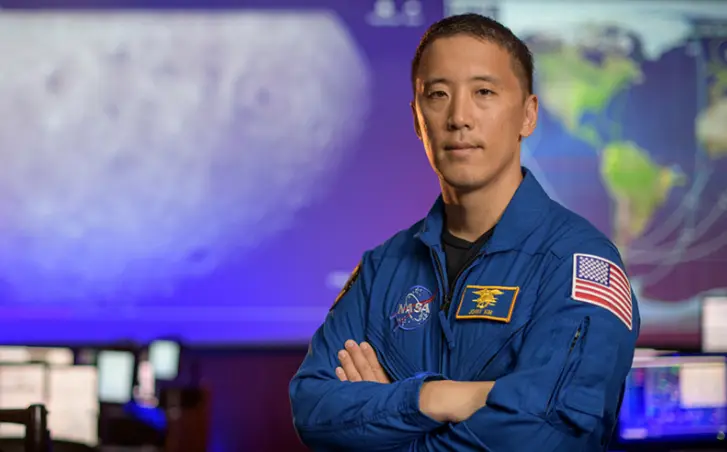
NASA astronaut Jonny Kim Returns from ISS marks the completion of a science-packed mission focused on human health, technology testing, and Earth observation. His crewmates’ safe landing delivers critical insights for future lunar and Martian exploration, underscoring the mission’s scientific, medical, and operational impact.
KumDi.com
NASA astronaut Jonny Kim Returns from ISS captures global attention as he and his crewmates complete a transformative mission filled with scientific breakthroughs and operational milestones. Their safe landing brings home essential research on human health, technology innovation, and space-based environmental insights—setting the stage for future deep-space exploration.
NASA astronaut Jonny Kim, one of the most accomplished individuals in modern space exploration, has safely returned to Earth alongside his international crewmates after an intensive long-duration mission aboard the International Space Station (ISS). Their landing marks the conclusion of months of scientific research, operational milestones, and international teamwork in low-Earth orbit.
The return of this diverse crew is more than a routine homecoming. It symbolizes the continuation of decades-long global cooperation in space, the advancement of human-health research, and the development of next-generation technologies for upcoming lunar and Martian missions. Jonny Kim’s unique background as a Navy SEAL, physician, and astronaut adds an extraordinary dimension to the mission’s scientific contributions — especially within the field of space medicine.
Table of Contents

A Mission Driven by Science and Exploration
Long-duration ISS missions typically last around six to eight months, providing astronauts with the opportunity to conduct hundreds of scientific experiments while maintaining the station’s systems. This mission was no exception. Jonny Kim and his crewmates dedicated their time in orbit to research that helps scientists understand how spaceflight affects the human body and how microgravity influences biological, technological, and environmental systems.
Human Research: The Core of Jonny Kim’s Expertise
As a Harvard-trained medical doctor, Jonny Kim played a key role in supporting experiments related to:
- Bone density loss and muscle atrophy
Microgravity leads to rapid bone resorption and loss of muscle mass, making this research critical for future missions to the Moon and Mars. - Cardiovascular changes
Understanding fluid shifts, heart strain, and changes in blood pressure helps doctors plan safer long-distance space travel. - Immune system responses
Data from this mission contributes to better understanding of infection risks, inflammation, and potential countermeasures. - Behavioral and psychological health
Astronauts undergo cognitive tests, sleep studies, and stress analyses, providing insights into how humans adapt to isolation in confined environments.
Jonny Kim’s medical experience strengthened the scientific accuracy and efficiency of these experiments, turning months of data into long-term knowledge for healthcare experts and mission planners.
Biological and Environmental Studies
Beyond human physiology, the mission’s research portfolio included studies in biology, biotechnology, and environmental monitoring.
Microbial Behavior in Space
The crew monitored microbes aboard the ISS to better understand how bacteria adapt, grow, or become more resistant in microgravity. These findings could improve methods for:
- preventing contamination
- designing safer spacecraft
- reducing infection risks in closed habitats
Plant Growth and Food Production
Future missions will require astronauts to grow fresh produce in space. On this expedition, plant growth chambers were used to:
- test how roots develop without gravity
- analyze nutrient uptake
- study stress resistance in plants
These experiments build the knowledge needed for sustainable farming on the Moon and Mars.
Earth Observation
From its vantage point hundreds of kilometers above the planet, the ISS provides unparalleled views of Earth. Jonny Kim and his crewmates captured imagery and analyzed atmospheric data to support:
- climate monitoring
- natural disaster tracking
- environmental change research
Satellites offer steady monitoring, but human observation adds detail and intuition that automated systems often miss.
Technology Demonstrations and Engineering Milestones
The mission also advanced technology needed for deep-space exploration. The crew tested:
- new sensors and radiation-shielding materials
- robotic systems for autonomous repairs
- advanced onboard computing modules
- 3D-printed components designed to withstand microgravity
Such tests reduce risks for future missions and help engineers verify that hardware performs as expected when exposed to the extreme conditions of space.
Because the ISS serves as a testbed for technology that will eventually support lunar bases and Mars transit vehicles, every successful demonstration gets us closer to sustainable human presence beyond Earth.
International Cooperation: A Continuing Tradition

One of the defining features of the ISS program is the collaboration between nations that may not always align politically but unite in their pursuit of scientific discovery. Jonny Kim worked daily with crewmates from multiple space agencies.
This mission reaffirmed that:
- cross-agency training enhances safety
- shared spacecraft operations strengthen reliability
- scientific partnerships produce better results
Despite changing geopolitical landscapes, the ISS remains a symbol of peaceful, cooperative progress in space.
A Safe Return to Earth
After concluding final experiments, securing cargo, and preparing their spacecraft, Jonny Kim and his crewmates boarded their capsule for the journey home. The return sequence — undocking, deorbit burn, atmospheric re-entry, parachute deployment, and touchdown — is a precisely orchestrated operation requiring perfect coordination between ground teams and the crew.
Upon landing, recovery personnel assisted the astronauts as they readjusted to gravity. After months of floating, even standing is a challenge. Medical evaluations, rehydration, and early rehabilitation begin almost immediately.
Post-Mission Recovery: A Delicate Process
Returning astronauts go through a multi-week recovery program that includes:
- Physical therapy to regain muscle strength and balance
- Cardiovascular monitoring to assess fluid redistribution
- Neurological tests to measure the effects of microgravity
- Psychological assessments to ensure well-being
Jonny Kim’s medical background makes him uniquely aware of the significance of this process. He will also collaborate with mission scientists to interpret data collected during his time in orbit.
What’s Next for Jonny Kim?
Astronaut assignments after a mission vary, but likely next steps include:
- detailed debriefs with mission controllers and scientists
- reviewing experiment results
- participating in technical evaluations of returning spacecraft
- public outreach, education, and media briefings
- ongoing training for future missions, including possible roles in deep-space exploration
Given Jonny Kim’s operational experience and medical expertise, he remains a strong candidate for future leadership roles in complex exploration campaigns — especially within the Artemis program’s lunar missions.
How This Mission Impacts Life on Earth
Space missions are not only about distant exploration. The research Kim and his crewmates conducted has direct benefits for Earth:
Medical Advancements
Data from human research leads to:
- better treatments for osteoporosis
- insights into immune system disorders
- improved methods for wound healing
- new protocols for long-term patient care in isolated environments
Environmental and Climate Insights
Earth observations help:
- track deforestation
- monitor air quality
- improve disaster response
- refine global climate models
Technological Innovation
Technologies tested in space often find new applications on Earth:
- stronger materials
- advanced sensors
- robotics
- autonomous systems
- remote medical monitoring devices
Conclusion
The return of NASA astronaut Jonny Kim and his international crewmates represents far more than the end of a mission. It marks the successful completion of an ambitious scientific journey that strengthens humanity’s understanding of life in space, enhances global cooperation, and pushes technological boundaries necessary for future exploration.
From advancing human-health research to supporting innovation that impacts life on Earth, this mission demonstrates the value of sustained human presence in space. Jonny Kim’s expertise as an astronaut-doctor ensured that these efforts reached new levels of depth and precision.
As the world prepares for a new era of lunar and Martian exploration, missions like this one form the foundation on which the future of spaceflight will be built.
FAQs
What makes Jonny Kim’s ISS return significant?
Jonny Kim’s ISS return is significant because it delivered major ISS mission highlights, including human-health research and space science achievements that support future exploration.
What science achievements came from Jonny Kim’s ISS mission?
The mission produced key space science achievements such as human-physiology data, technology tests, and environmental observations led in part by NASA astronaut Jonny Kim.
How does Jonny Kim’s ISS return support future space missions?
The Jonny Kim ISS return provides critical findings that improve spacecraft systems, guide long-duration travel, and shape training for future missions—reinforcing core ISS mission highlights.
What experiments were conducted during Jonny Kim’s ISS mission?
Experiments completed by NASA astronaut Jonny Kim included studies on bone loss, immune function, plant growth, and advanced materials—major space science achievements.
What happens next after Jonny Kim’s ISS return?
Following the Jonny Kim ISS return, astronauts begin rehabilitation, debriefings, and analysis of ISS mission highlights, preparing for future scientific roles and exploration projects.




 and then