










Scientists suggest that aliens may not have contacted us because intelligent civilizations often self-destruct before achieving interstellar communication. Others believe they may be observing us silently or that vast cosmic distances make contact nearly impossible within our technological limits.
KumDi.com
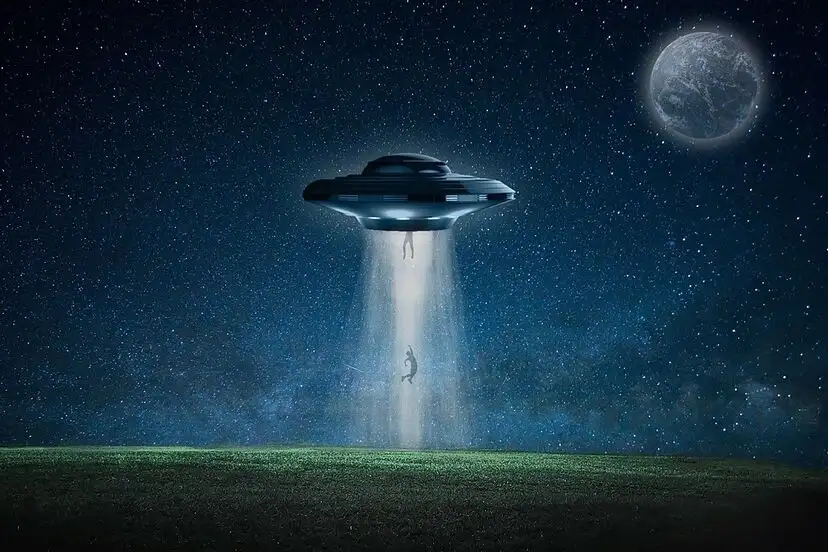
Why aliens haven’t contacted us yet? It’s one of humanity’s biggest cosmic mysteries — and scientists believe they may finally have an answer. The real reason, rooted in the Fermi Paradox and decades of astrobiological research, suggests that alien civilizations might be facing the same existential risks we do, preventing them from reaching out across the stars.
Table of Contents

The Great Silence: A Mystery That Defines Humanity
For centuries, humanity has gazed into the night sky, wondering if we are alone. Despite countless stars and billions of potentially habitable planets, we’ve received no clear message, no alien probe, and no signs of intelligent life. This puzzle is famously known as the Fermi Paradox, named after physicist Enrico Fermi, who once asked, “Where is everybody?”
The paradox highlights a contradiction: if intelligent extraterrestrial life is common, why haven’t they contacted us? Scientists across the world have been re-examining this question with new data, and their latest conclusions may finally explain this cosmic silence.
Reason 1: Civilizations Destroy Themselves Before Contact
One of the most chilling explanations is that technological civilizations tend to self-destruct before reaching interstellar communication capabilities. Nuclear war, climate collapse, or uncontrolled artificial intelligence could wipe out intelligent life before it develops the technology to explore or communicate across galaxies.
This concept, known as the Great Filter, suggests that every civilization faces a nearly impossible hurdle — one that humanity might not survive either.
Reason 2: Aliens May Already Know About Us — But Are Staying Silent
Another compelling theory is that extraterrestrials have already detected Earth but choose not to communicate. This is sometimes called the “Zoo Hypothesis.”
According to this idea, advanced alien civilizations intentionally avoid direct contact to let less developed species like us evolve naturally — just as we might observe animals in a protected reserve without interference.
Scientists like John Ball from MIT proposed that aliens could be aware of us through our radio signals or atmospheric pollution, yet deliberately remain silent, treating Earth as an experiment in cosmic evolution.
Reason 3: We’re Listening the Wrong Way
Despite decades of effort through projects like SETI (Search for Extraterrestrial Intelligence), humanity might be using the wrong methods.
Our radio-based listening strategies assume aliens communicate similarly to us, but what if they use technologies beyond our comprehension — quantum communication, neutrino signals, or dark matter manipulation?
In that case, the universe could be alive with messages we simply don’t recognize.
Reason 4: The Universe Is Too Vast — and Time Is Against Us
Even if intelligent life exists elsewhere, cosmic distances present a near-insurmountable challenge. The Milky Way alone spans 100,000 light-years, meaning messages could take tens of thousands of years to travel between civilizations.
Additionally, civilizations might rise and fall across different eras — just missing each other in cosmic time. Humanity could be listening long after others have gone silent, or long before others awaken.
Reason 5: We’re the First — Or the Last
Some scientists argue that humans might actually be among the first intelligent civilizations to arise in the Milky Way.
The conditions for life — stable stars, heavy elements, and planetary systems — may have taken billions of years to develop.
If that’s true, alien civilizations may simply not have had enough time to evolve yet.
On the other hand, if we’re latecomers, others may have already vanished due to catastrophic events, leaving us as one of the few survivors in a once-active galaxy.
What This Means for Humanity
The search for extraterrestrial life isn’t just about finding aliens — it’s about understanding our own survival.
If the Great Filter lies ahead of us, we must overcome existential threats like climate change and nuclear war to avoid extinction.
If it lies behind us, we may be uniquely lucky — one of the rare intelligent species that made it this far.
Either way, the silence of the stars challenges us to reflect on our role in the universe and our responsibility to preserve life.
Future Possibilities: The Next Steps in Our Search
Projects like NASA’s James Webb Space Telescope and Breakthrough Listen are expanding our search for alien life. By analyzing exoplanet atmospheres and scanning for artificial signals, scientists hope to detect indirect evidence of civilizations — even if they never send us a message directly.
And if we do receive contact, it will be the most transformative event in human history.
Conclusion: Silence May Be the Answer Itself
The absence of communication doesn’t mean absence of life. It may simply reflect the nature of intelligence in the universe — fragile, short-lived, or wisely silent.
Perhaps one day, when humanity is ready, we’ll finally hear the whisper of another world reaching back through the void.
FAQs
What do scientists believe is the real reason aliens haven’t contacted us?
Scientists believe aliens haven’t contacted us because most intelligent civilizations may self-destruct before reaching interstellar communication — a concept tied to the Fermi Paradox and Great Filter.
What is the Fermi Paradox in relation to extraterrestrial life?
The Fermi Paradox highlights the contradiction between the high probability of extraterrestrial life and the lack of evidence or contact from intelligent civilizations.
Could aliens already know about Earth but avoid communication?
Yes. The Zoo Hypothesis suggests that advanced alien civilizations may already be aware of us but deliberately avoid contact, allowing humanity to evolve naturally without interference.
Are humans using the wrong methods to detect alien life?
Possibly. Current SETI projects rely on radio signals, but if aliens use advanced methods like quantum communication or neutrinos, we might be missing their messages entirely.
Does the Great Filter mean humanity could face extinction?
The Great Filter theory warns that most civilizations destroy themselves before interstellar travel. If true, humanity must overcome global threats to avoid the same fate.




 and then