










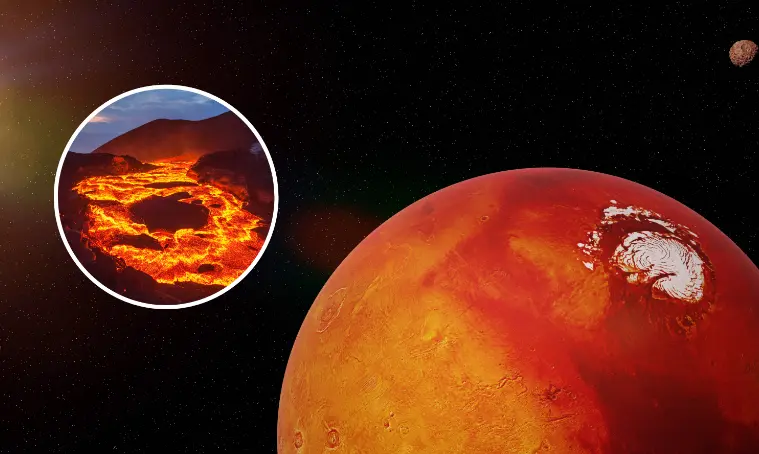
Mars, often referred to as the “Red Planet,” has long fascinated scientists and enthusiasts alike. Its striking reddish hue has sparked curiosity for centuries, leading to numerous theories about its origins. Recent research has shed new light on this age-old question, revealing that the planet’s iconic color may be attributed to a water-rich iron mineral known as ferrihydrite, rather than the previously assumed dry mineral hematite. This discovery not only alters our understanding of Mars’ surface composition but also hints at a wetter and potentially habitable past.
The Reddish Hue of Mars: A Historical Perspective
Mars has captivated human imagination since ancient civilizations. The Romans named it after their god of war due to its blood-like color, while the Egyptians referred to it as “Her Desher,” meaning “the red one.” For centuries, scientists have pondered the reasons behind this unique coloration, with various hypotheses emerging over time.
Early Theories
- Hematite Hypothesis: For a long time, the prevailing theory was that Mars’ redness was primarily due to hematite, a mineral that forms under dry conditions. This assumption was based on the observation of iron oxide in the Martian dust, leading researchers to believe that the planet had remained dry and inhospitable for billions of years.
- Oxidation Processes: Another theory suggested that the reddish appearance could result from oxidation processes involving iron-rich rocks and the Martian atmosphere. However, the lack of direct evidence for water in these processes left many questions unanswered.
The Shift in Understanding
The latest research challenges these long-held beliefs, suggesting a more complex interaction between water and iron on Mars. By combining data from multiple missions and laboratory simulations, scientists have begun to unravel the mystery behind the planet’s distinctive color.
The Role of Ferrihydrite in Mars’ Coloration
The breakthrough study, published in the journal Nature Communications, indicates that ferrihydrite, a water-containing iron oxide, may be the primary contributor to Mars’ red appearance. This revelation has significant implications for our understanding of the planet’s historical climate and potential habitability.
What is Ferrihydrite?
Ferrihydrite is an iron oxide mineral that forms in the presence of water, particularly in cooler conditions. Unlike hematite, which typically forms in arid environments, ferrihydrite’s formation suggests that liquid water was once prevalent on Mars.
- Formation Conditions: Ferrihydrite forms when iron reacts with oxygen and water, creating a mineral that can stabilize under current Martian conditions. This indicates that Mars may have had a significantly different climate in its past.
- Presence in Martian Dust: The research team believes that ferrihydrite is not only present in the dust that blankets Mars but may also be found in its rock formations. This discovery opens new avenues for understanding the planet’s geological history.
Analyzing Martian Data: A Multimodal Approach
To arrive at their conclusions, the research team employed a comprehensive approach, utilizing data from various Mars missions and laboratory experiments. This multimodal strategy allowed them to create a clearer picture of the planet’s surface composition.
Data Sources
- Spacecraft Observations: The researchers analyzed data from several missions, including the European Space Agency’s Mars Express and Trace Gas Orbiter, as well as NASA’s Mars Reconnaissance Orbiter and various rovers.
- Laboratory Simulations: By replicating Martian dust in a lab setting, scientists were able to study the composition and behavior of the particles, leading to a better understanding of their origins.
Findings and Implications
The combination of observational data and lab results revealed that ferrihydrite, when mixed with basalt (a volcanic rock), closely matched the minerals detected on Mars. This finding supports the theory that water played a crucial role in the planet’s rusting process much earlier than previously thought.
A Watery Past: What It Means for Habitability
The implications of this research extend beyond simply explaining Mars’ color. Understanding the presence of ferrihydrite on the planet suggests a wetter, more habitable environment in its ancient history.
Conditions for Life
- Liquid Water Availability: The presence of ferrihydrite implies that Mars may have sustained liquid water on its surface, a critical factor for the potential development of life. This challenges the notion that Mars has been a barren world for billions of years.
- Transition from Wet to Dry: The study suggests that Mars transitioned from a wet environment to the cold, dry conditions we observe today. This transformation likely had significant implications for the planet’s climate and geological processes.
Future Exploration
The findings raise intriguing questions about Mars’ past and its potential for hosting life. Future missions, such as the Mars Sample Return program, aim to collect samples of Martian dust and rocks, which could provide further insights into the planet’s history.
The Scientific Community’s Response
The discovery of ferrihydrite as a key player in Mars’ color has garnered attention from the scientific community, prompting discussions about the implications for planetary science and astrobiology.
Excitement Among Researchers
- Adomas Valantinas, the lead author of the study, expressed enthusiasm about the findings, stating, “Mars is still the Red Planet; it’s just that our understanding of why Mars is red has been transformed.”
- Collaboration Across Missions: Scientists from various missions are eager to analyze Martian samples to confirm the presence of ferrihydrite and understand its role in the planet’s history.
Broader Implications for Planetary Science
The research not only enhances our understanding of Mars but also has implications for studying other celestial bodies. By examining the processes that shape planetary surfaces, scientists can gain insights into the evolution of Earth-like planets.
Conclusion: A New Era of Mars Exploration
The revelation that ferrihydrite may be responsible for Mars’ distinctive color marks a significant advancement in our understanding of the planet. As researchers continue to investigate the implications of this discovery, the quest to uncover the secrets of Mars’ past remains a thrilling endeavor.
Looking Ahead
- Mars Sample Return Missions: Upcoming missions are poised to provide critical data that could reshape our understanding of Mars and its potential for life.
- Continued Research: As scientists delve deeper into the planet’s geological history, the story of Mars continues to unfold, revealing a world that may have once been more hospitable than we ever imagined.
In summary, the discovery of ferrihydrite as a key component of Mars’ reddish hue not only transforms our understanding of the planet’s surface but also opens new avenues for exploration and inquiry. As we look to the future, the mysteries of Mars beckon, inviting us to explore its past and consider the possibilities of life beyond our own planet.
FAQs
1. What makes Mars red?
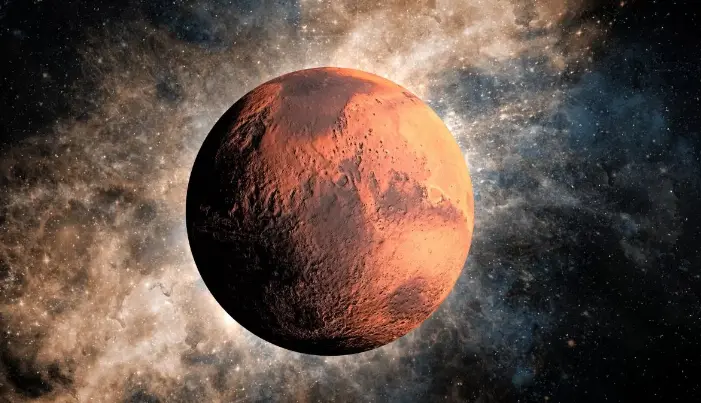
Mars appears red due to iron oxide, or rust, covering its surface. This gives the planet its reddish hue, which reflects sunlight and makes it visible from Earth.
2. Is Mars entirely red?
Not entirely. While its surface is mostly covered in iron-rich dust, Mars also has patches of brown, tan, and even some black and white regions from different minerals and ice.
3. Does the Martian atmosphere affect its color?
Yes, the thin atmosphere is filled with dust particles that scatter sunlight, enhancing the reddish appearance of the planet, especially during dust storms.
4. Was Mars always red?
No, scientists believe Mars was once wetter and possibly had a different color before oxidation turned its surface into the rusty red we see today.
5. Can Mars’ color change in the future?
Potentially. If Mars undergoes terraforming or significant atmospheric changes, its surface color could shift due to alterations in chemical composition and weathering.




 and then