








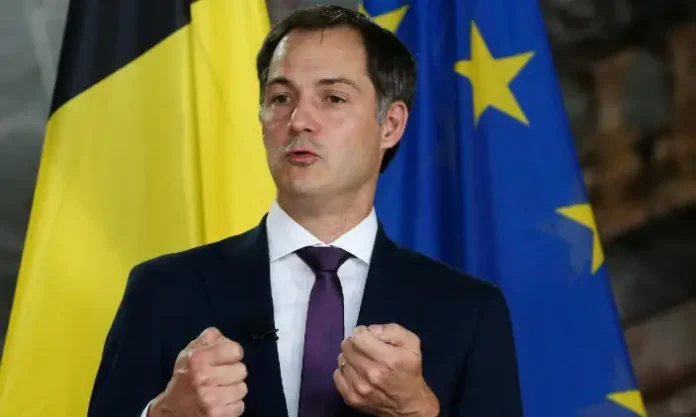

After an arduous seven-month period filled with intense negotiations, Belgium has finally reached an agreement to form a new coalition government. This development comes on the heels of the June elections, which left the country’s political landscape fragmented and lacking a clear majority. The coalition, led by Bart De Wever of the New Flemish Alliance (N-VA), marks a significant shift in Belgium’s political dynamics, as it brings together five parties from both the Dutch-speaking Flanders region and the French-speaking Wallonia region.

The Coalition Agreement
The coalition agreement has been a long time coming, with parties engaging in complex discussions that often seemed to stall over contentious issues such as budget cuts, social spending, and migration policies. The final agreement was reached on a Friday, with De Wever poised to become the first prime minister from the Flemish nationalist party. This coalition includes a mix of conservative, centrist, and leftist parties, reflecting Belgium’s diverse political spectrum.
Key Players in the Coalition
The coalition comprises five parties:
- New Flemish Alliance (N-VA): A conservative nationalist party that emerged from the elections with the largest share of votes.
- Christian Democrats and Flemish (CD&V): A centrist party that plays a crucial role in bridging the gap between the two linguistic communities.
- Vooruit (Forward): A leftist party that represents the interests of the working class.
- Les Engagés: A centrist Francophone party focused on social issues.
- Reformist Movement (MR): A liberal party from Wallonia that advocates for economic reforms.
This coalition holds a total of 81 seats in Belgium’s 150-seat parliament, allowing them to govern effectively despite the country’s historical challenges with coalition politics.
The Path to Agreement
The road to this coalition was fraught with challenges. Following the June elections, which resulted in a fragmented parliament, negotiations began in earnest. Initially, it was expected that the talks would progress more swiftly due to the right and center-right parties gaining ground. However, discussions hit a snag over budgetary concerns and social reforms, which are always sensitive topics in Belgium.
Protracted Negotiations
Belgium has a reputation for lengthy coalition negotiations, with the 2010-2011 talks lasting an unprecedented 541 days. This time, the discussions were marked by disagreements over how to address the country’s budget deficit, which stood at approximately 4.4% of GDP in 2023. The need to balance fiscal responsibility with the preservation of social welfare programs added complexity to the negotiations.
The Final Push
In the final hours before the agreement was announced, negotiators engaged in a marathon session lasting 60 hours to finalize the details of the 800-page coalition document. The discussions covered a wide range of topics, from pension reforms to healthcare spending, and the need for budget cuts was a central theme.
Bart De Wever: A New Era in Leadership
With the coalition agreement in place, Bart De Wever is set to take the reins as Belgium’s prime minister. His leadership style and political vision will play a crucial role in shaping the direction of the new government.
De Wever’s Political Background
De Wever has been a prominent figure in Belgian politics for years, having served as the mayor of Antwerp since 2013. His party’s success in the June elections was a testament to his popularity and political acumen. However, his rise to the premiership comes at a time of significant challenges, both domestically and internationally.
Challenges Ahead
As prime minister, De Wever will need to navigate the delicate balance between implementing necessary economic reforms and addressing the social concerns of the populace. His proposals for cuts to social benefits and reforms to the pension system have already sparked opposition from labor unions and various social groups.
Economic Implications of the Coalition
The new government will face immediate economic challenges, particularly in terms of addressing the budget deficit and ensuring fiscal sustainability. Belgium is one of several EU countries under scrutiny for exceeding the 3% deficit threshold set by EU fiscal rules.
Budgetary Considerations
The coalition’s agreement is expected to include significant budget cuts, particularly in social spending, as well as increases in military spending to meet NATO obligations. These measures are aimed at stabilizing the economy and restoring confidence among investors.
Social Spending and Public Reaction
The proposed cuts to social programs have raised concerns among various sectors of society. Teachers, military personnel, and trade unions have already staged protests against potential reforms, highlighting the tension between fiscal austerity and social welfare.
The Role of the Monarchy
The involvement of the Belgian monarchy in the formation of the government underscores the traditional role of the crown in the country’s political processes. King Philippe’s endorsement of the coalition agreement is a significant step in legitimizing the new government.
The King’s Statement
Following the announcement of the coalition agreement, King Philippe expressed his hope for stability and progress in the new government. His role as a unifying figure is crucial in a country often divided along linguistic and ideological lines.
Symbolism of the Coalition
The coalition itself symbolizes a willingness to bridge divides and work towards a common goal. The diverse representation from both linguistic communities reflects Belgium’s complex identity and the need for cooperation in governance.
Future Prospects for Belgium
As Belgium embarks on this new chapter under a coalition government, the prospects for the nation will depend on the effectiveness of the new leadership in addressing pressing issues.
Navigating Political Divisions
The coalition’s ability to manage the inherent divisions between Flanders and Wallonia will be critical. Historical animosities and differing political ideologies pose significant challenges to unity.
Economic Recovery and Reform
The focus will also be on economic recovery and reform, particularly in light of the ongoing pressures from the EU regarding fiscal responsibility. The government’s approach to these issues will be closely monitored by both domestic and international observers.
Conclusion
In conclusion, Belgium’s journey to form a new government after seven months of negotiations is a testament to the complexities of coalition politics in a divided nation. Under the leadership of Bart De Wever, the coalition aims to tackle pressing economic challenges while navigating the delicate balance of social welfare and fiscal responsibility. As Belgium moves forward, the effectiveness of this coalition will be pivotal in shaping the future of the country and its role within the European Union.




 and then