








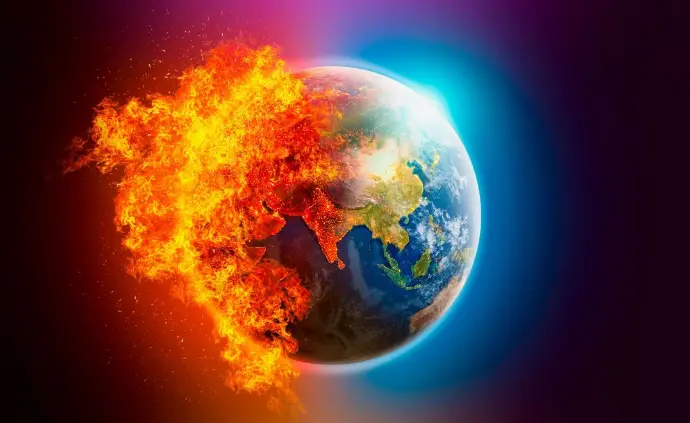

The climate gamble 2026 refers to the world’s failed bet that slow, incremental climate action would be enough. Instead, extreme weather, displacement, and economic instability intensified. As the climate system crosses irreversible thresholds, nations now confront a far more dangerous and unpredictable global reality.
KumDi.com
The world has entered a turning point: the climate gamble 2026 has been lost, and the consequences are unfolding rapidly. Surging global temperatures, intensifying disasters, and rising economic pressures now define a new climate reality. As this dangerous era begins, governments, businesses, and communities must rethink how to protect lives, rebuild resilience, and prepare for accelerated environmental change.
For more than a decade, global climate policy revolved around a single wager: if nations acted quickly enough, there was still a chance to keep global warming below the symbolic 1.5°C threshold. That number wasn’t magical, but it represented the line between “difficult” and “potentially catastrophic.” Governments, industries, scientists, and communities built their climate ambitions around the idea that the world still had time.
Now, as 2026 begins, the uncomfortable truth is widely acknowledged: the world has lost that gamble.
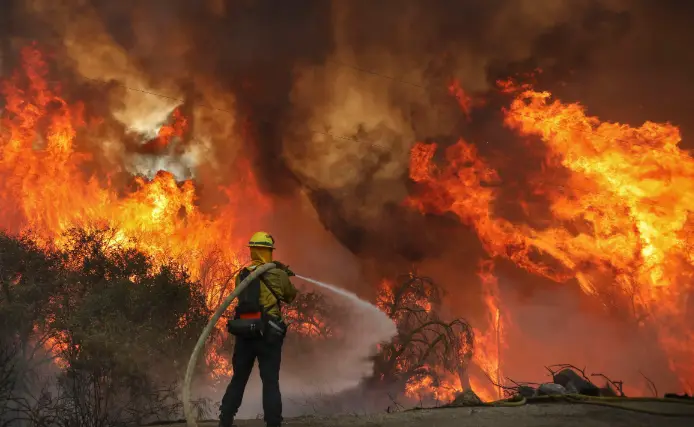
Record-breaking temperatures, escalating storms, collapsing ecosystems, and increasingly fragile economies are no longer warnings—they are the lived reality. The planet has entered a new climatic phase defined by heightened risks, reduced buffers, and a shrinking margin for error.
But losing the gamble does not mean losing the future.
It means adapting strategy, accelerating action, and preparing societies for a climate that is already more extreme than policymakers planned for. This article provides a comprehensive look at what this new reality means, what risks define 2026, and what choices can still prevent the worst outcomes.
Table of Contents

Why 2026 Marks a Turning Point
1. The climate system has shifted beyond earlier assumptions
Over the past three years, planetary warming has accelerated faster than expected. Extreme heat events that scientists once projected for the 2030s began arriving in the mid-2020s. In numerous regions, traditional weather patterns have broken down completely, replaced by:
- hotter and longer heatwaves
- rainfall systems that stall or intensify unpredictably
- overlapping disasters (heat + drought, heat + storms, drought + fire)
- coastal inundation becoming a seasonal norm
These patterns demonstrate that the world has moved from “early climate change” into a more volatile stage where every tenth of a degree of additional warming multiplies risk.
2. Emission cuts were too slow, too small, and too politically fragile
Despite years of promises, global emissions plateaued rather than plunged. Fossil fuel investment continued. Global energy demand outpaced renewable deployment. And many governments prioritized short-term economic stability over climate commitments.
In short: the world didn’t reduce emissions fast enough to stay on the safe side of climate thresholds. Now, warming momentum is baked into the next decade — even with stronger actions starting today.
3. Overshoot is no longer a future scenario — it’s the present
“Overshoot” refers to temporarily exceeding a temperature goal and trying to return below it later. By 2026, overshoot has become inevitable. This means the world must deal not only with higher average temperatures, but also with:
- irreversible ecosystem impacts
- heightened disaster frequency
- infrastructure stress
- long-term economic volatility
- deepening inequality between resilient and vulnerable regions
The gamble wasn’t simply about staying under 1.5°C. It was about avoiding a cluster of interconnected risks. Those risks have now arrived.
Understanding What “Losing the Climate Gamble” Really Means
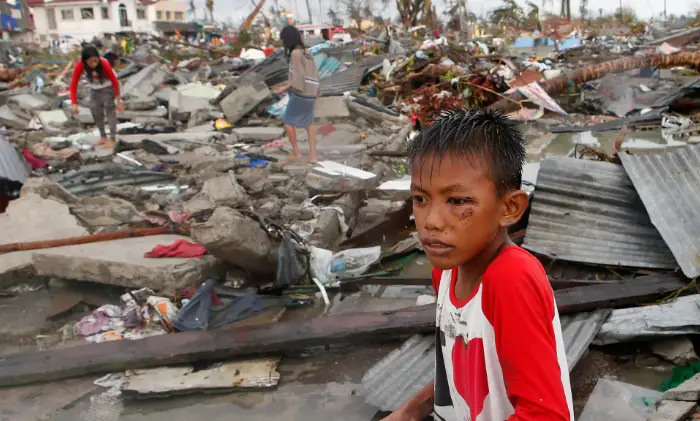
People often interpret this phrase as if humanity has failed completely. But the reality is more nuanced — and more important.
It means:
1. The timeline for action has compressed dramatically.
Changes once expected over decades are now unfolding over years. Adaptation and mitigation plans that assumed slower warming must be rewritten.
2. The climate system has entered a more extreme baseline.
2026 is not just “another hot year.” It is the beginning of a period where:
- “500-year floods” happen every decade
- Heatwaves break records every summer
- Marine heatwaves reshape coastlines and fisheries
- Agricultural seasons become more unreliable
- Insurance markets face collapse in exposed regions
3. Societies must plan for greater volatility, not gradual change.
The climate is not only warming; it is destabilizing. Infrastructure, food systems, finance, and health systems must now prepare for compounding shocks — events that overlap and multiply.
4. Both mitigation and adaptation are now life-or-death priorities.
Mitigation reduces long-term worst-case impacts.
Adaptation protects lives today.
Neither is optional.
The 2026 Climate Risk Landscape: What the New Reality Looks Like
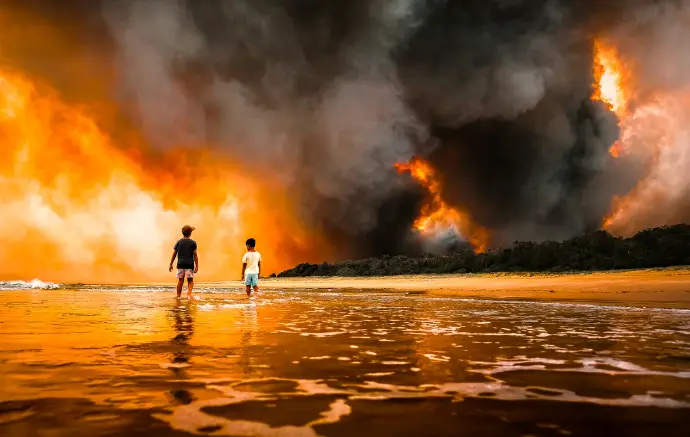
Below is a detailed look at the key risks shaping 2026 and beyond.
1. Extreme Heat Becomes the Defining Hazard of Modern Life
Heatwaves are now the deadliest recurring climate event globally. In 2026, the world can expect:
- more frequent multi-week heatwaves
- nighttime temperatures too high for the body to recover
- cities experiencing “urban heat traps”
- severe outdoor labor reduction
- increased rates of heatstroke and cardiovascular emergencies
For many regions, extreme heat is transforming where people can safely live and work.
2. Compounded Disasters Overturn Old Climate Models
The new climate era is characterized by overlapping catastrophes:
- A heatwave dries vegetation → drought intensifies → wildfires ignite → storms arrive → landslides follow.
- Tropical cyclones stall over warmer oceans → rainfall doubles → rivers overflow → infrastructure collapses.
These “domino disasters” are now more common than isolated events.
3. Coastal Regions Enter a New Age of Permanently Rising Risk
Sea levels continue rising, but storm surges amplify damage dramatically. Coastal cities now face:
- more frequent tidal flooding
- permanent loss of shoreline
- saltwater intrusion into drinking water
- rising financial strain from infrastructure reinforcement
- growing debates about strategic retreat
For low-lying nations, the issue is existential.
4. Food Systems Enter a Decade of Instability
Agriculture has become one of the most immediate victims of the new climate regime.
Key stressors include:
- unpredictable growing seasons
- flash droughts and intense rainfall back-to-back
- soil degradation from repeated extremes
- temperature thresholds that key crops can’t tolerate
- fisheries collapsing due to ocean heatwaves
This puts global food security under increasing pressure.
5. Economic and Political Instability Intensify
Climate impacts do not remain confined to the environment; they cascade into economies and governance systems.
2026 brings:
- rising insurance premiums or total withdrawal from risky markets
- higher food and energy prices
- climate-driven migration pressures
- budget strain from repeated disaster recovery
- increased geopolitical friction over water and resources
The climate crisis has become an economic crisis — and a political one.
What the World Can Still Do in 2026
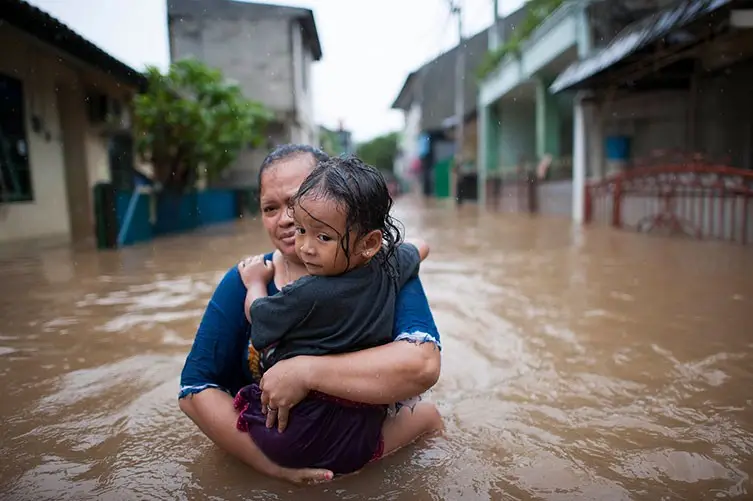
Losing the gamble does not end the fight. It changes the battlefield.
Here are the three essential action tracks that define meaningful climate strategy in this new era.
Track 1: Deep, Rapid Mitigation — Reducing the Damage Still Matters
Even though overshoot is inevitable, every fraction of a degree matters. Avoiding 1.6°C, 1.7°C, or 2°C still determines the fate of:
- coral reefs
- Arctic ice stability
- global food production
- water systems
- hundreds of millions of lives
Critical mitigation actions for 2026:
- Phase out fossil fuels on accelerated timelines
No new long-life infrastructure. Shortened timelines for coal, oil, and gas retirement. - Triple renewable energy deployment
Solar, wind, battery storage, and clean grids must dominate new investment. - Rebuild global transportation
Electrify cars, buses, trucks; expand rail; redesign urban mobility. - Transform industry
Green steel, low-carbon cement, hydrogen adoption, and circular manufacturing. - Reduce consumption emissions
Efficiency, diet shifts, and material use reductions in wealthy countries.
Mitigation is no longer just environmental policy — it is global risk management.
Track 2: Adaptation and Resilience — Protect People From the Climate They Already Live In
Adaptation is no longer a future concern. It is a survival strategy.
In 2026, urgent adaptation priorities include:
1. Heat adaptation
- cooling centers
- heat-resilient housing
- urban greening
- reflective surfaces
- early-warning systems
2. Water security
- drought management
- efficient irrigation
- strengthened water storage
- watershed protection
3. Secure food systems
- climate-resilient crops
- diversified supply chains
- protected fisheries
4. Disaster-resilient infrastructure
- flood-resilient roads and bridges
- elevated buildings
- modernized drainage systems
5. Coastal protection
- sea walls where viable
- mangrove and wetland restoration
- strategic relocation for the most vulnerable areas
Adaptation doesn’t stop climate change — but it saves lives and livelihoods.
Track 3: Governance, Equity, and Innovation — Building Systems That Can Withstand the Century Ahead
The climate crisis exposes deeper structural weaknesses. To succeed in this new era, countries must strengthen governance, institutions, and innovation systems.
1. Climate-aware financial systems
Banks, insurers, and markets must price climate risk realistically.
2. Social safety nets
Heat, storms, and displacement impact the poor first. Protection systems must expand.
3. International cooperation
No nation can manage climate-driven migration, disaster relief, or advanced technology deployment alone.
4. Innovation at scale
Carbon removal, grid technologies, weather forecasting, and resilient agriculture require massive investment — and global governance.
5. Fairness and justice
Communities least responsible for emissions face the greatest harm. Global climate finance must reflect this reality.
Avoiding the Dangerous Illusions of the Overshoot Era
The new climate reality carries tempting shortcuts — but they come with risks.
Myth 1: “We can remove carbon later.”
Carbon removal will help, but it cannot replace cutting emissions now.
Myth 2: “Adaptation means we don’t need mitigation.”
Adaptation without mitigation becomes an endless, losing battle.
Myth 3: “Geoengineering will fix everything.”
Large-scale cooling interventions carry unknown ecological, political, and ethical risks.
The world cannot gamble a second time.
What 2026 Means for Ordinary People
Urban residents
Expect hotter summers, higher energy bills, and more frequent air-quality alerts.
Farmers
Will face more unpredictable seasons, greater crop losses, and shifting planting calendars.
Coastal communities
Will see more tides, more floods, and growing pressure to relocate.
Workers
Outdoor labor may become unsafe during peak hours in hotter regions.
Governments
Budgets will stretch as disaster frequency rises.
The lived experience of climate change is no longer abstract. It defines daily life.
A Realistic Note on Hope
The climate gamble may be lost, but humanity retains agency.
The world still controls:
- how high temperatures ultimately rise
- how resilient societies become
- how many lives are protected
- how ecosystems recover or collapse
- how fair and livable the future can be
History shows that societies can change rapidly when the stakes become undeniable. The 2026 climate reality is not a final defeat — it is the moment that forces a long-delayed transformation.
The question is no longer whether climate change is real or dangerous.
The question is whether the world will rise to meet the danger with courage, coordination, and unprecedented action.
The climate future is still being written.
What we choose next — individually, locally, nationally, globally — will decide whether the decades ahead are defined by managed resilience or escalating catastrophe.
FAQs
What does it mean that the world lost the climate gamble in 2026?
Losing the climate gamble 2026 means the world has entered a more dangerous climate reality 2026, where rising temperatures and extreme events are unavoidable. Nations must prioritize resilience, adaptation, and faster action to manage global warming risks 2026.
Why is 2026 considered a turning point for climate reality?
The year marks a shift into a more volatile climate reality 2026, driven by record heat, severe weather, and growing global warming risks 2026. It shows the climate gamble 2026 has already produced long-lasting consequences that require urgent global response.
What are the biggest global warming risks in 2026?
The major global warming risks 2026 include extreme heat, stronger storms, wildfires, food insecurity, and economic instability. These growing threats confirm the world has entered a harsher climate reality 2026, proving the climate gamble 2026 is over.
How should countries respond to the new climate reality of 2026?
Governments must accelerate emissions cuts, invest in resilient infrastructure, and expand adaptation plans to address the climate reality 2026. Stronger policies and rapid action are essential to reduce global warming risks 2026 and avoid worsening outcomes from the climate gamble 2026.
How will the lost climate gamble 2026 impact everyday life?
Daily life will be shaped by hotter temperatures, higher costs, frequent weather extremes, and shifting resource availability. This new climate reality 2026 increases global warming risks 2026 and highlights why stronger community protection is vital following the failed climate gamble 2026.




 and then