








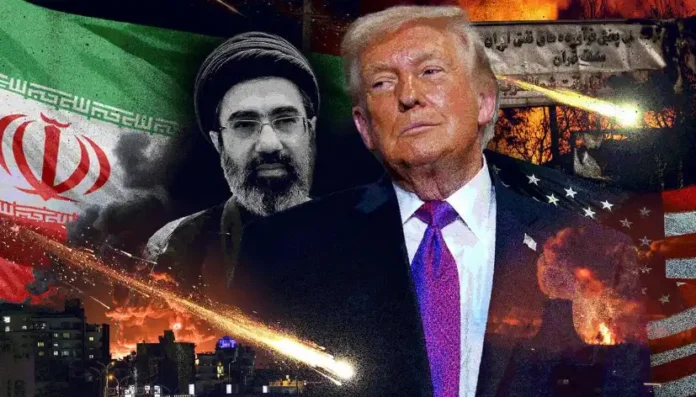
Will Japan and Korea join an Iran war?
KumDi.com
No, Japan and South Korea are unlikely to directly participate in a war involving Iran. Due to constitutional limits, regional security priorities, and economic considerations, both countries would more likely provide indirect support such as logistics, maritime security, and diplomatic coordination rather than engage in combat.
As of 2026, it is highly unlikely that Japan or South Korea would directly join a war involving Iran. Both countries prioritize diplomatic stability, economic security, and alliance-based defense strategies rather than direct military engagement in Middle Eastern conflicts.
However, indirect involvement—such as logistical support, sanctions enforcement, or alliance coordination with the United States—is possible under specific geopolitical conditions.
Table of Contents
Understanding the Core Question
The question “Will Japan and Korea join an Iran war?” reflects concerns about:
- Escalating tensions in the Middle East
- Alliance obligations with the United States
- Energy security risks
- Regional military policies
To answer accurately, we must analyze defense policies, legal frameworks, economic dependencies, and geopolitical strategy.
Strategic Position of Japan
Constitutional Constraints and Military Doctrine
Japan operates under Article 9 of its constitution, which limits war participation. While reinterpretations allow collective self-defense, Japan’s military (Self-Defense Forces) remains fundamentally defensive.
- Japan cannot initiate offensive war
- Military deployment abroad requires strict conditions
- Public opinion strongly favors non-intervention
Real-World Example
Japan has previously contributed to Middle East stability through:
- Maritime refueling missions (non-combat)
- Anti-piracy patrols in the Gulf of Aden
These are support roles, not combat operations.
Energy Dependency Factor
Japan imports a significant portion of its oil from the Middle East. A conflict involving Iran could disrupt supply chains, which means:
- Japan’s priority = protect shipping lanes
- Likely action = naval escort missions, not combat
Strategic Position of South Korea
Military Capabilities vs Policy Restraint
South Korea has a highly capable military but is strategically focused on:
- Deterrence against North Korea
- Regional stability in East Asia
Its defense posture is regionally concentrated, not globally interventionist.
Alliance with the United States
South Korea is a key ally of the United States, which could create indirect pressure. However:
- Participation in non-core conflicts is politically sensitive
- Deployment decisions require domestic approval
Real-World Example
South Korea has participated in:
- Peacekeeping missions
- Anti-piracy operations near Somalia
But it has avoided direct involvement in high-risk Middle East conflicts.
Iran Conflict: What Would Trigger Involvement?
For Japan or South Korea to join a war involving Iran, several high-threshold conditions must be met:
1. Direct Threat to National Security
- Attack on citizens, vessels, or assets
- Closure of critical shipping routes like the Strait of Hormuz
2. Formal Request from the United States
- Alliance coordination under mutual defense frameworks
- Even then, involvement would likely be limited and conditional
3. United Nations Mandate
- Participation in a UN-backed multinational operation
- Focus on peacekeeping or stabilization rather than combat
Types of Likely Involvement (If Any)
Rather than direct warfare, Japan and South Korea would most likely engage in:
A. Logistical and Support Roles
- Fuel supply
- Medical assistance
- Intelligence sharing
B. Maritime Security Operations
- Protecting oil tankers
- Monitoring sea lanes
C. Economic Measures
- Sanctions enforcement
- Trade restrictions
D. Cyber and Intelligence Cooperation
- Surveillance and threat monitoring
- Coordination with allied forces
Key Constraints Limiting Direct War Participation
Legal Barriers
- Japan’s constitutional limits
- South Korea’s legislative approval requirements
Domestic Public Opinion
- Strong anti-war sentiment in both countries
- Political risk for leaders supporting military escalation
Economic Priorities
- Both economies rely heavily on global trade stability
- War participation could trigger:
- Energy price spikes
- Supply chain disruptions
Geopolitical Risk Analysis (2026 Perspective)
Regional vs Global Priorities
- Japan → Focus on Indo-Pacific security
- South Korea → Focus on Korean Peninsula stability
Neither country sees Iran as a primary security threat.
U.S. Alliance Dynamics
While both are allies of the United States:
- Alliances do not automatically mandate participation in all conflicts
- Each country retains sovereign decision-making authority
Scenario Breakdown
| Scenario | Japan Response | South Korea Response |
|---|---|---|
| Limited U.S.–Iran conflict | Diplomatic support + logistics | Diplomatic support |
| Full-scale regional war | Maritime security operations | Possible non-combat support |
| Direct attack on shipping | Naval escort missions | Naval monitoring |
| UN peacekeeping mission | Likely participation | Likely participation |
| Direct attack on country | Defensive military action | Defensive military action |
Expert Insight (Policy & Defense Perspective)
From a defense policy standpoint, countries like Japan and South Korea follow a risk-minimization doctrine:
- Avoid escalation outside core regions
- Maintain alliance credibility without overcommitment
- Protect economic lifelines (energy, trade routes)
In practical terms, this means:
Participation without escalation—supporting stability while avoiding frontline combat.
Common Misconceptions
“All U.S. allies will join any war”
False. Alliances involve cooperation, not automatic military participation.
“Economic dependency means military intervention”
Incorrect. It often leads to protective measures, not combat engagement.
“Advanced military = willingness to fight globally”
Not necessarily. Strategic priorities determine deployment, not capability alone.
Final Conclusion
Japan and South Korea are unlikely to directly join a war involving Iran. Their strategies emphasize:
- Defensive security
- Regional focus
- Economic stability
However, they may still play important indirect roles, including logistical support, maritime protection, and diplomatic coordination.
FAQs
Will Japan and Korea join Iran war if the US requests support?
While the US alliance is strong, will Japan and Korea join Iran war scenarios depend on national policy. Japan may provide logistical support, and South Korea could assist indirectly, but both are unlikely to engage in direct combat due to legal and political constraints.
Why is Japan unlikely to join Iran war directly?
Japan’s constitutional restrictions limit military action abroad. In any will Japan and Korea join Iran war situation, Japan would likely focus on maritime security and energy supply protection rather than offensive operations in a Japan Iran conflict role.
Could South Korea be involved in an Iran war?
South Korea Iran war involvement is possible only in indirect roles such as peacekeeping or logistics. Its primary military focus remains on North Korea, making participation in Middle East conflicts strategically unlikely.
What role would US allies play in an Iran conflict?
In a US allies Middle East war scenario, countries like Japan and South Korea would support through intelligence sharing, sanctions, and naval operations. Direct combat participation remains low probability unless national security is directly threatened.
What could change the likelihood of Japan and Korea joining Iran war?
The likelihood of will Japan and Korea join Iran war could increase if global shipping routes are attacked, energy supplies are disrupted, or a UN-backed coalition forms. Even then, involvement would likely remain limited and non-combat focused.




 and then