








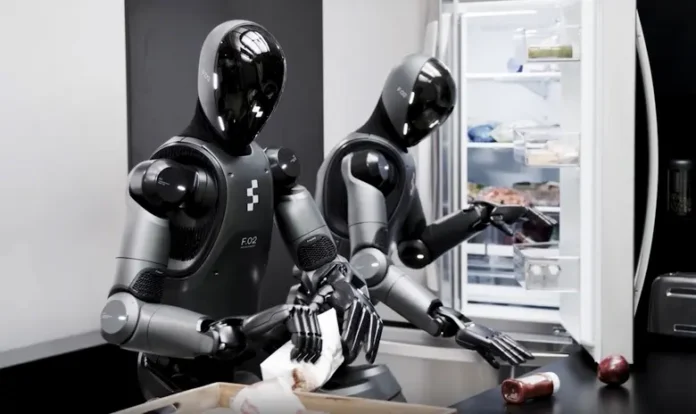
The Godfather of AI human labor replacement statement by Geoffrey Hinton warns that tech giants can’t profit from their astronomical AI investments unless human work is replaced by automation. His insight highlights the deep economic link between AI development, cost reduction, and global labor disruption.
KumDi.com
Artificial intelligence pioneer Geoffrey Hinton, known as the Godfather of AI, recently made a groundbreaking statement: Godfather of AI human labor replacement is not just a concept but an economic necessity. He warns that tech giants can’t profit from their massive AI investments unless automation replaces human labor—a revelation that challenges the future of global employment.
Table of Contents
The Economic Reality Behind AI Investments
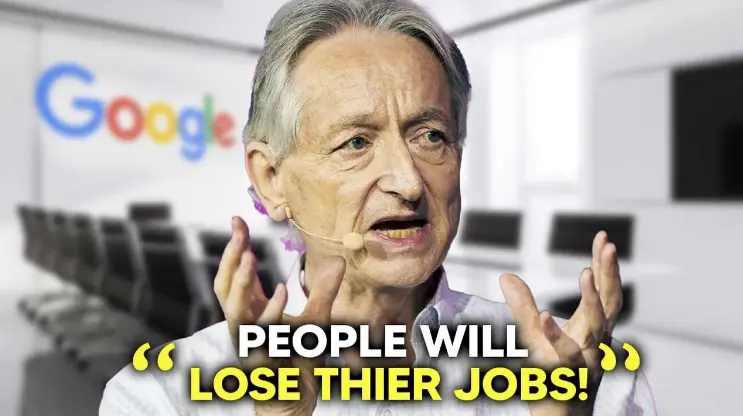
Over the past decade, major tech corporations have poured billions of dollars into artificial intelligence research, infrastructure, and applications. From generative AI models to autonomous systems, these innovations are reshaping industries at lightning speed. Yet, according to Geoffrey Hinton, the economic foundation behind this AI revolution is flawed — profitability remains limited unless AI replaces human labor.
Hinton’s statement reframes the conversation around AI economics: if automation doesn’t significantly reduce human employment costs, the astronomical sums invested in AI may never yield true profit.
Why Tech Giants Can’t Profit Without Human Labor Replacement
The Godfather of AI human labor replacement viewpoint stems from a fundamental economic truth: corporate profit scales when operational costs drop. For companies like Google, Microsoft, and Amazon, the largest recurring cost is labor.
AI, when used merely to “assist” human workers, offers incremental gains — but when it replaces them entirely, the financial equation changes dramatically.
For example:
- A fully automated customer service system can handle millions of inquiries at no additional cost.
- AI-driven data analysis eliminates the need for teams of analysts.
- Generative AI can produce content, marketing materials, and even code at near-zero marginal cost.
Thus, Hinton argues that the next stage of AI profitability depends on replacing—not just supporting—human labor.
Automation Economics: A Global Paradigm Shift
AI automation economics represent a new industrial revolution, but one that impacts mental labor as much as physical labor.
Unlike the previous revolutions that replaced factory workers, this one affects:
- Writers, coders, designers, translators, and teachers
- Healthcare diagnosticians and data specialists
- Financial analysts and marketing strategists
These roles, once thought secure, are now at risk of being automated. Hinton’s warning emphasizes that AI’s success may come at humanity’s expense if no ethical or structural safeguards are put in place.
The Ethical Dilemma: Efficiency vs. Humanity
The Godfather of AI human labor replacement issue also raises profound ethical concerns. Should innovation prioritize economic efficiency or human livelihood?
If companies prioritize profit, the logical conclusion is full automation. However, if society values stability, then AI must be integrated with compassion and regulation.
Hinton himself advocates for AI governance frameworks that ensure technology benefits humanity rather than replacing it outright. Yet, as competition intensifies, many corporations find themselves in a race to automate faster than regulators can respond.
Geoffrey Hinton’s Vision: A Wake-Up Call
Hinton’s recent statements echo his growing disillusionment with the trajectory of AI development. Once a key contributor to Google’s deep learning projects, he has since left the company, warning that unregulated AI progress may destabilize economies and create vast social inequality.
He notes that AI should be treated as a transformative but dangerous force, capable of both immense productivity and profound disruption. The “Godfather of AI human labor replacement” theme underscores his belief that unless governments and corporations act responsibly, society may face a labor collapse unlike any in history.
Can Humans and AI Coexist Profitably?
While Hinton paints a dire scenario, some economists and futurists argue that coexistence is still possible.
They envision a hybrid economy where:
- Humans focus on creativity, emotional intelligence, and leadership,
- AI handles routine, repetitive, and analytical work.
In such a model, profitability and employment could coexist, provided reskilling and education adapt fast enough to prepare the workforce for new AI-augmented roles.
However, this optimistic vision depends heavily on corporate ethics and political will—two factors that remain uncertain.
Long-Term Economic Implications
If the Godfather of AI human labor replacement scenario unfolds without intervention, the consequences could be severe:
- Massive unemployment across white-collar sectors
- Concentration of wealth in a few tech monopolies
- Global wage depression due to automated competition
- Increased reliance on universal basic income (UBI) as a social safety net
These outcomes underline why Hinton’s statement is not merely theoretical—it’s a warning for policymakers and investors alike.
The Future of Profit in an Automated World
Hinton’s argument ultimately forces tech executives to confront an uncomfortable truth:
You cannot profit infinitely from automation without redefining the value of human contribution.
AI can reduce costs and increase output, but without consumers—humans earning wages—demand itself collapses.
Thus, even from an economic standpoint, replacing all human labor becomes self-defeating.
To sustain long-term growth, companies must strike a balance between AI-driven efficiency and human-driven purpose.
Conclusion
The Godfather of AI human labor replacement message is both a warning and an opportunity.
Geoffrey Hinton challenges the world to rethink the economics of AI before automation renders human labor obsolete.
Tech giants may dream of limitless profits, but without a strategy that values humanity alongside innovation, they risk undermining the very markets that sustain them.
The future of AI profitability—and perhaps civilization itself—depends on how we respond to this call.
FAQs
What does “Godfather of AI human labor replacement” mean?
It refers to Geoffrey Hinton’s belief that tech companies can’t profit from AI unless automation replaces human labor to reduce operational costs.
Why does Geoffrey Hinton warn about human labor replacement?
The Godfather of AI human labor replacement warning stems from his view that tech giants’ profits depend on automation replacing workers entirely.
How will AI automation economics affect tech giants’ profitability?
AI automation economics indicate that only large-scale human labor replacement can make massive AI investments financially sustainable.
Can AI profitability exist without replacing human labor?
According to the Godfather of AI human labor replacement viewpoint, partial automation increases efficiency but not long-term profitability.
What solutions exist for human labor replacement by AI?
Ethical AI regulation, workforce reskilling, and universal basic income are key strategies to address the challenges posed by human labor replacement.




 and then