










SoftBank sold its $5.8 billion Nvidia stake to raise funds for massive OpenAI investments. This strategic move shifts SoftBank’s focus from AI hardware to advanced AI platforms, signaling Masayoshi Son’s bold plan to dominate the next era of artificial intelligence innovation.
KumDi.com
SoftBank sells its $5.8 billion Nvidia stake to fund OpenAI investments — a move that underscores the company’s radical shift from hardware-driven AI profits to software-based intelligence leadership. This decision marks a defining moment in SoftBank’s global AI strategy, reflecting Masayoshi Son’s ambitious vision to reshape the future of artificial intelligence.
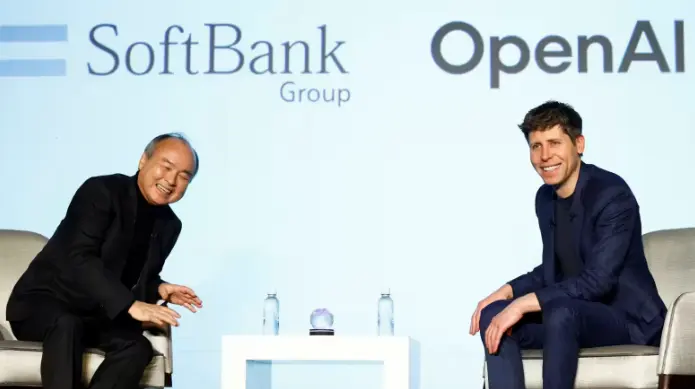
SoftBank Group has made another bold move in the high-stakes world of artificial intelligence. The Japanese conglomerate sold its entire $5.8 billion stake in Nvidia, one of the world’s leading AI chipmakers, to free up capital for massive new investments in OpenAI and related ventures.
This strategic divestment signals a clear shift in SoftBank’s focus — from betting on the hardware powering artificial intelligence to investing directly in the AI platforms and services that define the next stage of technological transformation.
The sale follows SoftBank’s renewed commitment to becoming a global leader in AI infrastructure, applications, and innovation, driven by its founder Masayoshi Son’s vision of an “AI-first” future.
Table of Contents
Why SoftBank Sold Its Nvidia Stake
At first glance, SoftBank’s decision might seem counterintuitive. Nvidia has been the world’s most successful AI-related stock, soaring more than 200% in the past two years thanks to unprecedented demand for its GPUs, which power the training of large language models and data centers worldwide.
However, SoftBank’s rationale centers on capital reallocation. Rather than continue holding a highly appreciated stock, the company aims to deploy capital into higher-growth, higher-control opportunities, such as OpenAI — the creator of ChatGPT — and its expanding ecosystem.
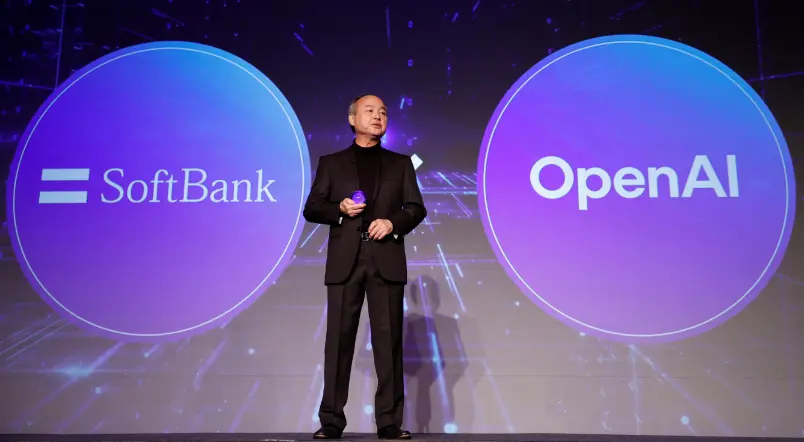
Masayoshi Son reportedly wants SoftBank to play a more central role in the AI value chain, beyond hardware, and believes that partnering with or funding OpenAI will yield greater strategic influence and long-term returns than passive holdings in chip stocks.
The Bigger Picture: From Hardware to Platforms
This sale marks a fundamental strategic shift from AI enablers (hardware) to AI platforms (applications and ecosystems). Nvidia’s success comes from selling the picks and shovels of the AI gold rush — chips that train massive models. But the real long-term power may rest with the companies building and controlling those models, such as OpenAI.
SoftBank appears to be positioning itself for that future. The company envisions AI not just as a productivity tool but as a platform layer for global business, media, and robotics. By freeing up billions in liquid capital, SoftBank can pursue equity partnerships, infrastructure projects, and licensing agreements with OpenAI that could anchor its next phase of growth.
In short: SoftBank is shifting its role in the AI ecosystem from supplier to partner — from investing in the picks and shovels, to owning part of the gold mine.
Financial and Portfolio Implications
The $5.8 billion sale strengthens SoftBank’s liquidity at a time when it is aggressively rebuilding its investment portfolio after a series of technology market corrections.
This move comes after the group’s Vision Fund suffered heavy losses in recent years due to overexposure to overvalued startups. By contrast, SoftBank’s newer AI strategy aims to create a more concentrated, higher-quality portfolio centered on global AI leadership.
Selling Nvidia shares that had already appreciated significantly is a logical step from a capital-management perspective. It provides immediate funding to pursue new deals without raising debt or selling other strategic assets.
SoftBank’s overall balance sheet remains strong, and the company’s profits have rebounded, supported by valuations in AI-linked investments and its stakes in telecommunications and robotics ventures.
The OpenAI Factor: Betting Big on the Future of Intelligence
OpenAI is currently one of the most valuable and influential technology companies in the world. Its products, from ChatGPT to DALL·E, have reshaped how consumers and businesses interact with AI. Its enterprise partnerships with Microsoft, Apple, and others make it a dominant player in the AI-as-a-service ecosystem.
For SoftBank, investing in OpenAI offers access to the application layer of generative AI, where revenue models are clearer and growth potential is exponential.
SoftBank is also exploring ways to bring OpenAI’s technology to Asian markets, particularly Japan, where it can integrate AI into telecom networks, robotics, and enterprise tools through its subsidiaries like SoftBank Corp. and Arm Holdings.
Masayoshi Son has publicly declared that he wants SoftBank to be “at the center of the AI revolution.” Selling Nvidia shares to fund OpenAI-related initiatives aligns perfectly with that ambition.
Market Reaction and Investor Sentiment
The market’s immediate reaction to the sale was mixed. Nvidia shares saw a brief dip following the announcement, though analysts emphasized that the sale did not reflect Nvidia’s fundamentals, which remain exceptionally strong.
Investors, however, read the move as a possible signal of profit-taking at peak valuations in the AI chip sector. Nvidia’s stock had surged to record highs, and SoftBank’s exit may have inspired some short-term caution across semiconductor equities.
Conversely, many analysts see this as a bullish signal for OpenAI and the AI software market, indicating that major institutional investors are reallocating capital toward application-layer companies that could drive the next wave of growth.
In the broader AI investment landscape, SoftBank’s reallocation reinforces a growing narrative: the next trillion-dollar opportunity may lie not in chips, but in AI services and ecosystem ownership.
Risks and Challenges
While the sale provides liquidity, it also concentrates SoftBank’s exposure to fewer, more volatile assets. Investing heavily in OpenAI carries distinct risks:
- Valuation risk: OpenAI’s private valuation has soared, and its future earnings trajectory is uncertain. If AI adoption slows or competition intensifies, returns could be pressured.
- Regulatory risk: Global governments are increasingly scrutinizing AI companies for data privacy, content moderation, and safety concerns.
- Dependency risk: OpenAI’s close ties with Microsoft and reliance on external cloud infrastructure could limit SoftBank’s direct influence.
- Opportunity cost: Nvidia remains a market leader in AI hardware. Exiting completely could mean missing out on further appreciation if chip demand continues to explode.
Despite these risks, SoftBank appears confident that the AI application space offers greater potential returns than hardware in the long run.
What This Means for the AI Ecosystem
SoftBank’s decision could mark the beginning of a broader capital rotation in the AI industry — away from semiconductor dominance and toward software, services, and integrated intelligence.
This transition mirrors past technology cycles: the early internet era was hardware-driven (servers and networking equipment), but the biggest value creation eventually occurred at the application layer (Google, Facebook, Amazon).
If AI follows the same pattern, companies that control models, data, and user interfaces — such as OpenAI — could capture the lion’s share of profits in the coming decade.
SoftBank’s investment strategy may thus be ahead of the curve: reducing exposure to hardware cyclicality while maximizing upside from scalable AI business models.
The Future of SoftBank’s AI Strategy
SoftBank’s long-term AI plan extends beyond OpenAI. The company has expressed interest in AI-driven robotics, autonomous vehicles, digital assistants, and smart infrastructure. It aims to integrate generative AI into nearly every business segment it touches.
Masayoshi Son has also hinted at developing a “super AI cluster” that could serve as the backbone of Japan’s next-generation economy, powered by partnerships with OpenAI and other global innovators.
By reallocating capital strategically, SoftBank is rebuilding its identity — from a diversified investment conglomerate to an AI infrastructure leader focused on global transformation.
Bottom Line: A Bold but Calculated Move
SoftBank’s $5.8 billion sale of its Nvidia stake is not a retreat from AI, but a reinvestment in AI’s future. The company is trading one of the world’s most successful hardware plays for a chance to own a larger piece of the software and intelligence layer that could define the next decade.
It’s a risky bet, but that has always been Masayoshi Son’s style. If OpenAI continues to dominate and commercialize AI at scale, SoftBank’s decision may look visionary. If not, it could be remembered as another case of selling winners too early.
Either way, the move underscores a new chapter in the global AI arms race — where power and profit are shifting from chips to cognition.
FAQs
Why did SoftBank sell its $5.8 billion Nvidia stake?
SoftBank sold its $5.8 billion Nvidia stake to fund major OpenAI investments, shifting focus from AI chip hardware to advanced AI software platforms that promise higher long-term growth and influence.
How will SoftBank’s Nvidia sale impact its AI strategy?
The Nvidia sale allows SoftBank to strengthen its AI strategy by redirecting capital into OpenAI and other generative AI projects, aiming to lead the global market for intelligent applications and services.
What does SoftBank’s OpenAI investment mean for the AI market?
SoftBank’s OpenAI investment highlights a broader industry shift from hardware makers like Nvidia toward AI application platforms, signaling a new phase of digital innovation and capital realignment.
Is SoftBank still investing in AI after selling Nvidia shares?
Yes, SoftBank remains deeply invested in AI. The Nvidia share sale provides liquidity to accelerate funding in OpenAI and related AI ventures, positioning the company as a core AI ecosystem player.
Could selling Nvidia shares affect SoftBank’s future growth?
While SoftBank exits a high-performing chip stock, the proceeds fund potentially higher-margin AI software ventures. The move aligns with SoftBank’s long-term goal to dominate AI-driven technologies through OpenAI partnerships.




 and then