




Why are people having fewer kids?
KumDi.com
The main reasons include rising living costs, unaffordable housing, career pressures, delayed relationships, financial insecurity, and changing attitudes toward parenthood. While some adults prefer a child-free lifestyle, others want children but feel unable to afford the financial and emotional responsibilities.
People are having fewer children around the world, but the reasons go much deeper than simply not wanting to become parents. Rising living costs, unaffordable housing, career pressures, financial uncertainty, changing relationships, and concerns about the future are influencing how people make decisions about starting a family. For many, having children has become a choice that requires more financial stability, emotional readiness, and long-term security than previous generations experienced.
Why are people really having fewer children? The main reasons include the rising cost of raising a family, delayed marriage and relationships, economic insecurity, changing attitudes toward parenthood, unequal childcare responsibilities, and concerns about the environment and future living conditions. Some people genuinely prefer a child-free life, while others want children but feel unable to afford or support the family they imagined.
This is an important distinction: falling birth rates do not necessarily mean that people have stopped loving children or reject family life. In many cases, people are postponing parenthood, having fewer children than they originally wanted, or deciding that the conditions required to raise a child are simply not within reach.
The global decline in fertility is therefore not just a demographic issue. It reflects fundamental changes in how people work, build relationships, manage money, and define a fulfilling life.
Table of Contents

Why Are People Having Fewer Children? Understanding the Global Fertility Decline
The decline in birth rates is one of the most significant demographic changes of the 21st century.
According to the United Nations’ World Fertility 2024 report, the global fertility rate fell to approximately 2.2 births per woman in 2024, compared with around five in the 1960s and 3.3 in 1990.
More than half of countries and territories now have fertility rates below the replacement level of approximately 2.1 births per woman.
The replacement fertility rate is the approximate number of children women would need to have, on average, for a population to replace itself across generations without migration.
However, a low fertility rate does not mean that every person is choosing to remain child-free. It measures the average number of births per woman under current age-specific fertility patterns, not the number of children people personally want.
What is driving the decline?
Several major factors are contributing to lower birth rates:
- Higher housing and living expenses.
- Increasing costs of childcare and education.
- Delayed marriage and long-term partnerships.
- Career and professional development priorities.
- Financial insecurity and unstable employment.
- Greater access to contraception and reproductive healthcare.
- Changing attitudes toward marriage and parenthood.
- Unequal distribution of household and childcare responsibilities.
- Concerns about climate change, conflict, and the future.
The OECD’s research on fertility trends identifies housing costs, unemployment, economic insecurity, family policies, and changing social attitudes as important factors influencing decisions about having children. OECD+1
Importantly, these factors often interact. Someone may want children but delay having them because of housing costs, then postpone the decision further because of career uncertainty or difficulty finding a suitable partner.
1. The Rising Cost of Raising Children Is Changing Family Decisions
One of the biggest reasons people are choosing to have fewer children is the increasing financial commitment associated with parenthood.
Raising a child involves much more than paying for food, clothing, and basic necessities. Parents must consider housing, healthcare, childcare, transportation, education, extracurricular activities, and the possibility of losing income when one parent takes time away from work.
For younger adults already struggling with everyday expenses, having a child can appear financially overwhelming.
Housing costs make starting a family difficult
Housing is one of the most significant barriers to family formation.
In many major cities, young professionals spend a substantial proportion of their income on rent or mortgage payments.
Consider a couple living in a large metropolitan area:
- Both partners work full-time.
- Their combined income covers rent, utilities, transportation, and food.
- They have limited savings after monthly expenses.
- Moving to a larger home would increase their financial burden.
- Having a child would introduce additional childcare and healthcare costs.
Even if both partners want children, the decision may be postponed until they can afford more suitable accommodation.
The OECD identifies housing costs as negatively associated with fertility rates across its member countries. OECD+1
Childcare and education are increasingly expensive
Childcare is another major consideration.
In countries where affordable childcare is limited, parents may have to choose between paying for private childcare and reducing their working hours.
Education costs can also influence family planning.
In South Korea, for example, private education expenses can become a substantial household commitment, particularly when parents feel pressure to provide competitive educational opportunities.
The financial implications can extend from early childhood through university.
Financial pressure increases with each additional child
The financial burden of parenthood does not always increase in a simple or predictable way.
A family with one child may need a larger home, another vehicle, additional childcare arrangements, and more extensive education expenses when considering a second or third child.
Consequently, couples who already have one child may decide that expanding their family would place too much pressure on their finances.
The important point: Many people are not necessarily rejecting parenthood. They are questioning whether they can provide the financial stability and quality of life they believe a child deserves.
2. Career Ambitions and Financial Independence Are Changing Priorities
Previous generations often followed a relatively predictable life pattern: finish education, find a job, get married, purchase a home, and have children.
That sequence is no longer universal.
Today’s adults have more opportunities to pursue higher education, build careers, travel, establish businesses, and develop personal interests before considering parenthood.
For many, professional development is not simply about earning more money. It is also connected to independence, identity, personal achievement, and long-term security.
Having children can interrupt career progression
Pregnancy, childbirth, parental leave, and childcare can significantly affect professional opportunities.
Women often face particular challenges because pregnancy and childbirth involve physical demands that cannot be equally shared between partners.
Although fathers increasingly participate in childcare, women in many societies continue to perform a disproportionate share of unpaid domestic work.
This can create difficult choices:
- Postpone having children to pursue professional qualifications.
- Delay pregnancy until achieving greater financial stability.
- Reduce working hours after childbirth.
- Accept slower career progression.
- Decide not to have children because the professional and personal trade-offs feel too significant.
Financial independence has become more important
Many adults want to establish savings, build investments, travel, or purchase property before becoming parents.
These goals can take considerably longer to achieve when housing and living costs rise faster than wages.
A couple may decide to wait until their thirties to have their first child, even if they originally expected to start a family earlier.
This delay can eventually affect the total number of children they have.
Not everyone considers parenthood essential to personal fulfillment
Modern social attitudes have expanded the definition of a successful adult life.
For some people, fulfillment comes from:
- Career achievements.
- Meaningful relationships.
- Travel and cultural experiences.
- Creative interests.
- Financial independence.
- Community involvement.
- Personal development.
Having children can still be an important life goal, but it is no longer universally considered a necessary milestone of adulthood.
Pew Research Center’s 2024 survey of American adults found that 57% of childless adults aged 18–49 who said they were unlikely to have children identified simply not wanting children as a major reason. Another 44% cited wanting to focus on other things, including careers and personal interests. Pew Research Center+1
This illustrates that economic barriers are only part of the explanation. Personal preferences also matter.
3. People Are Getting Married Later or Not Finding the Right Partner
Another important reason behind falling birth rates is the changing nature of relationships.
Having children often requires a combination of personal readiness, a suitable partner, relationship stability, and shared expectations about family life.
However, finding a compatible long-term partner can be difficult.
Marriage and parenthood are happening later
In many developed countries, people are spending more years in education and entering stable employment later.
As a result, marriage and parenthood are often postponed.
For example, Eurostat reported that the average age of women having their first child in the EU reached 29.9 years in 2024, compared with 28.9 years in 2014. Eurostat+1
This does not mean that people in their thirties cannot have children. However, delaying parenthood can reduce the amount of time available for having multiple children.
Dating does not always lead to long-term commitment
Modern dating provides more opportunities to meet people, but it does not guarantee compatible long-term relationships.
Some adults experience:
- Difficulty finding partners with similar values.
- Uncertainty about marriage and commitment.
- Different expectations about having children.
- Financial disagreements.
- Geographic separation due to work.
- Difficulty balancing relationships with demanding careers.
Someone may genuinely want to become a parent but never find a partner with whom they feel comfortable starting a family.
More people are choosing to remain single
Remaining single is increasingly accepted in many societies.
Some people prefer living independently, while others do not want the responsibilities or compromises associated with long-term relationships.
Because partnership and family formation are connected in many countries, changes in relationship patterns can contribute to lower birth rates.
However, marriage is not a universal prerequisite for parenthood. Family structures differ across countries, and some people choose to raise children independently or within unmarried partnerships.
4. Women Are Reconsidering the Physical and Emotional Costs of Motherhood
One of the most important changes in modern family planning is that women have greater opportunities to make independent decisions about whether and when to have children.
Motherhood can be deeply meaningful, but it also involves significant physical, emotional, and practical responsibilities.
For some women, these responsibilities are incompatible with their current career plans, financial situation, personal goals, or preferred lifestyle.
Pregnancy and childbirth involve real physical demands
Pregnancy and childbirth are major biological events.
They can involve:
- Physical discomfort and fatigue.
- Pregnancy-related medical complications.
- Changes in physical health.
- Postpartum recovery.
- Sleep disruption.
- Breastfeeding challenges.
- Postpartum depression and anxiety in some mothers.
The experience differs considerably between individuals. Some women have relatively uncomplicated pregnancies, while others experience significant medical or psychological difficulties.
For women who have experienced difficult pregnancies or childbirth, the decision to have another child may require careful consideration.
The unequal burden of childcare remains a concern
Even when both parents work, women frequently carry a larger share of childcare and household responsibilities.
This can create what is commonly described as the second shift: completing domestic work and caring for children after finishing paid employment.
The issue is not necessarily that women do not want children. Rather, some are questioning why becoming a mother should require sacrificing a disproportionate amount of professional freedom, personal time, and financial independence.
Motherhood is increasingly viewed as a choice, not an obligation
In previous generations, women often faced strong social expectations to marry and have children.
Those expectations have changed in many societies.
Women can increasingly choose whether motherhood fits their personal circumstances and long-term goals.
This is an important social development. A decline in birth rates should not automatically be interpreted as a rejection of family values or an indication that women are responsible for demographic problems.
Reproductive decisions should remain voluntary and informed.
5. Fear About the Future: Climate Change, War, and Global Uncertainty
Another reason some people hesitate to have children is uncertainty about the world into which their children would be born.
Modern generations have experienced several major global disruptions, including:
- The COVID-19 pandemic.
- Climate change and environmental degradation.
- International conflicts and geopolitical instability.
- Economic recessions and inflation.
- Political polarization.
- Rapid technological change.
- Concerns about future employment opportunities.
These developments can influence how people evaluate the long-term responsibilities of parenthood.
Climate change and environmental concerns
Some prospective parents worry about extreme weather, rising temperatures, water shortages, biodiversity loss, and the long-term sustainability of natural resources.
They may question whether future generations will enjoy the same environmental stability that earlier generations experienced.
Pew Research Center’s 2024 survey found that 26% of American adults under 50 without children who were unlikely to have children identified environmental concerns, including climate change, as a major reason. Pew Research Center+1
This does not mean climate change is the primary reason for declining fertility everywhere. Its influence varies by individual, country, and social circumstances.
Economic and geopolitical uncertainty
A child is a long-term responsibility extending far beyond the next few years.
Parents must consider whether they can provide a secure environment for a child over decades.
Economic uncertainty can make this difficult.
For example, a young couple working in industries experiencing rapid technological disruption may hesitate to take on additional financial commitments if they are uncertain about future income.
Similarly, concerns about political instability or international conflict may influence decisions about family planning.
The psychological burden of an uncertain future
Parenthood requires a degree of confidence in the future.
When people feel that their lives are already difficult to manage, the idea of assuming responsibility for another person can seem overwhelming.
The OECD has identified the accumulation of global crises and increasing perceptions of uncertainty as factors that may influence fertility decisions, particularly among younger adults. OECD+1
6. More People Are Choosing a Child-Free Lifestyle
Not everyone who does not have children is waiting for the right financial conditions or relationship.
Some people simply do not want to become parents.
This distinction is essential when discussing declining birth rates.
A child-free lifestyle refers to an individual or couple who chooses not to have children. It differs from childlessness caused by circumstances such as infertility, the absence of a suitable partner, or financial difficulties.
Why do people choose not to have children?
Common reasons include:
- They enjoy their independence and personal freedom.
- They prefer to concentrate on their careers or businesses.
- They do not feel emotionally interested in parenthood.
- They want to maintain financial flexibility.
- They prefer travel, hobbies, and personal development.
- They do not want the responsibilities of raising children.
- They have concerns about the social and environmental future.
Some adults also have negative childhood experiences that influence their feelings about becoming parents.
For example, someone who grew up in a highly unstable family environment may feel uncertain about repeating that experience.
Others may have positive family relationships but simply prefer a different lifestyle.
What does research tell us?
Pew Research Center’s July 2024 report provides useful insight into these changing preferences.
Among American adults aged 18–49 without children who said they were unlikely to have children:
| Major reason | Percentage |
|---|---|
| Simply do not want children | 57% |
| Want to focus on other things | 44% |
| Concerns about the state of the world | 38% |
| Cannot afford to raise a child | 36% |
| Environmental concerns | 26% |
| Have not found the right partner | 24% |
| Do not really like children | 20% |
Source: Pew Research Center, July 2024. Respondents could identify multiple reasons, so percentages do not add up to 100%. The survey concerns a specific US population, not all adults worldwide. Pew Research Center+1
The findings demonstrate that modern decisions about parenthood involve a combination of personal preferences, financial realities, and concerns about the future.
7. Infertility and Delayed Parenthood: The Biological Side of Falling Birth Rates
Not every person who has fewer children makes that decision voluntarily.
Some couples want children but encounter difficulties conceiving.
Infertility, reproductive health conditions, and age-related changes in fertility can affect family planning.
According to the World Health Organization, approximately one in six people of reproductive age experience infertility during their lifetime. This is a global estimate and includes different causes affecting women and men. UNFPA Administrative Agent
Why delaying parenthood can affect fertility
Female fertility generally declines with age, with a more noticeable reduction during the mid-to-late thirties and beyond.
This is associated with changes in both the quantity and quality of available eggs.
Male fertility can also change with age, although the pattern differs.
Some people delay having children until they achieve greater financial or professional stability, only to discover that conception is more difficult than expected.
Common medical factors affecting conception
Potential factors include:
- Polycystic ovary syndrome (PCOS).
- Endometriosis.
- Ovulation disorders.
- Blocked or damaged fallopian tubes.
- Reduced ovarian reserve.
- Low sperm count or impaired sperm motility.
- Hormonal conditions.
- Certain genetic or reproductive health conditions.
Infertility can affect either partner or involve a combination of factors.
Access to fertility treatment
Assisted reproductive technologies, including in vitro fertilization (IVF), have helped many people achieve pregnancy.
However, fertility treatment can involve considerable financial costs, medical procedures, emotional stress, and uncertainty.
Access varies substantially depending on national healthcare systems, insurance coverage, and personal financial resources.
This means that some people who want children may not be able to pursue the treatment options available to them.
Important distinction: Delayed parenthood, infertility, and voluntary child-free living are different experiences. They should not be grouped together as though everyone without children has made the same decision.
Why Are Birth Rates Especially Low in Countries Like South Korea, Japan, and China?
East Asia provides some of the clearest examples of how economic, social, and demographic changes can combine to produce exceptionally low fertility.
South Korea, Japan, and China have experienced significant declines in birth rates, although their demographic situations and policy responses differ.
South Korea: Housing, education, and work pressure
South Korea has experienced one of the world’s most pronounced fertility declines.
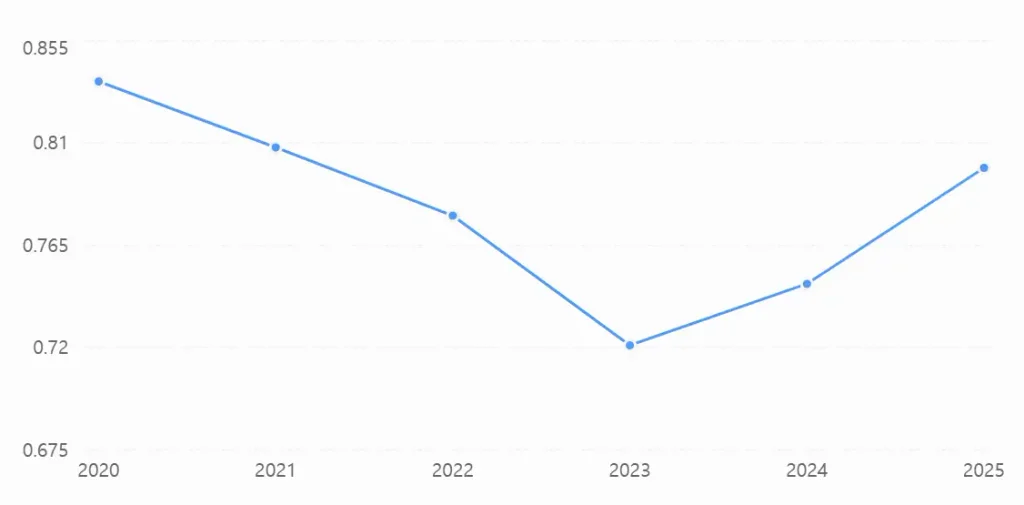
According to South Korea’s Ministry of Data and Statistics, the country’s total fertility rate increased from 0.75 in 2024 to 0.80 in 2025, with approximately 254,300 births recorded in 2025. 국가데이터처+1
South Korea’s total fertility rate
0.80
Children per woman, 2025
South Korea’s total fertility rate from 2020 to 2025, based on official national statistics.
Several factors contribute to the country’s low fertility:
- High housing costs, particularly in Seoul.
- Expensive private education and tutoring.
- Intense competition in education and employment.
- Long working hours and demanding workplace cultures.
- Delayed marriage.
- Unequal domestic and childcare responsibilities.
- Financial pressure on young households.
The country’s 2025 increase is worth noting, but one year’s improvement does not establish a sustained demographic recovery.
Japan: Ageing society and delayed family formation
Japan has faced declining births and an ageing population for decades.
Economic uncertainty, delayed marriage, fewer marriages, and the financial demands of raising children are among the factors associated with lower fertility.
The demographic consequences include:
- A growing proportion of older residents.
- A smaller working-age population.
- Increasing demand for elderly care.
- Pressure on pension and healthcare systems.
- Difficulties maintaining local communities and services.
China: Changing economic and social expectations
China’s declining birth rate reflects several interacting changes.
These include the high costs of housing and education, delayed marriage, changing attitudes toward parenthood, and the long-term demographic effects of the former one-child policy.
Even after restrictions on family size were relaxed, higher birth quotas alone did not automatically restore fertility.
The broader lesson is that government permission or financial incentives cannot independently reverse changes in personal preferences and economic circumstances.
Why Financial Incentives Alone Cannot Solve the Falling Birth Rate
Governments around the world have introduced financial incentives to encourage people to have children.
These programs can include:
- Birth grants.
- Monthly child allowances.
- Tax deductions.
- Paid maternity and paternity leave.
- Subsidized childcare.
- Publicly funded fertility treatment.
- Housing assistance for young families.
- Education subsidies.
These policies can reduce some of the financial pressure associated with raising children.
However, research suggests that financial assistance alone is unlikely to restore fertility to replacement levels.
The OECD’s analysis found positive associations between fertility rates and employment, parental leave, early childhood education and care spending, and financial support for households. It also identified a negative association between fertility and housing costs.
The report emphasizes that changing social attitudes and perceived insecurity also matter. OECD+1
What policies are more likely to address the underlying barriers?
A comprehensive approach should include several elements.
| Policy area | Practical solution |
|---|---|
| Housing | Affordable family housing and rental stability |
| Employment | Secure contracts and predictable working hours |
| Childcare | Accessible, affordable, high-quality childcare |
| Parental leave | Paid leave for both parents |
| Gender equality | Fairer distribution of domestic responsibilities |
| Education | Reduced financial pressure from education costs |
| Healthcare | Accessible reproductive and fertility services |
| Work-life balance | Flexible working arrangements and family-friendly workplaces |
The objective should not be to pressure people into having children.
It should be to ensure that those who want to become parents can do so without facing unreasonable economic, professional, or social barriers.
What Happens When Fewer People Have Children? The Long-Term Impact on Society
Falling birth rates have consequences that extend far beyond individual families.
When fewer children are born over an extended period, the age structure of a population gradually changes.
The proportion of older people increases relative to younger generations, potentially creating economic and social challenges.
An ageing population and workforce shortages
A declining birth rate can eventually reduce the number of people entering the workforce.
This may create shortages in industries that depend on a large working-age population, including:
- Healthcare and nursing.
- Construction.
- Manufacturing.
- Transportation.
- Education.
- Agriculture.
- Elderly care.
However, workforce shortages are not an automatic consequence of every year of low fertility. Migration, productivity improvements, automation, and higher labor-force participation can influence the outcome.
Greater pressure on pension and healthcare systems
Many developed countries operate pension and social insurance systems that depend partly on contributions from working-age people.
When the ratio of working-age residents to retirees declines, governments may face increasing financial pressure.
Healthcare demand can also rise as populations age.
This creates difficult policy questions about taxation, retirement ages, healthcare financing, and long-term care.
Smaller school populations and changing communities
Fewer births can lead to:
- Declining school enrollment.
- School closures in smaller communities.
- Reduced demand for some childcare services.
- Population decline in rural areas.
- Changes in local housing demand.
- Reduced economic activity in some regions.
These effects are particularly visible in communities where younger adults move to major cities or overseas for employment.
Economic growth and innovation
A smaller population does not automatically mean a weaker economy.
Economic output depends on several factors, including productivity, technology, education, investment, and workforce participation.
For example, automation and artificial intelligence may help businesses maintain productivity even when the working-age population becomes smaller.
Nevertheless, demographic ageing can make it more difficult to maintain economic growth if productivity improvements do not compensate for a declining workforce.
What Can Individuals and Couples Do If They Want Children but Feel Unprepared?
For individuals who genuinely want to become parents but feel overwhelmed by financial or professional responsibilities, it can help to separate immediate concerns from longer-term decisions.
There is no universal age or financial threshold at which someone becomes ready for parenthood.
However, practical planning can make the decision more manageable.
Step 1: Understand your financial position
Calculate your monthly household income and expenses.
Consider:
- Housing and utility costs.
- Healthcare and insurance.
- Childcare expenses.
- Transportation.
- Food and household necessities.
- Emergency savings.
- Potential reductions in income during parental leave.
A realistic budget can help identify whether the main obstacle is insufficient income, high housing expenses, or a lack of financial planning.
Step 2: Discuss expectations with your partner
Couples should discuss important questions before having children.
For example:
- Do both partners genuinely want children?
- How many children would they ideally like?
- How will childcare responsibilities be divided?
- Will either partner reduce working hours?
- How will major expenses be managed?
- What support is available from family or public services?
These conversations can prevent misunderstandings later.
Step 3: Research available family support
Depending on the country, parents may qualify for parental leave, childcare subsidies, healthcare coverage, housing assistance, and child-related tax benefits.
Understanding available support can change how financially achievable parenthood appears.
Step 4: Consider reproductive health and timing
People who are concerned about fertility should seek reliable medical information rather than relying on assumptions or social media advice.
A healthcare professional can discuss reproductive health, age-related fertility changes, and available treatment options.
People with known fertility concerns or difficulty conceiving should consider appropriate medical evaluation.
Step 5: Recognize that parenthood is a personal decision
Not everyone needs to have children to live a meaningful life.
Some people find fulfillment through parenthood, while others build satisfying lives without children.
Both choices deserve respect.
The goal should be to make an informed decision based on personal circumstances rather than pressure from family, society, or government demographic targets.
Will Birth Rates Continue to Fall in the Future?
The United Nations expects global fertility to continue declining over the coming decades, although the pattern will differ significantly between regions.
Its World Fertility 2024 report projects that the global fertility rate could reach approximately 1.8 births per woman by 2100. 유엔
Several developments will influence future fertility patterns:
Economic conditions: If housing, childcare, and education remain expensive relative to household incomes, some people may continue postponing parenthood.
Employment security: More predictable employment and family-friendly working conditions may help people achieve their desired family size.
Changing relationships: Marriage patterns, partnership stability, and attitudes toward parenthood will continue to influence family formation.
Reproductive healthcare: Improvements in fertility treatment may help some people who experience difficulties conceiving, although medical technology cannot eliminate all age-related fertility limitations.
Government policies: Effective parental leave, childcare, and housing support may reduce barriers for people who want children.
Cultural preferences: Greater acceptance of child-free lifestyles means that future family patterns may differ significantly from those of previous generations.
An important consideration is that a temporary increase in births does not necessarily indicate a permanent reversal in fertility trends. Demographers generally examine several years of data to distinguish lasting changes from short-term fluctuations.
FAQs

Why are people having fewer kids worldwide?
People are having fewer kids worldwide because of rising living costs, expensive housing, financial insecurity, career pressures, delayed marriage, and changing family preferences. While some adults choose not to have children, others postpone parenthood because they cannot afford the responsibilities of raising a family.
Is the rising cost of living the main reason for declining birth rates?
The rising cost of living is a major factor behind declining birth rates. Housing, childcare, healthcare, and education expenses make parenthood financially challenging. However, changing social attitudes, career priorities, relationship difficulties, and personal lifestyle preferences also influence decisions about having children.
Why are younger generations choosing a child-free lifestyle?
Younger generations may choose a child-free lifestyle because they value financial independence, career development, personal freedom, and flexibility. Environmental concerns, economic uncertainty, and the responsibilities of parenthood also influence some people’s decisions not to have children.
Why are birth rates declining in South Korea and Japan?
Birth rates in South Korea and Japan are declining because of expensive housing, delayed marriage, demanding work cultures, high education costs, and changing family expectations. These economic and social pressures make it increasingly difficult for younger adults to establish households and raise children.
Can governments reverse the global decline in birth rates?
Governments can help address declining birth rates through affordable housing, accessible childcare, paid parental leave, employment security, and family financial support. However, financial incentives alone are unlikely to reverse fertility declines because personal preferences and changing social attitudes also influence parenthood decisions.
Conclusion: People Have Not Necessarily Stopped Wanting Families. They Are Rethinking What Parenthood Costs.
The decline in birth rates is often described as a demographic crisis, but the reasons behind it are deeply personal and interconnected.
For some people, having children is simply not part of their desired lifestyle. Others want to become parents but cannot find a suitable partner, afford a home, manage childcare expenses, or achieve the financial security they believe their children deserve.
Women are also making more independent reproductive decisions, while younger generations are reconsidering traditional expectations about marriage, careers, and family life.
The evidence suggests that falling birth rates cannot be explained by one issue or solved through financial incentives alone. Economic security, housing affordability, reproductive healthcare, gender equality, and changing social expectations all play important roles.
Perhaps the most important distinction is between people who do not want children and those who cannot have the number of children they would like.
The real question is not simply why people have stopped having children. It is why having a family has become so difficult for people who still want one.
References
- United Nations – Global fertility trends and future population projections
- OECD – Fertility trends across the OECD: Underlying drivers and the role for policy
- UNFPA – The real fertility crisis: The pursuit of reproductive agency in a changing world




 and then
