








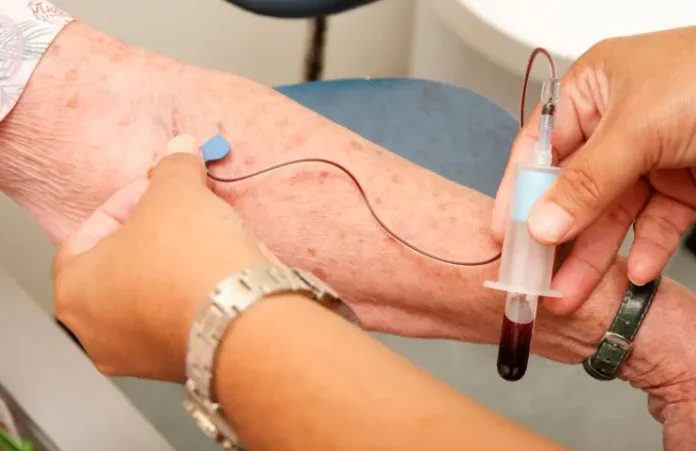

The FDA Clears Blood Test for Alzheimer Disease that helps doctors rule out the disease in adults showing memory loss or cognitive decline. By detecting the pTau181 biomarker in blood, this quick and non-invasive test simplifies early diagnosis and reduces the need for PET scans or spinal taps.
KumDi.com
A major breakthrough in Alzheimer’s diagnosis has arrived. The U.S. Food and Drug Administration (FDA) has officially cleared a blood test designed to help rule out Alzheimer’s disease in people who are already showing signs of cognitive decline. This new test represents a shift toward more accessible, less invasive, and faster diagnostic pathways — one that could make early detection and treatment more achievable for millions of people worldwide.
Table of Contents
Why This Matters
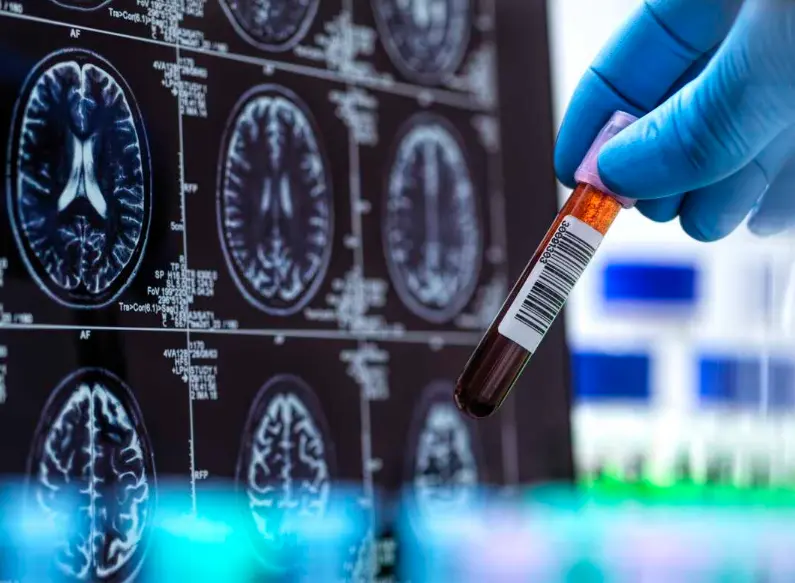
Until recently, diagnosing Alzheimer’s disease required complex and invasive tests such as spinal taps or PET brain scans to detect hallmark proteins like amyloid and tau. These methods, while accurate, are expensive, limited to specialized centers, and often involve long waiting times.
The newly cleared blood test can identify biological signs of Alzheimer’s from a simple blood draw — offering primary care physicians and neurologists a quick and accessible tool to rule out Alzheimer’s-related pathology in symptomatic adults. It doesn’t replace traditional diagnostic methods but serves as an effective first step to determine who may actually need further testing.
What Exactly Did the FDA Approve?
The FDA cleared the Elecsys® pTau181 plasma test, developed by Roche Diagnostics. It measures levels of phosphorylated tau protein (pTau181) in the blood — a biomarker strongly associated with Alzheimer’s-related changes in the brain.
The clearance allows the test to be used for adults aged 55 and older who are showing cognitive symptoms, such as memory loss, confusion, or difficulty performing familiar tasks. It’s intended to rule out Alzheimer’s when clinical signs suggest possible dementia but the cause is uncertain.
In essence, a negative result from the test means it’s unlikely the person’s cognitive symptoms are due to Alzheimer’s disease. This helps doctors decide whether further testing, such as a PET scan or spinal tap, is truly necessary.
How the Blood Test Works
In Alzheimer’s disease, abnormal clumping of proteins like amyloid beta and tau disrupts communication between brain cells. The Elecsys test measures a modified form of tau called pTau181, which increases in the blood as these brain changes develop.
By analyzing the concentration of pTau181, laboratories can determine whether there is biochemical evidence suggesting Alzheimer’s-related pathology.
If the levels are low, the likelihood of Alzheimer’s being the cause of the patient’s symptoms is minimal — making it a reliable “rule-out” test.
Unlike PET scans or lumbar punctures, this blood test:
- Requires only a small blood sample
- Delivers results within hours instead of days or weeks
- Can be performed in standard clinical laboratories
- Reduces patient discomfort and anxiety
How Accurate Is It?
Clinical trials of the Elecsys pTau181 test demonstrated a negative predictive value (NPV) of approximately 98% in ruling out Alzheimer’s pathology among symptomatic adults. In simple terms, when the test result is negative, there’s about a 98% chance the person does not have the type of brain changes seen in Alzheimer’s disease.
This accuracy gives doctors confidence to proceed with alternative investigations — for example, looking for depression, vitamin deficiency, thyroid disorders, or other causes of cognitive impairment — rather than immediately moving to costly Alzheimer’s-specific tests.
Earlier FDA Approvals and Growing Momentum
The Elecsys approval follows another significant FDA clearance earlier this year for the Lumipulse G pTau217/β-Amyloid 1-42 blood test developed by Fujirebio Diagnostics. That test measures two key biomarkers to help detect the presence of Alzheimer’s pathology.
Together, these approvals mark a new era in Alzheimer’s diagnostics. For the first time, clinicians can use blood-based tests as part of routine evaluation — a step that could dramatically expand early detection, accelerate treatment decisions, and improve access for patients in community settings.
What This Means for Patients and Families
For families facing early signs of memory decline, the new test provides something invaluable — clarity. Instead of waiting months for specialized imaging or enduring invasive procedures, patients can now get an initial answer quickly.
Here’s what this breakthrough could mean in practical terms:
- Faster Triage: Doctors can use blood testing as an early step to decide who truly needs specialist referral.
- Reduced Stress: Patients avoid invasive lumbar punctures unless absolutely necessary.
- Lower Costs: Blood tests are far more affordable than PET scans, reducing financial burden.
- Earlier Intervention: Timely diagnosis means patients may access treatment sooner and plan for the future with more certainty.
For Clinicians: A New Diagnostic Pathway

This clearance also empowers primary care physicians — not just neurologists — to participate more directly in the diagnostic process. A general practitioner can now:
- Order the blood test during an initial assessment
- Interpret the result in conjunction with cognitive screening tools
- Decide whether referral to a specialist or further testing is warranted
The test is not meant to confirm Alzheimer’s on its own, but rather to rule it out confidently, enabling clinicians to redirect attention to other possible causes of symptoms.
Important Limitations
While the approval is a major step forward, there are still boundaries and cautions to keep in mind:
- Not for Healthy Individuals: The test is approved only for people already showing symptoms, not for general population screening.
- Does Not Replace Clinical Evaluation: A doctor’s judgment remains essential. Test results must always be interpreted in the context of a full neurological assessment.
- Potential for False Positives or Negatives: No test is perfect — medical professionals may still need confirmatory testing if results are unclear or inconsistent with clinical findings.
- Access and Infrastructure: While the Elecsys system is automated and widely available, smaller or rural healthcare centers may take time to adopt it fully.
Impact on Alzheimer’s Research and Drug Development
Blood-based biomarker tests open new doors for Alzheimer’s research. Clinical trials for new treatments can now identify suitable participants faster, monitor progression more efficiently, and reduce costs associated with imaging and spinal fluid collection.
Researchers are also developing next-generation biomarker panels that combine tau, amyloid, and neurofilament light proteins to refine diagnosis even further. Over time, this could lead to personalized medicine approaches where treatment and prevention strategies are guided by each person’s unique biological profile.
Questions Patients Should Ask Their Doctor
If you or a loved one are experiencing early memory issues, here are helpful questions to bring to your next appointment:
- Is a blood test for Alzheimer’s appropriate for my situation?
- What would a positive or negative result mean for me?
- Will this test be covered by my insurance?
- If the result suggests Alzheimer’s, what confirmatory tests or treatments come next?
Having these conversations ensures that test results lead to clear, informed next steps — not confusion or unnecessary worry.
Looking Ahead
The FDA’s decision to clear a blood test for ruling out Alzheimer’s disease represents a transformative shift in how dementia is evaluated. It moves diagnosis out of exclusive, hospital-based procedures and into the realm of everyday clinical care.
As more tests become available, accessibility and early detection will likely improve dramatically. Families will no longer need to endure months of uncertainty before receiving clarity. For healthcare systems, these tests promise to save both time and resources, allowing specialists to focus on the patients who need them most.
While there’s still work ahead — ensuring equitable access, educating clinicians, and securing insurance coverage — this is a milestone worth celebrating. The ability to use a simple blood sample to rule out one of the most feared diseases of our time is not just scientific progress — it’s human progress.
Key Takeaways
- The FDA has cleared the Elecsys pTau181 blood test to help rule out Alzheimer’s in symptomatic adults.
- The test is designed for adults aged 55 and older who are showing cognitive symptoms.
- It provides a 98% accuracy rate in ruling out Alzheimer’s pathology, offering doctors a fast, non-invasive tool.
- This approval follows earlier clearances of other Alzheimer’s blood tests, marking a new era in early diagnosis.
- It’s not for screening healthy individuals, but it represents a powerful new option for clinical decision-making.
FAQs
What is the new FDA-approved blood test for Alzheimer’s disease?
The new FDA-cleared blood test for Alzheimer’s measures the pTau181 biomarker in blood to help rule out Alzheimer’s pathology in symptomatic adults. It offers a faster, less invasive alternative to PET scans or spinal fluid tests.
How accurate is the Alzheimer’s blood test cleared by the FDA?
The FDA-cleared blood test for Alzheimer’s shows about 98% accuracy in ruling out Alzheimer’s-related changes. This high precision makes it a trusted first-line tool for early dementia evaluation and diagnosis.
Who should get the Alzheimer’s blood test?
Doctors recommend the Alzheimer’s blood test for adults aged 55 and older who show cognitive symptoms such as forgetfulness, confusion, or language difficulties. It is not designed for general population screening or people without symptoms.
How does the FDA-cleared Alzheimer’s blood test work?
This Alzheimer’s blood biomarker test detects levels of phosphorylated tau (pTau181) — a protein linked to brain changes in Alzheimer’s disease. A low reading helps rule out Alzheimer’s, guiding doctors toward other possible causes of memory loss.
Why is the new Alzheimer’s blood test important?
The FDA approval of this blood test for Alzheimer’s makes early diagnosis faster, cheaper, and more accessible. It empowers primary care doctors to screen efficiently, saving patients time and avoiding unnecessary invasive procedures.




 and then