








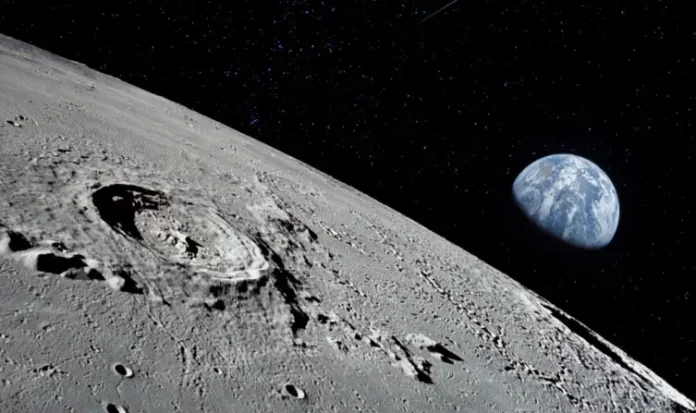

The Moon moving away from Earth occurs at about 3.8 cm per year due to tidal forces transferring angular momentum from Earth. This gradual recession slows Earth’s rotation, slightly alters tides, and illustrates the dynamic gravitational interaction between Earth and its only natural satellite.
KumDi.com
The Moon moving away from Earth is a subtle but significant phenomenon that affects tides, Earth’s rotation, and long-term planetary dynamics. Physicists explain that tidal forces transfer energy from Earth to the Moon, gradually pushing it into a higher orbit while slowing our planet’s rotation. Understanding this process reveals how gravitational interactions shape the Earth-Moon system.
The Moon is gradually moving away from Earth at an average rate of approximately 3.8 centimeters per year. While this may seem like a small distance, it has measurable effects on Earth’s rotation, tides, and long-term planetary dynamics. Understanding this phenomenon requires a closer look at tidal forces, angular momentum, and the Earth-Moon gravitational relationship.
Table of Contents
How Tidal Forces Cause the Moon to Recede
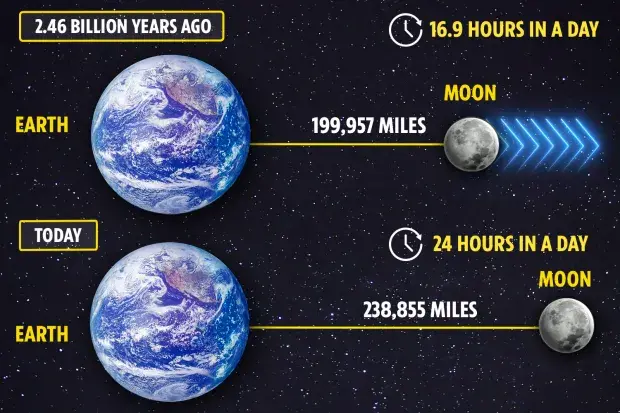
The primary reason the Moon is moving away from Earth is tidal interaction. Earth’s oceans are pulled by the Moon’s gravity, creating tidal bulges. Because Earth rotates faster than the Moon orbits, these bulges are slightly ahead of the Moon. This misalignment creates a gravitational pull that transfers energy and angular momentum from Earth to the Moon, gradually pushing the Moon into a higher orbit.
This process explains why the Moon is drifting away from Earth and why our planet’s rotation is slowing down over millions of years. Tides are not only essential for marine life but also play a key role in shaping our planet’s long-term rotational and orbital behavior.
The Moon’s Effect on Earth’s Rotation
As the Moon moves outward, Earth’s rotation slows slightly. Millions of years ago, Earth’s day lasted only about 18 hours. Fossil records, such as growth rings in corals, indicate that days have gradually lengthened to the current 24 hours.
This effect, caused by the Moon’s recession, demonstrates the connection between lunar movement and Earth’s day length. Scientists track these changes to better understand Earth’s long-term rotational history and how celestial interactions influence life on our planet.
Observing the Moon’s Distance
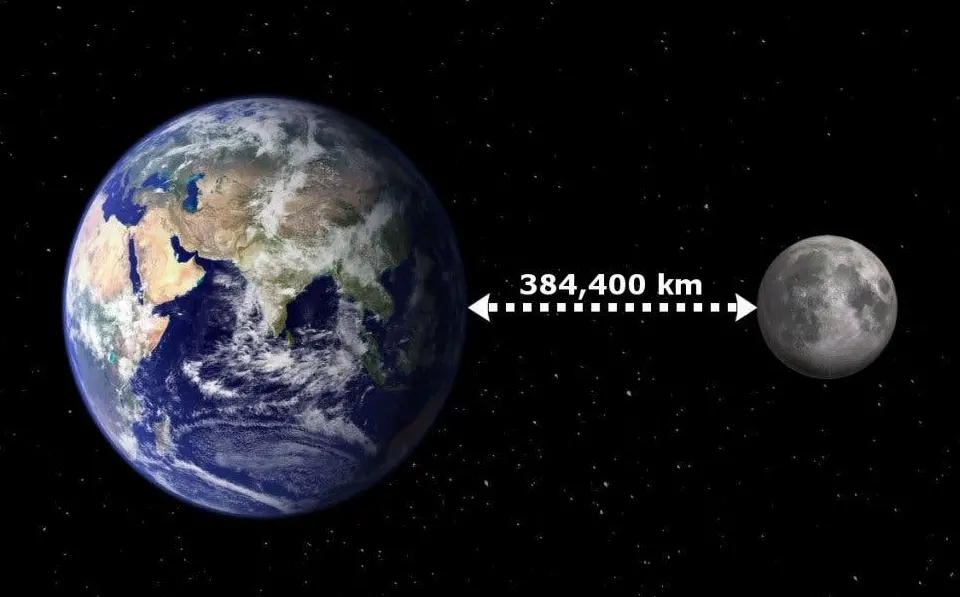
Modern science measures the Moon’s distance using laser ranging experiments. Reflectors placed on the lunar surface during human space missions allow for precise calculations. These measurements confirm the Moon’s gradual recession and provide valuable data for understanding the dynamics of the Earth-Moon system.
The evidence highlights that the Moon is slowly drifting farther from Earth and shows how gravitational forces continuously shape the orbital paths of celestial bodies.
Long-Term Implications for Tides
As the Moon moves away, its gravitational influence on Earth’s oceans weakens slightly. This results in smaller tidal ranges over very long timescales. While this change is imperceptible over a human lifetime, it could have consequences for ocean mixing, climate regulation, and coastal ecosystems over millions of years.
Understanding this process is crucial for predicting the long-term evolution of tides and the impact of celestial mechanics on Earth’s environment.
Tidal Locking and Future Earth-Moon Dynamics
Over billions of years, the Earth-Moon system could reach a state of tidal locking, where one side of Earth constantly faces the Moon, just as one side of the Moon always faces Earth today.
Although this scenario is far in the future, it demonstrates the profound effects of tidal forces. The Moon’s recession gradually affects Earth’s rotation, length of day, and the overall stability of the Earth-Moon system.
The Moon’s Role in Stabilizing Earth
The Moon stabilizes Earth’s axial tilt, which influences seasons and long-term climate stability. As the Moon moves farther away, its stabilizing effect will diminish slightly. However, for millions of years, the Moon continues to play a critical role in keeping Earth’s climate predictable.
This emphasizes the Moon’s importance for life on Earth and the subtle consequences of its slow outward movement.
Why the Moon’s Recession Matters for Planetary Science
Studying the Moon’s recession helps physicists understand celestial mechanics, angular momentum transfer, and tidal interactions in planetary systems. This knowledge is applicable not only to Earth-Moon interactions but also to other planetary systems in our galaxy.
By observing and modeling these changes, scientists can predict the long-term evolution of planets and their satellites, providing insight into planetary formation and stability.
Conclusion: The Dynamic Earth-Moon Relationship
The Moon’s slow drift away from Earth is a clear example of the dynamic nature of our solar system. Every year, as it moves slightly farther away, Earth’s rotation slows, tides adjust, and the Earth-Moon system evolves.
Understanding this process offers a window into the long-term effects of tidal forces, the intricacies of celestial mechanics, and the interconnectedness of planetary systems. Although imperceptible on human timescales, the Moon’s recession is a reminder of the subtle but powerful forces shaping our planet and its environment.
FAQs
Why is the Moon moving away from Earth?
The Moon is moving away from Earth due to tidal forces that transfer angular momentum from our planet. This lunar recession gradually increases the Moon’s orbit while slowing Earth’s rotation.
How fast is the Moon drifting away from Earth?
The Moon drifts away at approximately 3.8 centimeters per year. Tidal interactions between Earth and the Moon are responsible for this gradual change in distance.
Does the Moon’s recession affect tides on Earth?
Yes, as the Moon moves farther, its gravitational pull on Earth’s oceans weakens slightly, affecting tidal ranges. This demonstrates the connection between lunar recession and tidal forces.
How does the Moon moving away influence Earth’s rotation?
The transfer of angular momentum from Earth to the Moon slows Earth’s rotation over time. Days become slightly longer as the Moon recedes, showing the dynamic effects of celestial mechanics.
What long-term impact will the Moon’s recession have?
Over millions of years, the Moon’s movement may lead to tidal locking and subtle changes in tides and Earth’s rotation. Studying lunar recession helps scientists understand long-term planetary dynamics.




 and then