








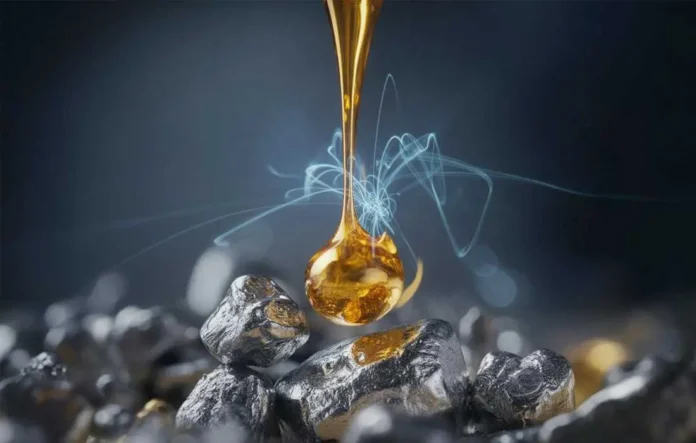

Physicists have successfully converted lead into gold using high-energy nuclear reactions in particle accelerators. By removing three protons from lead nuclei, scientists create gold atoms. This breakthrough is a scientific demonstration of nuclear transmutation, not a method for producing usable gold in everyday life.
KumDi.com
Physicists have achieved a remarkable scientific breakthrough by converting lead into gold through advanced nuclear reactions. Using particle accelerators, scientists can remove protons from lead nuclei to form gold atoms. This experiment demonstrates the principles of nuclear transmutation, fulfilling the age-old curiosity of alchemy while remaining purely a laboratory phenomenon.
Yes, physicists have technically converted lead into gold in laboratory experiments. However, this transformation occurs under extreme conditions, produces only microscopic quantities, and is not commercially viable. This achievement demonstrates the power of modern nuclear physics, not a method for creating gold for everyday use.
In the first successful demonstrations, scientists used high-energy particle accelerators to manipulate atomic nuclei, removing protons from lead atoms so they became gold nuclei. While this fulfills the centuries-old dream of alchemy, it is strictly a scientific experiment and not a method for producing usable gold.
Table of Contents
How Lead Can Be Transformed Into Gold
At the atomic level, elements are defined by their number of protons. Lead has 82 protons, while gold has 79. To convert lead into gold, exactly three protons must be removed from the lead nucleus.
Chemical reactions cannot achieve this because they only affect electrons, not the nucleus. The transformation requires nuclear reactions, which are possible only under high-energy conditions, such as those created in particle accelerators.
Physicists use techniques like ultraperipheral collisions, where lead nuclei pass extremely close to each other at near-light speeds. These collisions generate intense electromagnetic fields that can eject protons from the nucleus. When a lead nucleus loses three protons in this way, it becomes a gold nucleus.
How Much Gold Is Produced?
Even in the most advanced experiments, the amount of gold created is extremely small. Only a few billion nuclei may be produced in a given run, which corresponds to an overall mass so tiny it cannot be seen with the naked eye.
Moreover, the gold nuclei are unstable due to their high energy and velocity. They exist only for a fraction of a second before breaking apart upon interacting with the accelerator components. This means the gold is not recoverable or usable.
Alchemy vs Modern Physics
For centuries, alchemists sought a way to turn lead into gold, hoping for wealth and prestige. Their approach relied on chemical processes and mystical theories, which were never successful.
Modern physics makes this dream a reality, but in a strictly scientific sense. The method involves manipulating the atomic nucleus rather than chemical reactions, and it requires highly sophisticated equipment and precise control of extreme energies. Unlike medieval alchemy, this is measurable, repeatable, and understandable through the laws of nuclear physics.
Why This Discovery Matters
While the conversion of lead to gold is not practical for commercial purposes, it has significant scientific value:
- Validates nuclear models: It helps physicists understand how nuclei behave under extreme conditions.
- Improves accelerator design: Understanding nuclear reactions allows scientists to better manage particle beams.
- Simulates early universe conditions: High-energy collisions recreate states of matter similar to those that existed shortly after the Big Bang.
This achievement demonstrates the limits and potential of nuclear physics, offering insights into the fundamental nature of matter.
Limitations and Practical Considerations
Despite the impressive science, there are several reasons why this process is not useful for producing gold:
- The equipment is extremely expensive and requires specialized facilities.
- The amount of gold produced is microscopic and disappears almost immediately.
- The process cannot be scaled for industrial production.
In short, the gold exists only in a transient state that can be detected by instruments but not collected for practical use.
Other Elements Be Transmuted?
Yes, nuclear reactions can transform other elements. Scientists have demonstrated the conversion of mercury and bismuth into gold isotopes under controlled conditions. However, like lead-to-gold conversion, these reactions are expensive, highly specialized, and produce negligible quantities, making them impractical outside of research laboratories.
Key Takeaways
| Fact | Summary |
|---|---|
| Lead → Gold | Achievable via nuclear reactions, but only in laboratories. |
| Alchemy Realized? | Technically yes, but only as a physics experiment. |
| Amount Produced | Extremely tiny, far too small to see or use. |
| Stability | Highly unstable and fleeting. |
| Practical Use | None; the process is purely scientific. |
Conclusion
Physicists have achieved what alchemists dreamed of for centuries: converting lead into gold. However, this is a scientific demonstration rather than a commercial breakthrough. The gold exists only fleetingly and in microscopic quantities, proving a principle of nuclear physics, not a method for wealth creation.
This work highlights the remarkable power of modern science to manipulate the very building blocks of matter and offers a glimpse into the extreme conditions of the universe’s earliest moments.
FAQs
How did physicists convert lead into gold?
Physicists converted lead into gold using high-energy nuclear reactions in particle accelerators. By removing three protons from lead nuclei, they successfully produced gold atoms in laboratory experiments.
Is lead-to-gold conversion practical for commercial use?
No. The lead-to-gold experiment produces only microscopic amounts of gold that exist briefly. It is a scientific demonstration of nuclear transmutation, not a method for making usable gold.
What is nuclear transmutation?
Nuclear transmutation is the process of changing one element into another by altering its nucleus. In the lead-to-gold experiment, protons were removed from lead atoms to create gold, demonstrating controlled nuclear reactions.
What role do particle accelerators play in creating gold from lead?
Particle accelerators generate high-energy collisions that allow scientists to manipulate atomic nuclei. These collisions remove protons from lead, producing gold nuclei, and make laboratory transmutation possible.
How does this experiment relate to alchemy?
The lead-to-gold experiment fulfills the centuries-old alchemist goal in scientific terms. Unlike medieval alchemy, this modern experiment uses nuclear physics, not chemical reactions, to convert lead into gold in controlled laboratory conditions.




 and then