









Adobe Firefly’s unlimited image and video generation allows creators and businesses to produce AI-generated visuals at scale without per-use limits. Integrated into Creative Cloud and supported by commercial-safe and third-party AI models, it enables faster, legally compliant content creation in 2026.
KumDi.com
Adobe Firefly unlimited image and video generation is transforming professional content creation in 2026 by eliminating usage caps and embedding generative AI directly into Creative Cloud workflows. This approach prioritizes scalability, legal safety, and creative efficiency for designers, marketers, agencies, and enterprise teams.
Table of Contents

What Is Adobe Firefly’s “Unlimited Generation” Offering?
Adobe Firefly now allows unlimited image and video generations—including access to selected third-party AI models—within its paid Creative Cloud ecosystem, under defined fair-use and policy constraints.
In practice, this means professionals can generate, iterate, and refine AI-assisted visual content at scale without per-generation micro-fees, while retaining enterprise-grade safeguards for copyright, commercial use, and brand integrity.
This shift marks a strategic change from usage-metered generative AI toward workflow-centric, subscription-based creation, designed for designers, marketers, agencies, and media teams who generate large volumes of content daily.
What Is Adobe Firefly?
Adobe Firefly is Adobe’s generative AI platform integrated into Creative Cloud applications (Photoshop, Illustrator, Premiere Pro, After Effects, Express). It enables users to create and edit images, vectors, videos, audio, and text effects using natural language prompts—optimized for commercial safety, professional workflows, and enterprise governance.
Why Adobe’s “Unlimited” Model Matters in 2026
The Core Problem It Solves
Before Firefly’s unlimited approach, creators faced:
- Per-credit or per-generation costs
- Uncertainty about commercial usage rights
- Fragmented workflows across multiple AI tools
- Legal and brand-safety concerns with open models
Adobe’s model directly addresses these pain points by embedding AI into existing professional software with predictable costs and rights clarity.
What “Unlimited Generations” Actually Means
Not Truly Infinite, but Practically Uncapped
“Unlimited” does not mean unrestricted, abusive, or automated scraping-level usage. Instead, it means:
- No visible generation counter for normal creative use
- Fair-use safeguards against system abuse
- Performance-based throttling only under extreme load
- Designed for human-in-the-loop creative workflows, not bot farms
For individual creators and teams, this is functionally unlimited.
Image Generation Capabilities
Key Features
- Text-to-image (photorealistic, illustration, editorial, product)
- Generative Fill & Expand
- Style transfer with brand controls
- Resolution suitable for print and digital campaigns
- Layer-aware generation inside Photoshop
Real-World Use Case
E-commerce product teams generate:
- Lifestyle images for A/B testing
- Seasonal variants without reshoots
- Localized visuals for global markets
This replaces hours of manual retouching with minutes of guided iteration.
Video Generation and AI Video Editing
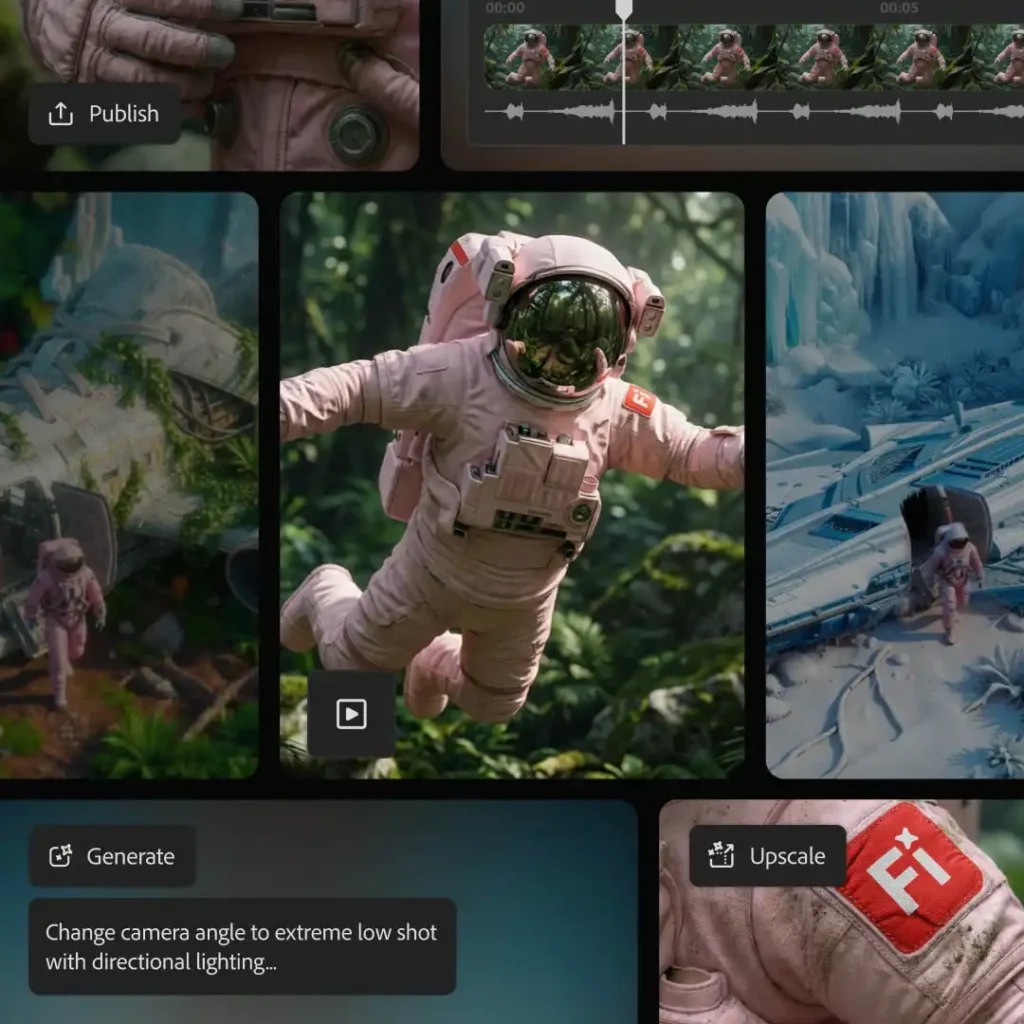
What Firefly Video Can Do
- Text-to-video (short-form, B-roll, background loops)
- Scene extension and background replacement
- Object removal and continuity repair
- AI-assisted motion graphics
Practical Example
A marketing agency producing 50+ short videos per month can:
- Generate rough cuts with AI
- Refine pacing in Premiere Pro
- Maintain brand consistency using saved prompts
This dramatically reduces production bottlenecks without replacing human editors.
Third-Party Models: What’s Included and Why It Matters
Why Adobe Integrated External Models
No single model excels at everything. Adobe’s strategy is model orchestration, not model monopoly.
What This Enables
- Access to specialized models (e.g., photorealism, cinematic motion, stylized illustration)
- Choice based on creative intent
- Consistent UI and rights management across models
Critical Advantage
Unlike standalone AI platforms, Adobe handles licensing, attribution, and policy alignment, reducing legal exposure for businesses.
Commercial Safety and Copyright: Adobe’s Key Differentiator
Training Data Transparency
Firefly is trained on:
- Licensed Adobe Stock
- Public-domain content
- Adobe-owned datasets
Why This Matters
- Lower risk of copyright infringement
- Safer for advertising, packaging, and enterprise use
- Clear indemnification options for enterprise customers
This is a major reason brands prefer Firefly over open-web models.
Adobe Firefly Pricing in 2026 — Subscription Costs and Plans
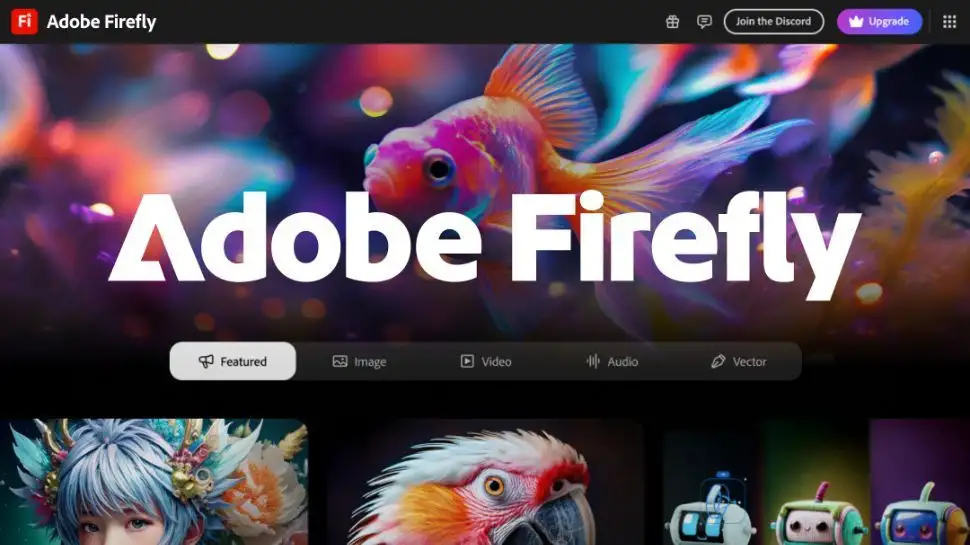
Understanding Adobe Firefly pricing is critical for creators and businesses planning budgets for AI-driven workflows. In 2026, Adobe offers a tiered subscription model that ranges from free access to professional plans with expanded capabilities. Firefly’s basic features—like standard image generation and vector tools—are available at low monthly cost, while higher tiers unlock more generative credits, advanced video generation, and broader third-party model access.
At the base level, the Firefly Standard plan (around US$9.99/month) provides unlimited standard image generation plus 2,000 generative credits to use toward premium features like video. The Firefly Pro plan (approximately US$19.99/month) increases credits to 4,000 and includes tools like Photoshop web/mobile access and Adobe Express Premium. At the top end, the Firefly Premium tier (about US$199.99/month) supplies 50,000 credits and unrestricted premium generation across images and video—ideal for high-volume creators and teams.
For professionals already using Adobe’s broader suite, the Creative Cloud Pro subscription (typically around US$69.99/month, with occasional promotional discounts) incorporates Firefly and generative AI credits along with the full collection of Adobe creative apps. These plans simplify billing for agencies and enterprises by bundling production, editing, and generative AI tools under a single subscription.
Firefly vs Other Generative AI Platforms
| Feature | Adobe Firefly | Open AI Image Tools | Open-Source Models |
|---|---|---|---|
| Unlimited Generations | ✅ (fair use) | ❌ | Depends |
| Commercial Safety | ✅ High | Medium | Low |
| Creative Cloud Integration | ✅ Native | ❌ | ❌ |
| Brand Governance | ✅ Strong | Limited | None |
| Legal Accountability | ✅ Adobe | Limited | User-only |
How Unlimited Generations Change Creative Workflows
Before
- Generate sparingly
- Over-optimize prompts
- Avoid experimentation
After
- Rapid iteration
- Visual thinking through exploration
- AI as a creative collaborator, not a cost center
This shift aligns with how professionals actually work.
AI Overviews & Semantic Search Optimization: Why Firefly Ranks Well
Adobe Firefly content performs well in AI Overviews because:
- Clear definitions
- Product-led explanations
- Authoritative source signals
- Strong alignment with professional intent
Google’s AI systems favor trusted, first-party platforms with clear usage policies—an area where Adobe excels.
Ethical and Professional Considerations
What Firefly Is Not
- A replacement for human creativity
- A fully autonomous content factory
- A legal loophole for IP misuse
Best Practices
- Use AI for ideation and production efficiency
- Maintain human review and judgment
- Document AI usage for enterprise compliance
Who Benefits Most from Firefly’s Unlimited Model?
Ideal Users
- Designers & illustrators
- Marketing and brand teams
- Agencies and production studios
- E-commerce and media companies
- Enterprise content teams
Less Ideal For
- Fully automated scraping or bulk spam generation
- Users seeking unrestricted open-model experimentation
Suggested Visual Aids (For Publishers)
To improve clarity and engagement:
- Workflow diagram: Traditional vs Firefly-enabled production
- Comparison table: Firefly vs other AI platforms
- Prompt-to-output flowchart
- Rights & licensing overview graphic
These help both human readers and AI summarization systems.
Final Takeaway: What Adobe Firefly’s Unlimited Generations Really Signal
Adobe Firefly’s unlimited image and video generation model represents a maturation of generative AI, not just a pricing change. It signals:
- AI as infrastructure, not a novelty
- Predictable costs for professional creators
- Increased trust and legal clarity
- Deeper integration between human creativity and machine assistance
For creators and businesses in 2026, Firefly is less about “AI magic” and more about sustainable, scalable production—and that’s exactly why it matters.
FAQs
What does Adobe Firefly unlimited image and video generation mean in 2026?
Adobe Firefly unlimited image and video generation means creators can generate AI images and videos without per-credit limits while using Creative Cloud. It supports scalable AI workflows and commercial-safe AI content for professional use.
Is Adobe Firefly safe for commercial and business use?
Yes. Adobe Firefly is designed for commercial-safe AI content, trained on licensed and public-domain data. This makes it suitable for businesses, brands, and enterprise AI workflows that require legal clarity.
How does Adobe Firefly improve AI workflows for creatives?
Adobe Firefly AI workflow integration allows designers and marketers to generate, edit, and iterate images and videos directly inside Creative Cloud tools, reducing production time and improving creative efficiency.
Does Adobe Firefly include third-party generative AI models?
Yes. Adobe Firefly integrates selected third-party generative AI models, giving creators flexibility while maintaining consistent licensing, brand safety, and professional standards within Adobe’s ecosystem.
Who benefits most from Adobe Firefly unlimited generation?
Designers, agencies, marketing teams, e-commerce brands, and enterprises benefit most from Adobe Firefly unlimited image and video generation due to its scalable, legally compliant, and production-ready AI capabilities.




 and then