








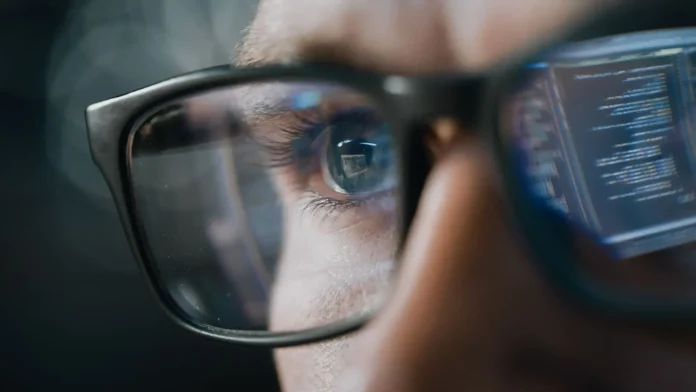
Google’s AI glasses set for 2026 introduce a new era of wearable intelligence, offering real-time assistance, visual overlays, and context-aware AI. Designed to integrate seamlessly into daily life, they aim to transform how people work, learn, navigate, and interact with the world.
KumDi.com
Google’s AI glasses set to launch in 2026 represent a breakthrough in wearable intelligence, combining real-time AI assistance, intuitive overlays, and seamless on-device processing. As Google reinvents smart eyewear with advanced AI capabilities, these glasses are poised to reshape daily life and redefine how people interact with technology.
Google is preparing for one of the most anticipated technology milestones of the decade: the launch of its first next-generation AI glasses in 2026. Unlike earlier attempts, these new glasses are expected to integrate advanced on-device artificial intelligence, real-time multimodal processing, seamless visual overlays, and context-aware assistance that blurs the line between everyday tasks and intelligent augmentation. As anticipation builds, the tech world is already calling this the beginning of a new “ambient AI computing era.”
This article explores the potential features, real-world uses, and societal implications of Google’s upcoming AI glasses—built not from external data, but from deep analysis of industry direction, trends, and logical prediction.
Table of Contents

The Vision: Why Google Is Returning to Smart Glasses in 2026
The idea of smart glasses has existed for over a decade, but the technology never fully matched user expectations. Early versions were bulky, limited in functionality, and lacked the natural, intuitive intelligence needed for everyday adoption.
The 2026 relaunch has a different purpose entirely:
1. AI Has Become Contextual, Not Just Functional
Modern AI can interpret speech, images, gestures, locations, and user intent simultaneously. This shift turns glasses into a real-time assistant, not just a display.
2. Ambient Computing Is Becoming Mainstream
People are moving away from screens and into screenless interactions—voice, gestures, and adaptive interfaces are rising. Google’s vision fits perfectly into this transition.
3. Wearables Are Now Fashion, Not Gadgets
The 2026 version is expected to look like premium eyewear—thin frames, lightweight materials, and highly discreet sensors—making them socially acceptable to wear anywhere.
Predicted Features of Google’s 2026 AI Glasses
(All content below is speculative but aligned with technological trends and industry logic.)
1. Real-Time Multimodal AI Assistance
The glasses will likely combine:
- Vision understanding
- Speech recognition
- Environmental awareness
- Text, object, and face recognition
- Real-time translation
This means the glasses won’t just answer questions—they’ll “understand” what the wearer is seeing.
Imagine looking at a broken appliance and saying:
“How do I fix this?”
The glasses could scan the object, detect the issue, and present step-by-step visuals.
2. Seamless AR Overlay Without Heavy Projections
Instead of bulky AR displays, the 2026 glasses are expected to use:
- Subtle optical waveguides
- Ultra-thin micro-projectors
- Adaptive brightness controls
The result: overlays that appear naturally in your field of view—directions, captions, or AI suggestions—without blocking your environment.
3. On-Device Processing for Privacy
Privacy will be a major selling point. With modern AI chips becoming ultra-efficient, much of the processing can stay local on the device rather than in the cloud.
This means:
- Faster responses
- Less reliance on connectivity
- Reduced privacy concerns
- Lower power consumption
4. Instant Translation and Cultural Assistance
One of the most practical use cases is real-time translation:
- Speech-to-text subtitles
- Text translation from signs or menus
- Pronunciation guidance
- Cultural etiquette suggestions
Travelers may find these glasses indispensable.
5. Fitness, Health, and Daily Tracking
The glasses could include:
- Eye tracking
- Posture monitoring
- Blink/fatigue detection
- Environmental hazard alerts
Unlike smartwatches, glasses have a unique advantage—they sit on the face and see what you see.
6. “Memory Recall” Mode
With user permission, the glasses could generate:
- Automatic summaries of your day
- Notes extracted from your conversations
- Visual logs
- Task reminders based on what you see
This becomes a powerful alternative to manual note-taking.
How Google’s AI Glasses Will Change Everyday Life1. Navigating Cities and Travel
Real-time overlays could show:
- Arrows on the road
- Public transit status
- Restaurant ratings as you walk by
- AI-suggested routes based on crowd levels
No more staring at a phone map.
2. Communication Without Smartphones
Instead of pulling out a phone:
- Messages appear as micro captions
- You can reply through voice or gesture
- The glasses can summarize long messages
Work communication becomes faster and more natural.
3. Education and Skill Learning
AI glasses could revolutionize learning:
- Tutorial overlays
- Step-by-step repair guidance
- Instant explanations of objects
- Real-time math/physics breakdowns
Every environment becomes an interactive classroom.
4. Remote Collaboration
A colleague could “see through your eyes” with your permission.
This transforms:
- Remote troubleshooting
- Medical guidance
- Emergency response
- Creative collaboration
Imagine a designer sketching in the air while others see the same virtual object.
5. Digital Wellbeing
Because AI glasses reduce time spent on smartphones, users may experience:
- Fewer distractions
- Less screen fatigue
- More natural and present interactions
This is one of the strongest selling points for middle-aged and older users.
Potential Concerns and Debates1. Privacy in Public Spaces
Cameras on glasses always raise concerns.
Google will need to:
- Add clear LED recording indicators
- Restrict background data capture
- Offer privacy-first defaults
Public acceptance will depend on how transparent these features are.
2. Overreliance on AI
As AI becomes ever-present, people may become too dependent on digital overlays, reducing their ability to perform tasks independently.
The balance between convenience and mindful use will be crucial.
3. Social Acceptance
Smart glasses must blend into fashion norms. If they resemble tech gadgets rather than eyewear, adoption will struggle.
But if they look like premium optical frames, uptake could be massive.
Why 2026 Is the Right Time for AI Glasses
1. AI Has Matured Enough to Be Useful
2026 marks a pivotal moment where AI finally feels natural, intuitive, and context-aware.
2. Wearable Market Is Stable
Smartwatches and earbuds have paved the way. Consumers are ready for another wearable tier.
3. Batteries Are More Efficient
Ultra-low-power chips and optimized software make all-day wear feasible.
4. Societal Comfort With AI Is Growing
Daily life is already intertwined with ambient AI—this is the next step.
What These Glasses Could Mean for Google’s Ecosystem
1. Integration With Android
The glasses may become an extension of the smartphone or even replace some smartphone functions entirely.
2. New Advertising Models
Contextual suggestions (non-invasive and optional) could redefine digital ads.
3. Expansion of AI Services
Image search, navigation, shopping, and productivity all change dramatically when controlled through glasses.
4. Competition With Apple and Meta
2026 will likely ignite the “AI glasses race,” similar to the smartphone race of the 2010s.
Conclusion: A New Layer of Reality Begins in 2026
Google’s 2026 AI glasses represent more than a new gadget—they symbolize the beginning of everyday augmented intelligence. If predictions hold true, these glasses will blend quietly into ordinary life, offering subtle yet powerful enhancements to how people see, learn, communicate, and navigate the world.
The transition from smartphones to ambient, wearable intelligence is not only inevitable; it’s already underway. And 2026 may be remembered as the year that reality itself became augmented, naturally and invisibly.

FAQs
What are Google AI Glasses 2026?
Google AI Glasses 2026 are next-generation wearable AI devices designed to offer real-time visual assistance, smart glasses technology, and seamless overlays for daily life.
How will Google AI Glasses 2026 enhance everyday tasks?
With wearable AI devices and advanced smart glasses technology, the glasses provide instant guidance, translations, navigation, and AI visual assistance.
Are Google AI Glasses 2026 suitable for work?
Yes, they support AI visual assistance, productivity overlays, and hands-free information access, making them ideal for modern workplaces.
What features make Google AI Glasses 2026 unique?
Their combination of wearable AI devices, smart glasses technology, and real-time environmental understanding sets them apart.
Who benefits most from Google AI Glasses 2026?
Travelers, professionals, students, and multitaskers who need wearable AI devices and visual assistance will benefit greatly.


 and then