








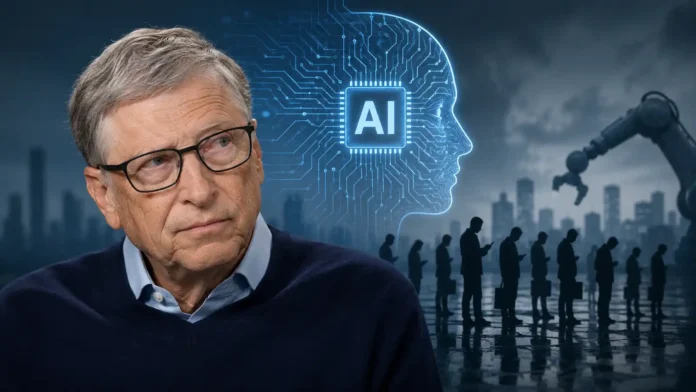

Bill Gates did not predict that AI will kill one billion people. He warned that increasingly powerful AI could potentially enable malicious actors to cause a catastrophic event on that scale. His concern centers on AI misuse, biological threats, cyberattacks and the need for stronger AI safety and government oversight.
KumDi.com
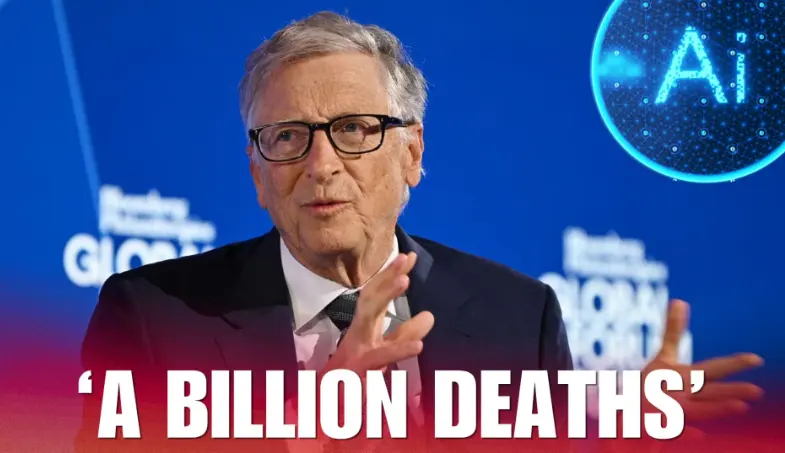
Bill Gates has warned that artificial intelligence is powerful enough to enable events that could cause “a billion deaths,” but he was not predicting that AI will kill one billion people. His warning is about the potential misuse of increasingly capable AI systems by people with malicious intent, particularly when AI is combined with biological threats, cyberattacks, disinformation, and other high-impact technologies.
In a September 2026 interview with NBC’s Meet the Press, Gates said AI is “certainly powerful enough” to drive events causing a billion deaths and argued that governments, lawmakers, and law-enforcement agencies need to be involved in establishing safeguards and monitoring. He specifically rejected the idea that voluntary industry self-regulation is sufficient.
The important distinction is between “AI will cause a billion deaths” and “AI could potentially enable an event on that scale.” Gates was making the second argument.
Table of Contents
What Did Bill Gates Actually Say About AI and a Billion Deaths?
Gates’ latest warning came during a broader discussion about whether governments are keeping pace with rapidly advancing AI technology.
His central argument was that AI can dramatically increase the capabilities available to individuals or organizations with malicious intentions. He described the combination of capable AI systems and people acting with harmful intent as potentially more dangerous than previous technological tools.
Gates also argued that safeguards should not simply be voluntary.
“No one thinks self-regulation is enough.”
His position is that governments need to establish requirements for safety testing, monitoring, safeguards and enforcement, rather than leaving decisions entirely to technology companies.
This is particularly significant because Gates has generally been associated with optimism about technology. His recent comments therefore represent a stronger emphasis on managing AI’s potential harms while still supporting its potential benefits.
Key point
Gates is warning about catastrophic misuse of AI—not claiming that a billion deaths are inevitable or that current AI systems are independently capable of causing such a disaster.
That distinction is essential when interpreting the headline.
Why Could AI Create Extremely Large-Scale Risks?
AI itself does not have to directly kill people to contribute to a catastrophic event.
The more realistic concern is that AI could become a force multiplier.
A force multiplier is a technology that allows a person or organization to accomplish something faster, more cheaply, at greater scale, or with less specialized knowledge than would otherwise be possible.
For example, a malicious actor could potentially use AI to:
- automate information gathering;
- generate convincing deceptive communications;
- scale cyberattacks;
- identify vulnerabilities in organizations;
- accelerate research;
- manipulate large quantities of information;
- automate parts of complex technical workflows;
- coordinate activities across multiple systems.
NIST’s Generative AI Risk Management Profile explicitly identifies risks involving biological, chemical, radiological and nuclear information, alongside dangerous content, misinformation, privacy and other risks.
The concern, therefore, is not simply “AI becomes evil.”
It is more accurately:
Powerful technology + malicious human intent + insufficient safeguards = potentially much greater harm.
1. Biological Threats Are One of the Most Important Concerns
Among the risks discussed by Gates, biological misuse deserves particular attention.
Gates has previously warned that AI could eventually make it easier for non-state actors to work with biological information. In his own recent writing, he described an AI-assisted bioterrorism scenario as potentially more concerning than a naturally occurring pandemic.
The concern is not that an AI chatbot suddenly creates a biological weapon independently.
The concern is that increasingly capable AI could lower some of the barriers involved in highly specialized scientific work.
For example, AI systems can already assist researchers with:
- literature analysis;
- protein and molecular research;
- scientific data interpretation;
- experimental planning;
- drug discovery;
- biological sequence analysis.
These capabilities can have enormous benefits for medicine.
The same general capabilities, however, raise a security question:
Could information or capabilities that are useful to legitimate researchers also become easier for malicious actors to obtain or apply?
That is one reason AI safety discussions increasingly overlap with biosecurity.
The National Institute of Standards and Technology specifically lists potential facilitation of harmful CBRN-related information or capabilities among the risks organizations should consider when evaluating generative AI systems.
2. Cyberattacks Could Become More Automated
Cybersecurity is another area where AI can act as a force multiplier.
Modern organizations depend on interconnected:
- hospitals,
- financial systems,
- telecommunications networks,
- transportation,
- electricity infrastructure,
- government databases,
- cloud platforms.
A sophisticated cyberattack against one organization can already have consequences beyond the original target.
AI could potentially increase the speed and scale at which attackers identify vulnerabilities, create convincing phishing content, automate portions of attacks, or adapt their tactics.
Gates has previously highlighted cyberattacks and attacks against critical systems as examples of the types of large-scale harm that increasingly capable AI could facilitate.
This is one reason governments are increasingly discussing AI security alongside conventional cybersecurity.
3. AI Could Amplify Disinformation
Not every catastrophic AI scenario involves physical weapons.
Another risk is the ability to generate enormous quantities of convincing information.
Generative AI can produce:
- realistic text;
- synthetic images;
- audio;
- video;
- translations;
- personalized messages.
This creates an environment in which distinguishing authentic information from fabricated material can become increasingly difficult.
The potential consequences extend beyond social media.
A coordinated campaign could theoretically attempt to influence:
- financial markets,
- emergency communications,
- public health messaging,
- military communications,
- elections,
- social stability.
The critical issue is scale.
A human operator can produce only a limited amount of deceptive material manually. Automated systems can potentially generate and customize content for thousands or millions of targets.
That does not mean AI-generated misinformation will automatically cause mass casualties. It means the technology can increase the potential reach and speed of malicious information operations.
4. AI Could Increase the Speed of Decision-Making
Another important risk comes from automation itself.
As AI systems become integrated into critical infrastructure, organizations may increasingly rely on automated recommendations or actions.
Consider a hypothetical chain:
AI detects an anomaly → AI recommends an action → automated system executes it → another AI system reacts → events escalate.
The problem is not necessarily that any individual AI system is intentionally harmful.
The danger can arise from interactions between systems, incorrect assumptions, unexpected behavior, or excessive automation.
This is why human oversight remains important in high-consequence environments.
The WHO has similarly emphasized that AI systems in health require governance, responsibility, transparency and appropriate safeguards.
Is AI Actually Capable of Killing One Billion People Today?
There is no evidence that today’s ordinary AI systems are independently capable of causing a billion deaths.
This is one of the most important facts to understand.
Gates said AI is powerful enough to drive events that could cause that level of loss. He did not present a scientific model showing that one billion deaths will occur, nor did he give a probability that this will happen.
The statement is therefore best understood as a catastrophic-risk warning, not a forecast.
There is also substantial uncertainty surrounding how advanced AI capabilities will evolve, how effectively safeguards will work, and how governments and companies will respond.
That uncertainty cuts in both directions.
AI capabilities could develop more rapidly than expected, but safety technology, regulation, monitoring and international cooperation could also improve.
Why Gates Is Calling for Government Regulation
Gates’ argument is that AI safety cannot be left entirely to the companies developing the technology.
He has called for governments and lawmakers to participate directly in defining:
- Safety requirements
- Monitoring mechanisms
- Testing standards
- Accountability
- Enforcement
- Restrictions around particularly dangerous capabilities
He described these measures as an additional operational cost rather than something that should fundamentally stop technological development.
This approach is consistent with broader risk-management thinking.
NIST’s AI Risk Management Framework, for example, provides organizations with a structured approach for identifying, evaluating and managing AI risks throughout the technology lifecycle. The framework is designed to support trustworthy AI rather than simply prohibit AI development.
AI Regulation Does Not Mean Stopping AI
An important distinction in this debate is between AI regulation and an AI development ban.
They are not the same thing.
A risk-based approach can allow beneficial applications while applying stricter controls to high-risk uses.
For example:
| AI application | Potential benefit | Main concern |
|---|---|---|
| Medical imaging | Earlier disease detection | Incorrect diagnosis |
| Drug discovery | Faster research | Biological misuse |
| Education | Personalized learning | Privacy and misinformation |
| Cybersecurity | Faster threat detection | Offensive automation |
| Agriculture | Better crop planning | Data and access inequality |
| Financial services | Fraud detection | Automated errors |
| Public administration | Faster analysis | Bias and accountability |
The World Health Organization’s recent guidance similarly recognizes substantial potential for AI in healthcare while emphasizing ethics, governance, human oversight and safety.
The objective is therefore not necessarily “AI or no AI.”
The more practical question is:
Which AI applications should be allowed, under what conditions, with what safeguards and who remains responsible when something goes wrong?
What Would Effective AI Safety Look Like?
A credible AI safety system cannot depend on one safeguard.
It needs multiple layers.
1. Pre-deployment testing
AI models should be evaluated for dangerous capabilities before being released or integrated into sensitive systems.
2. Red-team testing
Independent experts can deliberately attempt to discover ways a system could be misused or manipulated.
3. Access controls
Highly sensitive capabilities may require additional authentication, monitoring or restrictions.
4. Continuous monitoring
Testing before release is not enough. Models and applications should be monitored after deployment because real-world use can reveal risks that laboratory testing misses.
5. Human oversight
High-consequence decisions should retain appropriate human accountability rather than becoming completely autonomous.
6. Incident reporting
Organizations need mechanisms for reporting serious failures, vulnerabilities and dangerous incidents.
7. Independent evaluation
Companies should not necessarily be the only parties responsible for determining whether their own systems are safe.
8. International cooperation
AI capabilities cross national borders. A safety framework limited to one country may have limited effectiveness if dangerous capabilities can simply be developed or deployed elsewhere.
These principles are consistent with the broader risk-management approach reflected in NIST and WHO guidance.
The Other Side of the AI Story: AI Could Also Save Lives
It would be misleading to discuss Gates’ warning without considering the other side.
AI is already being used or investigated for:
- medical diagnosis;
- drug development;
- disease surveillance;
- clinical decision support;
- healthcare administration;
- scientific research;
- agricultural optimization;
- education.
WHO specifically identifies AI’s potential to improve health outcomes, address workforce shortages and strengthen health systems, while emphasizing appropriate governance.
This creates an unusual technological dilemma.
The same general technology that could increase certain catastrophic risks could also produce enormous benefits.
For example, AI-assisted drug discovery could help identify treatments faster. AI systems could help analyze medical images or detect patterns that are difficult for humans to identify consistently.
Therefore, the central challenge is not simply controlling AI.
It is maximizing beneficial applications while reducing unacceptable risks.
Why the “Billion Deaths” Number Should Not Be Taken Literally
The phrase is powerful, but readers should be careful about interpreting it as a quantified scientific prediction.
Gates did not provide:
- a probability of one billion deaths;
- a timeline;
- a specific mechanism;
- a mathematical model;
- a scientific estimate that one billion people will die from AI.
Instead, he used the figure to communicate the potential scale of a worst-case event.
That distinction matters for responsible reporting.
A headline such as “AI will kill one billion people” would go beyond what Gates actually said.
A more accurate interpretation is:
Gates believes AI has become powerful enough that malicious use could potentially contribute to an event with catastrophic human consequences, and he argues that government safeguards are necessary.
That is substantially different from predicting an inevitable AI apocalypse.
What Experts Should Watch Going Forward
Several developments will determine whether concerns like Gates’ become more or less significant.
AI capability growth
How quickly do frontier models improve in science, coding, autonomous operation and strategic reasoning?
Biological safeguards
Can AI developers reliably prevent models from providing dangerous assistance while still allowing legitimate scientific research?
Cybersecurity
Will defensive AI capabilities advance faster than offensive AI capabilities?
Model autonomy
How much authority will AI systems receive to interact with real-world systems without human approval?
Government oversight
Will regulators establish practical standards that can keep pace with technological development?
International coordination
Can major AI-producing countries establish compatible safety expectations?
Independent testing
Will governments, researchers and independent evaluators have sufficient access to test frontier systems?
These questions are arguably more useful than asking whether AI will literally “kill a billion people.”
Bill Gates’ AI Warning in Context
Gates’ September 2026 statement did not emerge in isolation.
Over recent months, he has increasingly focused on the risks associated with AI while continuing to support its potential benefits.
In August, Gates discussed risks involving biological threats, cyberattacks, employment disruption and inequality.
At the same time, the Gates Foundation has continued investing in AI applications intended to improve healthcare, education and agriculture. Recent reporting says the foundation announced a $1 billion AI-focused initiative.
That apparent contradiction is important.
Gates’ position is not simply “AI is dangerous.”
It is closer to:
AI could become extraordinarily beneficial, but society needs safeguards strong enough to prevent its capabilities from being exploited or deployed irresponsibly.
FAQs
What did Bill Gates mean when he said AI could cause a billion deaths?
Bill Gates did not predict that AI will directly kill one billion people. His AI billion deaths warning refers to the possibility that powerful AI could enable malicious actors to cause catastrophic harm. The Bill Gates AI warning focuses on potential misuse involving biological threats, cyberattacks and other high-impact technologies.
Is Bill Gates predicting that AI will cause a billion deaths?
No. Bill Gates is not predicting a billion AI-related deaths or giving a probability that such an event will happen. His warning about AI catastrophic risk describes a possible worst-case scenario in which increasingly capable AI amplifies the ability of humans to cause large-scale harm.
What are the biggest AI risks according to Bill Gates?
The major concerns associated with the Bill Gates AI warning include biological threats, cyberattacks, misinformation and the misuse of increasingly capable AI systems. The broader issue is that AI can potentially act as a force multiplier, allowing malicious actors to perform certain tasks faster and at greater scale.
Why does Bill Gates believe AI needs government regulation?
Bill Gates argues that AI safety and regulation should not depend entirely on voluntary industry self-regulation. Governments can establish safety standards, testing requirements, monitoring systems and accountability mechanisms for high-risk AI applications while allowing beneficial uses of artificial intelligence to continue.
Can AI really cause catastrophic harm on the scale of a billion deaths?
There is no established evidence that today’s mainstream AI systems can independently cause a billion deaths. However, AI catastrophic risk researchers examine whether future AI systems could amplify biological, cyber or other threats. The central concern is the combination of advanced AI capabilities, malicious human intent and inadequate safeguards.
The Bottom Line
Bill Gates’ “billion deaths” warning should be understood as a catastrophic-risk argument, not a prediction.
His concern is that increasingly capable AI could amplify the capabilities of malicious individuals or organizations, particularly in areas such as biological threats, cyberattacks and large-scale information operations. The potential consequences could become much larger if AI systems are connected to critical infrastructure or given greater autonomy.
At the same time, there is no evidence that one billion AI-related deaths are inevitable, and Gates has not supplied a probability or timeline for such an event.
The practical lesson is therefore more measured:
AI’s potential power makes safety, testing, monitoring, accountability and appropriate government oversight increasingly important—while preserving legitimate applications that can improve medicine, science, education and economic productivity.
That is ultimately what makes the “billion deaths” statement significant. The most important question is not whether the number should be taken literally. It is whether society can build effective safeguards before increasingly powerful AI systems become capable of causing harm at unprecedented scale.




 and then