








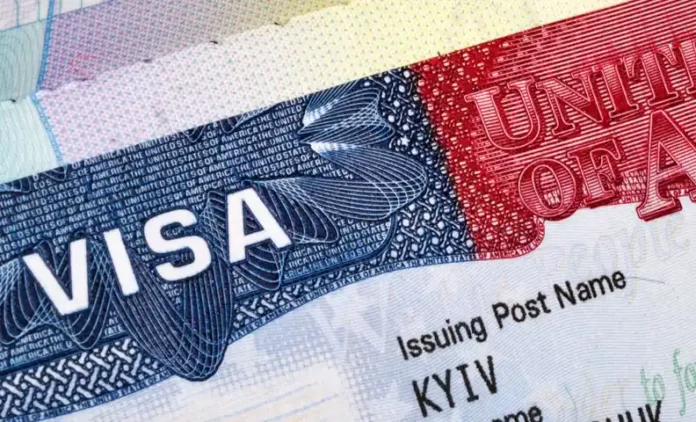

Trump’s new H-1B Visa $100K Fee creates major challenges for the American workforce by raising hiring costs, limiting foreign talent, and reshaping U.S. competitiveness. While aimed at protecting domestic jobs, it risks innovation loss, talent shortages, and weaker global leadership for the United States.
KumDi.com
The American workforce is facing a powerful new challenge: Trump’s H-1B Visa $100K Fee. This bold immigration move reshapes how U.S. companies hire global talent, impacts immigrant families, and could alter America’s future competitiveness. While intended to protect domestic workers, it carries serious risks for innovation and economic growth.
The American workforce is entering a new era of transformation, uncertainty, and heated debate. The recent announcement of a $100,000 fee for new H-1B visa applications has sent shockwaves through the business community, immigrant families, and policymakers alike. For decades, the H-1B visa has served as one of the primary pathways for high-skilled foreign workers—particularly in technology, engineering, and research—to contribute to the United States economy. Now, with such a dramatic price tag attached, the landscape is poised for significant change.
This policy is not just about visas; it is about the future of American innovation, global competitiveness, and the delicate balance between protecting domestic workers and welcoming international talent. The H-1B Visa $100K Fee represents a sharp pivot in immigration and labor strategy, one that will ripple across industries, communities, and international relationships.
In this article, we explore the potential consequences of the fee, the winners and losers, and how America’s future could be reshaped by this bold move.
Table of Contents
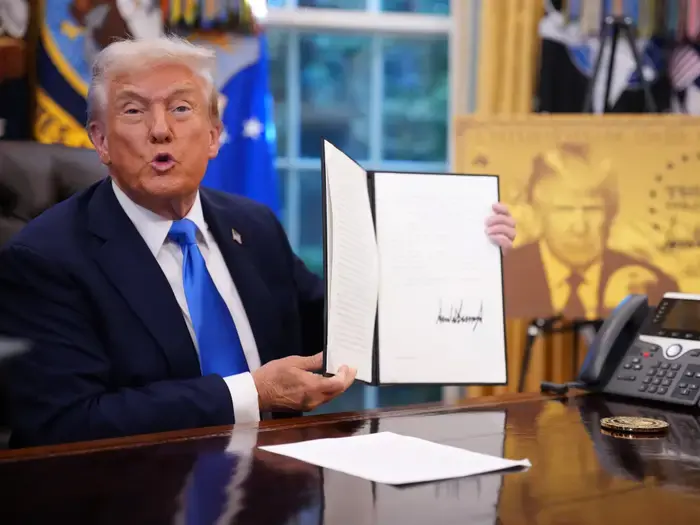
What the H-1B Visa Represents
The H-1B program was designed to allow U.S. companies to employ foreign professionals in specialized fields such as information technology, science, medicine, and finance. These workers often bring highly sought-after expertise that supports innovation and fills skill gaps in the domestic labor market.
Over time, the program has become a cornerstone of the tech economy, particularly in Silicon Valley and other innovation hubs. Companies ranging from Fortune 500 giants to emerging startups rely on H-1B workers to scale, compete, and innovate at a global level.
By attaching a $100,000 fee to each new application, the program is no longer merely a tool for securing global talent—it becomes a financial gatekeeper that will redefine who can access the American dream and how businesses manage their hiring strategies.
The Immediate Impact on Companies
For large multinational corporations, $100,000 may be a cost they can absorb, though reluctantly. However, for small and mid-sized businesses, the new fee could be devastating. Startups, in particular, thrive on the creativity and specialized skills of international workers, yet they often operate with limited capital. For these businesses, hiring one foreign professional could mean sacrificing other critical investments such as research, marketing, or product development.
The result may be a chilling effect on entrepreneurship. Innovation requires talent, and if access to that talent becomes prohibitively expensive, America may see fewer groundbreaking startups and more companies choosing to expand outside U.S. borders.
Shifts in the American Workforce
One of the policy’s stated intentions is to prioritize American workers by reducing reliance on foreign labor. In theory, higher costs for H-1B visas could push companies to hire more domestically, raising wages and creating opportunities for U.S. citizens.
However, the reality may be more complex. Many of the roles filled by H-1B workers are in highly specialized fields such as artificial intelligence, cybersecurity, and advanced engineering. There is already a shortage of domestic candidates in these areas, and training new workers takes time. Without an immediate pipeline of qualified American workers, companies may turn to automation, outsourcing, or relocating parts of their operations overseas.
In this scenario, the American workforce may not gain as many jobs as hoped. Instead, the workforce could face slower job creation, higher project costs, and reduced global competitiveness.
Implications for Immigrant Families
Beyond the economic considerations, the $100,000 fee carries profound personal consequences for immigrant families. For many, the H-1B is not just a work permit; it is a pathway to long-term residence, stability, and the possibility of citizenship.
The new policy effectively places a high price on opportunity, making it much harder for families to plan their futures. Some will be forced to abandon their dreams of working in the U.S., while others may face difficult decisions about whether the financial strain is worth the potential rewards.
This could also lead to a brain drain, where talented individuals who would have contributed to the U.S. economy choose to take their skills to other countries with more accessible immigration systems. Canada, the United Kingdom, and parts of Europe could become the new beneficiaries of talent that once flowed to America.
The Innovation Question
America’s leadership in global innovation has always depended on its ability to attract the best and brightest from around the world. Many of the most successful companies in the United States—Google, Tesla, Intel, and others—have been founded or co-founded by immigrants. By raising the cost of entry to $100,000, the government risks closing the doors to future innovators who could have created the next big breakthrough.
Innovation thrives in diverse, collaborative environments. When the pool of talent shrinks, so too does the potential for groundbreaking ideas. If America cannot access the best talent, other nations will step in to fill the void. Over time, this could erode America’s position as the global leader in technology and research.
Potential Economic Scenarios
- Short-Term Boost for Domestic Workers
Some U.S. workers may benefit from reduced competition and potentially higher wages in certain sectors. This effect, however, could be limited to industries where American workers are already well-represented. - Talent Shortages and Higher Costs
Companies in need of specialized expertise may struggle to find qualified candidates, leading to delays, higher costs, and reduced output. - Acceleration of Outsourcing and Offshoring
Businesses may choose to establish operations abroad where talent is accessible without exorbitant fees. This could ultimately reduce the number of jobs created within the U.S. - Decline in U.S. Competitiveness
Over the long term, the inability to attract top global talent could hinder America’s role as a leader in innovation, trade, and global influence.
Diplomatic and Global Consequences
The H-1B visa program has long been a point of connection between the U.S. and countries like India, which supplies the majority of applicants. The imposition of a $100,000 fee is likely to strain diplomatic relationships, particularly if it is perceived as unfairly targeting certain countries.
Such tensions could affect trade agreements, investment flows, and broader geopolitical dynamics. As other countries open their doors to high-skilled immigrants, the U.S. risks being seen as less welcoming, undermining its soft power and influence on the world stage.
Long-Term Adaptations
The success or failure of this policy will depend on how quickly America adapts. Several potential outcomes are possible:
- Educational Investment: If the U.S. invests heavily in STEM education and workforce training, it may eventually reduce reliance on foreign talent. However, this is a long-term solution that requires sustained funding and political will.
- Immigration Alternatives: Families and professionals may look for other visa categories, though these often come with their own limitations.
- Corporate Strategy Shifts: Companies may increasingly embrace remote work, hiring international employees without bringing them physically to the U.S. This could undermine the original intent of the policy while still allowing firms to access talent.
Conclusion
Trump’s $100,000 fee on H-1B visas is more than an immigration policy—it is a turning point for America’s workforce, innovation ecosystem, and global identity. While it may temporarily benefit some domestic workers by reducing competition, the broader consequences could be far-reaching: stifled innovation, loss of global competitiveness, weakened diplomatic relationships, and the relocation of talent and business abroad.
America’s strength has always been its ability to attract dreamers, innovators, and risk-takers from across the globe. By placing such a high barrier to entry, the nation risks closing its doors to the very people who have historically fueled its success. The future of the American workforce now hangs in the balance, and the choices made in the coming years will determine whether the U.S. continues to lead in innovation—or watches others take its place.
FAQs
What is Trump’s $100K H-1B visa fee and how does it affect the American workforce?
The $100K H-1B visa fee raises costs for hiring skilled foreign workers. It could shift the American workforce by limiting access to global talent, raising wages for some domestic jobs, but also causing innovation slowdowns and competitiveness risks.
Why is the H-1B visa $100K fee considered a threat to U.S. competitiveness?
By making H-1B visas costlier, companies may reduce hiring international talent. This threatens U.S. global competitiveness in technology and innovation, where foreign professionals play a vital role.
How will the American workforce adapt to the H-1B visa $100K fee?
The American workforce may see more investment in STEM education, automation, and remote hiring abroad. However, the transition could leave gaps in specialized roles and slow growth in emerging industries.
Does the $100K H-1B visa fee benefit U.S. workers?
Some U.S. workers may benefit through reduced job competition and higher wages. Yet, the long-term effects may include fewer jobs overall, higher costs for businesses, and slower innovation within the American workforce.
What industries are most affected by the H-1B visa $100K fee?
Technology, engineering, medicine, and research are most impacted. These industries rely heavily on H-1B workers, and the fee could cause skill shortages, outsourcing, and reduced U.S. leadership in global innovation.




 and then