








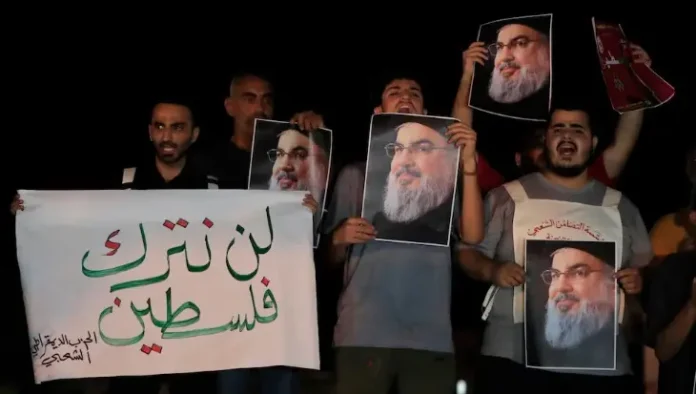

The Middle East has long been a hotbed of geopolitical tensions, and the recent escalation between Israel and the Iran-backed Hezbollah group in Lebanon has only served to exacerbate the situation. In a series of devastating airstrikes, Israel has targeted Hezbollah’s command centers and leadership, including the reported killing of the group’s longtime leader, Hassan Nasrallah. The consequences of these actions have been far-reaching, with civilian casualties, mass displacement, and the looming threat of a broader regional conflict. As the world watches with bated breath, the future of the region hangs in the balance, and the decisions made in the coming days will undoubtedly shape the course of events for years to come.

The Backdrop: Israel’s Invasion and the Rise of Hezbollah
To understand the current conflict, one must delve into the complex history of the region. In 1982, Israel invaded Lebanon, responding to attacks by the Palestine Liberation Organization. This invasion led to the deaths of over 17,000 people, and the investigation that followed held Israel indirectly responsible for a massacre carried out by Christian Lebanese fighters in a Beirut refugee camp. As the Palestinian fighters departed Lebanon, a new force emerged: the Shia Islamist militants of Hezbollah, trained by Iran. In 1983, Hezbollah carried out a suicide bombing attack on a U.S. Marine barracks in Beirut, killing nearly 300 U.S. and French personnel and civilians. This marked the beginning of Hezbollah’s rise as a formidable player in the region’s geopolitical landscape.
Hezbollah’s Expansion and Support for Gaza
Over the years, Hezbollah has become a key component of a larger Iran-led alliance of militant groups spanning Yemen, Syria, Gaza, and Iraq. This alliance has increasingly clashed with Israel and its allies, vowing to continue the fight until the war with Hamas in Gaza ends. Hezbollah’s support for the Palestinian cause has been a significant source of tension, with the group frequently launching rockets and drones into northern Israel in “support” of its allies in Gaza.
The Killing of Hezbollah’s Military Commander
The recent escalation in tensions can be traced back to July 2023, when Israel claimed to have killed Hezbollah’s most senior military commander, Fu’ad Shukr, with a strike on Beirut. In retaliation, Hezbollah launched hundreds of drones and missiles into Israel, setting the stage for the current wave of violence.
The Targeted Killing of Hezbollah Leader Hassan Nasrallah
The most recent and dramatic development in the conflict came on September 28, 2023, when Israel launched a series of airstrikes in Beirut, targeting what it claimed was Hezbollah’s central command headquarters. In a stunning move, Israel announced that it had killed Hezbollah’s longtime leader, Hassan Nasrallah, in the attack. Nasrallah, who had only given speeches via video due to his fear of assassination, was a central figure in Hezbollah’s threats to destroy Israel and the U.S. presence in Lebanon. His death has left a significant void in the group’s leadership, and the implications of this loss are still unfolding.
The Aftermath: Massive Explosions and Civilian Casualties
The Israeli airstrikes that targeted Nasrallah and other Hezbollah leaders were not surgical operations. The explosions that rocked Beirut on September 28th and 29th were massive, leveling multiple high-rise apartment buildings in the city’s predominantly Shiite southern suburbs. The death toll from these strikes has been staggering, with at least 11 people killed and 108 wounded, according to Lebanon’s health ministry. The true extent of the casualties, however, may be much higher, as rescue teams continue to search for survivors buried under the rubble.
The Displacement of Civilians
The increase in cross-border fighting has forced tens of thousands of people from their homes in both Israel and Lebanon. Israel has declared the return of some 70,000 evacuees to their homes in the country’s north as a war aim, while Lebanon has recorded more than 100,000 people displaced, with authorities stating that the true number is likely much higher.
The Regional Implications
The escalation in the conflict between Israel and Hezbollah has sent shockwaves throughout the region. Iran, Hezbollah’s principal backer, has accused Israel of using U.S.-made “bunker-busting” bombs in the strikes and has called on all Muslims to stand by Hezbollah against the “occupier, evil and suppressor” regime of Israel. Meanwhile, Iraq has declared a three-day mourning period in the country, reflecting the deep ties between Hezbollah and Iran-backed factions in the region.
The International Response
The international community has reacted with growing concern over the situation in Lebanon. The United States has expressed its full support for Israel’s right to defend itself, while also emphasizing the need for diplomatic solutions to de-escalate the conflicts in Gaza and Lebanon. France, along with the U.S., has proposed a 21-day ceasefire to allow for a diplomatic resolution, but this proposal has been met with skepticism from Israel, which has vowed to continue its campaign against Hezbollah.
The Possibility of a Broader Regional War
As the conflict continues to escalate, the specter of a broader regional war looms large. Hezbollah’s extensive missile capabilities and its ties to Iran have raised fears that the current hostilities could draw in other regional powers, potentially spiraling out of control. An Israeli security official has suggested that a war against Hezbollah may not last as long as the current conflict in Gaza, as the objectives in Lebanon are more narrowly focused on pushing the militant group away from the border with Israel.
The Uncertain Future
The events of the past week have left the Middle East in a precarious state, with the future of the region hanging in the balance. The death of Hezbollah’s leader, Hassan Nasrallah, has dealt a significant blow to the group, but it remains to be seen how the organization will respond and who will emerge as its new leadership. As the international community scrambles to find a diplomatic solution, the risk of a broader conflict continues to loom large, with the potential for devastating consequences for the people of the region.
The Ongoing Conflict and Its Implications for the Future
The conflict between Israel and Hezbollah is far from a new development, but the recent escalation has highlighted the fragility of the region and the high stakes involved. The targeted killing of Hezbollah’s leader, Hassan Nasrallah, has been a significant blow to the group, but it has also raised the specter of retaliation and the potential for a wider regional war. As the international community works to find a diplomatic solution, the people of Lebanon and Israel remain caught in the crossfire, with thousands displaced from their homes and the threat of further violence hanging over their heads.

The Importance of Conflict Resolution and Diplomacy
In the face of such a complex and volatile situation, the importance of conflict resolution and diplomacy cannot be overstated. While Israel has the right to defend itself against terrorism, the way in which it does so can have far-reaching consequences. The decisions made by all parties in the coming days will shape the course of events for years to come, and it is crucial that they choose a path that prioritizes the safety and well-being of the region’s people.
Conclusion: A Precarious Moment for the Middle East
The events unfolding in Lebanon and the broader Middle East represent a precarious moment for the region and the world. The targeted killing of Hezbollah’s leader, Hassan Nasrallah, has sent shockwaves through the region, and the potential for a wider conflict remains high. As the international community works to find a diplomatic solution, the people of the region remain caught in the crossfire, with thousands displaced from their homes and the threat of further violence ever-present. The decisions made in the coming days will have profound consequences for the future of the Middle East, and it is crucial that all parties involved prioritize the path of peace and stability over the path of war and destruction.




 and then