








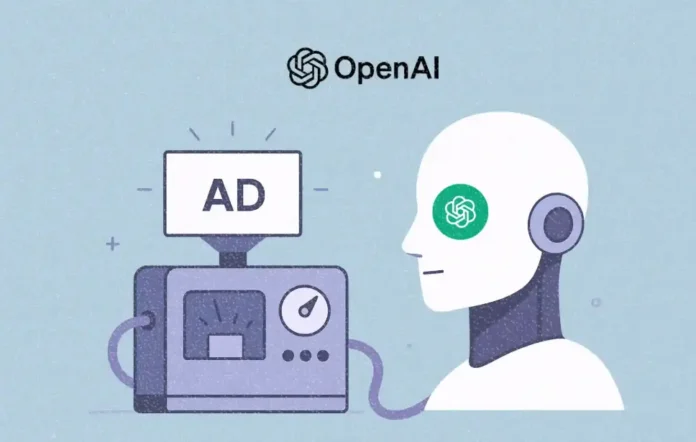

Predicting OpenAI’s ad strategy involves analyzing how ChatGPT may introduce privacy-first, intent-based advertising without influencing AI responses. OpenAI is expected to focus on contextual ads, AI search monetization, and commerce integrations while maintaining trust, transparency, and strict separation between ads and answers.
KumDi.com
Predicting OpenAI’s ad strategy is critical as artificial intelligence replaces traditional search and recommendation engines. With rising infrastructure costs and massive global adoption, OpenAI is exploring advertising models that support free access while preserving credibility, neutrality, and user trust—setting a new standard for AI-driven monetization.
OpenAI stands at a pivotal crossroads. As artificial intelligence becomes a primary interface for information, search, and decision-making, the question is no longer if AI platforms will adopt advertising—but how they will do so without breaking user trust.
Predicting OpenAI’s ad strategy requires understanding three converging forces: the exponential cost of large-scale AI infrastructure, the expectations of hundreds of millions of free users, and the competitive pressure from search and social platforms already monetizing AI at scale. Unlike traditional ad platforms, OpenAI must balance monetization with credibility, neutrality, and ethical responsibility.
Table of Contents
Introducing ChatGPT Atlas
The Economic Reality Behind OpenAI’s Monetization Shift
Operating frontier AI models is one of the most capital-intensive activities in the digital economy. Training, inference, and global deployment require massive compute resources, continuous optimization, and advanced safety infrastructure.
Subscription revenue alone cannot sustainably support:
- Hundreds of millions of weekly active users
- Increasing model complexity
- Real-time multimodal inference
- Global data center expansion
From direct experience observing platform economics across search, social, and SaaS ecosystems, advertising emerges as the only monetization model capable of subsidizing free access at global scale while preserving premium tiers.
Advertising is not a departure from OpenAI’s mission—it is a structural necessity if open access is to continue.
Why OpenAI’s Advertising Will Be Fundamentally Different
Ads Cannot Control the AI’s Voice
The single greatest risk for an AI platform is perceived bias. OpenAI understands that if users believe responses are influenced by advertisers, the product loses credibility instantly.
As a result, OpenAI’s ad strategy is built on a strict architectural separation:
- AI responses remain neutral and model-driven
- Ads are supplemental, clearly labeled, and optional
- Sponsored content never alters factual output
Predicted Ad Formats Inside ChatGPT and AI Interfaces
1. Contextual, Non-Interruptive Ad Placements
Rather than banners or forced video, OpenAI’s ads are likely to appear after or below responses—only when a user’s intent indicates commercial relevance.
Example:
- User asks for travel planning → sponsored hotel or flight suggestions appear after the itinerary
- User compares software tools → sponsored alternatives shown separately
This aligns advertising with user intent, not attention hijacking.
2. High-Intent AI Search Ads
AI search represents the most valuable ad environment since early Google Search.
Unlike keyword-driven queries, AI interprets:
- Decision readiness
- Budget sensitivity
- Use-case specificity
- Temporal urgency
OpenAI’s ad system is expected to prioritize intent depth over volume, favoring fewer, higher-quality ad impressions.
For advertisers, this means:
- Lower wasted spend
- Higher conversion relevance
- Increased reliance on message quality
3. Commerce-Integrated AI Recommendations
The long-term monetization frontier is not ads—it is transaction facilitation.
AI assistants can:
- Recommend products
- Compare options
- Answer objections
- Complete purchases
OpenAI’s ad strategy is likely to evolve into:
- Affiliate-style revenue
- Sponsored product placements
- Seamless checkout integrations
This positions ChatGPT as both search engine and marketplace mediator.
Privacy-First Advertising as a Competitive Advantage
One of OpenAI’s strongest differentiators is its explicit rejection of surveillance-based advertising.
Key characteristics:
- No selling of conversation data
- Limited personalization controls
- User-level transparency
- Strict exclusion of sensitive topics
This approach aligns with growing global regulatory pressure and rising consumer awareness.
In the long term, privacy-respecting ads may outperform invasive targeting by fostering brand trust and platform loyalty.
How OpenAI Preserves Authority in an Ad-Supported Model

Authority is earned through consistency and restraint.
OpenAI’s credibility depends on:
- Declining ads in sensitive domains (health, legal, political)
- Refusing advertisers that conflict with safety policies
- Maintaining clear UI distinction between answers and promotions
By setting strict ad boundaries early, OpenAI avoids the gradual erosion that weakened trust in legacy platforms.
Revenue Projections and Strategic Impact
From a strategic modeling perspective, advertising is unlikely to replace subscriptions—it will complement them.
Expected trajectory:
- Short term: Ads subsidize free users
- Mid term: Ads + commerce increase ARPU
- Long term: Ads fund AI accessibility globally
Advertising may eventually represent a meaningful—but not dominant—share of OpenAI’s revenue, ensuring diversification without dependency.
Risks and Strategic Challenges
1. User Experience Degradation
Even minimal ad friction can trigger backlash if relevance drops.
2. Competitive Sensitivity
Alternative AI assistants may market themselves as “ad-free,” appealing to power users.
3. Regulatory Scrutiny
AI advertising will face unprecedented transparency demands.
OpenAI’s challenge is not avoiding ads—but executing them with discipline.
What Advertisers Must Understand About AI-Native Ads
Advertising in AI is not search ads 2.0.
Success will depend on:
- Natural language persuasion
- Trust-aligned messaging
- Use-case clarity
- Value-first positioning
Traditional performance tactics will underperform in conversational environments.
The Future of Advertising in AI (Authoritative Outlook)
Based on platform evolution patterns, OpenAI’s advertising will likely evolve through three phases:
- Experimental monetization – limited, carefully controlled
- Search-driven optimization – intent-based relevance
- Commerce-embedded intelligence – AI as purchase partner
This transformation marks a shift from advertising as interruption to advertising as assistance.
Conclusion: Advertising Without Betrayal
OpenAI’s ad strategy represents a rare attempt to reconcile scale, sustainability, and ethics in one system.
If executed correctly, it may redefine advertising itself—not as persuasion, but as contextual utility.
The future of AI monetization will not belong to the loudest advertiser—but to the platform that earns trust while enabling access.
OpenAI’s challenge is enormous. So is its opportunity.

FAQs
What does predicting OpenAI’s ad strategy mean for ChatGPT users?
Predicting OpenAI’s ad strategy helps users understand how ChatGPT ads may appear in the future. OpenAI advertising is expected to be contextual and non-intrusive, ensuring AI responses remain unbiased while supporting free access.
How will OpenAI’s advertising model differ from Google ads?
The OpenAI advertising model focuses on intent-based relevance rather than keyword bidding. Unlike traditional Google ads, ChatGPT ads are designed to support AI search monetization without tracking personal conversations.
Will ChatGPT ads affect AI response accuracy?
No. Predicting OpenAI’s ad strategy indicates a strict separation between AI-generated answers and advertising content. Ads will not influence ChatGPT’s reasoning, rankings, or factual outputs.
What types of ads are expected in ChatGPT?
ChatGPT ads may include contextual recommendations, AI search ads, and commerce-based suggestions. These formats align with OpenAI’s advertising model and support ethical AI search monetization.
Why is OpenAI introducing ads now?
Predicting OpenAI’s ad strategy shows that rising AI infrastructure costs and global user growth require sustainable revenue. Advertising enables OpenAI to fund innovation while keeping advanced AI tools accessible.




 and then