










“Mother Mary” positions Anne Hathaway at the center of a stylized, psychologically layered performance that explores identity, performance, and celebrity mythology. According to critic Manohla Dargis, Hathaway delivers a visually controlled yet emotionally complex portrayal, where the film’s strength lies less in narrative clarity and more in its symbolic exploration of fame, artifice, and self-construction.
KumDI.com
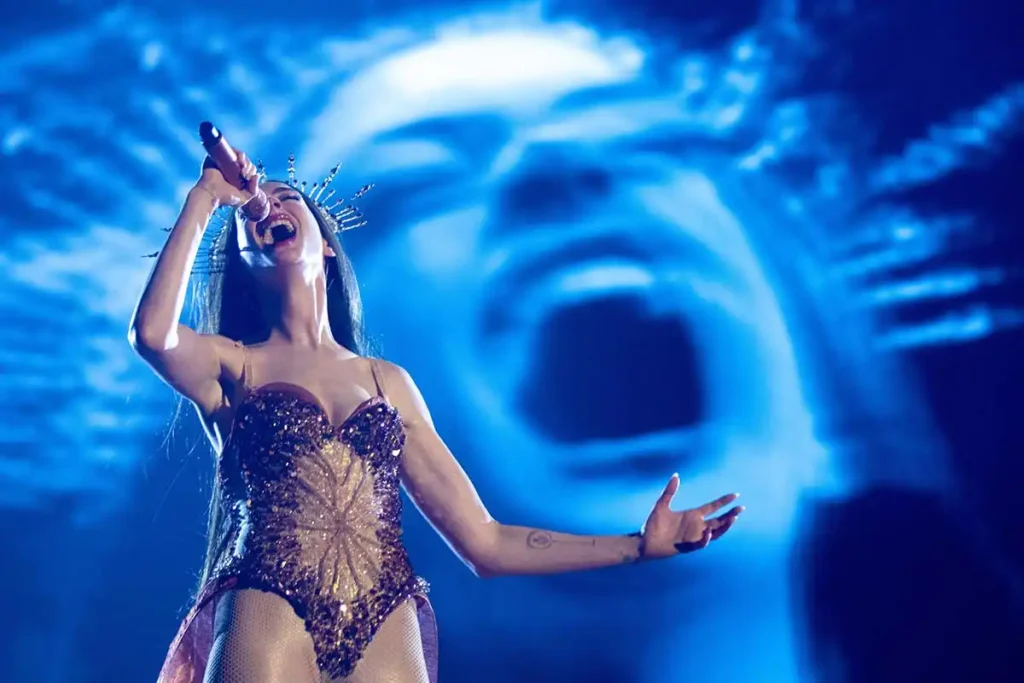
Mother Mary is not a conventional narrative-driven film. Instead, it operates as a hybrid of character study, visual spectacle, and thematic essay on celebrity identity. Directed with an emphasis on aesthetic precision, the film constructs a world where performance extends beyond the stage and into the psyche.
At its core, the film examines how public figures—especially female icons—navigate the tension between authenticity and persona. Hathaway’s character is less a traditional protagonist and more an evolving symbol of modern fame.
Table of Contents

Critical Context: Who Is Behind the Review?
The review referenced—published by The New York Times and written by Manohla Dargis—is significant because Dargis is widely regarded as one of the most authoritative voices in contemporary film criticism. Her analyses often prioritize cinematic language, performance nuance, and cultural context over surface-level storytelling.
This positions the review not as casual opinion but as a critical framework for understanding the film’s artistic intent.
Performance Analysis: Anne Hathaway’s Controlled Transformation
Precision Over Emotional Excess
Hathaway’s performance in Mother Mary is deliberately restrained. Rather than relying on overt emotional expression, she uses:
- Micro-expressions
- Physical stillness
- Controlled vocal delivery
This aligns with a broader trend in contemporary performance where internal conflict is conveyed through minimalism rather than dramatization.
Embodied Persona vs. Inner Self
A key strength of Hathaway’s portrayal is the duality between:
| Layer | Description |
|---|---|
| Public Persona | Polished, iconic, almost untouchable |
| Private Identity | Fragmented, uncertain, searching |
This dual-layer performance reflects real-world dynamics seen in celebrity culture, where identity becomes a curated construct.
Thematic Breakdown: Core Ideas Explored
1. The Construction of Celebrity
The film suggests that celebrity is not an organic state but a manufactured identity shaped by:
- Media narratives
- Audience expectations
- Industry demands
This aligns with sociological frameworks around “performed identity,” where individuals adapt to external perception.
2. Religious and Iconographic Symbolism
The title Mother Mary is not accidental. It evokes:
- Sacred imagery
- Maternal archetypes
- Cultural reverence
The film visually and thematically parallels celebrity worship with religious devotion, suggesting that modern fame functions as a secular form of mythology.
3. Performance as Survival Mechanism
Rather than treating performance as purely artistic, the film frames it as necessary for survival:
- Emotional masking
- Identity preservation
- Power negotiation
This interpretation reflects real-world case studies in performance psychology, where individuals adopt roles to manage external pressures.
Visual Language: Style as Narrative
Highly Controlled Aesthetic
The film uses:
- Symmetrical compositions
- Stylized lighting
- Minimalist set design
These elements create a sense of artificiality, reinforcing the theme that everything—identity, emotion, environment—is constructed.
Why Visuals Matter More Than Plot
Unlike traditional films where plot drives engagement, Mother Mary relies on:
- Visual symbolism
- Performance nuance
- Atmosphere
This approach places it closer to art-house cinema than mainstream storytelling.
Narrative Structure: Fragmented and Interpretive
Non-Linear Storytelling
The film avoids a clear beginning-middle-end structure. Instead, it presents:
- Episodic sequences
- Abstract transitions
- Emotional rather than chronological progression
This structure requires active interpretation from the viewer, making it less accessible but more intellectually engaging.
Strengths Identified in the Review
Based on Dargis’s critical framework, the film excels in:
1. Performance Depth
Hathaway’s ability to balance control and vulnerability elevates the film beyond its abstract narrative.
2. Conceptual Ambition
The film attempts to interrogate large themes—identity, fame, mythology—without simplifying them.
3. Visual Cohesion
Every visual element supports the central themes, demonstrating strong directorial vision.

Limitations and Criticisms
1. Emotional Distance
The film’s stylization can create a barrier between the audience and the character.
2. Narrative Ambiguity
While intentional, the lack of clear narrative direction may frustrate viewers seeking resolution.
3. Intellectual Over Accessibility
The film prioritizes thematic exploration over audience engagement, limiting its mainstream appeal.
Real-World Relevance: Why This Film Matters
Reflection of Modern Celebrity Culture
In the age of social media and curated identities, Mother Mary mirrors real phenomena:
- Influencer personas
- Public image management
- The commodification of identity
Psychological Insight
The film aligns with psychological concepts such as:
- Identity fragmentation
- Role performance
- Cognitive dissonance between public and private selves
These are widely documented in both clinical psychology and media studies.
Comparison to Similar Works
While unique, Mother Mary shares thematic DNA with films that explore identity and performance:
- Character-driven psychological studies
- Art-house explorations of fame
- Symbolic, visually-driven narratives
However, its emphasis on iconography and minimalism distinguishes it within the genre.
Final Evaluation
Mother Mary is less a film to “watch” and more a film to “interpret.” Through Anne Hathaway’s controlled yet compelling performance, it presents a meditation on identity that resonates with contemporary cultural realities.
As highlighted by Manohla Dargis, its power lies not in narrative satisfaction but in its ability to provoke thought about how identity is shaped, performed, and consumed.Final Evaluation
Mother Mary is less a film to “watch” and more a film to “interpret.” Through Anne Hathaway’s controlled yet compelling performance, it presents a meditation on identity that resonates with contemporary cultural realities.
As highlighted by Manohla Dargis, its power lies not in narrative satisfaction but in its ability to provoke thought about how identity is shaped, performed, and consumed.
FAQs
What is Mother Mary about?
Mother Mary is an art-house character study that explores celebrity identity, performance, and self-construction. The film focuses on how public personas are created and maintained, often at the cost of personal authenticity.
How is Anne Hathaway’s performance in Mother Mary?
Anne Hathaway delivers a restrained and technically precise performance. Rather than dramatic emotional displays, she uses subtle expressions and controlled body language to portray the tension between public image and private identity.
Is Mother Mary a mainstream or art-house film?
Mother Mary leans strongly toward art-house cinema. It prioritizes visual storytelling, symbolism, and thematic depth over a traditional, linear narrative, which may not appeal to all audiences.
Why is the film called Mother Mary?
The title references religious iconography, drawing parallels between celebrity culture and modern forms of worship. It suggests that public figures can become symbolic figures similar to sacred icons.
Is Mother Mary easy to understand?
Not entirely. The film uses a fragmented structure and abstract storytelling, requiring active interpretation. Viewers familiar with symbolic or experimental cinema will find it more accessible than general audiences.




 and then