










Steven Spielberg’s Disclosure Day is a visually stunning 2026 UFO thriller that combines extraterrestrial mystery, government conspiracy, and emotional storytelling. Featuring strong performances and classic Spielberg themes of wonder, truth, and human connection, the film delivers one of the year’s most ambitious science-fiction experiences.
KumDi.com
Disclosure Day is Steven Spielberg’s most ambitious science-fiction film in years, blending UFO mythology, government-conspiracy suspense, and deeply human themes of empathy, truth, and belief. While critics are divided on its narrative complexity and third-act execution, the film has largely been praised for its visual craftsmanship, emotional ambition, Emily Blunt’s performance, and Spielberg’s return to large-scale sci-fi storytelling.
For audiences wondering whether Disclosure Day is worth seeing, the answer is generally yes—particularly for fans of Spielberg’s classic alien-centered films such as Close Encounters of the Third Kind and E.T. the Extra-Terrestrial. However, viewers expecting a straightforward extraterrestrial adventure may find its dense conspiracy elements and philosophical ambitions more challenging than anticipated.
Table of Contents

What Is Disclosure Day About?
Disclosure Day centers on Daniel Kellner, a cybersecurity expert and whistleblower who discovers evidence that powerful organizations have concealed proof of extraterrestrial life for decades. Pursued by the shadowy corporation Wardex, Daniel becomes entangled with meteorologist Margaret Fairchild, whose mysterious experiences suggest a direct connection to the alien phenomenon. Together they race against time to expose the truth before it is permanently buried.
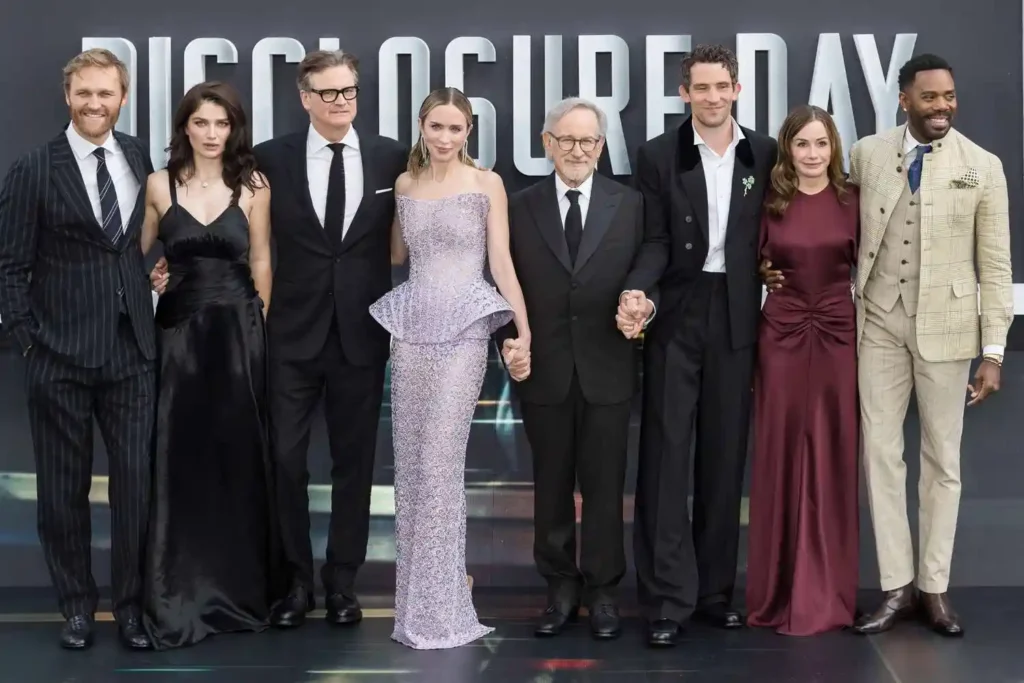
The film stars:
- Josh O’Connor as Daniel Kellner
- Emily Blunt as Margaret Fairchild
- Colin Firth as Noah Scanlon
- Colman Domingo as Hugo Wakefield
- Eve Hewson as Jane Blankenship
The screenplay comes from longtime Spielberg collaborator David Koepp, whose previous work with the director includes Jurassic Park and War of the Worlds.
Review Summary
Strengths
1. Spielberg’s Return to Science-Fiction Spectacle
One of the most celebrated aspects of Disclosure Day is Spielberg’s renewed commitment to large-scale cinematic storytelling.
The film features:
- Elaborate chase sequences
- Expansive visual effects
- Suspense-driven set pieces
- Emotional character moments intertwined with spectacle
Several critics have noted that the film recaptures the sense of wonder and momentum that defined Spielberg’s most iconic blockbusters.
Unlike many modern franchise films, Disclosure Day is an original story rather than an adaptation, sequel, or reboot. This originality gives the film a refreshing sense of unpredictability.
2. Emily Blunt Delivers the Standout Performance
Among the film’s most consistently praised elements is Emily Blunt’s portrayal of Margaret Fairchild.
Margaret begins as an ordinary television meteorologist before experiencing inexplicable psychological and physiological changes linked to extraterrestrial contact. Blunt balances vulnerability, intelligence, and emotional authenticity throughout the role. Critics repeatedly highlight her performance as one of the film’s greatest strengths.
Her character serves as the emotional center of the story, grounding increasingly extraordinary events in recognizable human experiences.
3. Themes of Truth, Empathy, and Human Connection
Rather than focusing solely on alien encounters, Disclosure Day explores broader questions:
- How would society react to proof of extraterrestrial life?
- Can truth unite people rather than divide them?
- What happens to religion, politics, and identity when humanity’s place in the universe changes?
These themes align closely with Spielberg’s long-standing interest in human relationships and moral questions. Critics have noted that the film is less concerned with aliens themselves than with humanity’s response to revelation.
This thematic depth distinguishes the movie from many contemporary science-fiction thrillers.
Weaknesses
1. Narrative Overload
The most common criticism concerns the screenplay’s complexity.
The story simultaneously explores:
- Government secrecy
- Corporate conspiracies
- Psychic phenomena
- Religious responses
- Alien disclosure
- Personal relationships
While ambitious, these multiple narrative threads occasionally compete for attention, resulting in uneven pacing and moments of confusion. Several reviewers describe the script as overstuffed.
2. A Divisive Third Act
Many critics agree that the film’s conclusion may be its most controversial element.
Some reviewers praise the ending for embracing Spielberg’s trademark optimism and emotional sincerity. Others argue that the final revelations reduce the mystery established earlier in the film.
This divide largely depends on whether viewers prefer ambiguity or definitive answers in science-fiction storytelling.
How Disclosure Day Fits Into Spielberg’s Career
Comparison with Spielberg’s Alien Films
| Film | Primary Theme | Tone |
|---|---|---|
| Close Encounters of the Third Kind | Wonder and discovery | Awe-filled |
| E.T. the Extra-Terrestrial | Friendship and childhood | Emotional |
| War of the Worlds | Survival and fear | Dark |
| A.I. Artificial Intelligence | Humanity and identity | Philosophical |
| Disclosure Day | Truth, empathy, disclosure | Conspiratorial and hopeful |
Many reviewers describe Disclosure Day as a synthesis of Spielberg’s earlier science-fiction interests. It combines the wonder of Close Encounters, the emotional core of E.T., and the paranoia of conspiracy thrillers.
However, it also reflects modern concerns surrounding misinformation, institutional secrecy, and public distrust.
Technical Analysis
Direction
Spielberg’s direction remains exceptionally confident.
Key strengths include:
- Clear visual storytelling
- Dynamic camera movement
- Efficient pacing during action sequences
- Emotional emphasis during character interactions
Even critics who were less enthusiastic about the screenplay generally praised the filmmaking itself.
Cinematography
Longtime collaborator Janusz Kamiński returns behind the camera.
The cinematography blends:
- Atmospheric lighting
- Expansive sky imagery
- High-contrast visual compositions
- Classic Spielbergian visual motifs
Several reviews specifically highlight Kamiński’s work as essential to the film’s immersive quality.
Music
The score by legendary composer John Williams provides another major asset.
The music reinforces:
- Suspense
- Mystery
- Emotional resonance
- A sense of cosmic wonder
For longtime Spielberg fans, Williams’ contribution evokes the emotional power of earlier collaborations while supporting a distinctly contemporary narrative.
Themes Explained
The Meaning of “Disclosure”
The title refers to the public revelation of hidden information regarding extraterrestrial existence.
Within the film, disclosure functions on multiple levels:
- Government disclosure
- Personal disclosure
- Spiritual disclosure
- Emotional disclosure
This layered approach transforms what could have been a straightforward UFO thriller into a broader exploration of truth and human identity.
Faith and Alien Life
One of the film’s more unusual dimensions involves religion.
Rather than presenting faith and science as opposing forces, Disclosure Day explores how spiritual belief might adapt to evidence of extraterrestrial intelligence. Critics have identified these scenes as among the film’s more thought-provoking elements.
This thematic choice helps distinguish the film from standard invasion narratives.
Who Should Watch Disclosure Day?
Recommended For
- Science-fiction enthusiasts
- Spielberg fans
- Viewers interested in UFO mythology
- Audiences seeking thoughtful blockbuster filmmaking
- Fans of conspiracy thrillers
May Not Appeal To
- Viewers seeking nonstop action
- Those wanting a simple alien-invasion story
- Audiences who prefer tightly focused narratives
FAQs
Is Steven Spielberg’s Disclosure Day worth watching?
Yes. Steven Spielberg’s Disclosure Day Review highlights a visually impressive and emotionally engaging UFO thriller. Fans of intelligent science fiction, extraterrestrial mysteries, and Spielberg UFO thriller films will find plenty to appreciate in this ambitious 2026 release.
What is Disclosure Day about?
Disclosure Day follows a cybersecurity expert who uncovers evidence suggesting that extraterrestrial life has been hidden from the public for decades. As revealed in many Disclosure Day movie review analyses, the story explores government secrecy, corporate conspiracies, and humanity’s reaction to a world-changing revelation.
How does Disclosure Day compare to Spielberg’s previous sci-fi films?
Steven Spielberg’s Disclosure Day Review frequently compares the film to classics such as Close Encounters of the Third Kind, E.T., and War of the Worlds.
Why is Disclosure Day generating so much attention in 2026?
The Disclosure Day 2026 film has attracted significant attention because it marks Spielberg’s return to original large-scale science-fiction storytelling centered on UFO disclosure and extraterrestrial life.
What are the main themes explored in Disclosure Day?
According to numerous Disclosure Day movie review articles, the film explores truth, empathy, disclosure, faith, and human connection.
Final Verdict
Disclosure Day is not merely a film about extraterrestrials. It is a film about humanity confronting a transformative truth.
Steven Spielberg combines spectacle, suspense, and emotional inquiry to create a science-fiction thriller that feels both nostalgic and contemporary. While the screenplay occasionally struggles under the weight of its ambitions and the ending may divide audiences, the film succeeds as a major cinematic event driven by strong performances, technical excellence, and meaningful ideas.
Overall Rating: 8.5/10
For viewers interested in intelligent blockbuster filmmaking, Disclosure Day represents one of 2026’s most significant science-fiction releases and a compelling return to the themes that have defined Spielberg’s career for nearly five decades.




 and then